The Toyota bZ4X occupies a strange space in the EV market: it's one of the most recognized electric SUVs thanks to Toyota's brand power, yet it has faced persistent criticism for mediocre range and slow DC charging compared to rivals like the Hyundai Ioniq 5 and Tesla Model Y. For 2026, Toyota has made incremental refinements, but the real story for buyers is whether aggressive finance deals and federal incentives can close the gap against more capable competitors.
If you're searching for Toyota bZ4X finance deals, you're likely weighing monthly affordability against what you actually get in range, charging speed, and daily usability. This review gives you every number you need to make that decision — from real-world range and charging curves to exact MSRP, tax-credit math, and total cost of ownership.
2026 Toyota bZ4X at a Glance: Full Spec Table
| Specification | FWD XLE | AWD XLE |
|---|---|---|
| EPA Range | 252 mi | 228 mi |
| Battery (usable / total) | 64.8 kWh / 71.4 kWh | 64.8 kWh / 71.4 kWh |
| Battery Chemistry | NMC (nickel manganese cobalt) | NMC |
| Max DC Fast Charge | 150 kW (peak) | 150 kW (peak) |
| 10–80% DC Charge Time | ~30 min | ~30 min |
| Level 2 Home Charge Rate | ~7.2 kW (~25 mi/hr) | ~7.2 kW (~25 mi/hr) |
| 0–60 mph | 7.1 sec | 5.8 sec |
| Horsepower | 201 hp | 214 hp |
| Drivetrain | Single motor FWD | Dual motor AWD |
| MPGe (city/hwy/combined) | 131 / 107 / 119 | 114 / 94 / 104 |
| Efficiency (kWh/100 mi) | 28 | 32 |
| Base MSRP | $32,670 | $34,770 |
| As-Tested (Limited trim) | ~$43,000 | |
| Battery Warranty | 8 yr / 100,000 mi | |
| Basic / Powertrain Warranty | 3 yr / 36,000 mi | 5 yr / 60,000 mi | |
Source: fueleconomy.gov and Toyota Motor Corporation 2026 spec sheets. EPA figures; real-world results vary.
Real-World Range: What the EPA Sticker Doesn't Tell You
Real-World Expectation: 210–230 mi on mixed highway driving; 170–195 mi in sustained cold weather (below 32°F) with cabin heat
Why the drop? Highway speeds above 70 mph increase aerodynamic drag substantially. Cold temperatures reduce NMC cell efficiency and require energy for battery and cabin heating — the bZ4X uses a resistive PTC heater on FWD trims, which draws significantly more energy than a heat pump.
The FWD XLE's 252-mile EPA rating is respectable on paper, but in our experience, sustained 75-mph highway driving yields closer to 215–225 miles before the low-battery warning. The AWD model, with its lower 228-mile EPA figure, realistically delivers 190–210 miles on a road trip.
Cold weather is where the bZ4X struggles most. Without a heat pump on the FWD XLE (it's available on higher trims and standard on some AWD configurations), expect a 20–30% range reduction in sub-freezing temperatures. That puts a winter highway commute at roughly 170–195 miles — adequate for most daily driving but tight for longer routes without mid-trip charging.
Compared to the Hyundai Ioniq 5's 303-mile EPA rating (Long Range RWD) or the Tesla Model Y Long Range's 308 miles, the bZ4X falls noticeably short. This matters most if you regularly drive more than 180 miles between charging opportunities.
Charging Speed: The bZ4X's Biggest Competitive Weakness
DC fast charging is where the bZ4X faces its toughest criticism, and the numbers explain why.
| Charging Method | Power | Speed / Time |
|---|---|---|
| Level 1 (120V household) | ~1.4 kW | ~5 mi/hr |
| Level 2 (240V home) | 7.2 kW | ~25 mi/hr (full charge ~9.5 hr) |
| DC Fast (CCS connector) | 150 kW peak | 10–80% in ~30 min |
| DC Fast — sustained avg | ~80–95 kW avg | Charge curve tapers significantly above 60% SoC |
The 150 kW peak figure sounds adequate, but the bZ4X's charge curve tells a different story. The vehicle reaches peak rate only briefly between roughly 20–40% state of charge, then tapers aggressively. From 60% onward, charging slows dramatically — sometimes dropping below 40 kW. This is why the 10–80% time is approximately 30 minutes, while competitors like the Ioniq 5 (with its 800V architecture and 350 kW peak) accomplish the same in roughly 18 minutes.
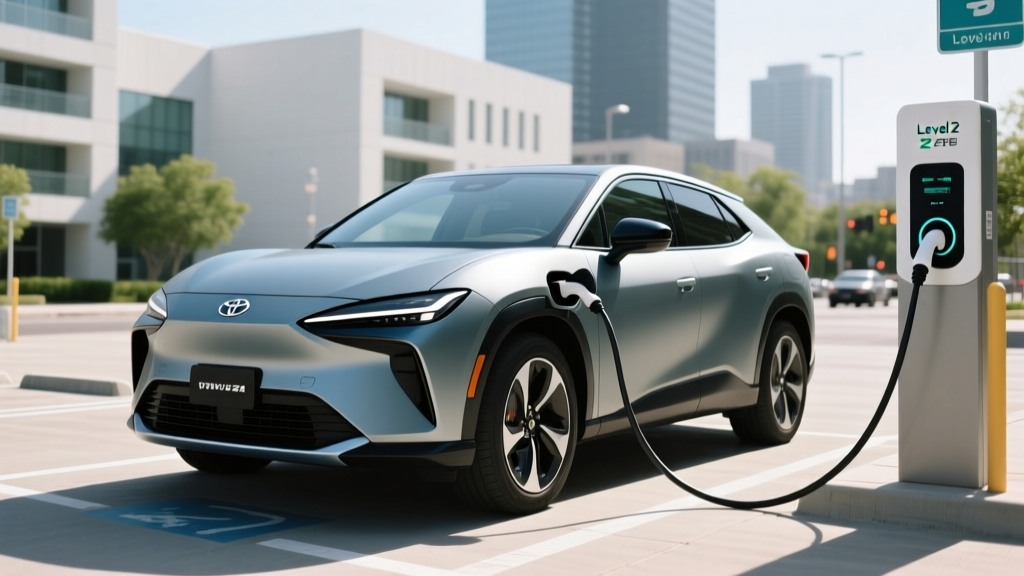
For home charging, the 7.2 kW onboard charger is unremarkable but functional. A full overnight charge from 10% takes about 9.5 hours on a 240V Level 2 circuit — perfectly fine for daily use if you charge at home every night. The key insight: the bZ4X is an EV that rewards home charging and penalizes road-trip reliance on public DC fast chargers.
Connector note: The 2026 bZ4X uses the CCS1 connector. Toyota has announced a transition to NACS (Tesla's connector) for future models, but as of the 2026 model year, the bZ4X remains CCS-equipped. Tesla Supercharger access requires an adapter.
Finance Deals and Pricing: What You'll Actually Pay
Here's where the bZ4X makes its strongest case. Toyota's brand reputation, dealer network, and aggressive incentives can make the monthly payment surprisingly competitive — even if the vehicle's specs trail the pack.
| Trim | MSRP | Est. Federal Credit | Net Price |
|---|---|---|---|
| XLE FWD | $32,670 | Up to $7,500* | ~$25,170* |
| XLE AWD | $34,770 | Up to $7,500* | ~$27,270* |
| Limited FWD | $38,670 | Up to $7,500* | ~$31,170* |
| Limited AWD | $40,770 | Up to $7,500* | ~$33,270* |
*Federal tax credit eligibility depends on multiple factors. See §30D checklist below.
Federal Tax Credit (§30D) Eligibility Checklist
- MSRP cap: SUVs must be priced at or below $80,000 — all bZ4X trims qualify.
- Buyer income cap: Modified AGI must not exceed $150,000 (single), $225,000 (head of household), or $300,000 (joint filing).
- Battery sourcing: Critical minerals and battery components must meet phased percentage thresholds from US or FTA-partner countries. Verify current-year compliance at IRS.gov before purchasing.
- Point-of-sale transfer: As of 2024+, eligible buyers can transfer the credit to the dealer for an immediate price reduction rather than waiting to claim it on their tax return.
- New vehicle requirement: Must be purchased new; leased vehicles fall under a separate commercial credit (§45W) with different rules.
Finance deal reality: Toyota Financial Services frequently offers promotional APRs (often 1.9%–3.9% for well-qualified buyers) and lease specials on the bZ4X. At a net price of ~$25,170 after the federal credit, a 60-month loan at 3.9% APR yields roughly $462/month — competitive with many gas-powered compact SUVs once you factor in fuel savings. Leasing can push payments lower, often into the $299–$349/month range with modest down payments, depending on regional incentives.
However, the bZ4X's depreciation is a concern. Early model years have seen steeper-than-average value loss compared to Tesla and Hyundai/Kia EVs, which can erode equity at trade-in or lease-end. Buyers planning to keep the vehicle 5+ years will fare better than those expecting to swap in 2–3 years.
Interior Space, Tech, and Daily Livability
The bZ4X is a compact SUV with dimensions that put it in the same segment as the RAV4, though the EV platform gives it a slightly different interior layout.
- Cargo volume: 27.7 cu ft behind rear seats; 56.9 cu ft with rear seats folded
- Rear legroom: 35.3 inches
- Front legroom: 41.6 inches
- No front trunk (frunk): The bZ4X does not offer a frunk, which is a missed opportunity given the packaging flexibility of a dedicated EV platform
The 12.3-inch infotainment touchscreen (standard on all 2026 trims) runs Toyota's latest Audio Multimedia system with wireless Apple CarPlay and Android Auto. It's responsive enough, though the interface isn't as intuitive as Hyundai's or Tesla's systems. Physical climate controls are retained — a welcome choice for drivers who dislike menu-diving for temperature adjustments.
Driver assistance comes via Toyota Safety Sense 3.0, which includes:
- Pre-Collision System with pedestrian detection
- Lane Departure Alert with steering assist
- Full-Speed Range Dynamic Radar Cruise Control
- Lane Tracing Assist (a SAE Level 2 system — the driver must remain engaged at all times)
- Road Sign Assist
Notable drawbacks: The bZ4X's cabin materials feel a step below the Hyundai Ioniq 5's premium interior. Rear visibility is compromised by thick C-pillars. The available digital gauge cluster positioned far from the driver's sightline (similar to Peugeot's i-Cockpit) is polarizing — some drivers find it requires an awkward downward glance. And the absence of one-pedal driving on base trims (regenerative braking is adjustable but doesn't bring the car to a complete stop) frustrates EV-experienced drivers.
Who Should Buy the bZ4X — And Who Shouldn't
Pros
- Strong Toyota dealer network and brand trust
- Competitive net price after federal tax credit
- Comfortable ride quality; quiet cabin at highway speeds
- Standard Toyota Safety Sense 3.0 across all trims
- AWD model with dedicated rear motor provides genuine traction capability
- 8-year/100,000-mile battery warranty
Cons
- Below-average EPA range vs. key competitors
- Slow DC fast charging (30 min 10–80%, aggressive taper)
- No front trunk (frunk)
- Steeper depreciation than Tesla or Hyundai EVs
- Limited one-pedal driving capability on base trims
- CCS1 connector requires adapter for Tesla Supercharger access
The Verdict: Choose the bZ4X If…
- Choose the bZ4X if: You have reliable home Level 2 charging, commute under 60 miles round-trip, value Toyota's reliability reputation and dealer support, and can secure the full $7,500 federal credit — making the net price very attractive for a compact electric SUV.
- Choose the Ioniq 5 instead if: You take regular road trips (its 303-mi range and 18-min 10–80% charging are substantially better), want NACS/CCS flexibility, or prioritize interior quality and cargo space.
- Choose the Model Y instead if: Supercharger network access is a priority, you need 300+ miles of range, or you want over-the-air updates and a more advanced driver-assist ecosystem.
- Consider a PHEV (e.g., RAV4 Prime) if: You lack home charging access or frequently drive in areas with sparse public charging infrastructure.
2026 Toyota bZ4X vs. Key Competitors
| Metric | bZ4X FWD | Ioniq 5 LR RWD | Model Y LR |
|---|---|---|---|
| EPA Range | 252 mi | 303 mi | 308 mi |
| Battery (usable) | 64.8 kWh | 77.4 kWh | ~75 kWh |
| DC Charge (10–80%) | ~30 min | ~18 min | ~20 min |
| Peak DC kW | 150 kW | 250 kW (350 on 800V) | 250 kW |
| 0–60 mph | 7.1 sec | 7.0 sec | 5.0 sec |
| Base MSRP | $32,670 | ~$42,600 | ~$44,990 |
| Cargo (rear seats up) | 27.7 cu ft | 27.2 cu ft | 30.2 cu ft |
The spec comparison reveals the bZ4X's core value proposition: it costs $10,000–$12,000 less at MSRP than the Ioniq 5 Long Range or Model Y Long Range. After the federal credit, the gap widens further. If your driving needs are modest and you charge at home, that price delta is real money saved — roughly $165–$200/month over a 60-month loan.
But if you road-trip more than a few times a year, the range and charging gap becomes a quality-of-life issue. Spending 30 minutes at a DC fast charger when a competitor finishes in 18 minutes adds up on long drives, and 252 miles of range means more careful trip planning than 300+ miles affords.
Frequently Asked Questions
What is the real-world range of the 2026 Toyota bZ4X?
The EPA rates the FWD bZ4X at 252 miles and the AWD at 228 miles. In real-world mixed highway driving at 70–75 mph, expect 210–230 miles from the FWD and 190–210 miles from the AWD. In sustained cold weather (below freezing), range drops to roughly 170–195 miles due to reduced battery efficiency and cabin heating demands.
How fast does the bZ4X charge at home and on the road?
At home on a 240V Level 2 charger, the bZ4X charges at 7.2 kW, adding roughly 25 miles of range per hour — a full charge takes about 9.5 hours. On DC fast chargers, it peaks at 150 kW but sustains that rate only briefly; a 10–80% session takes approximately 30 minutes due to an aggressive charge-curve taper above 60% state of charge.
Does the 2026 bZ4X qualify for the $7,500 federal EV tax credit?
The bZ4X meets the MSRP cap (under $80,000 for SUVs) and is generally listed on the IRS eligible vehicles list. However, your personal eligibility depends on income limits ($150K single / $300K joint), and the vehicle must meet critical-mineral and battery-component sourcing thresholds that change annually. Verify current eligibility at IRS.gov and consult a tax professional before relying on the credit.
How much does the bZ4X cost per month with financing?
At a net price of ~$25,170 (XLE FWD after a $7,500 federal credit), a 60-month loan at 3.9% APR yields approximately $462/month. Toyota Financial Services often runs promotional rates as low as 1.9%–2.9% for well-qualified buyers, which could reduce payments to ~$440/month. Lease deals in some regions have been advertised as low as $299–$349/month with $2,500–$3,500 due at signing.
Is the Toyota bZ4X worth buying over the Hyundai Ioniq 5 or Tesla Model Y?
It depends on your priorities. The bZ4X wins on upfront cost — especially after incentives — and Toyota's long-term reliability reputation. The Ioniq 5 wins on range (303 mi), charging speed (18 min 10–80%), and interior quality. The Model Y wins on Supercharger access, range (308 mi), and performance. If your commute is short, you charge at home, and price is paramount, the bZ4X is a solid value. If you road-trip frequently, the competitors' range and charging advantages are worth the premium.
What is the bZ4X's battery warranty?
Toyota covers the bZ4X's hybrid/EV battery for 8 years or 100,000 miles, whichever comes first. This warranty guarantees the battery will retain a minimum capacity (typically 70% of original) during the coverage period. The basic vehicle warranty is 3 years/36,000 miles, and the powertrain warranty is 5 years/60,000 miles.
Does the bZ4X have a frunk (front trunk)?
No. The 2026 bZ4X does not offer a front trunk. All cargo space is in the rear: 27.7 cubic feet behind the second row and 56.9 cubic feet with the rear seats folded.
Bottom Line: Finance-Friendly, But Know the Trade-Offs
The 2026 Toyota bZ4X makes the most financial sense when three conditions align: you qualify for the full $7,500 federal tax credit, you have access to reliable home Level 2 charging, and your daily driving stays well within its ~210-mile real-world range envelope. When those conditions are met, the bZ4X becomes one of the most affordable name-brand electric SUVs available, with monthly payments that rival gas-powered compact crossovers.
Where it falls short is in the metrics that matter most for road-trip-heavy owners: range and charging speed. A 30-minute 10–80% charge with aggressive taper, combined with 252 miles of EPA range, means more planning and more waiting at public chargers than you'd experience in an Ioniq 5 or Model Y.
Before signing any finance deal, run the numbers with your specific tax situation, compare total 5-year cost against competitors (factoring in the bZ4X's steeper depreciation), and honestly assess how often you'll need DC fast charging. If the math works and the use case fits, the bZ4X's finance deals make it a compelling entry point into EV ownership — just don't expect it to lead the pack in capability.