The Short Answer on Toyota's Electric SUV
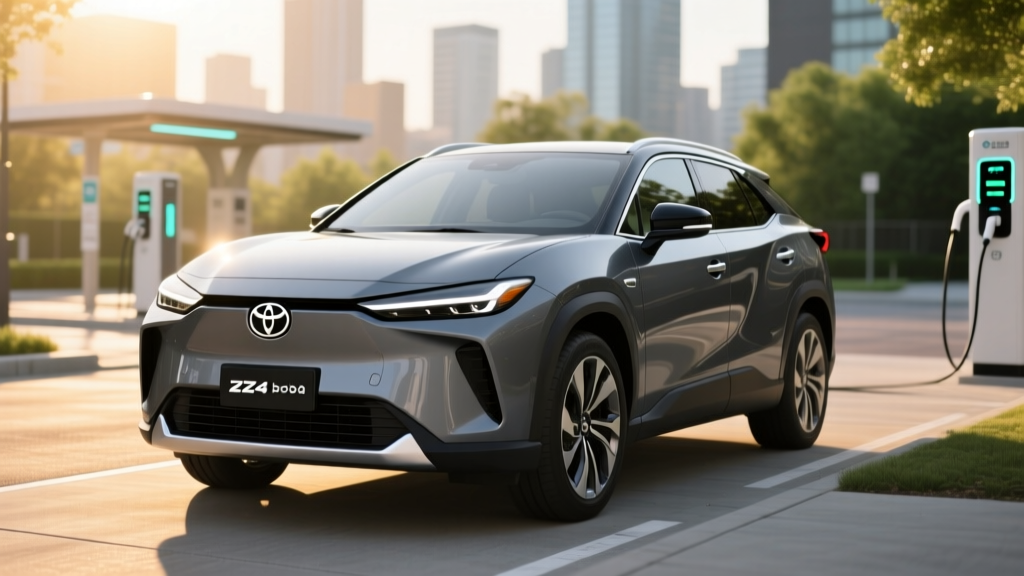
If you're searching for an electric Toyota SUV, the 2026 Toyota bZ4X is currently Toyota's only all-electric SUV offering in the U.S. market. It delivers an EPA-estimated 252 miles of range (XLE FWD), a 71.4 kWh usable battery, and starts at approximately $37,070 before incentives. It's a competitive mid-size electric crossover, but buyers should know its real-world highway range drops closer to 210–225 miles, and DC fast charging peaks at 150 kW (10–80% in roughly 30 minutes). If you want a Toyota SUV with more range and less charging worry, the RAV4 Plug-In Hybrid (Prime) with 42 miles of electric-only driving remains a strong alternative.
2026 Toyota bZ4X: The Specs That Matter
Toyota entered the dedicated EV space later than rivals like Hyundai and Tesla, and the bZ4X reflects a cautious-but-improving approach. Co-developed with Subaru (which sells the nearly identical Solterra), the bZ4X is built on Toyota's e-TNGA platform. Here's what the numbers look like for the 2026 model year:
| Spec | XLE FWD | XLE AWD | Limited AWD |
|---|---|---|---|
| EPA Range | 252 mi | 228 mi | 222 mi |
| Battery (usable) | 71.4 kWh (NMC lithium-ion) | ||
| Horsepower | 201 hp | 214 hp | |
| 0–60 mph | ~7.1 sec | ~6.5 sec | |
| MPGe (combined) | 120 MPGe | 112 MPGe | 107 MPGe |
| Peak DC Charge Rate | 150 kW (CCS1/NACS adapter) | ||
| 10–80% DC Fast Charge | ~30 minutes | ||
| Level 2 Charge Rate | 7.2 kW (~24 mi/hr) | ||
| Base MSRP | $37,070 | $39,120 | $43,880 |
| Battery Warranty | 8 years / 100,000 miles (70% capacity retention) | ||
Real-World Range vs. EPA Sticker
The EPA rates the FWD bZ4X at 252 miles, but expect 210–225 miles on sustained highway driving at 70+ mph, and as low as 175–195 miles in freezing temperatures (below 32°F) due to cabin heating demands and battery chemistry limitations. City driving with regenerative braking recovers closer to the EPA figure. The AWD trims sacrifice 24–30 miles of rated range for the traction and power benefits of dual motors.
How the bZ4X Compares: Electric vs. Gas vs. Toyota Hybrid
Most Toyota SUV shoppers cross-shop the bZ4X against the RAV4 Hybrid, the RAV4 Prime (PHEV), and the gas-only RAV4. Here's how the ownership math actually works out over five years and 75,000 miles:
| Cost Category | bZ4X XLE FWD (EV) | RAV4 Hybrid XLE (HEV) | RAV4 Gas XLE (ICE) | RAV4 Prime SE (PHEV) |
|---|---|---|---|---|
| Base MSRP | $37,070 | $33,575 | $30,825 | $43,690 |
| Est. Federal Tax Credit | $0–$7,500* | $0 | $0 | $0–$7,500* |
| Fuel/Energy (5 yr) | $3,200 | $5,800 | $8,100 | $3,600 |
| Maintenance (5 yr) | $1,800 | $3,200 | $4,100 | $3,000 |
| Insurance (5 yr est.) | $9,500 | $7,800 | $7,500 | $9,000 |
| Net 5-Yr Cost | ~$44,070–$51,570 | ~$50,375 | ~$50,525 | ~$50,290–$59,290 |
*Federal §30D tax credit eligibility depends on MSRP caps (SUVs: $80,000), buyer income limits ($150K single / $300K joint AGI), and battery critical-mineral sourcing requirements. The bZ4X's credit eligibility has fluctuated as Toyota adjusts supply chains. Always verify current eligibility at IRS.gov or via the dealer's point-of-sale transfer system before purchasing.
The bZ4X wins on energy and maintenance costs — no oil changes, fewer moving parts, and electricity at roughly $0.13/kWh nationally saves thousands over gas. But EV insurance premiums run 15–25% higher on average due to battery replacement costs and specialized repair networks. If you qualify for the full $7,500 credit (applied at point of sale as of 2024+ rules), the bZ4X's effective purchase price drops to under $30,000, making it the cheapest option in this table.
Charging Reality: What bZ4X Owners Actually Experience
The bZ4X uses a 71.4 kWh NMC (nickel-manganese-cobalt) battery pack. Toyota equips it with a liquid-cooled thermal management system, which helps sustain charging speeds and protect long-term battery health. But the charging picture has nuances every buyer should understand.
Home Charging (Level 2)
At 7.2 kW on a 240V Level 2 home charger, the bZ4X adds roughly 24 miles of range per hour and charges from 0–100% in about 10.5 hours. Most owners who charge overnight at home will start every day with a full battery, making the 252-mile EPA range more than adequate for daily commutes under 80 miles round-trip.
Installation cost: Expect $800–$2,500 for a professional Level 2 installation if your electrical panel has capacity. If you need a 200-amp panel upgrade, add $1,500–$3,000. Always get a quote from a licensed electrician before purchasing a charger.
DC Fast Charging (Road Trips)
The bZ4X peaks at 150 kW on DC fast chargers — adequate but behind the 200–350 kW peaks of rivals like the Hyundai Ioniq 5 and Tesla Model Y. The charge curve matters more than the peak number:
- 10–40% SoC: Sustains near 150 kW
- 40–60% SoC: Tapers to ~110 kW
- 60–80% SoC: Drops to ~70 kW
- Above 80%: Slows dramatically to protect battery (plan to unplug at 80% on road trips)
The 10–80% time of ~30 minutes means a typical road-trip stop adds 150–170 miles in half an hour. That's workable but means more time at chargers compared to vehicles with 800V architectures. Toyota now provides one year of complimentary charging on the EVgo network with new bZ4X purchases, which helps offset early public-charging costs.
Connector Note
The 2026 bZ4X ships with a CCS1 port. Toyota has announced NACS (Tesla Supercharger) adoption for future models, and a NACS adapter is available for accessing Tesla's Supercharger network. Confirm adapter compatibility and included network access with your dealer at purchase.
Common Misconceptions About the bZ4X — Fact-Checked
| Myth | Fact |
|---|---|
| "The bZ4X had a massive recall — it's unreliable." | Toyota issued a 2022 recall for wheel hub bolts on early production units. This was addressed with redesigned hubs and a software update. 2024–2026 models have not had repeat issues, and the bZ4X earns strong reliability marks from owner surveys post-fix. |
| "EV batteries need replacing every 5 years." | Toyota warranties the bZ4X battery for 8 years / 100,000 miles against dropping below 70% capacity. Industry data from Recurrent and other battery-health trackers shows modern NMC packs typically retain 85–92% capacity at 100K miles with normal use. |
| "You can't drive an EV in cold weather." | You can, but range drops 20–35% in sustained sub-freezing temperatures. The bZ4X offers an available heat pump (standard on Limited, optional on XLE AWD) that reduces cold-weather range loss by roughly 10 percentage points compared to resistive heating. Preconditioning while plugged in further mitigates loss. |
| "It qualifies for the $7,500 tax credit automatically." | Credit eligibility under IRS §30D depends on your income, the vehicle's MSRP, and battery mineral sourcing — all of which change. The bZ4X has seen its eligibility shift as Toyota restructures battery supply chains. Verify at purchase. |
| "Charging an EV is more expensive than gas." | At the national average electricity rate of ~$0.16/kWh (2025 EIA data), charging the bZ4X costs roughly $0.045/mile. A 28 MPG gas RAV4 at $3.40/gallon costs $0.121/mile — nearly 3x more. Public DC fast charging at $0.40–$0.50/kWh narrows the gap but still undercuts gas per mile. |
Who Should Buy the bZ4X — And Who Should Look Elsewhere
Actionable Decision Framework
Choose the Toyota bZ4X if:
- You have access to Level 2 home or workplace charging
- Your daily commute is under 80 miles round-trip
- You want to stay in the Toyota ecosystem (dealer network, reliability reputation, Toyota Safety Sense 3.0)
- You qualify for the §30D tax credit, bringing effective price below $30K
- You rarely take road trips over 300 miles, or you're patient with 30-minute charging stops
Choose the RAV4 Prime (PHEV) instead if:
- You lack reliable home charging access (apartment, street parking)
- You regularly drive 400+ mile road trips and don't want to plan around chargers
- You want 42 miles of electric-only commuting with a gas backup for longer drives
- You live in an area with sparse DC fast-charging infrastructure
Look at the Hyundai Ioniq 5 or Tesla Model Y if:
- Fast DC charging speed is a priority (Ioniq 5: 10–80% in ~18 min at 240 kW; Model Y: ~15 min at 250 kW)
- You want 300+ miles of EPA range
- You need access to the Tesla Supercharger network natively (Model Y)
- Performance matters (Ioniq 5 N: 0–60 in 3.4 sec; Model Y Performance: 3.5 sec)
First-Time EV Buyer Checklist for the bZ4X
If the bZ4X is your first electric vehicle, here's what to prepare before delivery day:
- Get an electrical panel assessment. A licensed electrician can confirm whether your home's panel supports a 40-amp (or 48-amp) circuit for Level 2 charging. Budget $1,000–$4,000 total for equipment and installation.
- Verify tax credit eligibility. Use the IRS's clean vehicle credit tool and confirm with your tax professional. The point-of-sale transfer option lets you apply the credit as a down payment reduction at the dealer.
- Download charging apps before you need them. EVgo, Electrify America, ChargePoint, and PlugShare are essential for finding public chargers and checking real-time availability.
- Set a charging limit of 80% for daily use. NMC batteries last longest when kept between 20–80% state of charge. Only charge to 100% before long road trips.
- Learn preconditioning. The bZ4X lets you precondition the battery and cabin via the Toyota app while plugged in. This warms the battery for faster DC charging and uses grid power instead of battery power for cabin heat.
- Budget for higher insurance. Get quotes before purchasing — EV insurance averages 15–25% more than comparable gas vehicles. Shop multiple carriers; some offer specific EV discounts.
Toyota's Electric SUV Future: What's Next After the bZ4X
Toyota has announced a broader EV lineup is coming, including a larger three-row electric SUV and models using next-generation battery technology. However, as of early 2026, the bZ4X remains the only dedicated Toyota electric SUV available for purchase in the U.S. Any future models should be treated as announced/preliminary until official pricing and EPA certification are published.
Toyota's strategy of offering EVs, PHEVs, HEVs, and hydrogen fuel-cell vehicles simultaneously means buyers have options across the electrification spectrum. For most shoppers, the question isn't "Is Toyota's EV good enough?" but rather "Which level of electrification fits my driving pattern?"
Does the Toyota bZ4X qualify for the $7,500 federal tax credit?
Eligibility under IRS §30D depends on your adjusted gross income (under $150K single / $300K joint), the vehicle's MSRP (under $80,000 for SUVs — the bZ4X qualifies), and battery critical-mineral and component sourcing rules that change periodically. Toyota's credit eligibility has shifted as supply chains evolve. Always confirm current status at IRS.gov or with your dealer's point-of-sale system before finalizing a purchase.
How long does the bZ4X battery last?
Toyota warranties the 71.4 kWh NMC battery for 8 years or 100,000 miles against dropping below 70% of original capacity. Real-world data from battery analytics firm Recurrent suggests most modern NMC packs retain 85–92% capacity at 100,000 miles with typical charging habits (avoiding frequent 100% charges and deep discharges). Full battery replacement, if ever needed out of warranty, is estimated at $8,000–$12,000 based on current parts pricing — though this is rare within the first decade of ownership.
Is the bZ4X good for road trips?
It's workable but not class-leading. With 228 miles of real-world highway range (AWD) and 150 kW peak charging adding ~150 miles in 30 minutes, you'll stop more often than in a Tesla Model Y or Hyundai Ioniq 5. For a 500-mile trip, plan two 30-minute charging stops. Use PlugShare or EVgo to map charger locations along your route before departing. The bZ4X's complimentary EVgo year helps offset public charging costs.
How does the bZ4X compare to the Subaru Solterra?
The bZ4X and Solterra share the same e-TNGA platform, battery, and powertrain. Differences are mostly cosmetic and in standard equipment: the Solterra comes standard with AWD and includes some off-road driving modes, while the bZ4X offers a FWD option with slightly more range. Pricing and dealer experience will be your main differentiators. Both share the same charging speeds, battery warranty, and range figures for equivalent trims.
Can I charge the bZ4X at Tesla Superchargers?
Toyota has been rolling out NACS adapter compatibility. As of the 2026 model year, confirm with your dealer whether a NACS adapter is included or available as an accessory, and whether the bZ4X's firmware supports Supercharger communication. The broader industry is migrating to NACS, and adapter solutions exist, but native compatibility varies by model year and software version.