Quick Verdict: Is the Toyota bZ4X the Right EV for You?
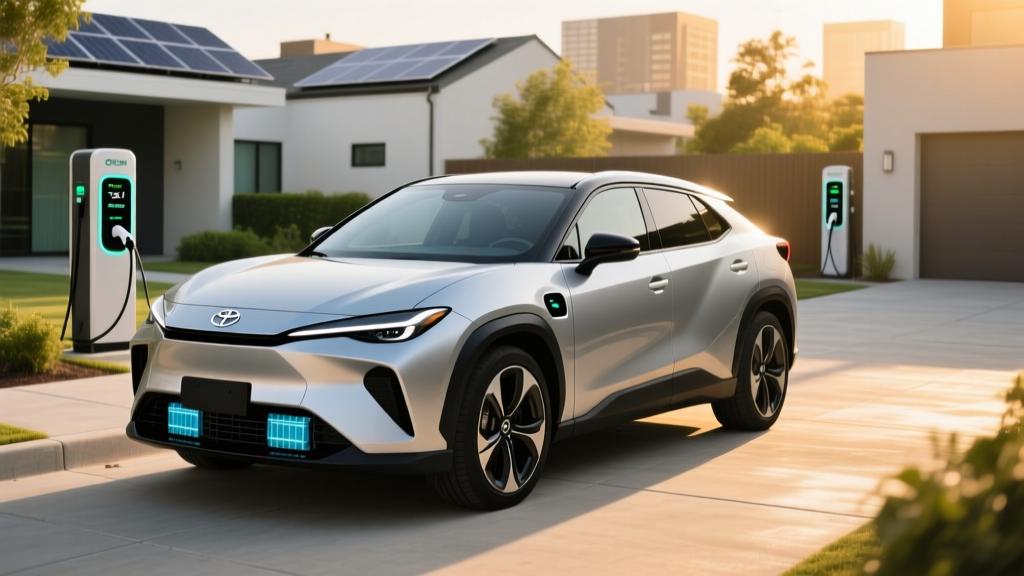
The 2026 Toyota bZ4X delivers an EPA-estimated 252 miles of range (FWD), 150 kW peak DC fast charging, and starts at $38,465 before incentives. It's a practical, midsize electric crossover aimed at Toyota-loyal buyers transitioning from a RAV4 or Camry. However, its real-world highway range drops to roughly 210–225 miles, and charging speeds lag behind rivals like the Hyundai Ioniq 5. If you want a no-surprises first EV with Toyota's dealer network behind it, the bZ4X is a solid pick. If maximum range and the fastest charging matter more, you'll want to cross-shop carefully.
Toyota's EV Lineup in 2026: What's Actually Available
Searching for an EV Toyota currently points to one primary battery-electric model: the bZ4X, now in its fourth model year after launching for 2023. Toyota's broader electrified lineup includes several hybrids (HEVs) and plug-in hybrids (PHEVs) like the RAV4 Prime and Prius Prime, but the bZ4X remains Toyota's only dedicated battery-electric vehicle (BEV) on sale in the U.S. as of early 2026.
Toyota has announced additional bZ-series EVs — including a three-row SUV and a smaller crossover — but these remain in announced/preliminary status. For buyers shopping today, the bZ4X is the EV to evaluate.
Range, Efficiency, and the Real-World Gap
The 2026 bZ4X comes in two drivetrain configurations, each with different range profiles:
| Spec | XLE FWD | XLE AWD | Limited FWD | Limited AWD |
|---|---|---|---|---|
| EPA Range | 252 mi | 228 mi | 236 mi | 214 mi |
| Battery (usable) | 71.4 kWh (NMC lithium-ion) | |||
| MPGe (combined) | 131 MPGe | 114 MPGe | 125 MPGe | 110 MPGe |
| Efficiency | 26 kWh/100mi | 30 kWh/100mi | 27 kWh/100mi | 31 kWh/100mi |
| Motor Output | 201 hp / 196 lb-ft | 214 hp / 248 lb-ft (dual motor) | 214 hp / 248 lb-ft | |
| 0–60 mph | ~7.1 sec | ~5.8 sec (AWD) | ||
Real-World Range Expectations
EPA sticker: 252 miles (FWD). Expect in practice: 215–230 miles on mixed highway driving at 70–75 mph. In cold weather (below 30°F), plan for 180–200 miles of usable range before needing a charge. The bZ4X uses a 71.4 kWh NMC battery — adequate for daily commutes and moderate road trips, but you'll be stopping once on a 400-mile drive.
For context, the EPA's fueleconomy.gov listing confirms the 252/228-mile split across trims. The AWD model's lower range comes from the added weight and friction of the rear motor, plus larger 20-inch wheels on the Limited trim that increase rolling resistance.
Charging Speeds: Home and DC Fast Charging
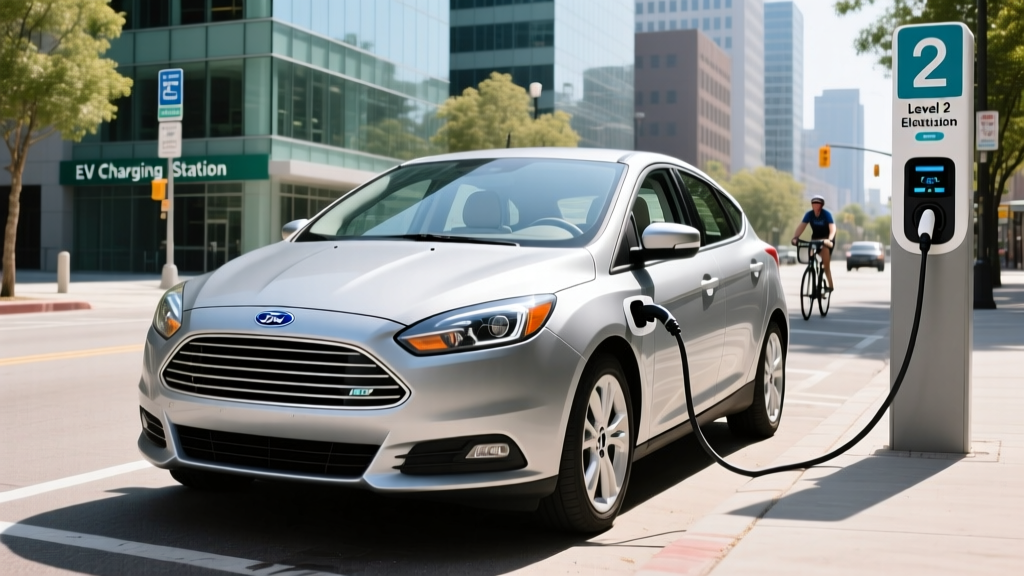
Charging is where the bZ4X reveals its most significant competitive gap. Here's the full picture:
| Charging Level | Power / Connector | Rate | Time (10–80%) |
|---|---|---|---|
| Level 1 (120V) | 1.4 kW / J1772 | ~4 mi/hr | ~50+ hours (full) |
| Level 2 (240V) | 7.2 kW / J1772 | ~24 mi/hr | ~9.5 hours (full) |
| DC Fast Charge | 150 kW peak / CCS1 | ~180 mi in 30 min (peak) | ~30 min (10–80%) |
The 150 kW peak DC rate is the headline number, but the charge curve matters more than peak speed. In real-world testing, the bZ4X sustains roughly 120–140 kW from 10% to about 45% state of charge, then tapers progressively. From 60% to 80%, speeds drop below 70 kW. Expect a 10–80% session to take approximately 30–34 minutes at a 150+ kW station — roughly 10 minutes longer than an Ioniq 5 or EV6 on the same charger.
Connector note: The bZ4X uses the CCS1 connector for DC fast charging and J1772 for Level 2. Toyota has not yet adopted the NACS (Tesla) connector on the bZ4X, though future models are expected to transition. For now, CCS1 works at Electrify America, EVgo, and most non-Tesla networks. Tesla Supercharger access requires a CCS-to-NACS adapter (sold separately, ~$200–$250).
Pricing, Tax Credits, and What You'll Actually Pay
| Trim | MSRP (2026) | Drivetrain |
|---|---|---|
| XLE FWD | $38,465 | Front-wheel drive |
| XLE AWD | $40,865 | Dual-motor AWD |
| Limited FWD | $43,265 | Front-wheel drive |
| Limited AWD | $45,665 | Dual-motor AWD |
All prices include destination charge. The bZ4X qualifies for consideration under the federal §30D Clean Vehicle Credit, but eligibility is not automatic. Under current IRS rules, you must meet several conditions:
- MSRP cap: SUVs must be under $80,000 — the bZ4X clears this easily.
- Buyer income cap: Modified AGI ≤ $150,000 (single) or ≤ $300,000 (joint).
- Battery sourcing: Critical minerals and battery components must meet phased-in domestic/free-trade-partner sourcing thresholds that tighten annually. Verify current-year compliance on the manufacturer's tax-credit letter or at fueleconomy.gov.
- Point-of-sale transfer: You can transfer the credit to the dealer at purchase to reduce your out-of-pocket cost immediately, rather than waiting to claim it on your tax return.
The credit amount can be up to $7,500, but partial credits ($3,750) apply if only one of the two sourcing requirements (critical minerals OR battery components) is met. Always confirm eligibility with your tax professional before relying on the credit in your purchase decision.
bZ4X vs. Gas RAV4 vs. RAV4 Prime: The Cost Comparison
Most bZ4X shoppers are cross-shopping Toyota's own lineup. Here's how the numbers stack up over 5 years and 75,000 miles:
| Cost Factor | bZ4X XLE FWD | RAV4 LE (Gas) | RAV4 Prime (PHEV) |
|---|---|---|---|
| Base MSRP | $38,465 | $30,425 | $43,690 |
| Est. Federal Credit | Up to $7,500 | $0 | Up to $7,500 |
| Net Purchase (after credit) | ~$30,965 | $30,425 | ~$36,190 |
| Fuel/Energy (5 yr, 75k mi) | ~$3,750 (home L2) | ~$8,100 (gas) | ~$4,800 (mixed) |
| Maintenance (5 yr) | ~$1,800 | ~$3,500 | ~$2,800 |
| Est. 5-Year Total | ~$36,515 | ~$42,025 | ~$43,790 |
Key assumptions: Electricity at $0.14/kWh national average, gas at $3.40/gallon, RAV4 at 30 MPG combined, bZ4X at 26 kWh/100mi. The bZ4X saves roughly $5,500 over 5 years versus the gas RAV4 — primarily through energy and maintenance reductions. Against the RAV4 Prime, the savings narrow because the Prime's 42-mile electric-only range covers most daily commutes without gas.
The bZ4X's advantage shrinks if you rely primarily on public DC fast charging at $0.40–$0.55/kWh, which pushes 5-year energy costs to $6,000–$8,200. Home charging access is the single biggest variable in EV ownership economics.
First-Time EV Buyer: What to Know Before You Sign
Decision Framework: Is the bZ4X Right for Your Situation?
Choose the bZ4X if:
- You can install a Level 2 home charger (240V, 32A+ circuit)
- Your daily driving is under 80 miles round-trip
- You value Toyota's dealer network for service and warranty work
- You want a straightforward EV without subscription features or beta driving-assist software
- Your road trips are typically under 250 miles between stops
Look elsewhere if:
- You regularly drive 300+ miles in a single stretch and want fewer charging stops
- You need the fastest possible DC charging (consider Ioniq 5, EV6, or Tesla Model Y)
- You live in a charging desert with limited public CCS infrastructure
- You need three rows of seating (the bZ4X is strictly two-row, five-passenger)
Home Charging Installation Reality
Plan to spend $500–$2,500 for a Level 2 home charger installation, depending on your electrical panel's capacity. If your panel is 200A and has spare breaker slots, a straightforward install runs $500–$1,200 (charger + electrician + permit). If you need a panel upgrade to 200A, add $1,500–$3,000. The bZ4X's 7.2 kW onboard charger means you don't need a 48A hardwired unit — a 32A charger ($350–$600) fully utilizes its capability.
Insurance Considerations
EV insurance premiums tend to run 15–25% higher than equivalent gas vehicles due to higher repair costs and specialized parts. Expect annual premiums of $1,800–$2,400 for the bZ4X depending on your state, driving record, and coverage level. Get quotes before purchasing — the premium gap can offset some of the fuel savings.
Common Misconceptions About the Toyota bZ4X
| Myth | Fact |
|---|---|
| "The battery will need replacing in 5 years." | Toyota warranties the bZ4X battery for 8 years/100,000 miles against defects and capacity loss below 70%. Industry data shows NMC batteries typically retain 85–90% capacity at 100k miles with normal use. |
| "I can use any Tesla Supercharger." | The bZ4X has a CCS1 port. Tesla Supercharger access requires a NACS adapter and Tesla's app for payment. Not all Supercharger stalls have the magic-dock adapter, and speeds may be limited. |
| "EVs are worse in winter." | Cold weather reduces range 15–30% due to battery chemistry and cabin heating demands. The bZ4X offers an available radiant heater and heat pump (trim-dependent) to mitigate loss, but plan conservatively — 252 EPA miles becomes ~185–210 in freezing temps. |
| "The bZ4X has self-driving." | Toyota Safety Sense 3.0 is a Level 2 driver-assist system (per SAE classification). It includes adaptive cruise, lane-centering, and automatic emergency braking. You must remain fully engaged — hands on wheel, eyes on road. It is not autonomous driving. |
| "All EVs charge at the same speed." | The bZ4X peaks at 150 kW — adequate but slower than the Hyundai Ioniq 5 (240 kW) or Tesla Model Y (~250 kW). On a road trip, that translates to 5–10 extra minutes per stop. |
Battery, Warranty, and Long-Term Ownership
The bZ4X's 71.4 kWh NMC (nickel-manganese-cobalt) battery is liquid-cooled with active thermal management — critical for longevity and consistent charging speeds. Toyota provides:
- Hybrid/EV Battery Warranty: 8 years / 100,000 miles (10 years / 150,000 miles in CARB states including CA, NY, WA, OR, and others)
- Basic Vehicle Warranty: 3 years / 36,000 miles
- Powertrain Warranty: 5 years / 60,000 miles
The battery warranty guarantees that capacity will not fall below 70% of original during the coverage period. Out-of-warranty battery replacement for the bZ4X is estimated at $12,000–$16,000 including labor — though this cost is expected to decline as the battery supply chain matures. For most owners trading in within 8–10 years, this is unlikely to be a pocketbook issue.
Interior, Tech, and Daily Livability
The bZ4X seats five with 37.7 cu ft of cargo space behind the rear seats (comparable to a RAV4). The 12.3-inch infotainment touchscreen runs Toyota's latest interface with wireless Apple CarPlay and Android Auto. Notable features include:
- Standard heated front seats and steering wheel (XLE and up)
- Available panoramic fixed-glass roof (no shade — can increase cabin heat in summer)
- Radiant cabin heater (Limited trim) that warms legs directly, reducing HVAC energy draw
- Vehicle-to-Load (V2L) capability is not available on the U.S.-spec bZ4X — a missed opportunity versus Hyundai/Kia rivals
Toyota Safety Sense 3.0 is standard on all trims and earned the bZ4X an IIHS Top Safety Pick designation with good ratings across crashworthiness tests.
Pros and Cons at a Glance
Pros
- Competitive pricing from $38,465; strong value after potential tax credit
- Toyota dealer network — 1,500+ U.S. locations for service and warranty
- Comfortable ride quality and quiet cabin at highway speeds
- AWD model delivers confident traction with 214 hp dual-motor setup
- Strong safety ratings (IIHS Top Safety Pick)
- 8-year/100k-mile battery warranty (10/150k in CARB states)
Cons
- 150 kW peak charging speed trails competitors by 50–100 kW
- Real-world highway range ~210–225 mi (FWD) falls short of the 252 EPA sticker
- No frunk (front trunk) — space occupied by power electronics
- No V2L (vehicle-to-load) power export capability
- CCS1 connector; NACS adapter needed for Tesla Supercharger access
- Panoramic roof lacks a sunshade, increasing summer cabin heat
Frequently Asked Questions
Does Toyota make any other fully electric vehicles besides the bZ4X?
As of early 2026, the bZ4X is Toyota's only battery-electric vehicle sold in the U.S. Toyota offers several hybrids (Prius, Camry Hybrid, RAV4 Hybrid) and plug-in hybrids (RAV4 Prime, Prius Prime) that pair electric motors with a gas engine, but these are not pure EVs. Toyota has announced additional bZ-series EVs, but none have a confirmed U.S. on-sale date.
How much does it cost to charge the bZ4X at home vs. public stations?
At the national average residential electricity rate of ~$0.14/kWh, a full charge (71.4 kWh) costs about $10, delivering roughly 220–240 real-world miles — approximately 4.2 cents per mile. Public DC fast charging at $0.40–$0.55/kWh raises the cost to $28–$39 per session, or 12–17 cents per mile. For comparison, a 30 MPG gas car at $3.40/gallon costs about 11.3 cents per mile. Home charging is where the economics decisively favor the EV.
Can I take the bZ4X on long road trips?
Yes, with planning. On a 500-mile trip, expect two charging stops of roughly 30 minutes each at 150+ kW CCS stations. Use the PlugShare or A Better Routeplanner apps to map stations along your route. The main limitation is the bZ4X's 150 kW peak charging speed — rivals charging at 200–250 kW shave 5–10 minutes off each stop. In cold weather or mountainous terrain, add a buffer: plan to charge at 15–20% remaining rather than running the battery to 5%.
Is the Toyota bZ4X eligible for the $7,500 federal tax credit?
The bZ4X is eligible for consideration under §30D, but the actual credit amount ($3,750 or $7,500) depends on current-year battery sourcing requirements, and your eligibility depends on income limits (≤$150k single / ≤$300k joint filers). The credit can be transferred to the dealer at point of sale to reduce your purchase price directly. Always verify current eligibility at fueleconomy.gov and consult a tax professional before finalizing your purchase.
How does the bZ4X compare to the Hyundai Ioniq 5?
The Ioniq 5 offers more EPA range (up to 303 mi on the Long Range RWD), significantly faster DC charging (up to 240 kW, 10–80% in ~18 min), a NACS connector option, and V2L capability. The bZ4X counters with a lower starting price, Toyota's dealer and service network, and a slightly more traditional driving feel. If charging speed and range are priorities, the Ioniq 5 leads. If you want a Toyota badge and competitive pricing, the bZ4X holds its own.