Quick Answer: What Toyota EV Offers Look Like in 2026
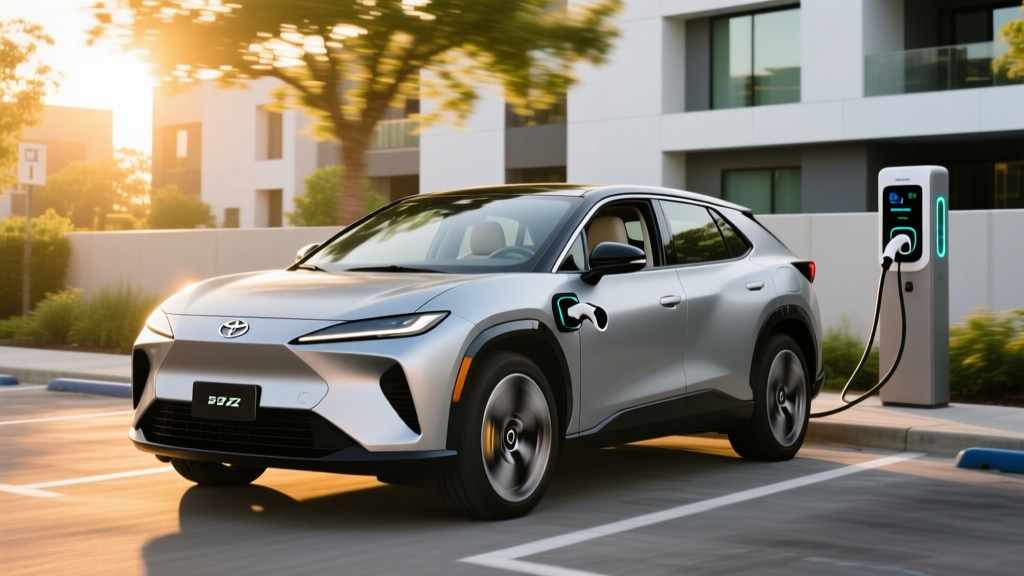
Toyota's primary all-electric offering in the U.S. is the bZ4X, a compact electric SUV starting at approximately $38,465 (2026 XLE FWD). It delivers an EPA-estimated 252 miles of range, a 71.4 kWh lithium-ion battery, and DC fast charging up to 150 kW. Toyota also offers the bZ4X Touring (AWD, ~$43,215) with 228 miles of EPA range. As of early 2026, the bZ4X FWD may qualify for a partial or full §30D federal tax credit depending on battery-sourcing compliance, buyer income, and point-of-sale transfer rules — but eligibility is not guaranteed and must be verified at purchase. Toyota's broader electrified lineup heavily emphasizes hybrids and PHEVs, so buyers comparing "Toyota EV offers" should understand that the bZ4X is currently Toyota's only mass-market BEV in the U.S.
The 2026 Toyota bZ4X: Range, Battery, and Charging Specs
Before evaluating any Toyota EV offer, you need the hard numbers. The bZ4X rides on Toyota's e-TNGA platform and comes in two main configurations for 2026:
| Spec | XLE FWD | XLE AWD | Touring AWD |
|---|---|---|---|
| Base MSRP | ~$38,465 | ~$41,015 | ~$43,215 |
| EPA Range | 252 mi | 236 mi | 228 mi |
| Battery (usable) | 71.4 kWh | 71.4 kWh | 71.4 kWh |
| Battery Chemistry | NMC (nickel manganese cobalt) | NMC | NMC |
| Motor Output | 201 hp / 196 lb-ft | 214 hp / 248 lb-ft | 214 hp / 248 lb-ft |
| 0-60 mph | ~7.1 sec | ~5.8 sec | ~5.8 sec |
| Max DC Charge Rate | 150 kW | 150 kW | 150 kW |
| 10-80% DC Fast Charge | ~32 min | ~32 min | ~32 min |
| Level 2 (240V) Rate | 7.2 kW | 7.2 kW | 7.2 kW |
| Level 2 Full Charge | ~9.5 hrs | ~9.5 hrs | ~9.5 hrs |
| MPGe (Combined) | 119 MPGe | 112 MPGe | 109 MPGe |
| Battery Warranty | 8 yr / 100,000 mi | 8 yr / 100,000 mi | 8 yr / 100,000 mi |
Source: EPA fueleconomy.gov, Toyota Motor Corporation 2026 spec sheets.
Real-World Range vs. EPA Sticker
The EPA rates the FWD bZ4X at 252 miles, but real-world results vary significantly:
- Highway driving (70+ mph): Expect ~210–225 miles. The bZ4X's aerodynamic profile and single-speed reduction gear mean efficiency drops noticeably above 65 mph.
- Cold weather (below 32°F): Range can fall to 170–195 miles. NMC chemistry loses roughly 20–30% capacity in freezing temperatures, and the bZ4X's heat pump (standard on AWD, optional on FWD) mitigates but doesn't eliminate this loss.
- City/mixed driving (moderate climate): You'll get close to the EPA figure — roughly 240–255 miles — thanks to regenerative braking recapturing energy in stop-and-go traffic.
For context, the Hyundai Ioniq 5 (318 mi EPA) and Tesla Model Y (320 mi EPA) outpace the bZ4X on range by a substantial margin at similar price points.
How the bZ4X Compares to Toyota's Gas and Hybrid Alternatives
Toyota's reputation rests on hybrids, not BEVs. If you're evaluating Toyota EV offers, it's worth understanding what you're trading. Here's a direct comparison with two popular Toyota alternatives:
| Metric | bZ4X XLE FWD | RAV4 LE (Gas) | RAV4 Prime SE (PHEV) |
|---|---|---|---|
| Base MSRP | $38,465 | $31,425 | $44,515 |
| Fed. Tax Credit (§30D) | Up to $7,500* | $0 | Up to $7,500* |
| Effective Price (after max credit) | ~$30,965 | $31,425 | ~$37,015 |
| EPA Range / Economy | 252 mi / 119 MPGe | 30 MPG combined | 42 mi EV + 38 MPG gas |
| Fuel/Energy Cost per Mile† | ~$0.045 | ~$0.115 | ~$0.06 (blended) |
| Annual Fuel Cost (12,000 mi) | ~$540 | ~$1,380 | ~$720 |
| Maintenance (annual est.) | ~$200 | ~$550 | ~$400 |
| 0-60 mph | 7.1 sec | 8.8 sec | 5.7 sec |
* §30D credit eligibility depends on battery-sourcing compliance, buyer income caps ($150K single / $300K joint MAGI), and MSRP limits ($80K SUVs). Verify current-year rules at IRS.gov.
† Based on $0.15/kWh national avg electricity, $3.45/gal gas. Your rates vary.
The math is revealing: with the full $7,500 point-of-sale credit, the bZ4X undercuts the gas RAV4 on effective purchase price and saves roughly $840/year in fuel and maintenance. But the RAV4 Prime PHEV offers 42 miles of electric-only range — enough for most commutes — with zero range anxiety on road trips. For buyers without home charging access, the PHEV may be the more practical Toyota electrified option.
Charging the bZ4X: Home Setup, Public Networks, and Real Costs
The bZ4X's charging profile is one area where Toyota's conservative approach shows. The 150 kW peak DC rate is slower than competitors like the Ioniq 5 (240 kW) or the Tesla Model Y (~250 kW on V3 Superchargers). Here's what that means in practice:
| Charging Level | Power | Miles Added per Hour | Typical Use Case |
|---|---|---|---|
| Level 1 (120V) | ~1.2 kW | ~4 mi/hr | Emergency / trickle top-off |
| Level 2 (240V, 32A) | 7.2 kW | ~25 mi/hr | Home overnight charging |
| DC Fast (peak) | 150 kW | ~180 mi/hr (at peak) | Road trips, 10-80% in ~32 min |
Home Charging Installation Costs
Most bZ4X owners will want a Level 2 home charger. Here's a realistic cost breakdown:
| Item | Low End | High End |
|---|---|---|
| Level 2 EVSE (hardware) | $350 | $700 |
| Electrician labor (240V/50A circuit) | $600 | $1,800 |
| Permit & inspection | $50 | $250 |
| Panel upgrade (if needed, 200A) | $1,500 | $3,500 |
| Total (no panel upgrade) | $1,000 | $2,750 |
| Total (with panel upgrade) | $2,500 | $6,250 |
The bZ4X uses the J1772 connector for Level 1 and Level 2 AC charging. For DC fast charging, 2026 models come equipped with CCS1 (Combined Charging System). Toyota has announced plans to transition future models to NACS (Tesla's connector), and adapters are available for accessing the Tesla Supercharger network — though charge speeds may be limited by adapter throughput.
Charging Cost vs. Gasoline
At the national average residential electricity rate of ~$0.15/kWh, fully charging the bZ4X's 71.4 kWh battery from 10% to 100% costs approximately $9.70. That's for 225+ real-world miles — equivalent to about $0.043 per mile. A gas RAV4 at 30 MPG and $3.45/gallon costs $0.115 per mile. Over 12,000 miles per year, that's a savings of roughly $864 in energy costs alone.
Public DC fast charging is more expensive — typically $0.35–$0.50/kWh at networks like Electrify America or EVgo. A 10–80% DC session (~50 kWh) would cost $17.50–$25.00, which is still cheaper than the equivalent gasoline but erodes the home-charging advantage.
Federal Tax Credit Eligibility for the bZ4X
The §30D Clean Vehicle Credit can reduce the bZ4X's effective price by up to $7,500, but qualification is not automatic. Here's the current checklist:
- MSRP cap: The bZ4X (classified as an SUV) must be under $80,000 — all trims qualify easily.
- Buyer income cap: Modified AGI must not exceed $150,000 (single), $225,000 (head of household), or $300,000 (joint). Your dealer verifies at point of sale.
- Battery sourcing: At least a percentage of critical minerals and battery components must be sourced from the U.S. or FTA partners. This threshold increases annually. The bZ4X's battery supply chain has been a moving target — confirm current-year compliance with your dealer or at fueleconomy.gov.
- Point-of-sale transfer: As of 2024+, you can transfer the credit to the dealer at purchase, reducing your out-of-pocket cost immediately rather than waiting for tax filing.
- Final assembly: Must occur in North America. The bZ4X is assembled in Japan, which has been a disqualifying factor for the full credit in prior years — verify 2026 status carefully.
Critical caveat: Because the bZ4X is manufactured in Japan, its §30D eligibility has been inconsistent. Some model years and configurations have qualified for partial credits under transitional battery-sourcing rules, while others have not. Always confirm the exact credit amount on the IRS qualified vehicle list before finalizing your purchase. Do not assume $7,500.
5-Year Ownership Cost Breakdown: bZ4X vs. Gas RAV4
| Cost Category | bZ4X XLE FWD | RAV4 LE (Gas) |
|---|---|---|
| Purchase Price (MSRP) | $38,465 | $31,425 |
| Federal Tax Credit (§30D, est.) | –$3,750 (partial)* | $0 |
| Effective Purchase Price | $34,715 | $31,425 |
| Home Charger Install | $1,800 | $0 |
| Energy/Fuel (5 years) | $2,700 | $6,900 |
| Maintenance (5 years) | $1,000 | $2,750 |
| Insurance (5 years, avg) | $7,500 | $6,250 |
| Depreciation (est. 5-yr) | $16,000 | $13,500 |
| Total 5-Year Cost | $63,715 | $60,825 |
* Partial credit assumed due to Japan assembly and evolving battery-sourcing rules. Confirm with dealer.
The bZ4X's energy and maintenance savings are real — roughly $5,950 over five years — but they're offset by higher insurance premiums (~$250/year more on average for EVs), home charging installation, and steeper depreciation. The gap narrows to about $2,890 over five years, or roughly $48/month. If you qualify for the full $7,500 credit, the bZ4X actually comes out ahead by ~$860.
Common Misconceptions About Toyota EV Offers
| Myth | Fact |
|---|---|
| "Toyota doesn't make EVs" | Toyota sells the bZ4X in the U.S. and has committed to a full BEV lineup by 2028–2030, including a next-gen electric truck and multiple SUVs. |
| "The bZ4X qualifies for the full $7,500 tax credit" | Not guaranteed. Japan assembly and battery-sourcing rules have limited eligibility. Always verify on the IRS qualified vehicle list before buying. |
| "EV batteries need replacing every few years" | The bZ4X's NMC battery is warrantied for 8 years/100,000 miles with a capacity retention threshold of 70%. Real-world degradation data from similar NMC packs suggests ~10–15% loss over 150,000 miles. |
| "You can't road-trip an EV" | You can, but the bZ4X's 150 kW peak charge rate and ~32-minute 10–80% time means longer stops than a Tesla Model Y (~18 min). Plan accordingly on long routes. |
| "EVs cost more to insure" | Generally true — EV insurance averages 15–25% higher than equivalent gas vehicles due to repair complexity and battery replacement costs. Shop quotes before buying. |
Decision Framework: Is the bZ4X the Right Toyota EV for You?
Choose the bZ4X if:
- You want a Toyota-badged BEV with a strong dealer service network and an 8-year/100,000-mile battery warranty.
- Your daily commute is under 100 miles round-trip and you have home Level 2 charging access.
- You live in a moderate climate where cold-weather range loss is manageable (252 EPA miles is workable; 180 miles in January in Minnesota is less so).
- You value Toyota Safety Sense 3.0 (standard adaptive cruise, lane-keeping, automatic emergency braking) and want familiar Toyota infotainment.
Choose a Toyota Hybrid or PHEV Instead if:
- You lack reliable home or workplace charging — public-only charging erodes cost savings and adds inconvenience.
- You frequently drive 300+ miles in a single day — the bZ4X's real-world range and 32-minute charge stops make this tedious compared to the RAV4 Prime's 600+ mile total range.
- You live in extreme cold climates — consider the RAV4 Prime PHEV (42 mi EV range + gas backup) as a bridge solution.
- You need maximum range per dollar — the Hyundai Ioniq 5, Tesla Model Y, and Chevrolet Equinox EV all offer 300+ EPA miles at comparable or lower prices.
Wait for Future Toyota EVs if:
- You're interested in Toyota's announced next-gen BEV platform (expected 2027+), which promises improved energy density, faster charging, and potentially U.S. assembly — improving tax credit eligibility.
- You need a three-row electric SUV or an electric truck — Toyota has announced these are coming but has not released production models as of early 2026.
Frequently Asked Questions
Does Toyota offer any fully electric vehicles besides the bZ4X?
As of 2026, the bZ4X is Toyota's only mass-market BEV sold in the United States. Toyota has announced plans for a broader BEV lineup — including a compact SUV, a sedan, and eventually an electric pickup — but none are currently available for purchase. Internationally, Toyota sells the bZ3 sedan in China, but it is not imported to the U.S.
Is the Toyota bZ4X eligible for the $7,500 federal tax credit in 2026?
Possibly, but not guaranteed. The bZ4X is assembled in Motomachi, Japan, and §30D requires North American final assembly for the full credit. Transitional battery-sourcing rules have allowed partial credits for some foreign-assembled vehicles in prior years. Always check the current IRS qualified vehicle list at IRS.gov and confirm with your dealer before signing a purchase agreement.
How does the bZ4X's charging speed compare to competitors?
The bZ4X peaks at 150 kW on DC fast charging, achieving a 10–80% charge in approximately 32 minutes. For comparison: the Hyundai Ioniq 5 peaks at ~240 kW (10–80% in ~18 minutes), the Tesla Model Y at ~250 kW (~15–18 minutes on V3 Superchargers), and the Ford Mustang Mach-E at ~150 kW (~30 minutes). The bZ4X's charge curve also tapers significantly above 80% SoC, so charging to 100% on DC adds considerable time.
What is the real-world range of the Toyota bZ4X?
The EPA rates the FWD model at 252 miles and the AWD at 228–236 miles. In real-world highway driving at 70+ mph, expect 210–225 miles from the FWD. In freezing temperatures, range drops to approximately 170–195 miles due to NMC chemistry losses and cabin heating demands. City driving in moderate temperatures will get you closest to the EPA sticker.
Should I buy the bZ4X or the RAV4 Prime PHEV?
If you have home charging and drive under 42 miles daily, the RAV4 Prime lets you commute on electricity while retaining unlimited gas range for road trips — with no charging-desert risk. If you want zero tailpipe emissions and lower per-mile operating costs, and you can accommodate the bZ4X's range and charging limitations, the BEV saves more over time. The decision largely comes down to your daily mileage, charging access, and road-trip frequency.
What does it cost to replace the bZ4X battery?
Full battery pack replacement for the bZ4X is estimated at $12,000–$18,000 out of warranty, based on current NMC pack pricing for ~70 kWh systems. However, battery failures within the 8-year/100,000-mile warranty period are covered if capacity falls below 70%. Most NMC packs retain 85–90% capacity at 100,000 miles based on industry degradation data, making out-of-pocket replacement unlikely for most first owners.