Quick Answer: Are Toyota EV Cars Worth Buying in 2026?
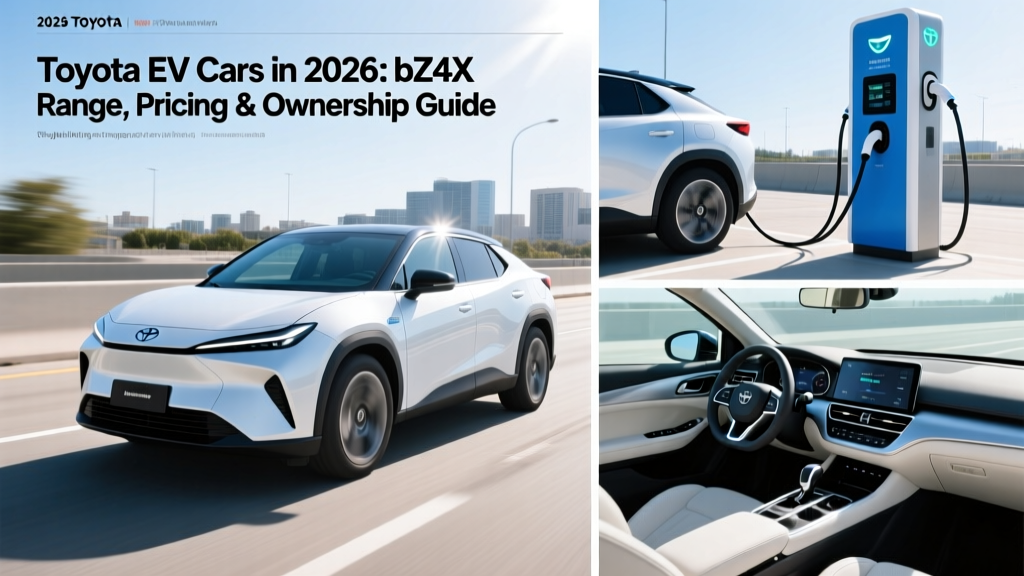
Toyota's primary battery-electric offering is the bZ4X, a compact SUV with 252 miles of EPA range (FWD), a 71.4 kWh battery, and starting at $37,070 MSRP for 2026. It's a practical entry point for Toyota loyalists transitioning to electric, but it faces stiff competition from the Hyundai Ioniq 5 (303 mi), Tesla Model Y (320 mi), and even Toyota's own hybrids like the RAV4 Prime PHEV (42 mi electric-only, 38 mpg combined). If you want a no-compromise EV with class-leading range and charging speed, look elsewhere. If you want Toyota reliability, a strong dealer network, and a competitive price after incentives, the bZ4X earns a spot on your shortlist.
Toyota's EV Lineup: The bZ4X Explained
Toyota has been cautious with full battery-electric vehicles (BEVs), investing heavily in hybrids and plug-in hybrids instead. As of 2026, the bZ4X remains Toyota's only widely available dedicated EV in the U.S. market. A larger, three-row bZ5X has been announced for late 2026/early 2027 but is not yet available for purchase. Toyota also sells the GR Supra-based electric concept and has showcased solid-state battery prototypes, but these remain future products.
The bZ4X is built on Toyota's e-TNGA platform, co-developed with Subaru (which sells it as the Solterra). It comes in two drivetrain configurations:
- FWD (XLE trim): 201 hp, 252 mi EPA range, 120 MPGe combined
- AWD (XLE/Limited): 214 hp, 228 mi EPA range, 104 MPGe combined
| Spec | FWD (XLE) | AWD (XLE/Limited) |
|---|---|---|
| EPA Range | 252 mi | 228 mi |
| Battery (usable) | 71.4 kWh (NMC) | 71.4 kWh (NMC) |
| Horsepower | 201 hp | 214 hp |
| 0-60 mph | ~7.1 sec | ~6.5 sec |
| Max DC Fast Charge | 150 kW | 150 kW |
| 10-80% DC Charge Time | ~30 min | ~30 min |
| Level 2 Charge Rate | 7.2 kW | 7.2 kW |
| MPGe (combined) | 120 MPGe | 104 MPGe |
| Base MSRP | $37,070 | $40,070 |
| Battery Warranty | 8 yr / 100,000 mi | 8 yr / 100,000 mi |
Real-World Range vs. EPA Sticker
The EPA rates the FWD bZ4X at 252 miles, but real-world results vary significantly:
- Moderate highway (65-70 mph, 70°F): ~220-235 mi
- Cold weather (30°F, highway): ~175-195 mi (25-30% loss typical for NMC without a heat pump in early model years; 2025+ models added a standard heat pump, improving cold performance to ~20-25% loss)
- City/suburban mixed driving: ~240-255 mi (regen braking helps recover energy)
For daily commuting under 60 miles round-trip, the bZ4X covers most needs with substantial buffer. Road-trippers should plan charging stops at roughly the 180-mile mark in winter conditions.
Charging: What to Expect at Home and on the Road
The bZ4X uses a CCS1 connector for DC fast charging and a J1772 connector for Level 2 AC charging. Toyota includes a dual-voltage mobile charger (Level 1 at 120V / Level 2 at 240V) with the vehicle, though the Level 2 cord requires a NEMA 14-50 outlet.
| Level | Power | Miles Added per Hour | Typical Use Case |
|---|---|---|---|
| Level 1 (120V) | ~1.2 kW | ~4-5 mi/hr | Overnight trickle; emergency |
| Level 2 (240V, 32A) | 7.2 kW | ~25-28 mi/hr | Home/work daily charging |
| DC Fast Charge | 150 kW peak | ~150+ mi in 15 min | Road trips |
Charging curve reality: The bZ4X peaks at 150 kW only between roughly 10-40% state of charge. From 40-80%, the rate tapers to 80-100 kW, and above 80% it drops sharply to protect the battery. A full 10-80% session takes approximately 30 minutes at a properly rated 150+ kW charger. This is slower than the Hyundai Ioniq 5 (800V architecture, 10-80% in ~18 min) or Tesla Model Y (~250 kW peak, ~25 min 10-80%).
For home Level 2 installation, budget $800-$2,200 total (charger hardware: $350-$650, electrician labor and permit: $450-$1,550). If your home's electrical panel needs a 200A upgrade, add $1,500-$3,000. Always get a licensed electrician's assessment before committing.
Toyota EV vs. Toyota Hybrid: The Cost and Practicality Comparison
Many Toyota buyers cross-shop the bZ4X against the RAV4 Hybrid and RAV4 Prime PHEV. Here's how they stack up financially and practically:
| Metric | bZ4X (FWD) | RAV4 Hybrid (AWD) | RAV4 Prime (PHEV) |
|---|---|---|---|
| Base MSRP | $37,070 | $33,575 | $44,475 |
| Fed. Tax Credit (§30D) | Up to $7,500* | $0 | Up to $7,500* |
| Effective Price (after credit) | ~$29,570 | $33,575 | ~$36,975 |
| EPA Range / MPG | 252 mi / 120 MPGe | 40 mpg combined | 42 mi EV + 38 mpg |
| Fuel/Energy Cost per Mile** | ~$0.045 | ~$0.10 | ~$0.06 (mixed) |
| Annual Fuel/Energy (12k mi) | ~$540 | ~$1,200 | ~$720 |
| Maintenance (annual est.) | ~$200 | ~$450 | ~$400 |
* §30D credit eligibility depends on MSRP caps, buyer income limits, battery sourcing, and critical minerals requirements. Check IRS.gov §30D rules and consult a tax professional. Point-of-sale transfer available at participating dealers.
** Based on $0.15/kWh national avg electricity and $3.20/gal gas. Your local rates may vary substantially.
The bottom line: After the federal tax credit, the bZ4X can actually undercut the RAV4 Hybrid in effective purchase price while costing roughly $660 less per year to fuel and maintain. The RAV4 Prime PHEV offers the best of both worlds — 42 miles of electric commuting plus a gas engine for road trips — but at a higher starting price. If you have reliable home charging and drive under 200 miles daily, the bZ4X is the cost winner. If you road-trip frequently or lack home charging access, the RAV4 Prime's flexibility is hard to beat.
Real Ownership Costs: 5-Year Breakdown
| Category | bZ4X (FWD) | RAV4 Hybrid |
|---|---|---|
| Purchase (after credit) | $29,570 | $33,575 |
| Energy/Fuel (5 years) | $2,700 | $6,000 |
| Maintenance (5 years) | $1,000 | $2,250 |
| Insurance (5 years, avg) | $7,500 | $6,250 |
| Home Charger Install | $1,500 | $0 |
| Estimated Depreciation | $12,000 | $10,500 |
| 5-Year Total | ~$54,270 | ~$58,575 |
EV insurance premiums remain 15-25% higher than equivalent gas vehicles due to repair costs and battery replacement risk. The bZ4X's depreciation curve is still establishing itself — early data from Kelley Blue Book suggests EVs in this segment retain 45-55% of value after 5 years, slightly below Toyota's hybrid reputation for strong resale.
Common Misconceptions About Toyota EV Cars
| Myth | Fact |
|---|---|
| "The battery will need replacing in a few years and cost $20,000." | The 71.4 kWh NMC battery is warranted for 8 years/100,000 miles at 70% capacity retention. Real-world degradation data from early 2023-2024 models shows ~5-8% loss over the first 2 years. Full replacement (rare) runs $12,000-$16,000 at current dealer pricing. |
| "Toyota doesn't believe in EVs." | Toyota's multi-pathway strategy includes BEVs, PHEVs, HEVs, and hydrogen. They've committed $70 billion to electrification and plan 30 BEV models globally by 2030. The cautious U.S. rollout reflects market-readiness assessment, not rejection of the technology. |
| "You can't road-trip in a bZ4X." | You can, with planning. CCS1 fast-charging access is widespread via Electrify America, EVgo, and ChargePoint networks. Expect 30-minute charging stops every ~180-200 highway miles. It's slower than Tesla's Supercharger ecosystem but entirely feasible. |
| "The bZ4X qualifies for the full $7,500 tax credit for everyone." | Eligibility depends on buyer AGI ($150k single / $300k joint), MSRP cap ($80k SUVs), and battery sourcing requirements that shift annually. Always verify current-year rules on IRS.gov before purchasing. |
Decision Framework: Should You Buy a Toyota EV?
Choose the Toyota bZ4X if:
- You have Level 2 home charging access (garage or driveway with 240V capability)
- Your daily driving is under 150 miles round-trip
- You qualify for the §30D federal tax credit (income and sourcing rules met)
- You value Toyota's dealer network and want a familiar brand for service
- You prefer a conventional SUV layout over futuristic EV styling
- You want AWD availability for snow/rain climates (AWD trim)
Look elsewhere if:
- You need 300+ miles of range — consider the Tesla Model Y, Hyundai Ioniq 5, or Chevrolet Equinox EV
- You take frequent 400+ mile road trips and want the fastest possible charging — Tesla's Supercharger network and 250 kW speeds still lead
- You have no home charging access and your area has sparse public CCS infrastructure
- You need three rows of seating — wait for the announced bZ5X or consider the Kia EV9
- You want a plug-in hybrid for maximum flexibility — the RAV4 Prime offers 42 mi EV + gas backup with zero range anxiety
First-Time EV Buyer Checklist
If the bZ4X is your first electric vehicle, prepare for these ownership realities:
- Home charging setup: Get an electrician quote for a NEMA 14-50 outlet or hardwired Level 2 charger (e.g., ChargePoint Home Flex, Emporia Level 2) before delivery day. Budget $800-$2,200.
- Download charging apps: PlugShare, Electrify America, EVgo, and ChargePoint are essential for finding public chargers on road trips. Pre-register and add a payment method.
- Learn preconditioning: The bZ4X can precondition its battery before DC fast charging (set a navigation destination to a charger). This warms the battery and enables faster charge rates, especially in cold weather.
- Understand the charge curve: Charging from 80-100% takes nearly as long as 10-80%. For road trips, charge to 80% and go — it's faster overall.
- Adjust your driving: One-pedal driving (strong regen) reduces brake wear significantly. The bZ4X's regen isn't as aggressive as a Tesla or Nissan Leaf, so expect a brief adaptation period.
- Insurance: Get quotes before buying. EV insurance averages 15-25% higher than gas equivalents. Shop multiple carriers — some now offer EV-specific discounts.
Frequently Asked Questions
Does the Toyota bZ4X qualify for the $7,500 federal tax credit in 2026?
It may, depending on your income, the vehicle's battery sourcing compliance, and current-year critical mineral requirements. The bZ4X's MSRP is under the $80,000 SUV cap, and buyer income must not exceed $150,000 (single) or $300,000 (joint). Battery sourcing rules tighten annually — verify eligibility at the point of sale with your dealer and cross-check IRS §30D guidance. The credit can be transferred to the dealer as a point-of-sale discount.
How does the bZ4X compare to the Subaru Solterra?
The Solterra is mechanically identical — same e-TNGA platform, same 71.4 kWh battery, same range figures. Differences are cosmetic (styling, badging) and in standard equipment. Subaru typically includes AWD as standard on more trims and adds X-MODE for light off-road traction. Compare dealer pricing in your area; whichever is cheaper after incentives is the rational choice.
What happens if the battery degrades significantly?
Toyota's battery warranty covers capacity below 70% for 8 years or 100,000 miles. If degradation triggers a warranty claim, Toyota will repair or replace modules to bring capacity above the threshold. Full battery replacement out of warranty currently costs approximately $12,000-$16,000 including labor at Toyota dealerships, though prices are expected to decline as the supply chain matures.
Is the bZ4X good in cold weather?
2025 and later model years include a standard heat pump, which significantly improves cold-weather efficiency compared to the 2023-2024 models (which used resistive heating). Expect 20-25% range loss at freezing temperatures with the heat pump — roughly 190-200 miles from the FWD model in winter highway driving. Preconditioning while plugged in helps preserve range.
Can I tow with the Toyota bZ4X?
The bZ4X is not rated for towing in the U.S. market. If towing capacity is a priority, consider the Ford Mustang Mach-E (up to 1,500 lb with the right equipment) or the Hyundai Ioniq 5 (up to 2,300 lb), or wait for larger Toyota EV platforms.