Quick Answer: Are Electric Toyota Cars Worth Buying?
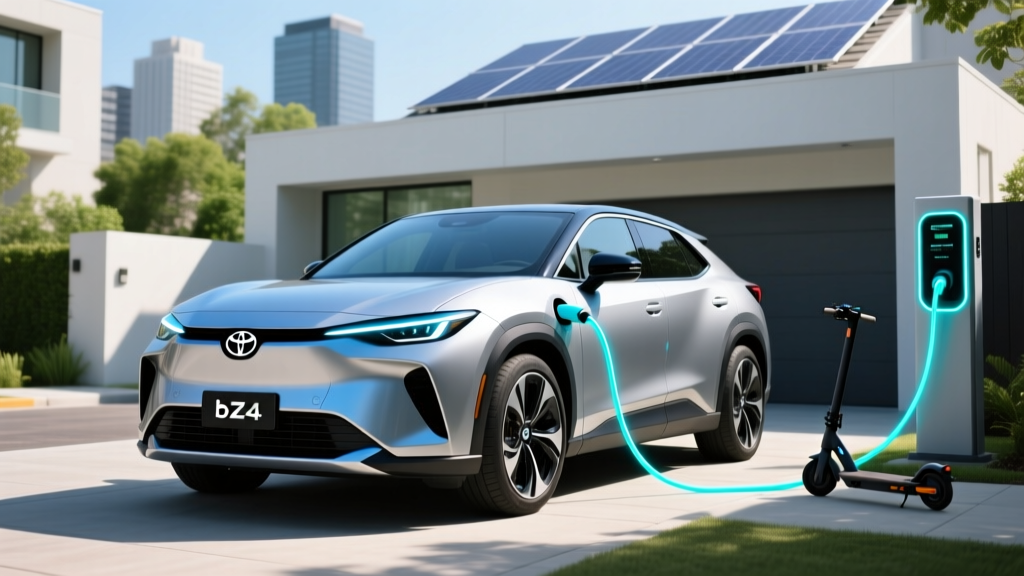
Toyota's current fully electric offering is the bZ4X, a compact crossover SUV with an EPA-estimated range of up to 252 miles (FWD XLE), a starting MSRP around $38,465, and eligibility for up to $7,500 in federal tax credits (subject to IRS §30D income, MSRP, and battery-sourcing rules). It charges at up to 150 kW DC fast charging, reaching 10–80% in approximately 30 minutes. For buyers prioritizing Toyota reliability and a dealer network, the bZ4X is a solid entry point — but its range and charging speed trail rivals like the Hyundai Ioniq 5 and Tesla Model Y. Toyota's broader electrified lineup (Prius, RAV4 Hybrid/PHEV, Camry Hybrid) remains a stronger fit for buyers who lack home charging or drive in extreme cold.
Toyota's Electric Car Lineup: What's Available Now
As of the 2026 model year, Toyota sells one dedicated battery-electric vehicle (BEV) in the United States: the bZ4X. The "bZ" (beyond Zero) sub-brand was announced with plans for multiple models, but the bZ4X remains the sole production EV on dealer lots. Toyota has also announced a next-generation EV platform (expected late 2026 or 2027), but specs and availability are preliminary and not yet purchasable.
Toyota's electrified strategy has heavily favored hybrids and plug-in hybrids. The 2026 Prius, RAV4 Hybrid, RAV4 Prime (PHEV), Camry Hybrid, and Highlander Hybrid all offer strong efficiency without requiring charging infrastructure. This matters for buyers weighing whether to go fully electric or stick with a hybrid — a decision we'll break down with hard numbers below.
bZ4X Specs: Range, Battery, Charging & Performance
Here's what the 2026 bZ4X delivers on paper and in practice:
| Specification | bZ4X XLE FWD | bZ4X Limited AWD |
|---|---|---|
| EPA Range | 252 miles | 222 miles |
| Battery Capacity (usable) | ~64 kWh (NMC) | ~64 kWh (NMC) |
| Max DC Fast Charge Rate | 150 kW | 150 kW |
| 10–80% DC Fast Charge Time | ~30 minutes | ~30 minutes |
| Level 2 AC Charging (240V) | ~6.6 kW (~9 hours full) | ~6.6 kW (~9 hours full) |
| Horsepower | 201 hp | 214 hp |
| 0–60 mph | ~7.1 seconds | ~6.5 seconds |
| EPA Combined MPGe | 119 MPGe | 104 MPGe |
| Starting MSRP | ~$38,465 | ~$43,900 |
| Battery Warranty | 8 years / 100,000 miles | 8 years / 100,000 miles |
Real-World Range vs. EPA Sticker
The EPA's 252-mile rating for the FWD bZ4X assumes a mix of city and highway driving at moderate temperatures. In real-world conditions:
- Highway-only at 70 mph: Expect ~210–225 miles. The bZ4X's boxy shape and lack of an active aero package hurt efficiency at sustained speed.
- Cold weather (below 32°F): Range drops 20–30%, meaning a usable 175–200 miles. Toyota's heat pump (standard on AWD trims) mitigates some loss but not all.
- City/mixed driving in mild weather: Most owners report 235–255 miles, closely matching the EPA figure.
The 222-mile AWD Limited trim will see proportionally lower real-world numbers. For road trips exceeding 200 miles, plan at least one DC fast-charge stop.
Charging the bZ4X: Speeds, Connectors & Infrastructure
The bZ4X uses a CCS1 (Combined Charging System) connector for DC fast charging and a J1772 connector for Level 1/Level 2 AC charging. It does not natively support Tesla's NACS connector, though adapters are available for Supercharger access on some networks.
| Charging Level | Power | Miles of Range Added per Hour | Best Use Case |
|---|---|---|---|
| Level 1 (120V household) | ~1.2 kW | ~3–4 miles | Overnight top-ups, emergencies |
| Level 2 (240V home/public) | ~6.6 kW | ~22–25 miles | Daily home charging, workplace |
| DC Fast Charging | Up to 150 kW | ~150+ miles in 30 min | Road trips, highway corridors |
Charging curve reality: The bZ4X peaks at 150 kW only between roughly 10–30% state of charge. Above 50%, the charge rate tapers significantly — often dropping below 60 kW past 70%. This means the 10–80% time of ~30 minutes is realistic, but charging from 80–100% can take an additional 25–30 minutes. Plan road-trip stops to charge only to 80% for efficiency.
Home charging setup: A Level 2 home charger (such as a ChargePoint Home Flex or Emporia Vue) on a 40-amp circuit delivers the full 6.6 kW, replenishing the battery from empty in about 9 hours. Installation costs typically run $500–$1,800 depending on panel proximity, conduit length, and whether your electrical panel needs an upgrade to 200 amps. Always get a quote from a licensed electrician before purchasing equipment.
bZ4X vs. Gas & Hybrid: Cost of Ownership Comparison
How does the bZ4X stack up against Toyota's own gas and hybrid models over five years? Let's compare the bZ4X XLE FWD against the RAV4 Hybrid XLE and the RAV4 LE (gas), assuming 15,000 miles/year, $0.14/kWh electricity, and $3.50/gallon gasoline.
| Cost Category (5 Years) | bZ4X XLE FWD (EV) | RAV4 Hybrid XLE | RAV4 LE (Gas) |
|---|---|---|---|
| Purchase Price (MSRP) | $38,465 | $33,525 | $30,425 |
| Federal Tax Credit (§30D) | Up to -$7,500* | $0 | $0 |
| Effective Purchase Price | ~$30,965* | $33,525 | $30,425 |
| Fuel/Energy (75,000 mi) | ~$3,570 | ~$6,563 | ~$9,188 |
| Maintenance (5 yr) | ~$1,200 | ~$2,800 | ~$3,200 |
| Insurance (est. 5 yr) | ~$9,500 | ~$7,800 | ~$7,200 |
| Estimated 5-Year Total | ~$45,235 | ~$50,688 | ~$50,013 |
*Tax credit eligibility depends on buyer income (≤$150K single / ≤$300K joint), vehicle MSRP (≤$80K SUVs), and battery component/critical-mineral sourcing per IRS §30D rules. Point-of-sale transfer available at participating dealers. Verify eligibility with a tax professional.
Key takeaways:
- The bZ4X's effective purchase price — after the federal credit — can undercut the RAV4 Hybrid, making the EV the cheaper option at acquisition if you qualify.
- Fuel savings are substantial: roughly $5,600 less than the gas RAV4 and $3,000 less than the hybrid over 75,000 miles.
- Maintenance savings come from no oil changes, no transmission fluid, fewer brake replacements (regenerative braking preserves pads), and no spark plugs.
- Insurance costs run 15–25% higher for EVs on average, partially offsetting fuel savings. Get quotes before committing.
Federal Tax Credits & Incentives for Toyota Electric Cars
The bZ4X may qualify for the full $7,500 federal tax credit under §30D, but eligibility is not automatic. Here's the checklist:
- Buyer income cap: Adjusted gross income ≤ $150,000 (single), ≤ $225,000 (head of household), ≤ $300,000 (joint filers)
- Vehicle MSRP cap: ≤ $80,000 for SUVs (the bZ4X qualifies at all trims)
- Battery sourcing: Required percentages of critical minerals and battery components must be sourced from the U.S. or free-trade-agreement countries (these thresholds increase annually; verify current-year rules at irs.gov)
- Point-of-sale transfer: You can transfer the credit to the dealer at purchase, reducing your out-of-pocket cost immediately rather than waiting for a tax refund
- Final assembly: Vehicle must be assembled in North America (the bZ4X is assembled in Japan — verify current assembly-status on the VIN lookup tool at fueleconomy.gov before purchasing)
Critical note: The North American final-assembly requirement has been a disqualifier for some Toyota EVs in prior years. Always check the DOE's qualifying vehicle list for the specific model year and VIN before relying on the credit.
Who Should Buy a Toyota bZ4X — And Who Shouldn't
The bZ4X is not the longest-range or fastest-charging EV in its segment. It works best for a specific buyer profile:
Decision Framework: Is the bZ4X Right for You?
Choose the bZ4X if:
- You have reliable Level 2 home charging (garage or driveway with 240V access)
- Your daily commute is under 80 miles round-trip
- You value Toyota's dealer network, warranty support, and brand trust
- You qualify for the $7,500 federal tax credit, bringing the effective price below $32,000
- You rarely drive more than 200 miles between stops
Consider a rival EV (Ioniq 5, Model Y, Equinox EV) if:
- You regularly take 300+ mile road trips (faster-charging rivals save 15–20 min per stop)
- You live in a cold climate and need maximum range retention (the Ioniq 5's heat pump and larger 77.4 kWh battery perform better)
- You need NACS native compatibility for seamless Tesla Supercharger access
Choose a Toyota Hybrid (RAV4 Hybrid, Prius, Camry Hybrid) if:
- You live in an apartment or lack home charging access
- You regularly tow (the RAV4 Hybrid tows up to 1,750 lbs; the bZ4X is not rated for towing)
- You drive in extreme cold (-10°F or below) where EV range loss exceeds 30%
- You want the lowest upfront cost with no charging dependency
Common Misconceptions About Electric Toyota Cars
| Myth | Fact |
|---|---|
| "Toyota doesn't make electric cars." | The bZ4X has been on sale since 2023 and continues for the 2026 model year. Toyota also offers several PHEVs (RAV4 Prime, Prius Prime) that drive on electricity alone for 25–44 miles. |
| "EV batteries need replacing every few years." | Toyota warranties the bZ4X battery for 8 years/100,000 miles against capacity loss below 70%. Industry data from Recurrent shows most modern NMC batteries retain 90%+ capacity at 100,000 miles. |
| "Charging takes hours on road trips." | A 10–80% DC fast charge takes ~30 minutes at a 150 kW station — comparable to a meal break. The key is planning stops around 150 kW+ chargers (Electrify America, EVgo) rather than slower 50 kW units. |
| "The bZ4X qualifies for the full $7,500 credit automatically." | Credit eligibility depends on buyer income, battery sourcing compliance, and final assembly location. Always verify via the IRS VIN lookup tool before purchase. |
| "EVs cost more to own than gas cars." | Over 5 years, the bZ4X with the federal credit can cost less than a comparable gas RAV4 when factoring fuel and maintenance savings, though insurance premiums partially offset gains. |
Real-World Ownership: What First-Time EV Buyers Must Know
If you're considering the bZ4X as your first electric car, here are the practical realities no brochure covers:
Home Charging Is Non-Negotiable for Convenience
Public charging works for road trips, but daily EV ownership lives or dies on home charging. A Level 2 charger on a dedicated 40-amp circuit adds ~25 miles of range per hour of charging — enough to fully replenish the bZ4X overnight. If you live in an apartment, condo, or street-parking situation without charging access, a hybrid is a far more practical choice.
Cold Weather Changes Everything
Below freezing, expect to lose 20–30% of your rated range. A 252-mile bZ4X becomes a ~185-mile vehicle in a Minnesota January. Preconditioning the battery while plugged in (using the Toyota app's scheduled departure feature) recovers some efficiency by warming the battery before you drive. If you live in a cold climate, budget for the range hit and consider the AWD trim with its standard heat pump.
Insurance Will Cost More
EV insurance premiums average 15–25% higher than equivalent gas vehicles, driven by higher repair costs for battery packs and specialized bodywork. Get quotes from your current insurer and at least two competitors before purchasing. Some insurers offer EV-specific discounts.
Regenerative Braking Takes Adaptation
The bZ4X offers adjustable regen levels via paddle shifters. At maximum regen, you can approach one-pedal driving in city traffic — lifting off the accelerator slows the car significantly. It takes about a week to build the muscle memory, but most EV owners come to prefer it.
Plan for Charging Deserts
While the U.S. charging network has expanded significantly, rural corridors in the Mountain West, parts of the South, and remote areas still have sparse DC fast-charger coverage. Use apps like PlugShare or A Better Routeplanner to map your regular long-distance routes before buying. If your most common 300-mile trip has no reliable 150 kW+ charger along the way, a hybrid eliminates that risk entirely.
Frequently Asked Questions
Does Toyota make any other fully electric cars besides the bZ4X?
As of 2026, the bZ4X is Toyota's only dedicated BEV sold in the U.S. Toyota has announced plans for a next-generation EV lineup on a new dedicated platform, but those models are not yet available. Toyota also sells plug-in hybrids (RAV4 Prime, Prius Prime) that offer 25–44 miles of electric-only driving before the gas engine engages.
What is the real-world range of the Toyota bZ4X?
The EPA rates the FWD bZ4X at 252 miles and the AWD at 222 miles. In mixed real-world driving at moderate temperatures, most owners report 220–250 miles. Highway-only driving at 70+ mph drops this to ~210–225 miles (FWD), and cold weather below freezing can reduce range to 175–200 miles.
How long does it take to charge the bZ4X at home?
On a Level 2 home charger (240V, 6.6 kW), a full charge from empty takes approximately 9 hours. A typical overnight charge of 8 hours adds roughly 175–200 miles of range — more than enough for most daily commutes. On a standard 120V outlet (Level 1), expect about 3–4 miles per hour of charging, which works only for low-mileage drivers or emergency top-ups.
Is the Toyota bZ4X eligible for the $7,500 federal tax credit?
The bZ4X may qualify for up to $7,500 under IRS §30D, but eligibility depends on several factors: buyer income must be below $150K (single) or $300K (joint), the vehicle must meet battery component and critical-mineral sourcing thresholds, and final assembly requirements must be satisfied. Because the bZ4X has been assembled in Japan, verify current-year assembly and sourcing status via the DOE vehicle lookup before relying on the credit.
How does the bZ4X compare to the Hyundai Ioniq 5 or Tesla Model Y?
The Ioniq 5 offers more range (up to 303 miles EPA), faster charging (up to 240 kW, 10–80% in ~18 minutes on 800V architecture), and NACS compatibility. The Model Y provides up to 320 miles of range, access to Tesla's Supercharger network, and more cargo space. The bZ4X trades off in these areas but may appeal to buyers who prioritize Toyota's brand reputation and dealer service network. Expect to pay less for the bZ4X after incentives than comparably equipped rivals.
What happens if the bZ4X battery degrades?
Toyota's battery warranty covers 8 years or 100,000 miles, guaranteeing at least 70% of original capacity. If the battery falls below that threshold within the warranty period, Toyota will repair or replace it at no cost. Out-of-warranty battery replacement costs are estimated at $8,000–$14,000 depending on labor and parts availability, though industry data suggests most modern EV batteries outlast their vehicles without needing full replacement.