Quick Answer: Is the Toyota bZ4X the Right Electric SUV for You?
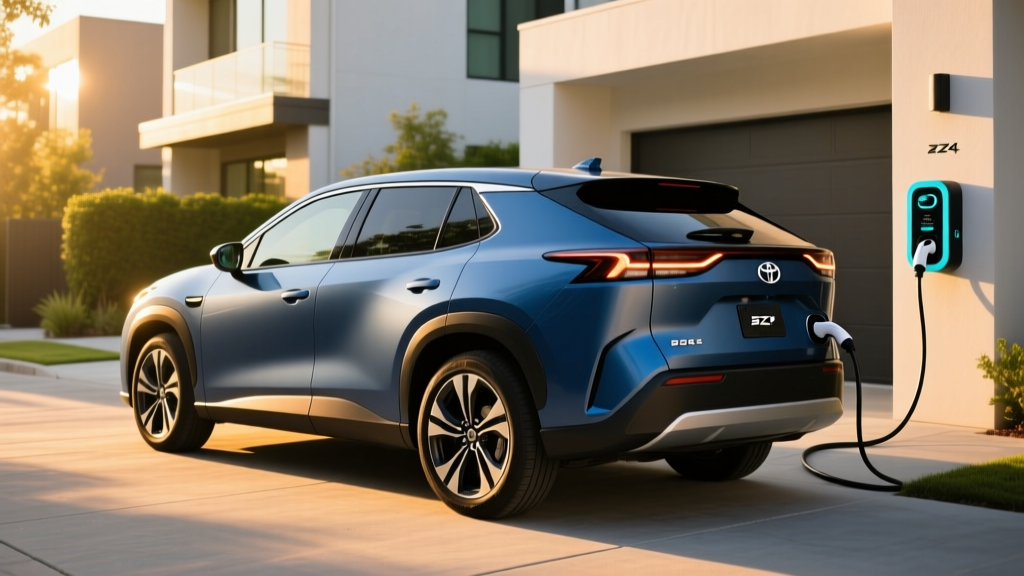
The 2026 Toyota bZ4X is a compact electric SUV starting at $38,465 with an EPA-estimated 252 miles of range (FWD XLE trim) and DC fast charging up to 150 kW. It qualifies for a partial or full §30D federal tax credit depending on battery-sourcing compliance and buyer income. The bZ4X makes sense if you want a mainstream-brand EV with Toyota's reliability reputation, mostly drive under 200 miles daily, and have access to Level 2 home charging. If you regularly road-trip 400+ miles, need over 300 miles of range, or live in extreme cold without a garage, consider the Hyundai Ioniq 5, Tesla Model Y, or a Toyota RAV4 Prime PHEV instead.
2026 Toyota bZ4X: Specs at a Glance
Toyota refreshed the bZ4X for the 2025 model year with a larger battery and faster charging, and those improvements carry into 2026. Here are the exact numbers buyers need:
| Specification | XLE FWD | XLE AWD | Limited FWD | Limited AWD |
|---|---|---|---|---|
| Base MSRP | $38,465 | $40,865 | $43,165 | $45,565 |
| EPA Range | 252 mi | 228 mi | 236 mi | 214 mi |
| Battery (usable) | 71.4 kWh, lithium-ion (NMC chemistry) | |||
| Motor Output | 201 hp / 195 lb-ft | 214 hp / 248 lb-ft (dual motor) | 214 hp / 248 lb-ft | |
| 0–60 mph | ~7.1 sec | ~5.7 sec | ~5.7 sec | |
| Max DC Fast Charge | 150 kW (CCS1 connector) | |||
| 10–80% DCFC Time | ~30 minutes (peak conditions) | |||
| Level 2 Charge Rate | 7.2 kW onboard (~9 hrs 10–100%) | |||
| MPGe (combined) | 114 MPGe | 102 MPGe | 107 MPGe | 98 MPGe |
| Battery Warranty | 8 years / 100,000 miles (70% capacity retention) | |||
Sources: EPA fueleconomy.gov, Toyota bZ4X official specs.
Real-World Range: What to Actually Expect
The EPA sticker says 252 miles for the FWD XLE. In real-world mixed driving, expect 220–240 miles in mild weather. On sustained highway driving at 70–75 mph, plan for 190–210 miles before needing a charger. In freezing temperatures (below 32°F), range drops to roughly 170–195 miles due to battery chemistry limitations and cabin heating load. The AWD Limited with 20-inch wheels and 214 miles EPA is the least efficient trim — highway trips in winter may require a charge stop under 170 miles.
Charging the bZ4X: Home, Public, and What It Costs
Charging speed is where the bZ4X's 150 kW peak rate shows its age against rivals like the Ioniq 5 (240 kW) or Model Y (250 kW). Here's what charging actually looks like across all three levels:
| Charging Level | Power (kW) | Miles Added per Hour | Typical Use Case |
|---|---|---|---|
| Level 1 (120V outlet) | ~1.2 kW | ~4 mi/hr | Emergency / overnight trickle only |
| Level 2 (240V home) | 7.2 kW | ~25 mi/hr | Daily home charging (full overnight) |
| DC Fast Charge | Up to 150 kW | ~150 mi in 30 min | Road trips, public stations |
The Charging Curve Reality
The bZ4X peaks at 150 kW only briefly between roughly 10–30% State of Charge (SoC). From 30–60%, it sustains around 100–120 kW. Above 80%, charging tapers sharply to under 40 kW to protect battery longevity. This means the advertised "10–80% in ~30 minutes" is realistic at a functioning 150+ kW station with a preconditioned battery, but if you arrive at 20% SoC in cold weather without preconditioning, expect 40+ minutes for the same session.
Home Charging Setup Costs
Most bZ4X owners will want a Level 2 home charger. Budget for the following:
| Item | Typical Cost Range |
|---|---|
| Level 2 charger (ChargePoint Home Flex, Emporia, Wallbox) | $350–$700 |
| Electrician (240V/40A circuit install) | $500–$2,000 |
| Electrical panel upgrade (if needed, 100A→200A) | $1,500–$3,500 |
| Permit and inspection | $50–$300 |
| Total (no panel upgrade) | $900–$3,000 |
| Total (with panel upgrade) | $2,400–$6,500 |
A licensed electrician should assess your panel capacity before purchase. The bZ4X's 7.2 kW onboard charger means a 32A circuit is sufficient — you don't need a 48A hardwired unit, which saves on install costs.
bZ4X vs. Gas and Hybrid: The Cost Comparison
Toyota's own RAV4 gas and RAV4 Prime PHEV are the most common cross-shops. Here's how five-year costs compare for 15,000 miles/year:
| Cost Factor (5 Years) | bZ4X XLE FWD | RAV4 LE (Gas) | RAV4 Prime (PHEV) |
|---|---|---|---|
| Base MSRP | $38,465 | $30,090 | $44,590 |
| Fed. Tax Credit (§30D) | Up to $7,500* | $0 | Up to $7,500* |
| Effective Purchase Price | ~$30,965 | $30,090 | ~$37,090 |
| Fuel/Energy (75k mi) | $2,800–$4,200** | $7,800–$9,400 | $3,500–$5,000 |
| Maintenance (5 yr) | ~$1,200 | ~$3,200 | ~$2,600 |
| Insurance (avg 5 yr) | ~$9,500 | ~$7,800 | ~$9,000 |
| Est. 5-Year Total | ~$44,500–$45,900 | ~$48,900–$50,500 | ~$52,200–$53,700 |
* §30D credit eligibility depends on battery critical-mineral sourcing, buyer income caps ($150K single / $300K joint AGI), and MSRP caps ($80K for SUVs). Verify current-year rules at IRS.gov. Consult a tax professional.
** Electricity cost assumes $0.13–$0.18/kWh home charging; public DCFC at $0.35–$0.50/kWh raises the bZ4X fuel cost to the upper range. Gas assumes $3.40–$4.10/gal at 30 MPG combined (RAV4) and 38 MPG combined (Prime gas mode).
The bZ4X breaks even against the gas RAV4 within roughly 3–4 years when the full tax credit applies, primarily through fuel and maintenance savings. The RAV4 Prime wins for buyers who lack reliable home charging or regularly drive in extreme cold, since its 42-mile electric-only range covers most commutes while the gas engine eliminates range anxiety.
Tax Credit Eligibility: What bZ4X Buyers Must Know
The §30D clean vehicle credit can reduce your federal tax liability by up to $7,500, and as of 2024, dealers can apply it as a point-of-sale price reduction. However, eligibility is not guaranteed:
- MSRP Cap: SUVs must have an MSRP at or below $80,000 — all bZ4X trims qualify.
- Buyer Income Cap: Modified AGI must not exceed $150,000 (single), $225,000 (head of household), or $300,000 (married filing jointly).
- Battery Sourcing: The credit splits into two halves — $3,750 for critical-mineral sourcing and $3,750 for battery-component assembly. Sourcing requirements tighten annually. Toyota has worked to shift bZ4X battery supply chains, but the exact credit amount (full $7,500, partial $3,750, or $0) varies by production batch and model year. Confirm with your dealer and cross-check at fueleconomy.gov.
- Point-of-Sale Transfer: You can transfer the credit to the dealer at purchase for an immediate price reduction, even if you have no federal tax liability.
First-Time EV Buyer: What You Need to Know About the bZ4X
| Common Misconception | Fact |
|---|---|
| "252 miles of range means I can drive 252 miles." | Highway driving at 70+ mph, cold weather, and hilly terrain reduce range by 15–30%. Plan trips around ~200 usable miles. |
| "Fast charging is always 30 minutes." | The 10–80% time assumes a preconditioned battery at a 150+ kW charger. Cold batteries, lower-power stations, and high SoC arrival all add time. |
| "EV batteries need replacing every few years." | Toyota warranties the bZ4X battery for 8 years/100,000 miles at 70% capacity retention. Industry data shows most EV batteries retain 85–90% capacity at 100K miles. A full replacement, if ever needed, runs roughly $12,000–$18,000 out of warranty. |
| "I can charge on any 120V outlet and be fine." | Level 1 adds only ~4 miles per hour. A fully depleted battery would take over 60 hours to recharge. Level 2 home charging is practically essential for daily use. |
| "EVs cost more to insure." | Often true. The bZ4X costs roughly 15–25% more to insure than a gas RAV4 due to higher repair costs for battery and structural components. Get quotes before buying. |
ADAS and Driver Assistance
The bZ4X comes standard with Toyota Safety Sense 3.0, which includes adaptive cruise control, lane-keeping assist, automatic emergency braking, and blind-spot monitoring. This is an SAE Level 2 driver-assist system — you must keep your hands on the wheel and eyes on the road at all times. It is not self-driving. Toyota does not currently offer a hands-free highway system comparable to GM's Super Cruise or Ford's BlueCruise on the bZ4X.
⚠ What Toyota Safety Sense 3.0 Does NOT Do
- Does not navigate intersections or stoplights autonomously
- Does not change lanes without driver initiation
- Does not handle construction zones, unmapped roads, or severe weather reliably
- Requires continuous driver supervision — it will issue alerts and slow the vehicle if you disengage
Decision Framework: Should You Buy the bZ4X?
Choose the Toyota bZ4X if:
- You want a mainstream-brand electric SUV with Toyota's dealer network and reliability track record
- Your daily driving is under 150 miles round-trip and you can charge at home overnight
- You qualify for the §30D tax credit, bringing the effective price near $31,000
- You value Toyota Safety Sense and don't need cutting-edge infotainment or hands-free driving
- You live in a moderate climate or have garage parking to mitigate cold-weather range loss
Look Elsewhere if:
- You regularly drive 300+ miles between charges — consider the Tesla Model Y (320 mi) or Hyundai Ioniq 5 (310 mi)
- You need faster DC charging for frequent road trips — the Ioniq 5 charges 10–80% in ~18 min at 240 kW
- You lack home charging access — a RAV4 Prime PHEV (42 mi electric + 520 mi total) is more practical
- You live in extreme cold (sustained sub-20°F) without a garage — expect under 170 miles of range in winter
- You want the latest tech cockpit — the bZ4X infotainment is functional but trails Tesla, Hyundai, and GM
Pros and Cons Summary
Pros
- Competitive pricing after tax credit (~$31K effective)
- Standard Toyota Safety Sense 3.0 across all trims
- Comfortable ride quality and quiet cabin
- Strong Toyota dealer/service network nationwide
- 8-year/100K-mile battery warranty
- Available AWD with dual-motor torque
Cons
- Range (214–252 mi) trails key competitors by 40–70 miles
- 150 kW max DC charging is slow for the segment
- CCS1 connector (no native NACS — adapter needed for Tesla Superchargers)
- Infotainment system feels dated vs. rivals
- No hands-free driving option available
- AWD trims sacrifice significant range (214 mi on Limited)
Frequently Asked Questions
Does the Toyota bZ4X use NACS or CCS for charging?
The 2026 bZ4X uses a CCS1 connector natively. Toyota has announced NACS adoption for future models, and you can use a CCS-to-NACS adapter to access Tesla Supercharger stations (V3 stalls limited to ~150 kW, which matches the bZ4X's peak rate anyway). For Electrify America, EVgo, and ChargePoint DC stations, no adapter is needed.
How long will the bZ4X battery last before needing replacement?
Toyota warranties the high-voltage battery for 8 years or 100,000 miles with at least 70% capacity retention. Based on industry-wide degradation data from similar NMC packs, expect roughly 10–12% capacity loss over 100,000 miles under normal use. Many EV batteries outlast their warranty periods. A full pack replacement outside warranty would cost an estimated $12,000–$18,000, though this is rare within the vehicle's typical lifespan.
Is the bZ4X better than the RAV4 Prime plug-in hybrid?
It depends on your charging access and driving pattern. The bZ4X has lower running costs if you charge at home and drive under 200 miles daily. The RAV4 Prime offers 42 miles of electric-only range for commutes plus a gas engine for unlimited road trips — no range anxiety, no charging-desert risk. If you can't charge at home or regularly drive 300+ miles, the Prime is the more practical Toyota.
Can I tow with the bZ4X?
Toyota does not rate the bZ4X for towing in the US market. If towing is a priority, look at the Ford Mustang Mach-E (up to 2,300 lbs with the right equipment) or the Rivian R1S for serious towing capability.
What does it cost to charge the bZ4X at home per month?
The bZ4X uses roughly 28–32 kWh per 100 miles depending on trim and conditions. At the US average residential rate of ~$0.16/kWh and 1,250 miles/month, expect roughly $56–$62 per month in home electricity costs. Compare that to $130–$155/month for gasoline in a 30 MPG RAV4 at $3.50–$3.70/gallon.