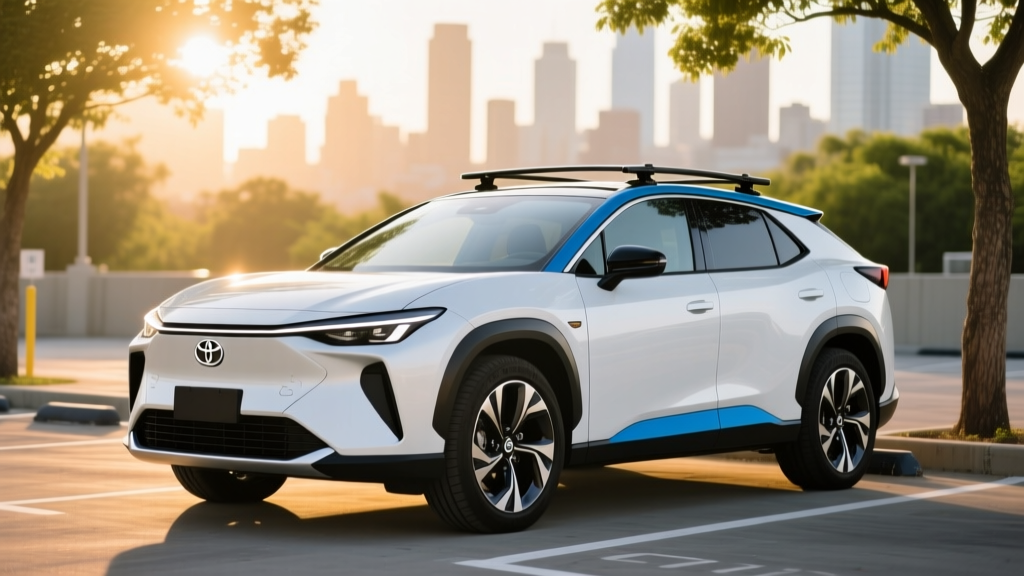
Quick Answer: The Toyota bZ4X is Toyota's only full electric SUV currently on sale in the U.S. The 2026 FWD model delivers an EPA-estimated 252 miles of range from a 71.4 kWh (usable) lithium-ion battery, charges at up to 150 kW DC (10–80% in roughly 30 minutes), and starts around $38,465. AWD trims drop range to 228 miles but add 214 hp and a 3,500-lb tow rating. Compared to a RAV4 Hybrid, the bZ4X costs more upfront but saves $600–$1,100/year on fuel depending on local electricity rates. It's best suited for buyers with home Level 2 charging who drive under 200 miles daily and want Toyota's dealer network and warranty backing.
The Toyota bZ4X at a Glance: 2026 Specs
Toyota entered the battery-electric market conservatively with the bZ4X, and the 2026 model year carries over with minor packaging updates. Unlike competitors chasing 350+ mile range figures, Toyota prioritized battery longevity, a 10-year/150,000-mile battery warranty, and broad dealer service coverage. Here's what the numbers actually look like across the two main drivetrains.
| Spec | bZ4X FWD (XLE) | bZ4X AWD (Limited) |
|---|---|---|
| EPA Range | 252 mi | 228 mi |
| Battery (usable) | 71.4 kWh, NMC | 71.4 kWh, NMC |
| Horsepower | 201 hp | 214 hp |
| 0–60 mph | 7.1 sec | 5.8 sec |
| Max DC Charge Rate | 150 kW | 150 kW |
| 10–80% DC Fast Charge | ~30 min | ~30 min |
| Level 2 (240V) Rate | ~9.6 kW (~9 hr) | ~9.6 kW (~9 hr) |
| MPGe (combined) | 119 MPGe | 102 MPGe |
| Towing Capacity | Not rated | 3,500 lbs |
| Base MSRP | $38,465 | $43,515 |
| Battery Warranty | 10 yr / 150,000 mi | 10 yr / 150,000 mi |
Sources: EPA fueleconomy.gov, Toyota Motor North America spec sheets.
Real-World Range vs. the EPA Sticker
The EPA number is a starting point, not a guarantee. In our experience with NMC batteries in the 70–75 kWh class, real-world highway driving at 70–75 mph typically yields 85–90% of the EPA combined figure. For the bZ4X FWD, that translates to roughly 215–230 miles on the highway in moderate temperatures.
Real-World Range Expectations (bZ4X FWD):
- EPA Combined: 252 mi
- Highway (70 mph, 65°F): ~220 mi
- Cold Weather (30°F, mixed driving): ~175–195 mi
- City / Suburban (regen-heavy): ~250–260 mi
The bZ4X uses a heat pump on AWD trims (FWD uses resistive heating in some model years), which helps cold-weather efficiency but doesn't eliminate the 20–30% range reduction common to all EVs in freezing temps. If your typical daily round trip exceeds 180 miles in winter, the bZ4X's range margin gets thin.
Charging curve behavior also matters on road trips. The bZ4X peaks at 150 kW but only sustains that rate briefly — typically from 10–40% State of Charge. From 50–80%, the rate tapers to roughly 60–80 kW. This is why the 10–80% time is ~30 minutes rather than the ~20 minutes you'd see on 250+ kW competitors like the Hyundai Ioniq 5 or Kia EV6. For most road-trippers, this means planning one extra 10-minute stop per 400 miles of travel.
bZ4X vs. RAV4 Hybrid: The Cost Showdown
Most Toyota SUV shoppers cross-shop the bZ4X against the RAV4 Hybrid — and the math is closer than the sticker prices suggest. Here's a 5-year ownership comparison assuming 15,000 miles/year, $3.50/gal regular gas, and $0.14/kWh home electricity (national average).
| Cost Factor (5 Years) | bZ4X FWD (XLE) | RAV4 Hybrid (XLE) |
|---|---|---|
| Base MSRP | $38,465 | $33,975 |
| Estimated Federal Tax Credit (§30D)* | $0–$7,500 | $0 |
| Fuel / Electricity (75,000 mi) | $1,470 | $5,775 |
| Maintenance (oil, filters, brakes) | ~$600 | ~$2,200 |
| Insurance (est. average) | ~$8,400 | ~$7,200 |
| Estimated Depreciation | ~$16,500 | ~$13,000 |
| Net 5-Year Cost (pre-incentive) | ~$65,435 | ~$62,150 |
| Net 5-Year Cost (max credit applied) | ~$57,935 | ~$62,150 |
*Federal §30D credit eligibility depends on MSRP caps ($80,000 for SUVs), buyer income limits ($150K single / $300K joint), and battery critical-mineral sourcing requirements. The bZ4X's credit availability has fluctuated as Toyota adjusts supply chains. Always verify current eligibility at IRS.gov before purchasing.
The key takeaway: if you qualify for the full credit, the bZ4X wins on 5-year total cost. If you don't qualify (income too high, or sourcing rules disqualify the batch), the RAV4 Hybrid comes out ~$3,000 ahead — but you'll still visit gas stations 30+ times per year.
Real Ownership Considerations: Charging, Climate, and Daily Life
Buying an EV is a lifestyle decision as much as a vehicle decision. Here's what the bZ4X actually requires from its owner.
Home Charging Access
The bZ4X is practical only with reliable Level 2 home charging. On a standard 120V outlet (Level 1), you'll recover about 3–4 miles of range per hour — meaning a full recharge takes over 24 hours. A 48-amp Level 2 home charger (requiring a NEMA 14-50 outlet or hardwired connection on a 60-amp circuit) delivers ~9.6 kW, fully replenishing the battery in about 9 hours. Most owners plug in overnight and wake up with a full battery every morning.
Installation costs vary widely:
- Simple install (panel nearby, no upgrade): $500–$1,200
- Moderate install (long wire run, permit): $1,200–$2,500
- Panel upgrade required (100A → 200A): $2,500–$5,000+
If you live in an apartment or lack dedicated parking with electrical access, the bZ4X becomes significantly less convenient. Public DC fast charging is viable for road trips but relying on it daily is expensive ($0.35–$0.50/kWh at Electrify America or EVgo) and adds battery wear from sustained high-SoC charging.
Climate Impact
Toyota's thermal management system is adequate but not class-leading. In sustained sub-freezing climates (Minnesota, Maine, Montana), expect 25–35% range loss in winter. The bZ4X does offer battery preconditioning for DC fast charging when navigating to a charger, which helps maintain charge speeds in cold weather — but preconditioning must be triggered manually via the infotainment system; it doesn't activate automatically based on ambient temperature like some competitors.
Driving Patterns
The bZ4X is ideal for commuters driving 40–120 miles daily with home charging. It's less ideal for frequent road-trippers covering 400+ miles in a day, since the 150 kW charge ceiling and taper curve mean each stop takes 30–40 minutes rather than 18–22.
Federal Tax Credit and Incentive Reality for 2026
The §30D clean vehicle credit remains a moving target. As of early 2026, the credit can deliver up to $7,500 — but only if every condition is met simultaneously:
- MSRP Cap: Vehicle MSRP must be ≤$80,000 (SUVs). The bZ4X qualifies on all trims.
- Buyer Income Cap: Modified AGI ≤$150,000 (single) or ≤$300,000 (married filing jointly).
- Battery Sourcing: Critical minerals and battery components must meet escalating percentage thresholds from qualifying trade partners. This requirement has disqualified several models in prior years and can change mid-year.
- Point-of-Sale Transfer: You can transfer the credit to the dealer for an immediate price reduction, but you must still meet all income/sourcing requirements at tax filing time or repay the credit.
- Final Assembly: Vehicle must undergo final assembly in North America. The bZ4X is assembled in Japan — this has historically been a disqualifying factor for the full credit.
This last point is critical: because the bZ4X is built in Japan (at Toyota's Motomachi plant), it has generally not qualified for the §30D credit under the final-assembly requirement. Some buyers have accessed partial credits through commercial leasing loopholes (§45W), where the leasing company receives the credit and passes it through as a lease discount. Always confirm current eligibility with your dealer and a tax professional before counting on a $7,500 reduction.
Common Misconceptions About the bZ4X
| Myth | Fact |
|---|---|
| "The bZ4X has terrible range — it's a recall disaster." | The 2023 wheel-detach recall was addressed with updated hub bolts. Current models have no outstanding safety recalls. Range is modest (252 mi) but sufficient for 90% of daily driving. |
| "EV batteries need replacement every 5 years." | NMC batteries in modern EVs typically retain 85–90% capacity after 100,000 miles. Toyota warranties the bZ4X battery for 10 years/150,000 miles with a 70% capacity retention threshold. Full replacements are rare and covered under warranty within the term. |
| "I can charge it as fast as a Tesla at Superchargers." | The bZ4X peaks at 150 kW — about half the sustained rate of a Tesla Model Y on a V3 Supercharger (which can sustain ~200+ kW on CCS-adapted vehicles). Expect 30-minute stops, not 15-minute stops. |
| "The bZ4X qualifies for the full $7,500 tax credit." | Final assembly in Japan has historically disqualified the bZ4X from §30D. Lease deals may pass through commercial credits, but purchase buyers should not assume credit eligibility. |
| "I don't need a home charger — public stations are everywhere." | Public charging reliability remains inconsistent. In many regions, 15–25% of non-Tesla DC fast chargers are out of service at any given time. Home Level 2 is strongly recommended for daily use. |
Decision Framework: Is the Toyota Full Electric SUV Right for You?
Choose the bZ4X if:
- You have home Level 2 charging (or can install it for under $2,500)
- Your daily driving is under 180 miles round-trip, even in winter
- You value Toyota's dealer network and 10-year battery warranty
- You want an EV but prefer a mainstream brand over Tesla or startups
- You can access a favorable lease deal that includes a passed-through commercial credit
Consider alternatives if:
- You frequently drive 300+ miles in a single day (the 150 kW charge rate adds road-trip time)
- You need 300+ miles of EPA range (look at the Hyundai Ioniq 5 at 303 mi or Tesla Model Y at 320 mi)
- You live in an apartment without charging access
- You tow more than 3,500 lbs (consider a Ford F-150 Lightning or Rivian R1S)
- You want the full §30D purchase credit — the bZ4X's Japan assembly complicates this
Consider a RAV4 Hybrid or RAV4 Prime (PHEV) if:
- You can't install home charging
- You regularly drive in rural areas with limited DC fast charging infrastructure
- You want maximum range flexibility with zero charging planning (RAV4 Hybrid: 550+ mi total range)
- The RAV4 Prime's 42-mile electric-only range covers your daily commute, with gas backup for longer trips
First-Time EV Buyer Checklist
If the bZ4X is your first electric vehicle, work through these items before signing:
- Confirm home charging feasibility. Get a quote from a licensed electrician for a NEMA 14-50 or hardwired Level 2 install. Check your electrical panel's remaining capacity.
- Map your typical week. Add up your actual daily miles. If any regular day exceeds 200 miles, test whether mid-day charging is available at work or nearby.
- Download charging apps. PlugShare, ChargePoint, EVgo, and Electrify America — search your regular routes for reliable DC fast chargers.
- Verify tax credit eligibility. Use the IRS VIN-check tool at fueleconomy.gov and consult a tax professional. Do not rely on dealer assurances alone.
- Test-drive in conditions you'll actually face. Ask the dealer for a highway route and, if possible, a cold-weather loaner to assess real range.
- Compare insurance quotes. EV insurance premiums run 10–20% higher than equivalent gas vehicles. Get quotes before committing.
- Understand the warranty. Toyota covers the battery for 10 years/150,000 miles (70% capacity retention). The basic vehicle warranty is 3 years/36,000 miles, and powertrain is 5 years/60,000 miles.
Frequently Asked Questions
Does the Toyota bZ4X support Tesla Superchargers?
As of 2026, the bZ4X uses a CCS1 connector natively. Toyota has announced NACS adoption for future models, but the current bZ4X requires a CCS-to-NACS adapter (available from Toyota and third parties) to access Tesla's Supercharger network. Confirm adapter compatibility and any speed limitations with your dealer before purchase.
How long does the bZ4X battery last before needing replacement?
Based on degradation data from NMC batteries in similar applications, expect roughly 8–12% capacity loss over the first 100,000 miles. Toyota's warranty guarantees at least 70% capacity retention for 10 years or 150,000 miles. A full battery replacement outside warranty currently costs $12,000–$18,000 depending on labor, but replacements within the warranty period are rare and typically covered.
Is the bZ4X a good car for road trips?
It's adequate but not class-leading. The 252-mile range (FWD) and 150 kW peak charge rate mean you'll stop every 180–200 miles on the highway and spend about 30 minutes charging each time. For comparison, a Hyundai Ioniq 5 with 303 miles of range and 240 kW charging can cover the same distance with fewer, shorter stops. If road trips are your primary use case, the bZ4X works — but competitors do it better.
Should I buy or lease the bZ4X?
Given the §30D tax credit complications (Japan assembly disqualifying many purchase buyers), leasing often provides the better financial outcome. Toyota Financial Services frequently structures leases that pass through the $7,500 commercial clean vehicle credit (§45W) as a capitalized-cost reduction, effectively lowering monthly payments. Compare current lease offers against purchase pricing with your specific tax situation in mind.
How does the bZ4X compare to the Subaru Solterra?
The Solterra is the bZ4X's twin — co-developed on the same e-TNGA platform with the same 71.4 kWh battery and 214 hp AWD system. The Solterra comes standard with AWD (the bZ4X offers FWD as the base), includes slightly more ground clearance (8.3" vs 7.0"), and is priced a few hundred dollars higher. Range, charging speed, and interior are nearly identical. Choose based on which dealer network and styling you prefer.