Should You Lease the Toyota bZ4X in 2026?
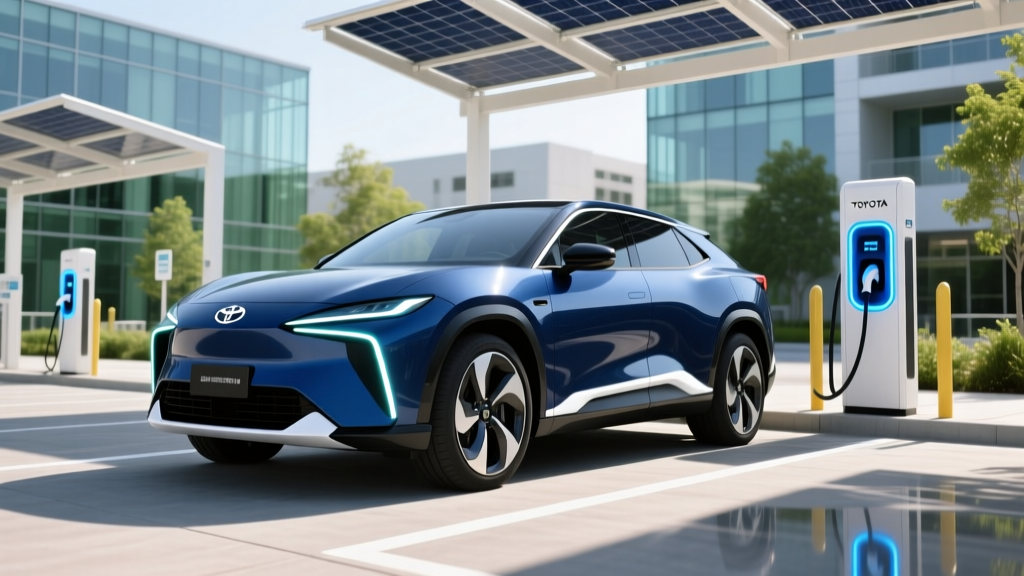
Toyota's all-electric lineup remains narrow entering the 2026 model year, with the bZ4X crossover standing as the brand's sole battery-electric vehicle available to U.S. buyers. If you've been searching for a Toyota electric car lease, the bZ4X is effectively your option — and whether it makes financial sense depends heavily on how federal incentives, leasing structures, and real-world operating costs stack up against both gas-powered Toyota SUVs and rival EVs.
This guide dissects the full cost picture: what you'll actually pay over five years, whether you qualify for the federal tax credit (and how leasing changes that equation), fuel and maintenance savings, the insurance premium reality, and what happens at trade-in time. Every figure below is grounded in EPA data, IRS rules, and manufacturer specifications.
2026 Toyota bZ4X: Key Specs at a Glance
Before running the numbers, here's what you're working with. The 2026 bZ4X carries over its powertrain with modest updates to charging software and standard equipment.
| Spec | XLE FWD | XLE AWD |
|---|---|---|
| Battery (usable) | 71.4 kWh (NMC lithium-ion) | 71.4 kWh (NMC lithium-ion) |
| EPA Range | 252 miles | 228 miles |
| Real-World Highway Range | ~215–230 mi | ~195–210 mi |
| Combined MPGe | 119 MPGe | 112 MPGe |
| Efficiency | 28 kWh/100 mi | 30 kWh/100 mi |
| Peak DC Fast Charge | 150 kW (CCS1) | 150 kW (CCS1) |
| 10–80% DC Charge Time | ~30 minutes | ~30 minutes |
| Level 2 Charge Rate | 7.4 kW | 7.4 kW |
| Horsepower | 201 hp | 214 hp |
| 0–60 mph | 7.1 sec | 6.5 sec |
| Base MSRP | $38,465 | $41,025 |
| Battery/Powertrain Warranty | 8 yr / 100,000 mi | |
The 5-Year Total Cost of Ownership Breakdown
How much does it really cost to own an EV over 5 years? The answer requires adding up every cash flow — not just the sticker price. Below is a 5-year TCO model for the 2026 bZ4X XLE FWD compared against a comparably priced gas SUV (the Toyota RAV4 LE AWD, MSRP ~$31,000). Assumptions: 15,000 miles/year, home Level 2 charging at $0.14/kWh, gas at $3.50/gallon, and a 5-year/60-month loan at 6.5% APR with 10% down.
| Cost Category | bZ4X XLE FWD | RAV4 LE AWD (Gas) |
|---|---|---|
| Purchase Price (MSRP) | $38,465 | $31,000 |
| Federal Tax Credit (§30D) | −$7,500 (if eligible) | $0 |
| Net Purchase After Credit | $30,965 | $31,000 |
| Fuel/Energy (75k mi) | $2,940 | $8,750 |
| Insurance (5 years) | $9,500 | $7,500 |
| Maintenance (5 years) | $1,800 | $4,200 |
| Estimated Depreciation | $16,500 | $12,000 |
| 5-Year Total | $61,705 | $63,450 |
The bZ4X's higher sticker price is substantially offset by the $7,500 federal credit (if you qualify — more on that below), and operating savings in fuel and maintenance widen the gap. However, steeper depreciation and higher insurance premiums eat into those gains. The net result: roughly comparable 5-year costs, with the bZ4X pulling slightly ahead if you capture the full tax credit and charge primarily at home.
Federal Tax Credit: Do You Qualify?
The IRS §30D Clean Vehicle Credit offers up to $7,500 for qualifying new EVs, but eligibility hinges on a web of requirements that change annually. For the 2026 tax year, here's what you need to satisfy:
- ✅ Buyer Income Caps: Modified AGI ≤ $300,000 (joint), $225,000 (head of household), $150,000 (single). Exceed these in either the purchase year or prior year and you lose the credit entirely.
- ✅ MSRP Caps: Vehicle base price must not exceed $55,000 for sedans or $80,000 for SUVs/trucks/vans. The bZ4X qualifies as an SUV — all trims clear this cap.
- ✅ Battery Component Sourcing: Battery components must be manufactured or assembled in North America (phasing percentages increase yearly). As of 2026, this requirement is stringent.
- ✅ Critical Minerals: A percentage of critical minerals must be sourced from the U.S. or FTA-partner countries. The bZ4X's battery sourcing has been a moving target — verify current eligibility at IRS.gov's qualified vehicle list.
- ✅ Point-of-Sale Transfer: Since 2024, you can transfer the credit to the dealer at purchase, receiving the $7,500 as an immediate price reduction rather than waiting to claim it on your tax return. This is available for leases too — see below.
- ✅ Final Assembly: Vehicle must undergo final assembly in North America. The bZ4X is assembled in Japan, which may disqualify it from the purchase credit depending on current-year interpretation. Always verify on the IRS qualified vehicle list before committing.
Charging vs. Gas: The Per-Mile Cost Reality
How much do I save on fuel? This is where the bZ4X delivers its clearest advantage — provided you charge at home. Here's the math using the bZ4X FWD's EPA-rated efficiency of 28 kWh/100 miles versus the RAV4 AWD's 30 MPG combined:
| Scenario | Cost/Mile | Annual (15k mi) | 5-Year Total |
|---|---|---|---|
| bZ4X — Home L2 ($0.14/kWh) | $0.039 | $588 | $2,940 |
| bZ4X — Public DCFC ($0.40/kWh avg) | $0.112 | $1,680 | $8,400 |
| bZ4X — Blended (70% home / 30% DCFC) | $0.061 | $916 | $4,578 |
| RAV4 AWD (30 MPG, $3.50/gal) | $0.117 | $1,750 | $8,750 |
At home Level 2 rates, the bZ4X costs roughly one-third per mile what the RAV4 burns in gasoline. Even with a blended charging mix, you'll save $3,000–$5,800 over five years on energy alone. However, if you rely exclusively on public DC fast charging at $0.40+/kWh, the savings evaporate — the bZ4X actually costs slightly more per mile than the gas RAV4 in that scenario.
Bottom line: Home charging access is non-negotiable for realizing EV fuel savings. If your dwelling lacks Level 2 capability and you can't install it, the financial case for the bZ4X weakens significantly.
Maintenance Savings: Fewer Parts, Lower Bills
EVs eliminate the maintenance items that plague gas-car owners: no engine oil, no transmission fluid, no spark plugs, no timing belts, no exhaust system. The bZ4X's single-speed reduction gear and electric motors have far fewer wear components.
| Service Item | bZ4X (EV) | RAV4 (Gas) |
|---|---|---|
| Oil Changes | $0 | $750 (10 changes) |
| Brake Pads/Rotors | $300 (regen extends life) | $1,200 (2 sets) |
| Coolant Flush | $200 | $200 |
| Tire Rotation/Replacement | $1,100 (EVs wear tires faster) | $800 |
| Cabin Air Filter | $150 | $150 |
| Transmission/Drive Fluid | $0 | $350 |
| Misc. (wipers, battery, etc.) | $250 | $750 |
| Total (Est.) | $2,000 | $4,200 |
The bZ4X saves roughly $2,200 over five years on maintenance. Regenerative braking significantly reduces brake pad wear — many EV owners report original pads lasting 80,000+ miles. The one area where EVs cost more is tires: the bZ4X's instant torque and heavier curb weight (~4,300 lbs) accelerate tread wear by 15–25% compared to a gas crossover.
Insurance: The Cost Most Buyers Overlook
Are EVs more expensive to insure? Yes, typically 15–30% more than comparable gas vehicles. The bZ4X is no exception. Industry data from major carriers shows average annual premiums of $1,800–$2,100 for the bZ4X versus $1,400–$1,600 for the RAV4.
The reasons are structural:
- Higher repair costs: EV battery packs and power electronics are expensive to replace after collision damage. Even minor rear-end impacts can total a battery.
- Specialized labor: High-voltage system repairs require certified technicians, limiting shop availability and raising labor rates.
- Higher vehicle value: Insurers base premiums partly on replacement cost, and the bZ4X's MSRP exceeds the RAV4's.
- Parts scarcity: EV-specific components (inverters, onboard chargers) often have longer lead times, increasing rental-car payouts.
Before signing a lease or purchase agreement, run a quote with your current insurer for the exact bZ4X trim. Some carriers (Geico, State Farm, Progressive) offer modest EV discounts, but they rarely close the full gap. Budget an extra $200–$400/year for insurance compared to a gas Toyota SUV.
Depreciation and Resale Value Trends
How well do EVs hold their value? This is the bZ4X's weakest financial link. EV depreciation has been steeper than gas vehicles over the past three years, driven by:
- Aggressive price cuts from Tesla and new entrants compressing the entire used-EV market.
- Battery health uncertainty among used buyers, even though most modern packs (including the bZ4X's) are warranted for 8 years/100,000 miles with a 70% capacity retention threshold.
- Rapid tech obsolescence — newer models offer faster charging and longer range, making 2–3-year-old EVs feel dated.
Current industry projections estimate the bZ4X will retain approximately 45–50% of MSRP after 5 years, compared to 55–62% for the RAV4. On a $38,465 purchase, that translates to roughly $16,500–$19,200 in depreciation — a significant number, though partially offset by the tax credit reducing your effective cost basis.
Leasing advantage: A lease transfers depreciation risk to the lessor. If Toyota Financial Services sets a generous residual value, your lease payments reflect only a portion of the vehicle's decline. For a brand like Toyota with historically strong resale values, lease residuals on the bZ4X may be more favorable than the open market would suggest — making leasing the financially smarter move for risk-averse buyers.
State, Local, and Utility Incentives
- California: Up to $2,000 via the Clean Fuel Reward (point-of-sale) plus potential CVRP rebates for income-qualified buyers.
- Colorado: State tax credit up to $5,000 for new EVs (income-capped, phases down by vehicle price).
- New York: Drive Clean Rebate up to $2,000 at point of sale.
- Utility rebates: Many electric utilities (PG&E, ConEdison, Xcel Energy, etc.) offer $250–$1,000 rebates for home Level 2 charger installation, and some provide off-peak charging credits worth $50–$200/year.
Lease vs. Buy: Which Path Fits the bZ4X?
Given the bZ4X's specific financial profile — potential federal credit ambiguity due to Japan assembly, steep depreciation, and the §45W lease loophole — leasing often emerges as the stronger financial play:
Choose a Lease If:
- The bZ4X doesn't qualify for the §30D purchase credit in your tax year (assembly/sourcing issues).
- You want to capture the §45W commercial credit via the lessor's pass-through.
- You'd rather not absorb depreciation risk on a rapidly evolving EV segment.
- You drive under 12,000–15,000 miles/year (typical lease mileage caps).
- You prefer swapping into newer EV tech every 36 months.
Choose to Buy If:
- You confirm the bZ4X qualifies for the full $7,500 §30D credit on the IRS list for your tax year.
- You plan to keep the vehicle 7+ years, riding out the depreciation curve.
- You drive high annual mileage (20,000+ mi/yr) that would trigger costly lease overage penalties.
- You want to claim the credit as a point-of-sale reduction and have no income-cap issues.
Frequently Asked Questions
Is the Toyota bZ4X eligible for the $7,500 federal tax credit in 2026?
It depends. The bZ4X is assembled in Motomachi, Japan, which has historically disqualified it from the §30D purchase credit's North American final assembly requirement. However, the §45W commercial credit available through leasing may still deliver equivalent savings passed through by the lessor. Always verify on the IRS qualified vehicles list before signing.
What does a typical bZ4X lease cost per month?
As of early 2026, advertised bZ4X leases from Toyota Financial Services have ranged from approximately $299–$449/month for 36-month terms with $2,500–$3,999 due at signing, depending on trim and region. If the lessor captures and passes through the $7,500 commercial credit, effective monthly costs can be substantially lower. Always ask the dealer for the full lease disclosure (money factor, residual, cap cost) to compare offers.
Can I charge the bZ4X on a regular household outlet?
Yes, but slowly. Level 1 charging on a standard 120V/15A outlet delivers roughly 1.4 kW — adding about 4–5 miles of range per hour. A full charge from empty would take 45+ hours. For daily use, a Level 2 home charger (240V, 7.4 kW) adds roughly 25–28 miles per hour of charging, fully replenishing the 71.4 kWh battery in about 9.5 hours overnight.
How does the bZ4X's range hold up in winter?
Cold weather reduces EV range by 20–35% depending on severity. The bZ4X FWD's EPA 252-mile range can drop to roughly 170–200 miles in sustained sub-30°F conditions, primarily due to cabin heating demands and reduced battery chemistry efficiency. The bZ4X includes a battery preconditioning feature for DC fast charging, but it's less aggressive than competitors like Hyundai's E-GMP platform. Precondition the cabin while plugged in to mitigate range loss.
What happens to the bZ4X battery long-term?
Toyota warranties the bZ4X's NMC battery pack for 8 years or 100,000 miles against degradation below 70% of original capacity. Industry data on similar NMC packs suggests 10–15% capacity loss over 100,000 miles under normal use. If you lease for 36 months and return the vehicle, long-term battery health is the lessor's concern, not yours — another leasing advantage.
How does the bZ4X compare to other electric SUVs in its price range?
The bZ4X competes against the Hyundai Ioniq 5, Kia EV6, Ford Mustang Mach-E, and Tesla Model Y. Compared to these rivals, the bZ4X trails in DC charging speed (150 kW peak vs. 230–350 kW for Hyundai/Kia/Tesla), real-world range, and interior tech. Its strengths are Toyota's reliability reputation, strong dealer network, and standard Toyota Safety Sense 3.0 ADAS suite. If charging speed and range are your top priorities, the Ioniq 5 or Model Y deliver measurably more. If brand trust and dealer support matter most, the bZ4X is the Toyota way into electric.
Sources: EPA fueleconomy.gov, IRS §30D Qualified Vehicles, Toyota bZ4X Specifications. Tax credit rules are current for the 2026 tax year and subject to legislative change. Consult a tax professional for personal eligibility.