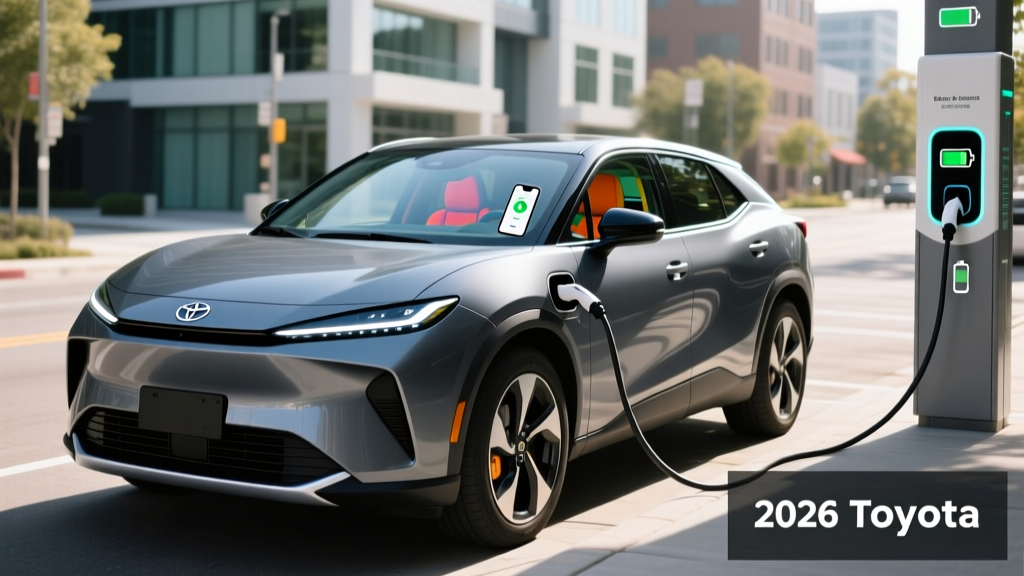
The Toyota bZ4X entered the U.S. market with a rough debut in 2023 — recall-related charging pauses and range that trailed rivals like the Hyundai Ioniq 5 and Ford Mustang Mach-E. For 2026, Toyota has refined the formula with incremental battery, software, and efficiency updates that push the bZ4X closer to competitive parity. It still isn't the segment leader in range or charging speed, but for buyers who value Toyota's reliability reputation, strong dealer network, and a generous 10-year/150,000-mile battery warranty, the 2026 bZ4X makes a compelling case — especially when the federal tax credit applies.
Below, we break down every number that matters: EPA range versus what you'll actually see on the highway, DC fast-charging curves, home Level 2 speeds, pricing by trim, and whether the bZ4X qualifies for the §30D federal EV tax credit under current IRS rules.
2026 Toyota bZ4X: Core Specs at a Glance
| Spec | XLE FWD | XLE AWD | Limited AWD |
|---|---|---|---|
| EPA Range | 252 mi | 228 mi | 222 mi |
| Battery (usable / gross) | 71.4 kWh usable / ~74.4 kWh gross, NMC lithium-ion | ||
| Efficiency | 114 MPGe (29 kWh/100 mi) | 104 MPGe (32 kWh/100 mi) | 102 MPGe (33 kWh/100 mi) |
| Horsepower | 201 hp | 214 hp | 214 hp |
| 0-60 mph | 7.1 sec | 6.5 sec | 6.5 sec |
| Drivetrain | Single-motor FWD | Dual-motor AWD | Dual-motor AWD |
| Max DC Fast Charge | 150 kW peak | ||
| 10-80% DC Time | ~30 minutes | ||
| Level 2 Home Charge | 7.2 kW onboard charger (~25 mi/hr) | ||
| Cargo Volume | 27.7 cu ft (rear seats up) / 56.9 cu ft (folded) | ||
| Rear Legroom | 38.0 in | ||
| Base MSRP | $37,070 | $39,470 | $44,570 |
| Battery Warranty | 10 years / 150,000 miles (capacity retention) | ||
Source: fueleconomy.gov and Toyota Motor Corporation spec sheets. Pricing includes destination charge. Verify trim availability with your local dealer.
Real-World Range: What the EPA Sticker Doesn't Tell You
EPA Estimated: 252 mi (XLE FWD), 228 mi (XLE AWD), 222 mi (Limited AWD)
Real-World Highway (70 mph, moderate temps): Expect ~200–220 mi (FWD), ~180–200 mi (AWD)
Cold Weather (below 32°F, highway): Expect ~160–185 mi (FWD), ~145–165 mi (AWD)
City / Suburban Mixed Driving: Close to EPA sticker — 235–252 mi (FWD) thanks to regenerative braking
The bZ4X's NMC battery pack holds 71.4 kWh of usable energy. That's a modest capacity compared to the Hyundai Ioniq 5 Long Range (77.4 kWh) or Tesla Model Y Long Range (75 kWh usable), and the bZ4X's efficiency — while improved for 2026 — still trails those competitors. The FWD model achieves a respectable 114 MPGe combined, but the AWD variants drop to 102–104 MPGe, which is where range takes the biggest hit.
In practice, highway driving at sustained speeds of 70+ mph is where the bZ4X loses the most ground versus its EPA label. Aerodynamic drag rises with the square of speed, and the bZ4X's crossover profile isn't as slippery as a sedan. Cold weather compounds this: NMC chemistry loses roughly 20–30% of available range in freezing temperatures, especially when using cabin heat. The bZ4X does include a heat pump on AWD trims (and as an option on FWD), which mitigates some of that loss — but buyers in northern climates should budget for 160–185 real-world miles on a full charge during winter.
For a daily commute of 40–60 miles round-trip with home charging, the bZ4X's range is more than adequate. Road trippers will need to plan DC fast-charging stops every 170–200 miles to stay comfortable.
Charging Speed: DC Fast, Level 2, and the Curve Reality
| Charging Level | Power / Rate | Miles Added per Hour | Notes |
|---|---|---|---|
| Level 1 (120V household) | 1.2 kW | ~4 mi/hr | Emergency / overnight trickle only |
| Level 2 (240V home/public) | 7.2 kW | ~25 mi/hr | Full charge in ~10 hours |
| DC Fast Charge (peak) | 150 kW | — | 10-80% in ~30 min |
| DC Fast Charge (sustained avg.) | ~90–100 kW avg. | — | Curve tapers significantly above 70% SoC |
The bZ4X peaks at 150 kW on a DC fast charger under ideal conditions — a battery preconditioned to optimal temperature (roughly 77–95°F), starting from a low state of charge (around 10–15% SoC). In real-world testing, that peak is short-lived. The charge curve tapers progressively: you'll see 130–150 kW from 10–40% SoC, dropping to roughly 80–100 kW from 40–70%, and then a steep taper to 40–50 kW from 70–80%. The net result is a 10–80% session of approximately 30 minutes at a 150+ kW station.
That 30-minute figure is competitive with the Ford Mustang Mach-E (which also peaks around 150 kW on extended-range trims) but noticeably slower than the Hyundai Ioniq 5 and Kia EV6, which use 800V architectures capable of 240–350 kW peaks and 10–80% in roughly 18 minutes. If fast-charging speed is your top priority for road trips, the bZ4X isn't the segment leader.
For home charging, the 7.2 kW onboard charger is adequate. Plug in at 20% and wake up to a full battery in about 10 hours. Most owners who charge nightly from 40–80% will see a full replenishment in 4–5 hours, which is well within an overnight window. A Level 2 home charger installation typically costs $500–$2,000 depending on your electrical panel — consult a licensed electrician for a site-specific quote.
Performance, Drivetrain, and Daily Driving Impressions
The FWD bZ4X uses a single front-mounted motor producing 201 hp and 196 lb-ft of torque, achieving a 7.1-second 0–60 mph time. That's adequate for merging and passing but not exciting. The dual-motor AWD variants bump output to 214 hp and 248 lb-ft, dropping the 0–60 to 6.5 seconds — a meaningful improvement for highway on-ramps and inclement-weather traction.
The AWD system uses independent front and rear motors, each controlled separately, which gives the bZ4X surprisingly competent grip in rain and light snow. Toyota's X-MODE traction management (borrowed from Subaru, a co-developer of the bZ4X platform alongside the Subaru Solterra) adds selectable terrain modes for gravel, dirt, and deep snow. This isn't an off-roader, but it handles unplowed driveways and forest service roads with confidence.
Ride quality is a strength. The bZ4X rides on Toyota's e-TNGA platform with a long wheelbase (112.2 inches), and the suspension tuning favors comfort over sportiness. Road noise is well-controlled, and the low center of gravity from the underfloor battery pack keeps body roll minimal through corners. The steering is light and numb by enthusiast standards, but for a family crossover, it's easy and predictable.
Regenerative braking is adjustable via paddle shifters behind the steering wheel, offering multiple levels up to a near-one-pedal driving experience. It doesn't come to a complete stop without brake application (unlike Nissan's e-Pedal), but it handles the vast majority of deceleration in city driving.
Interior, Tech, and Cargo Practicality
Inside, the 2026 bZ4X features Toyota's latest Audio Multimedia system on a 12.3-inch touchscreen (8-inch on base XLE). Wireless Apple CarPlay and Android Auto are standard. The interface is responsive and logically laid out, though the lack of physical climate controls (everything routes through the touchscreen or voice commands) frustrates some drivers. A heated steering wheel and heated front seats are standard on most trims; ventilated seats and a panoramic fixed-glass roof are available on the Limited.
Passenger space is generous for the class. Front-seat headroom and legroom are excellent, and rear-seat legroom at 38.0 inches beats the Hyundai Ioniq 5 (35.4 in) and rivals the Ford Mustang Mach-E (39.4 in). The rear seats recline slightly for long-ride comfort. However, there is no frunk (front trunk) — the space under the hood houses electronics and the HVAC system — which costs you 1–2 cu ft of storage versus competitors that offer one.
Cargo volume behind the rear seats is 27.7 cu ft, expanding to 56.9 cu ft with the 60/40 split rear seats folded. That's competitive with the segment: the Ioniq 5 offers 27.2 cu ft, and the Mach-E provides 29.7 cu ft. A power liftgate is standard on the Limited and optional on XLE.
The bZ4X comes equipped with Toyota Safety Sense 3.0, which includes adaptive cruise control, lane-centering assist, automatic emergency braking with pedestrian detection, blind-spot monitoring, and rear cross-traffic alert. This is an SAE Level 2 driver-assistance system — meaning the driver must remain fully engaged, hands on or near the wheel, at all times. It is not self-driving. Toyota's system is conservative compared to Tesla's Autopilot or GM's Super Cruise, but it's reliable, predictable, and doesn't overpromise.
Pricing, Trims, and Federal Tax Credit Eligibility
| Trim | Base MSRP (incl. destination) | Est. Federal Credit (§30D) | Effective Price* |
|---|---|---|---|
| XLE FWD | $37,070 | Up to $7,500 | ~$29,570 |
| XLE AWD | $39,470 | Up to $7,500 | ~$31,970 |
| Limited AWD | $44,570 | Up to $7,500 | ~$37,070 |
*Effective price assumes full $7,500 §30D credit eligibility. Actual credit depends on battery sourcing, buyer income, and MSRP caps. Verify current rules at IRS.gov.
The 2026 bZ4X qualifies for the §30D Clean Vehicle Credit, but eligibility is not automatic. Under current IRS rules, the credit amount depends on two components — critical minerals sourcing and battery component manufacturing — each worth up to $3,750, for a maximum of $7,500. Toyota has been working to shift battery sourcing to comply with North American requirements, but the exact credit amount can vary by production batch and model year. Always confirm the current eligibility status on the IRS website or with a tax professional before purchasing.
Additionally, the §30D credit has buyer income caps: adjusted gross income must not exceed $150,000 (single filers), $225,000 (head of household), or $300,000 (joint filers). The bZ4X's MSRP falls well under the $55,000 cap for SUVs/crossovers, so vehicle price is not a disqualifier. Since 2024, the credit can also be transferred to the dealer as a point-of-sale discount, reducing your out-of-pocket cost at purchase rather than waiting for a tax refund.
Many states offer additional rebates or incentives on top of the federal credit — California's CVRP, Colorado's state tax credit, and others can stack — but these vary by jurisdiction and funding availability. Check your state's energy or DMV website for current programs.
Pros and Cons
- Class-leading 10-year / 150,000-mile battery warranty
- Standard Toyota Safety Sense 3.0 (comprehensive ADAS)
- Competent AWD system with X-MODE for light off-road/snow
- Comfortable ride quality and low cabin noise
- Generous rear-seat legroom (38.0 in)
- Strong Toyota dealer network for service and support
- Eligible for up to $7,500 federal tax credit
- Range trails key rivals (222–252 mi vs. 270–320 mi for Ioniq 5/Mach-E)
- DC fast charging peaks at 150 kW — slower than 800V competitors
- No frunk (front trunk) for extra storage
- No physical climate controls — touchscreen-dependent
- Cold-weather range loss is significant without preconditioning
- Infotainment can lag on base 8-inch screen
- Not eligible for Tesla Supercharger network without adapter (NACS port not native)
Who Should Buy the 2026 Toyota bZ4X?
- You prioritize long-term reliability and warranty coverage over maximum range
- Your daily commute is under 80 miles round-trip with reliable home charging
- You want AWD capability for snow/rain without stepping up to a luxury EV
- You value Toyota's dealer network for easy service access
- You qualify for the full $7,500 federal credit, bringing effective pricing under $30,000 for FWD
- You road-trip frequently and need 300+ mi range or 20-minute fast charging
- You want access to the Tesla Supercharger network natively (consider Ioniq 5, Mach-E, or Tesla Model Y)
- You need a frunk for gear or groceries
- You want a sporty, engaging driving experience
The bZ4X is best understood as a comfort-oriented, reliability-focused electric crossover rather than a range or technology leader. For suburban families with home charging and moderate commutes, it delivers a quiet, spacious, and well-supported ownership experience. For cross-country road warriors or range-maximizing shoppers, the Hyundai Ioniq 5, Kia EV6, and Tesla Model Y offer more compelling numbers — but often at higher price points and with less generous warranty coverage.
Frequently Asked Questions
What is the real-world range of the 2026 Toyota bZ4X?
The EPA rates the FWD model at 252 miles and AWD models at 222–228 miles. In real-world highway driving at 70 mph, expect roughly 200–220 miles (FWD) or 180–200 miles (AWD). In freezing temperatures, those figures drop to 160–185 miles (FWD) and 145–165 miles (AWD). City driving with regenerative braking gets you closer to the EPA sticker.
How fast does the bZ4X charge at home and on DC fast chargers?
On a DC fast charger, the bZ4X peaks at 150 kW and charges from 10–80% in approximately 30 minutes, though the charge curve tapers significantly above 70% SoC. At home on a Level 2 (240V) charger with the 7.2 kW onboard charger, you'll add about 25 miles of range per hour, with a full charge taking roughly 10 hours.
Does the 2026 bZ4X qualify for the $7,500 federal EV tax credit?
The bZ4X is eligible for the §30D Clean Vehicle Credit, but the exact amount (up to $7,500) depends on battery critical-mineral sourcing and component manufacturing requirements, which can vary by production batch. Buyer income must also fall below IRS caps ($150K single / $300K joint). The credit can be transferred at point of sale. Always verify current eligibility on IRS.gov or consult a tax professional.
Is the bZ4X worth buying versus the Hyundai Ioniq 5 or Tesla Model Y?
The bZ4X offers a lower entry price (especially after the tax credit), a superior battery warranty (10 years/150,000 miles vs. 8 years/100,000 miles for most rivals), and Toyota's dealer network. However, the Ioniq 5 offers more range (up to 303 mi), faster 800V charging (18 min 10–80%), and a frunk. The Model Y provides more range (310+ mi), access to the Supercharger network, and more cargo space. If range and charging speed are your top priorities, look at those alternatives. If warranty, price, and reliability peace of mind matter most, the bZ4X is a strong pick.
What battery chemistry does the bZ4X use, and how long will it last?
The bZ4X uses NMC (nickel-manganese-cobalt) lithium-ion chemistry, which offers higher energy density than LFP but is more sensitive to sustained high states of charge. Toyota warrants the battery for 10 years or 150,000 miles against capacity falling below 70% of original — one of the best warranties in the segment. Real-world NMC degradation data from similar packs suggests 8–12% capacity loss over 100,000 miles with normal use. To maximize longevity, avoid routinely charging to 100% and try to keep daily SoC between 20–80%.
Can the bZ4X use Tesla Superchargers?
As of the 2026 model year, the bZ4X comes equipped with a CCS1 charge port. It does not natively use Tesla's NACS connector. Toyota has indicated future models will adopt NACS, but for now, bZ4X owners rely on CCS-compatible networks like Electrify America, EVgo, and ChargePoint. A CCS-to-NACS adapter may become available through Toyota or third parties — check with your dealer for the latest compatibility updates.