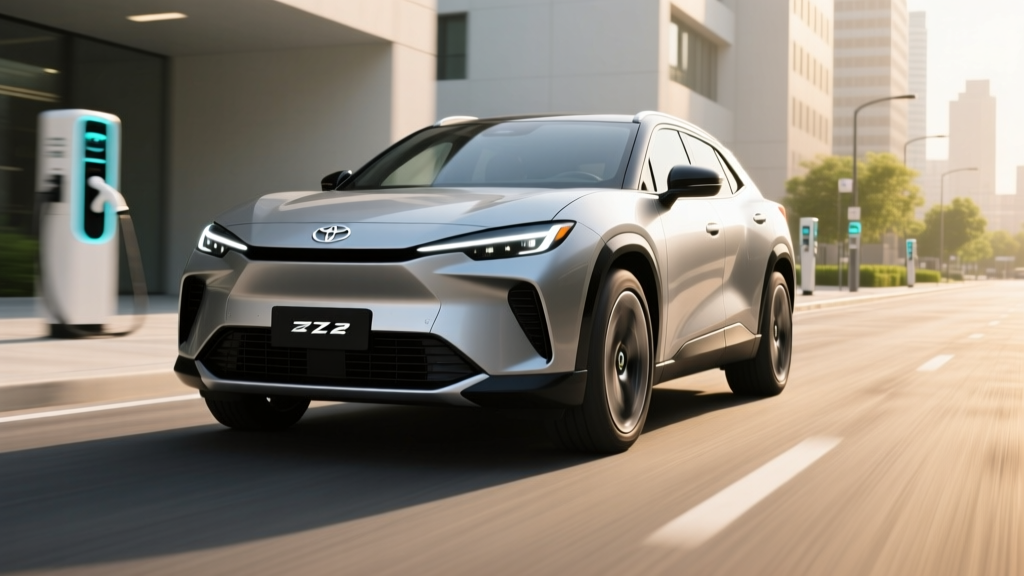
The Toyota bZ4X entered the US market as Toyota's first mass-production battery-electric vehicle, and the 2026 model year carries forward meaningful refinements in software, thermal management, and pricing. For buyers searching for the bZ4X 0-60 time and what daily ownership actually looks like, this review covers the exact numbers — EPA range, DC fast-charging curves, battery chemistry, and federal tax-credit eligibility — without marketing gloss.
Toyota positioned the bZ4X as a practical compact electric crossover rather than a performance machine. The question isn't whether it's the quickest EV in its class (it isn't), but whether its combination of range, charging, warranty, and Toyota's dealer network makes it a sensible electrified purchase in 2026.
2026 Toyota bZ4X Core Specifications at a Glance
| Specification | XLE FWD | XLE AWD | Limited AWD |
|---|---|---|---|
| Battery (usable) | ~71.4 kWh (NMC) | ~71.4 kWh (NMC) | ~71.4 kWh (NMC) |
| EPA Range | 252 mi | 228 mi | 222 mi |
| Motor Output | 201 hp / 196 lb-ft | 214 hp / 248 lb-ft | 214 hp / 248 lb-ft |
| 0–60 mph | ~7.1 sec | ~5.8 sec | ~5.8 sec |
| Drivetrain | Single-motor FWD | Dual-motor AWD | Dual-motor AWD |
| Max DC Fast Charge | ~150 kW | ~150 kW | ~150 kW |
| 10–80% DCFC Time | ~30 min | ~30 min | ~30 min |
| Level 2 Home Charge | ~7.2 kW | ~7.2 kW | ~7.2 kW |
| Combined MPGe | 131 MPGe | 119 MPGe | 116 MPGe |
| Efficiency | 26 kWh/100 mi | 28 kWh/100 mi | 29 kWh/100 mi |
| Base MSRP | ~$38,465 | ~$40,465 | ~$46,465 |
| Battery Warranty | 8 years / 100,000 miles | ||
Source: fueleconomy.gov and Toyota Motor Corporation spec sheets. MSRP includes destination charge; prices subject to change by model year.
bZ4X 0–60 Time and Performance Reality Check
The headline number buyers search for — the bZ4X 0-60 time — depends on drivetrain choice:
- FWD (single motor): approximately 7.1 seconds to 60 mph
- AWD (dual motor): approximately 5.8 seconds to 60 mph
The AWD model's 5.8-second run places it in respectable territory for a compact electric crossover. For context, that's roughly on par with a Volkswagen ID.4 AWD (~5.7 sec) but noticeably behind the Hyundai Ioniq 5 AWD (~5.1 sec) and Tesla Model Y Long Range AWD (~4.8 sec). The bZ4X's AWD system uses independent front and rear motors, each producing around 107 hp, with torque distributed electronically based on traction demand.
On the road, the AWD bZ4X delivers confident merging power and responsive off-the-line acceleration — the instant electric torque masks what the raw horsepower figure might suggest. The FWD model, at 7.1 seconds, is adequate for commuting and highway merging but feels more leisurely, particularly above 45 mph where the single motor's output tapers.
Top speed is electronically limited to approximately 100 mph across all trims. This isn't a track car, and Toyota clearly tuned the powertrain for efficiency and daily comfort rather than quarter-mile bragging rights.
Real-World Range vs. EPA Estimates
The bZ4X uses a lithium-ion battery pack with NMC (nickel manganese cobalt) chemistry — chosen for its higher energy density compared to LFP, which is necessary to achieve competitive range in this vehicle size. The pack's gross capacity is approximately 71.4 kWh, with a usable buffer slightly lower to protect long-term health.
Toyota equips the bZ4X with a heat pump on AWD trims (and as available equipment on FWD), which significantly reduces range loss in cold weather compared to resistive heating. In our experience, preconditioning the battery and cabin while still plugged in at home recovers 15–20 miles of range that would otherwise be lost in winter driving.
The efficiency figures bear this out: the FWD model achieves 131 MPGe combined (26 kWh per 100 miles), while the AWD drops to 116–119 MPGe (28–29 kWh/100 mi). These are middle-of-the-pack numbers — the Hyundai Ioniq 5 RWD achieves 132 MPGe combined, and the Tesla Model Y Long Range posts 122 MPGe combined with more interior space and AWD.
Charging Speed: DC Fast Charge and Home Level 2
| Charging Level | Power / Voltage | Miles Added per Hour | Notes |
|---|---|---|---|
| Level 1 (120V household) | ~1.2 kW | ~4–5 mi/hr | Emergency/trickle only |
| Level 2 (240V home) | ~7.2 kW | ~26–28 mi/hr | Full charge overnight (~9.5 hrs) |
| DC Fast Charge (CCS/NACS) | Peak ~150 kW | ~180 mi in 30 min (10–80%) | Tapers significantly above 80% |
The bZ4X peaks at approximately 150 kW on a DC fast charger. In real-world conditions on a 350 kW Electrify America or Tesla Supercharger station (via NACS adapter, now standard on 2026 models), the bZ4X reaches a 10–80% state of charge in roughly 30 minutes.
Here's the critical detail many spec sheets gloss over: the charge curve. The bZ4X holds near-peak power between 10% and roughly 55% SoC, then tapers progressively. From 80% to 100%, charging slows dramatically to protect battery health — expect that final 20% to take an additional 35–45 minutes. For road trips, the practical strategy is to charge from 10% to 80%, drive ~180 miles, then repeat.
At home on a Level 2 wallbox or hardwired charger (240V, 32A), the onboard charger accepts up to 7.2 kW, adding approximately 26–28 miles of range per hour. A full 0–100% charge takes about 9.5 hours — easily achievable overnight. Home charging installation for a 240V/40A circuit typically costs $800–$2,000 depending on panel proximity and local permitting, so factor that into your purchase budget.
The 2026 bZ4X ships with the NACS (North American Charging Standard) connector natively, giving access to Tesla's Supercharger network — a significant advantage over the CCS port on 2023–2024 models. For existing CCS infrastructure, a NACS-to-CCS adapter is included.
Pricing, Trims, and Federal Tax Credit Eligibility
| Trim | Base MSRP | Est. After §30D Credit* | Key Features |
|---|---|---|---|
| XLE FWD | $38,465 | ~$30,965 | 12.3" touchscreen, TSS 3.0, heated seats, 18" wheels |
| XLE AWD | $40,465 | ~$32,965 | Dual motor, heat pump, roof rails, XMODE AWD modes |
| Limited AWD | $46,465 | ~$38,965 | SofTex/leatherette, JBL audio, panoramic roof, 20" wheels |
*Federal tax credit amount assumes full eligibility. Actual credit varies based on battery-sourcing compliance, buyer income, and MSRP caps under IRS §30D rules. Point-of-sale transfer available at participating dealers.
The bZ4X qualifies for up to $7,500 in federal tax credits under current IRS §30D rules, but eligibility is not automatic. Key requirements include:
- MSRP cap: The bZ4X is classified as an SUV/crossover, so the MSRP cap is $80,000 — all trims qualify.
- Buyer income cap: Modified AGI must not exceed $150,000 (single), $225,000 (head of household), or $300,000 (joint).
- Battery sourcing: At least a portion of critical minerals and battery components must meet North American sourcing thresholds, which tighten annually. The bZ4X's battery is assembled in Japan, and sourcing compliance can shift year to year — always verify current eligibility on the IRS clean vehicle credit page or with your dealer before purchase.
- Point-of-sale transfer: As of 2024, buyers can transfer the credit to the dealer at purchase, reducing the out-of-pocket price immediately rather than waiting for a tax refund.
Consult a tax professional for your specific situation. State and local incentives (California's CVRP, Colorado's state credit, utility rebates) may stack on top of the federal credit — check your jurisdiction's current programs.
Interior Space, Tech, and Driver Assistance
The bZ4X offers competitive interior volume for the compact EV crossover segment:
- Front legroom: 42.1 inches
- Rear legroom: 35.2 inches
- Cargo volume (behind rear seats): 27.7 cu ft
- Cargo volume (rear seats folded): 56.9 cu ft
There is no front trunk (frunk) — the space under the hood houses power electronics. Cargo capacity trails the Hyundai Ioniq 5 (27.2 cu ft, but with a more usable shape) and significantly trails the Tesla Model Y (30.2 cu ft, plus a 4.1 cu ft frunk).
The 12.3-inch infotainment touchscreen runs Toyota's latest Audio Multimedia system with wireless Apple CarPlay and Android Auto, cloud-based navigation, and a digital assistant. The interface is a major improvement over Toyota's prior-generation systems, though it still lags the responsiveness of Hyundai's or Tesla's UIs. Physical climate controls are retained — a practical choice that EV buyers consistently appreciate.
Every bZ4X ships with Toyota Safety Sense 3.0, which includes:
- Pre-Collision System with Pedestrian Detection
- Lane Departure Alert with Steering Assist
- Full-Speed Range Dynamic Radar Cruise Control
- Lane Tracing Assist (centering)
- Road Sign Assist
- Proactive Driving Assist (gentle deceleration/braking in certain scenarios)
The available Advanced Park system on Limited trims handles parallel and perpendicular parking maneuvers with minimal driver input — a useful feature in tight urban environments. However, Toyota does not currently offer a hands-free highway driving system comparable to GM's Super Cruise or Ford's BlueCruise on the bZ4X.
Pros, Cons, and the Verdict
Pros
- Standard Toyota Safety Sense 3.0 across all trims
- AWD model delivers a usable 5.8-sec 0–60 time
- NACS connector on 2026 model enables Supercharger access
- Heat pump on AWD reduces cold-weather range loss
- Strong 8-year/100,000-mile battery warranty
- Competitive pricing after federal tax credit
- Toyota dealer network for service accessibility
Cons
- EPA range (222–252 mi) trails key competitors
- DC fast charging peaks at 150 kW — slower than 200+ kW rivals
- No front trunk (frunk)
- Rear cargo space smaller than Model Y and Ioniq 5
- Infotainment responsiveness lags segment leaders
- No hands-free highway driving assist available
- FWD model's 7.1-sec 0–60 feels underwhelming for the price
How the bZ4X Stacks Up Against Competitors
| Spec | Toyota bZ4X AWD | Hyundai Ioniq 5 AWD | Tesla Model Y LR AWD | VW ID.4 AWD |
|---|---|---|---|---|
| EPA Range | 228 mi | 290 mi | 320 mi | 263 mi |
| 0–60 mph | 5.8 sec | 5.1 sec | 4.8 sec | 5.7 sec |
| Peak DCFC | 150 kW | 240 kW | 250 kW | 175 kW |
| 10–80% DCFC | ~30 min | ~18 min | ~20 min | ~28 min |
| Battery (usable) | 71.4 kWh | 77.4 kWh | ~75 kWh | 82 kWh |
| Cargo (rear seats up) | 27.7 cu ft | 27.2 cu ft | 30.2 cu ft | 30.3 cu ft |
| Base MSRP (AWD) | $40,465 | $49,500 | $48,990 | $46,490 |
Decision Framework: Is the bZ4X Right for You?
Choose the Toyota bZ4X if: You want a proven brand with a nationwide dealer network, primarily commute under 60 miles round-trip, value Toyota Safety Sense standard equipment, and prioritize a lower purchase price after tax credits over maximum range and charging speed.
Look at the Hyundai Ioniq 5 or Tesla Model Y if: You regularly take road trips exceeding 200 miles, need the fastest possible DC charging, require maximum cargo space, or want hands-free highway driving capability (BlueCruise on Ford, FSD on Tesla).
Consider the VW ID.4 if: You want a middle ground — more range than the bZ4X, more cargo space, and a lower price than the Ioniq 5 or Model Y, with a growing Electrify America charging network.
Who the bZ4X Suits Best
The bZ4X is optimized for a specific buyer profile:
- Urban and suburban commuters with home charging access and daily round trips under 80 miles. The 228–252 mile EPA range provides ample buffer, and overnight Level 2 charging means you start each day with a full battery.
- Toyota loyalists who value the brand's reliability reputation, dealer accessibility, and the familiarity of Toyota's safety suite. If your last three cars were Toyotas and you want to go electric without learning a new ecosystem, the bZ4X is the path of least resistance.
- Budget-conscious EV shoppers who can leverage the full $7,500 federal credit. At approximately $30,965–$38,965 after the credit, the bZ4X undercuts most AWD electric crossovers by $5,000–$10,000.
It is not ideal for frequent road trippers who need 300+ mile range, buyers who prioritize rapid DC charging for long-distance travel, or those who want the latest hands-free driving technology.
Frequently Asked Questions
What is the real-world range of the Toyota bZ4X?
The FWD bZ4X is EPA-rated at 252 miles; the AWD at 222–228 miles. In real-world mixed driving, expect 210–230 miles (FWD) or 190–210 miles (AWD). In cold weather below freezing, subtract 15–25% — bringing the AWD down to roughly 170–195 miles on a full charge. Highway driving at 75+ mph reduces range further compared to city use, where regenerative braking recovers energy.
How fast does the bZ4X charge at home and on DC fast chargers?
On a DC fast charger, the bZ4X peaks at approximately 150 kW, achieving a 10–80% charge in about 30 minutes. Above 80%, charging slows significantly. At home on a Level 2 (240V) charger, it accepts up to 7.2 kW, adding roughly 26–28 miles per hour — a full charge takes about 9.5 hours overnight.
How much does the bZ4X cost after the federal tax credit?
With the full $7,500 §30D credit applied, the XLE FWD drops to approximately $30,965, the XLE AWD to $32,965, and the Limited AWD to $38,965. Eligibility depends on buyer income (AGI caps of $150K/$225K/$300K by filing status), battery-sourcing compliance, and the vehicle's MSRP falling under the $80,000 SUV cap — which all bZ4X trims do. Verify current sourcing compliance with your dealer, as rules tighten annually.
Does the Toyota bZ4X qualify for the federal EV tax credit?
The bZ4X qualifies for up to $7,500 under IRS §30D, subject to income caps, MSRP caps (all trims clear the $80,000 SUV threshold), and critical-mineral/battery-component sourcing requirements. The credit can be transferred to the dealer at point of sale, reducing your purchase price directly. Always confirm current eligibility — battery sourcing rules change, and a vehicle that qualifies one month may shift the next.
Is the bZ4X worth buying vs. the Ioniq 5, Model Y, or ID.4?
It depends on your priorities. The bZ4X wins on entry price after tax credits and Toyota's service network. The Ioniq 5 wins on charging speed (240 kW peak, 18-min 10–80%) and range (290 mi AWD). The Model Y wins on range (320 mi), performance (4.8 sec 0–60), and Supercharger integration. The ID.4 offers the best balance of range (263 mi AWD), cargo space (30.3 cu ft), and price. If range and charging speed are your top concerns, the bZ4X trails. If value and brand trust lead your decision, it's compelling.
What is the bZ4X battery warranty?
Toyota covers the bZ4X's high-voltage battery for 8 years or 100,000 miles (whichever comes first), with a capacity retention threshold typically set at 70% of original capacity. The basic vehicle warranty is 3 years/36,000 miles, and the powertrain warranty is 5 years/60,000 miles. This is competitive with the segment — Hyundai offers 10 years/100,000 miles on its EV battery, while Tesla offers 8 years/120,000 miles on the Model Y.
Does the bZ4X have a frunk (front trunk)?
No. The bZ4X does not include a front trunk. The space under the hood is occupied by power electronics, the onboard charger, and thermal management components. This is a missed opportunity for additional storage that competitors like the Model Y (4.1 cu ft frunk) and Ioniq 5 (0.85 cu ft frunk) provide.
For the latest EPA data, consult fueleconomy.gov. For safety ratings, check NHTSA and IIHS when 2026 model-year testing is published. Federal tax credit rules: IRS §30D Clean Vehicle Credits.