Quick Verdict: The Toyota-BYD Partnership Arrives in America
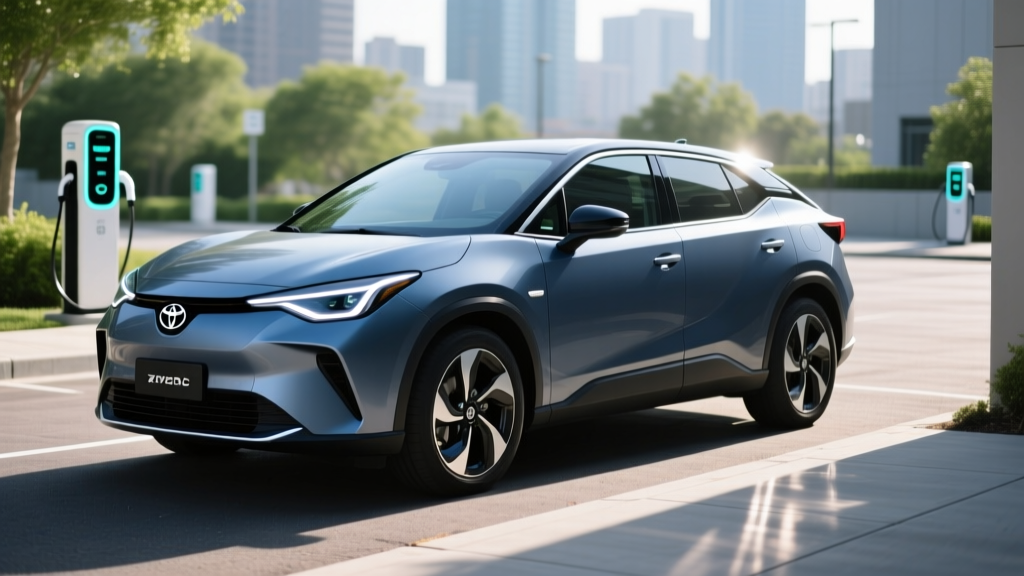
The 2026 Toyota bZ3C is the first production vehicle born from Toyota's deepened collaboration with BYD — a partnership that combines Toyota's chassis tuning and safety engineering with BYD's vertically integrated Blade battery and electric powertrain technology. Announced for global markets in late 2025, the bZ3C is expected to reach U.S. dealerships by mid-to-late 2026 as a compact-to-midsize electric crossover slotting between the bZ4X and the Highlander-sized bZ5X in Toyota's growing EV lineup.
Because the bZ3C is not yet on sale in the United States, the specifications below are based on Toyota's preliminary global release data and BYD's published powertrain details. Final EPA certification figures, U.S. trim pricing, and federal tax credit eligibility will be confirmed closer to launch. We'll update this review as official numbers become available.
Preliminary Specifications at a Glance
| Attribute | Specification |
|---|---|
| EPA Est. Range | ~310 miles (FWD, est.) |
| Battery Capacity | ~73.98 kWh usable (BYD Blade, LFP) |
| Battery Chemistry | Lithium Iron Phosphate (LFP) |
| DC Fast Charge (Peak) | ~150 kW (est.) |
| 10–80% DC Charge Time | ~28 minutes (est.) |
| Level 2 Home Charging | ~11 kW / ~30 mi/hr (est.) |
| 0–60 mph | ~7.2 sec (FWD) / ~5.8 sec (AWD est.) |
| Horsepower | ~201 hp (FWD) / ~335 hp (AWD est.) |
| Drivetrain | FWD standard / Dual-motor AWD available |
| MPGe (Combined, Est.) | ~110 MPGe (est.) |
| Base MSRP (Est.) | ~$38,000–$42,000 (FWD) |
| Battery Warranty | 8 yr / 100,000 mi (Toyota standard) |
Range and Efficiency: Real-World Expectations
The bZ3C's BYD Blade battery pack uses lithium iron phosphate (LFP) chemistry — a choice that prioritizes longevity, thermal stability, and lower cost over the energy density of nickel-manganese-cobalt (NMC) cells. The estimated ~74 kWh usable capacity paired with Toyota's projected aerodynamic and weight targets points toward an EPA range rating near 310 miles for the FWD model.
EPA Estimated: ~310 miles (FWD)
Highway (70–80 mph, sustained): Expect ~245–265 miles
Cold Weather (below 32°F): Expect ~220–250 miles (LFP packs lose range in cold, though less abruptly than NMC)
Mixed Commute (city/suburban): ~285–305 miles — closest to EPA
LFP chemistry degrades more gracefully than NMC but is more sensitive to cold temperatures. Preconditioning the battery before fast charging is critical for optimal charge speeds in winter.
Efficiency should land in the neighborhood of 110 MPGe combined (roughly 30 kWh/100 miles), which would place the bZ3C competitively against the Hyundai Ioniq 5 (114 MPGe combined) and slightly behind the Tesla Model Y (122 MPGe combined) per fueleconomy.gov data. The bZ3C's taller crossover profile and expected ~4,200-lb curb weight work against it on the efficiency front compared to sleeker sedans.
Charging: DC Fast and Home Level 2 Speeds
BYD's Blade battery platform supports DC fast charging at rates competitive with mainstream EVs, though not at the bleeding edge of 800-volt architectures like Hyundai's E-GMP or Porsche's Taycan. The bZ3C is expected to peak around 150 kW on DC fast chargers, which means a 10–80% session in approximately 28 minutes under ideal thermal conditions.
| Charge Level | Power | Speed / Time | Best Use Case |
|---|---|---|---|
| Level 1 (120V) | ~1.4 kW | ~4 mi/hr | Overnight top-up, emergencies |
| Level 2 (240V) | ~11 kW | ~30 mi/hr (full charge ~7 hr) | Daily home charging |
| DC Fast | ~150 kW peak | 10–80% in ~28 min | Road trips, quick top-ups |
Charging curve reality: Like most LFP batteries, the bZ3C's Blade pack will sustain strong charge rates through the mid-SoC range but taper noticeably above 80%. Plan to charge to 80% at DC fast chargers to avoid the slow taper — going from 80–100% can add 15–20 minutes. LFP batteries also tolerate regular 100% charging better than NMC, so daily home charges to full are acceptable and actually recommended for accurate state-of-charge calibration.
For U.S. models, expect the bZ3C to use the NACS (Tesla-style) connector given Toyota's commitment to adopting the North American Charging Standard across its EV lineup starting with 2025 models. This grants access to Tesla Superchargers via native port — a significant infrastructure advantage over CCS-only vehicles.
Performance and Drivetrain
The bZ3C will launch with a single-motor front-wheel-drive configuration producing an estimated 201 horsepower, with a dual-motor all-wheel-drive variant adding a rear motor for a combined output near 335 horsepower. The FWD model should reach 60 mph in roughly 7.2 seconds — adequate for merging and passing but not sports-sedan quick. The AWD variant drops that to an estimated 5.8 seconds.
Toyota's e-TNGA platform evolution (shared in concept with the bZ4X but refined) prioritizes ride comfort and low-speed maneuverability over aggressive handling. Expect a turning circle around 36 feet and a suspension tuned for compliance over sportiness. Regenerative braking should offer multiple levels, though Toyota has historically stopped short of true one-pedal driving in its EVs — a frustration for drivers accustomed to the strong regen in a Nissan Leaf or Chevrolet Bolt.
Interior, Tech, and Cargo Space
The bZ3C's cabin design borrows from the bZ4X's minimalist approach but addresses the most common criticism: physical controls. Toyota has indicated the production bZ3C will feature a 14-inch touchscreen running Toyota Audio Multimedia, wireless Apple CarPlay and Android Auto, and a reconfigured center console with restored physical knobs for climate and volume.
Estimated interior dimensions place the bZ3C in the compact-crossover segment:
- Front legroom: ~41.5 inches
- Rear legroom: ~38.0 inches
- Cargo volume (behind rear seats): ~28 cu ft
- Cargo volume (rear seats folded): ~62 cu ft
- Frunk: Small (~2 cu ft) — enough for charging cables
Driver assistance will be handled by Toyota Safety Sense 4.0 (TSS 4.0), which includes adaptive cruise control, lane-centering assist, automatic emergency braking with pedestrian detection, and blind-spot monitoring. This is an SAE Level 2 driver-assist system — it requires the driver to remain attentive and keep hands on or near the steering wheel at all times. It is not autonomous driving.
Pricing, Trims, and Federal Tax Credit Eligibility
Toyota has not published final U.S. MSRP figures for the bZ3C, but based on global-market positioning and the bZ4X's pricing structure, we estimate the following trim ladder:
| Trim | Drivetrain | Est. MSRP | After Est. Credit* |
|---|---|---|---|
| XLE (FWD) | FWD | ~$38,000 | ~$30,500 |
| XLE (AWD) | AWD | ~$41,000 | ~$33,500 |
| Limited (FWD) | FWD | ~$43,500 | ~$36,000 |
| Limited (AWD) | AWD | ~$46,500 | ~$39,000 |
*Estimated after potential $7,500 federal tax credit. Actual eligibility depends on multiple IRS §30D requirements — see below.
Federal EV Tax Credit: The BYD Battery Complication
The single biggest question surrounding the bZ3C's U.S. launch is whether it will qualify for the §30D Clean Vehicle Credit of up to $7,500. Under current IRS rules, eligibility requires meeting several conditions simultaneously:
- MSRP cap: SUVs/crossovers must be priced at or below $80,000 (bZ3C clears this easily)
- Buyer income cap: Modified AGI ≤ $150,000 (single) / $300,000 (joint)
- Battery component manufacturing: A percentage of battery components must be manufactured or assembled in North America (threshold increases annually)
- Critical minerals sourcing: A percentage of critical minerals must be sourced from the U.S. or free-trade-agreement countries
- Foreign Entity of Concern (FEOC) exclusion: Vehicles with battery components or critical minerals from a FEOC (which includes Chinese-headquartered companies like BYD) are disqualified from the credit
This is the crux: BYD is headquartered in Shenzhen, China, and is classified as a FEOC. If the bZ3C's battery cells or critical minerals trace back to BYD's Chinese supply chain, the vehicle would be ineligible for the $7,500 federal credit regardless of where final assembly occurs. Toyota could potentially source alternative battery packs for U.S.-spec models or restructure the supply chain to comply, but this would likely increase cost and could affect range/performance figures.
Expect Toyota to clarify U.S. tax credit eligibility once final battery sourcing details are confirmed. Consult a tax professional and check the latest IRS §30D guidance before making a purchase decision based on credit assumptions.
Warranty and Long-Term Ownership
Toyota's standard EV warranty package should carry over to the bZ3C:
- Battery: 8 years / 100,000 miles (capacity retention threshold typically 70%)
- Powertrain: 5 years / 60,000 miles
- Bumper-to-bumper: 3 years / 36,000 miles
- Roadside assistance: 2 years / 25,000 miles
LFP chemistry is a long-term ownership advantage. BYD's Blade cells have demonstrated strong cycle life in testing — often exceeding 3,000 charge cycles with less than 10% degradation, which translates to well over 500,000 miles of driving before significant capacity loss. For a buyer planning to keep the vehicle 8–10 years, the LFP pack is a genuine differentiator over NMC competitors that may degrade faster, particularly in hot climates.
Pros, Cons, and Competitive Positioning
✓ Pros
- LFP Blade battery offers excellent longevity and thermal safety
- Projected ~310-mile range is competitive in the segment
- NACS connector provides native Supercharger access
- Toyota's dealer network and resale value reputation
- Sub-$40K starting price (if FEOC rules don't force price increases)
- TSS 4.0 driver assist is mature and well-calibrated
✗ Cons
- FEOC battery sourcing likely disqualifies from $7,500 federal credit
- 150 kW DC charging is mid-pack — not 800V-class fast
- AWD performance (~5.8 sec 0-60) trails Tesla Model Y and Ioniq 5 AWD
- Toyota's regen braking still lacks true one-pedal mode
- Preliminary specs — final EPA numbers could disappoint
- Cargo space (~28 cu ft) is tighter than Model Y (~30 cu ft)
How It Stacks Up Against Key Competitors
The bZ3C enters one of the most competitive segments in the EV market. Here's how preliminary specs compare to established rivals:
- vs. Tesla Model Y (Long Range): Model Y offers ~320 mi EPA, 250 kW charging, and broader Supercharger maturity. But the bZ3C should undercut on base price and offers Toyota's service network.
- vs. Hyundai Ioniq 5: Ioniq 5's 800V architecture delivers 10-80% in ~18 min at 240 kW — significantly faster. Range is comparable (~303 mi for LR RWD).
- vs. Chevrolet Equinox EV: Closest rival in price. Equinox offers ~319 mi EPA range and qualifies for the full $7,500 credit (U.S.-sourced battery). This is the bZ3C's toughest competitive challenge.
Who Should Buy the Toyota bZ3C?
- You prioritize battery longevity and plan to own the vehicle 8+ years (LFP advantage)
- You want Toyota's dealer network and historically strong resale values
- You need NACS/Supercharger access without an adapter
- You're a daily commuter with home Level 2 charging and take occasional road trips
- You don't need the absolute fastest DC charging in the segment
- The $7,500 federal tax credit is essential to your budget (the Equinox EV or Ioniq 5 are safer bets)
- You want sub-5-second 0-60 performance (Model Y Performance or Ioniq 5 AWD)
- You frequently road-trip in cold climates and need maximum range retention
- You need maximum cargo space for family hauling (Model Y or Kia EV9)
Frequently Asked Questions
What is the real-world range of the Toyota bZ3C?
Based on preliminary estimates, expect ~310 miles EPA for the FWD model. Real-world highway driving at 70-80 mph should yield ~245-265 miles, and cold-weather range (below 32°F) will drop to approximately 220-250 miles. City and suburban driving will come closest to the EPA sticker.
How fast does the bZ3C charge?
The estimated peak DC fast-charge rate is ~150 kW, delivering a 10-80% charge in approximately 28 minutes under ideal conditions. At home on a Level 2 (240V) charger at ~11 kW, a full charge takes about 7 hours, adding roughly 30 miles of range per hour of charging.
Does the Toyota bZ3C qualify for the $7,500 federal EV tax credit?
This is uncertain and likely problematic. Because BYD is classified as a Foreign Entity of Concern (FEOC) under U.S. law, any bZ3C with BYD-sourced battery cells or critical minerals would be disqualified from the §30D credit, regardless of where the vehicle is assembled. Toyota may restructure U.S.-spec battery sourcing, but this is unconfirmed. Always verify current eligibility at irs.gov before purchasing.
Is the bZ3C worth buying vs. the Chevrolet Equinox EV or Tesla Model Y?
If the bZ3C qualifies for the tax credit, its sub-$31K effective price and LFP longevity make it compelling. If it doesn't qualify, the Equinox EV (which does qualify and offers similar range) becomes a stronger value proposition. The Model Y remains the segment benchmark for charging speed, performance, and software — but at a higher base price. The decision likely hinges on tax-credit eligibility and your brand loyalty.
What is BYD's role in the Toyota bZ3C?
BYD co-developed the bZ3C's electric powertrain and supplies the Blade battery pack (LFP chemistry). Toyota handles vehicle integration, chassis tuning, safety systems, interior design, and quality control. The partnership allows Toyota to leverage BYD's battery cost advantages while maintaining Toyota's brand positioning.
When will the Toyota bZ3C be available in the U.S.?
Toyota has announced the bZ3C for global markets, with U.S. availability expected in mid-to-late 2026 as a 2026 or 2027 model-year vehicle. Exact timing depends on final EPA certification and battery sourcing decisions for the U.S. market.