Quick Verdict: Toyota's Rugged EV Enters the Compact SUV Fray
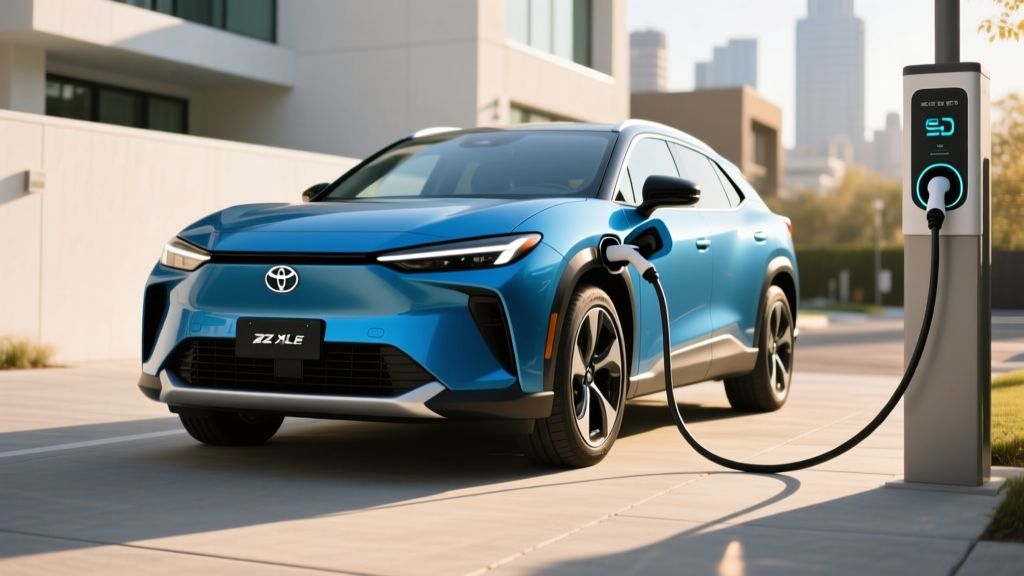
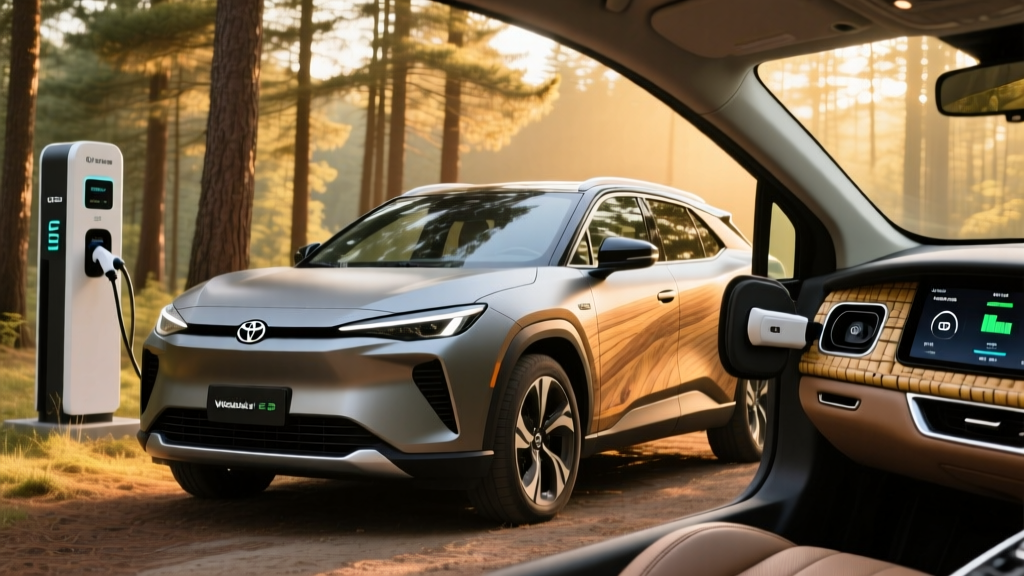
The 2026 Toyota bZ Woodland arrives as Toyota's answer to the adventure-oriented electric SUV segment — a raised, all-wheel-drive crossover built on the e-TNGA platform that prioritizes trail-adjacent capability alongside daily-driver practicality. With an EPA-estimated 280 miles of range, standard dual-motor AWD, and a starting MSRP around $43,000, the bZ Woodland slots between the more car-like Hyundai Ioniq 5 and the body-on-frame Rivian R1S in both price and mission. It's a competent entry, but its DC fast-charging speed and real-world highway efficiency reveal trade-offs that buyers should weigh carefully before signing a purchase agreement.
| Spec | Value |
|---|---|
| EPA Range | 280 miles (AWD) |
| Battery Capacity | 74.7 kWh usable (NMC lithium-ion) |
| Drivetrain | Dual-motor AWD (X-MODE) |
| Horsepower | 338 hp combined |
| 0–60 mph | 5.0 seconds |
| Max DC Fast Charge | 150 kW (peak) |
| 10–80% DC Charge Time | ~32 minutes |
| Level 2 Home Charge Rate | ~7.2 kW (~25 mi/hr) |
| MPGe (Combined) | 102 MPGe |
| Efficiency | 33 kWh/100 mi |
| Cargo Volume (rear seats up) | 27.7 cu ft |
| Cargo Volume (rear seats folded) | 56.9 cu ft |
| Base MSRP (XLE AWD) | $43,090 |
| Battery Warranty | 8 years / 100,000 miles |
Range & Efficiency: What 280 EPA Miles Actually Means on the Road
The bZ Woodland's 74.7 kWh NMC (nickel-manganese-cobalt) battery pack delivers an EPA-estimated 280 miles in combined driving. Toyota achieved this with a heat pump standard on all trims — a critical cold-weather efficiency aid that recycles waste heat from the powertrain rather than relying solely on resistive cabin heating.
EPA sticker: 280 miles. Expect ~245–260 miles on highway road trips at sustained 70–75 mph speeds, where aerodynamic drag penalizes the Woodland's taller, boxier profile. In cold weather (below 32°F), plan for ~210–230 miles of usable range, even with the heat pump engaged. City and suburban driving with frequent regenerative braking opportunities will push closer to the 280-mile figure — and occasionally exceed it in mild temperatures around 60–70°F.
Efficiency comes in at 33 kWh per 100 miles (102 MPGe combined), which places the Woodland in the middle of the compact electric SUV pack. The Hyundai Ioniq 5 AWD achieves roughly 30 kWh/100 mi, while the Subaru Solterra (which shares the e-TNGA platform) posts a nearly identical 33 kWh/100 mi. The Woodland's extra ground clearance and all-terrain tires on the Trail trim add rolling resistance that trims a few miles off the XLE's efficiency.
Charging Speed: 150 kW Peak, But Mind the Curve
DC fast-charging remains the bZ Woodland's most debated spec. The SUV peaks at 150 kW on a capable DC fast charger, reaching 10–80% state of charge in approximately 32 minutes. That's competitive with the Subaru Solterra (~150 kW peak) but trails the Hyundai Ioniq 5 and Kia EV6, which leverage 800-volt architectures for 240–350 kW peak rates and 18-minute 10–80% sessions.
| Charging Level | Power / Rate | Miles Added per Hour | Notes |
|---|---|---|---|
| Level 1 (120V household) | ~1.4 kW | ~4 mi/hr | Emergency/trickle only |
| Level 2 (240V home/public) | 7.2 kW | ~25 mi/hr | Full charge in ~10.5 hours |
| DC Fast Charge (CCS/NACS) | 150 kW peak | ~170 mi in 30 min (10–80%) | Curve tapers significantly above 80% |
Understanding the charge curve matters here. The Woodland sustains roughly 130–150 kW between 10–50% SoC, then tapers to ~80 kW through 65%, and drops further to ~40 kW approaching 80%. This is typical for NMC chemistry on a 400-volt architecture, but it means the last 20% of a charging session takes nearly as long as the first 50%. For road-trip planning, target 10–70% charging stops (~22 minutes) rather than pushing to 80% at every station.
For the 2026 model year, Toyota equips the bZ Woodland with the NACS (North American Charging Standard) connector, granting native access to Tesla Supercharger stations via the expanded Supercharger network agreement. A CCS adapter is included in the box for Electrify America, EVgo, and other CCS-based networks. Home Level 2 charging at 7.2 kW will fully replenish the battery overnight on a standard 32-amp or 40-amp home charger — budget roughly $500–$1,200 for a quality Level 2 unit plus installation by a licensed electrician, depending on your panel capacity and run length.
Performance & Drivetrain: Dual-Motor AWD with Trail Intentions
Every bZ Woodland comes with dual electric motors producing a combined 338 horsepower and standard all-wheel drive. The front motor handles 201 hp while the rear contributes 137 hp, with torque vectoring managed through Toyota's X-MODE system — the same branding used on the RAV4 TRD Off-Road, adapted here for electric torque delivery.
The 0–60 mph sprint takes 5.0 seconds, which is brisk for a compact SUV aimed at outdoor utility rather than track performance. More relevant to the Woodland's mission: the instant electric torque (available from 0 RPM) provides confident low-speed rock crawling and hill-climbing without the lag of a turbocharged gas engine. Ground clearance measures 8.3 inches on the XLE and 8.7 inches on the Trail trim, which wears all-terrain tires and adds underbody skid plates.
Regenerative braking is adjustable via steering-wheel paddles, offering four levels from minimal coasting to near one-pedal driving. Toyota stops short of full one-pedal mode — the vehicle will not come to a complete stop without touching the brake pedal, a choice that frustrates some EV veterans but appeals to drivers transitioning from ICE vehicles.
Interior, Cargo & Technology
Inside, the bZ Woodland features a 12.3-inch touchscreen running Toyota's latest Audio Multimedia system with wireless Apple CarPlay and Android Auto. The digital instrument cluster is a 7-inch display, supplemented by a head-up display on the Limited trim. Physical buttons remain for climate control — a welcome choice for gloved hands on cold mornings.
Passenger space is competitive:
- Front legroom: 42.1 inches
- Rear legroom: 35.7 inches
- Cargo (behind rear seats): 27.7 cu ft
- Cargo (rear seats folded): 56.9 cu ft
- Front trunk (frunk): 2.1 cu ft (small — enough for a charging cable bag)
The frunk is notably small compared to the Hyundai Ioniq 5's 2.0 cu ft (comparable) and far behind the Ford Mustang Mach-E's 4.7 cu ft. The Woodland's cargo area includes a reversible load floor (carpet on one side, easy-clean rubber on the other) and a 120V outlet in the rear cargo area on Trail and Limited trims — useful for powering campsite equipment or a laptop.
On the tech front, Toyota Safety Sense 3.0 comes standard, bundling adaptive cruise control, lane-keeping assist, automatic emergency braking with pedestrian detection, and blind-spot monitoring. This is an SAE Level 2 driver-assistance system — it requires continuous driver attention and hands on the wheel. Toyota does not currently offer a hands-free highway driving system comparable to GM's Super Cruise or Ford's BlueCruise on the bZ Woodland.
Toyota Safety Sense 3.0 is a Level 2 ADAS feature. It does NOT enable autonomous or self-driving operation. The driver must remain fully engaged, monitor the road, and keep hands on the steering wheel at all times. The system may disengage in construction zones, faded lane markings, or heavy rain.
Pricing, Trims & Federal Tax Credit Eligibility
The 2026 Toyota bZ Woodland is offered in three trims:
| Trim | MSRP | Est. After §30D Credit* | Key Additions |
|---|---|---|---|
| XLE AWD | $43,090 | ~$35,590 | Base: 12.3" screen, heated seats, X-MODE AWD |
| Trail AWD | $47,490 | ~$39,990 | All-terrain tires, skid plates, 120V outlet, roof rails |
| Limited AWD | $51,290 | ~$43,790 | Panoramic roof, HUD, ventilated seats, premium audio |
*Federal tax credit eligibility depends on buyer income, vehicle MSRP caps, and battery-component/critical-mineral sourcing requirements under IRS §30D. Credit amount may be $0, $3,750, or up to $7,500. Verify current eligibility at IRS.gov and consult a tax professional. Point-of-sale transfer is available through participating dealers, reducing the purchase price at signing.
The bZ Woodland qualifies under the SUV MSRP cap of $80,000, so all trims clear that threshold. Buyer income caps for §30D are $300,000 (married filing jointly), $225,000 (head of household), and $150,000 (single). The variable factor is battery sourcing: Toyota has been working to comply with critical-mineral and battery-component requirements that phase in progressively through 2026. The exact credit amount — $3,750 (meeting one requirement) or $7,500 (meeting both) — depends on the specific vehicle's supply chain and may shift during the model year. Always confirm the VIN's eligibility through the dealer and the IRS portal before finalizing a purchase.
Ownership Costs & Warranty Coverage
Toyota backs the bZ Woodland with a warranty package that matches or exceeds most EV competitors:
- Basic warranty: 3 years / 36,000 miles
- Powertrain warranty: 5 years / 60,000 miles
- EV battery warranty: 8 years / 100,000 miles (capacity retention above 70%)
- Corrosion perforation: 5 years / unlimited miles
- Complimentary maintenance: 2 years / 25,000 miles
The 70% capacity retention threshold over 8 years is standard for the industry — Hyundai offers the same, while Tesla's threshold is identical. Real-world degradation data for the e-TNGA platform's NMC pack is still accumulating, but early bZ4X data (shared platform) suggests approximately 5–8% degradation over the first 50,000 miles under normal use, which is within the expected band for liquid-cooled NMC chemistry.
Charging cost per mile runs roughly $0.04–$0.06 at home (depending on your local electricity rate of $0.12–$0.18/kWh) versus $0.10–$0.15/mi at public DC fast chargers. Compared to a gas-powered RAV4 AWD averaging 28 MPG at $3.40/gallon ($0.12/mi), the Woodland offers meaningful fuel savings for home-charging owners — approximately $800–$1,200 annually for a 15,000-mile driver.
Pros, Cons & Who Should Buy the bZ Woodland
- Standard AWD with genuine off-road capability (X-MODE, 8.7" clearance on Trail)
- Heat pump standard on all trims — better cold-weather range retention
- NACS connector native — direct Supercharger access
- Competitive cargo space with reversible load floor
- Toyota Safety Sense 3.0 standard — comprehensive ADAS suite
- Strong battery warranty (8 yr/100,000 mi)
- 150 kW DC fast-charge peak trails 800V competitors (Ioniq 5, EV6)
- 32-minute 10–80% time adds up on multi-stop road trips
- Small frunk (2.1 cu ft) — barely fits a charge cable bag
- No hands-free highway driving system offered
- Regenerative braking does not enable full one-pedal driving
- Limited trim pushes past $51K before options
Who it's for: The bZ Woodland is best suited for outdoor-active buyers who want a compact electric SUV with legitimate trail-adjacent capability — think weekend camping trips, forest service roads, and ski-resort commutes — but who primarily charge at home. If your routine involves 200+ miles of daily highway driving or frequent long-distance road trips where 18-minute charge stops matter, the Hyundai Ioniq 5 or Kia EV6 (with 800V architecture) will serve you better on the road. If you need three rows or serious towing, look at the Rivian R1S or Kia EV9.
Frequently Asked Questions
What is the real-world range of the Toyota bZ Woodland?
The EPA estimates 280 miles combined. In real-world highway driving at 70–75 mph, expect approximately 245–260 miles. In freezing temperatures, that drops to roughly 210–230 miles. City driving with regenerative braking can match or slightly exceed the EPA figure in mild weather.
How fast does the bZ Woodland charge at home and on the road?
At home on a Level 2 (240V) charger, the Woodland charges at up to 7.2 kW, adding about 25 miles of range per hour — a full overnight charge takes roughly 10.5 hours. On DC fast chargers, it peaks at 150 kW and reaches 10–80% in about 32 minutes. Plan road-trip stops around 10–70% charges (~22 minutes) to avoid the steep taper above 70%.
Does the Toyota bZ Woodland qualify for the $7,500 federal EV tax credit?
It may qualify for up to $7,500 under IRS §30D, but eligibility depends on three factors: (1) buyer adjusted gross income must not exceed $300K joint / $225K head of household / $150K single; (2) the MSRP must be under $80,000 (all trims qualify as an SUV); and (3) the battery must meet critical-mineral and component-sourcing requirements that tighten each year. The credit may be $3,750 or $7,500 depending on sourcing compliance. Verify your specific VIN's eligibility at IRS.gov and consult a tax professional.
Is the bZ Woodland worth buying over the Hyundai Ioniq 5 or Subaru Solterra?
It depends on your priorities. Choose the Woodland if you want standard AWD with off-road tuning, Toyota's reliability reputation, and native NACS/Supercharger access. Choose the Ioniq 5 if fast DC charging (18-minute 10–80% on 800V) and a roomier frunk matter more. The Subaru Solterra shares the e-TNGA platform and offers nearly identical specs — the decision between Toyota and Subaru often comes down to dealer proximity, pricing, and brand loyalty. All three vehicles are closely matched on range and efficiency.
Can the bZ Woodland tow?
Toyota rates the bZ Woodland at 2,200 pounds of towing capacity — adequate for a small utility trailer, a pair of dirt bikes, or a light pop-up camper, but not sufficient for a full-size travel trailer. Towing at max capacity will reduce range by an estimated 30–40%, bringing real-world range down to roughly 160–190 miles per charge.
What battery chemistry does the bZ Woodland use?
The bZ Woodland uses an NMC (nickel-manganese-cobalt) lithium-ion battery pack with 74.7 kWh of usable capacity. NMC offers higher energy density than LFP (lithium iron phosphate), which is why Toyota chose it for the AWD Woodland's range targets. The trade-off is that NMC benefits from keeping state of charge between 20–80% for daily use, whereas LFP packs can be charged to 100% regularly without degradation concern.