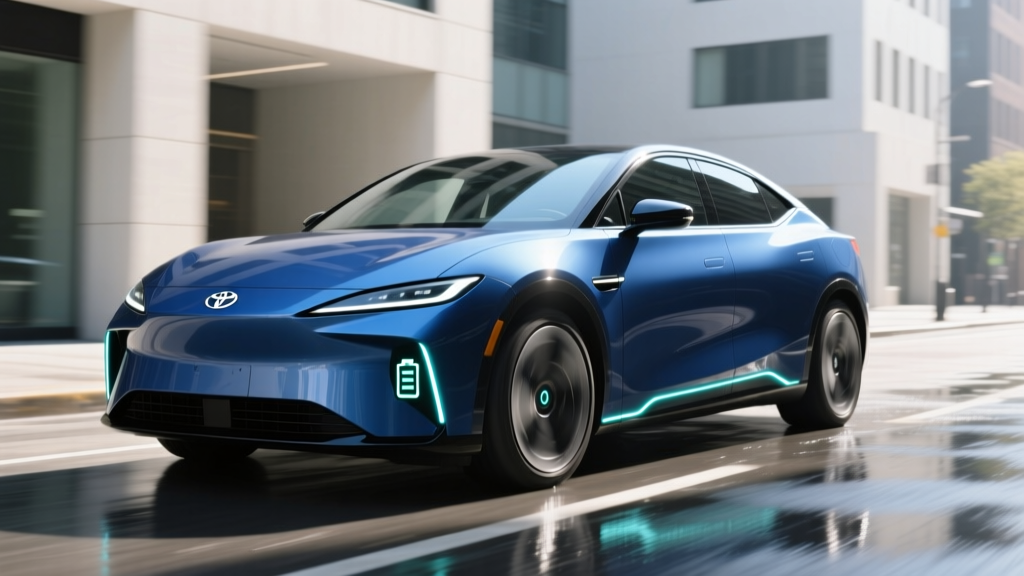
If you've been searching for a Toyota bZ lease deal or weighing whether to buy Toyota's all-electric crossover outright, you're not alone. The bZ4X — Toyota's flagship entry in the mainstream electric SUV segment — has matured considerably since its rocky 2023 debut. For 2026, Toyota has refined the battery thermal management, expanded DC fast-charge capability, and repositioned pricing to compete directly with the Hyundai Ioniq 5, Volkswagen ID.4, and Tesla Model Y.
But the real question for most shoppers isn't just sticker price — it's whether a Toyota bZ lease makes financial sense versus purchasing with the federal tax credit, and what daily ownership actually looks like once you factor in real-world range, charging speed, and cold-weather performance. This review breaks down every number that matters.
2026 Toyota bZ4X: Quick Verdict
The 2026 bZ4X is a competent, comfortable electric crossover that prioritizes ride quality and Toyota's reputation for long-term reliability over headline-grabbing range or acceleration. It's best suited for suburban commuters and small families who want predictable ownership costs and don't regularly drive more than 200 miles between charges. The available all-wheel-drive system and improved battery preconditioning make it a more viable year-round EV than earlier model years, but it still trails key competitors in DC fast-charging speed and cargo versatility.
| Spec | FWD | AWD (Dual Motor) |
|---|---|---|
| EPA Range | 252 miles | 228 miles |
| Battery (usable) | 71.4 kWh (NMC lithium-ion) | 71.4 kWh (NMC lithium-ion) |
| Horsepower | 201 hp | 214 hp |
| Torque | 196 lb-ft | 248 lb-ft |
| 0–60 mph | 7.1 sec | 5.8 sec |
| Max DC Fast Charge | 150 kW | 150 kW |
| 10–80% DC Charge Time | ~30 min | ~30 min |
| Level 2 Charge Rate | 7.2 kW (~25 mi/hr) | 7.2 kW (~25 mi/hr) |
| MPGe (city/hwy/combined) | 131 / 107 / 119 | 114 / 94 / 104 |
| Base MSRP | $38,465 | $42,585 |
Real-World Range: What the EPA Sticker Doesn't Tell You
The FWD bZ4X carries an EPA-estimated 252 miles of range, while the AWD variant drops to 228 miles. Those numbers are competitive for the class but require context before you sign a Toyota bZ lease or purchase agreement.
EPA Sticker: 252 mi (FWD) / 228 mi (AWD)
Mixed suburban/highway driving (65–75 mph): ~215–235 mi (FWD), ~195–215 mi (AWD)
Sustained highway (75+ mph): ~190–210 mi (FWD), ~175–195 mi (AWD)
Cold weather (below 32°F): Expect 20–30% reduction — as low as ~160–180 mi (FWD) on short, cold trips without preconditioning
According to fueleconomy.gov, electric vehicles typically lose 20–30% of range in cold weather due to cabin heating demands and reduced battery chemical efficiency. The bZ4X's heat pump (standard on 2026 models) mitigates some of this loss, but if you live in the Upper Midwest or Northeast and regularly drive highway distances in winter, plan around 170–190 usable miles between charges.
On the positive side, the bZ4X's battery management system now includes improved preconditioning — warming the battery before you arrive at a DC fast charger. This is critical for achieving peak charge rates, especially below 50°F. Without preconditioning, a cold NMC battery may accept only 40–60 kW instead of its 150 kW peak.
Charging Speed: DC Fast and Home Level 2
Charging is where the bZ4X reveals both its strengths and its most notable competitive gap. The 150 kW peak DC fast-charge rate is adequate but falls behind the Hyundai Ioniq 5 (240 kW) and Kia EV6 (239 kW), which use 800-volt architectures to achieve 10–80% charges in roughly 18 minutes.
| Charge Level | Power | Speed | Notes |
|---|---|---|---|
| Level 1 (120V outlet) | ~1.2 kW | ~4 miles/hour | Emergency/trickle only — full charge in ~60 hours |
| Level 2 (240V home) | 7.2 kW | ~25 miles/hour | Full charge in ~10 hours; ideal for overnight |
| DC Fast (peak) | 150 kW | 10–80% in ~30 min | Tapers significantly above 80% SoC |
At a public DC fast charger rated 150 kW or higher, the bZ4X will sustain close to peak power from roughly 10% to 55% state of charge, then taper progressively. Expect 55–80% to add another 8–10 minutes. This charge curve taper is standard behavior for NMC batteries — the battery management system reduces power to protect cell health — but it means your total 10–80% stop takes about 30 minutes, not the 18 minutes you'd see in an Ioniq 5.
For home Level 2 charging, the 7.2 kW onboard charger is a practical sweet spot. A full overnight charge from near-empty takes about 10 hours, which covers virtually all daily driving needs. Installation of a 240V/40A circuit with a quality Level 2 charger (like a ChargePoint Home Flex or Emporia Vue) typically costs $800–$2,000 including electrician labor, depending on panel proximity and local permit requirements.
Performance, Ride, and Drivetrain
The FWD bZ4X uses a single front-mounted motor producing 201 horsepower and 196 lb-ft of torque — adequate for merging and city driving but not thrilling. The 0–60 mph time of 7.1 seconds is competitive with a base RAV4 Hybrid but noticeably slower than the Tesla Model Y Long Range (4.8 seconds).
The AWD dual-motor variant adds a rear motor for a combined 214 hp and 248 lb-ft, dropping 0–60 to 5.8 seconds. Toyota's AWD system includes X-MODE, which manages torque distribution for light off-road and slippery-surface traction. It's not a rock crawler, but it handles snow-covered driveways and gravel roads confidently.
Ride quality is where the bZ4X genuinely shines. Toyota tuned the suspension for comfort over sportiness, and the result is a quiet, compliant ride that absorbs highway imperfections better than the firmer-riding Model Y. Steering is light and predictable — ideal for commuting, less so for canyon carving.
Interior, Cargo, and Technology
The bZ4X seats five, with 42.1 inches of front legroom and 35.4 inches of rear legroom — comparable to a RAV4. The cabin uses a mix of recycled fabrics and soft-touch materials, with a 12.3-inch touchscreen running Toyota's latest infotainment system. Wireless Apple CarPlay and Android Auto are standard, along with a Qi wireless charging pad.
Cargo space: 27.7 cubic feet behind the rear seats, expanding to 56.9 cu ft with seats folded. This is competitive with the Ioniq 5 (27.2 / 59.3 cu ft) but notably less than the Model Y (30.2 / 72.1 cu ft). There is no front trunk (frunk) — the space under the hood is occupied by power electronics.
Driver assistance comes via Toyota Safety Sense 3.0, which includes:
- Pre-Collision System with pedestrian detection
- Lane Departure Alert with Steering Assist
- Full-Speed Range Dynamic Cruise Control
- Lane Tracing Assist (centers the vehicle in its lane)
- Road Sign Assist
- Proactive Driving Assist (gentle deceleration when approaching slower traffic)
These features constitute SAE Level 2 driver assistance — the driver must remain fully engaged, hands on or near the wheel, and eyes on the road at all times. This is not autonomous driving. It's a well-executed highway companion that reduces fatigue on long trips, but it does not replace driver attention.
Pricing, Trims, and Federal Tax Credit Eligibility
The 2026 bZ4X is offered in two trims: XLE (base) and Limited. Both are available in FWD or AWD.
| Trim | Drivetrain | MSRP | Est. After §30D Credit* |
|---|---|---|---|
| XLE | FWD | $38,465 | ~$30,965 |
| XLE | AWD | $42,585 | ~$35,085 |
| Limited | FWD | $43,195 | ~$35,695 |
| Limited | AWD | $47,315 | ~$39,815 |
*Assumes full $7,500 §30D credit eligibility. Actual eligibility depends on buyer income, battery sourcing, and MSRP caps. See IRS rules below.
The IRS §30D Clean Vehicle Credit can provide up to $7,500 for qualifying new EVs, but eligibility is governed by multiple overlapping rules that change periodically. As of 2026, key requirements include:
- MSRP Cap: SUVs/crossovers must have an MSRP at or below $80,000 (all bZ4X trims qualify)
- Buyer Income Cap: Modified AGI must not exceed $150,000 (single), $225,000 (head of household), or $300,000 (married filing jointly)
- Battery Sourcing: The credit is split into two halves — $3,750 for critical-minerals sourcing and $3,750 for battery-component assembly, each with escalating domestic-content thresholds per IRS guidelines
- Point-of-Sale Transfer: Eligible buyers can transfer the credit to the dealer at purchase, reducing the purchase price immediately rather than waiting for a tax refund
For the bZ4X, the battery sourcing question is the variable most likely to affect your credit. Toyota sources NMC cells primarily from its joint venture with Panasonic (Prime Planet Energy & Solutions). Critical-mineral and component sourcing percentages shift annually under the Inflation Reduction Act. Always verify current-year eligibility on the IRS Clean Vehicle Credit page or with a tax professional before committing to a purchase.
Lease vs. Buy: Does a Toyota bZ Lease Make Sense?
Leasing an EV offers a distinct advantage under current tax law: the §30D credit passes through the leasing company (the lessor), and most manufacturers reflect this as a lease cash incentive — often without the buyer income or battery-sourcing restrictions that apply to purchases. This "lease loophole" (technically the commercial vehicle credit under §45W) has been a major driver of EV lease volume.
For the bZ4X, Toyota Financial Services has historically offered lease cash incentives in the $7,500–$10,000 range on select model years, which can make monthly payments surprisingly competitive. A typical 36-month lease on a bZ4X XLE FWD might land in the $350–$450/month range depending on your region, credit tier, and current incentives — though these offers fluctuate monthly.
Choose a Toyota bZ lease if:
- You want the lowest monthly payment and plan to drive under 12,000–15,000 miles/year
- You want to avoid long-term battery degradation risk (you'll return the vehicle before the warranty period ends)
- You prefer to upgrade every 3 years as charging and battery technology evolves
- Your income exceeds the §30D caps but you still want the lease-cash benefit
Choose to buy if:
- You drive more than 15,000 miles/year (lease overage penalties add up fast)
- You qualify for the full §30D credit and plan to keep the vehicle 5+ years
- You want to build equity and avoid perpetual car payments
- You can charge at home and your daily driving is well within the vehicle's range
Warranty and Long-Term Ownership
Toyota backs the bZ4X with a competitive warranty package:
- Basic warranty: 3 years / 36,000 miles
- Powertrain warranty: 5 years / 60,000 miles
- EV Battery warranty: 8 years / 100,000 miles (covers capacity below 70% of original)
- Rust-through perforation: 5 years / unlimited miles
- ToyotaCare (maintenance): 2 years / 25,000 miles (includes tire rotation, fluid top-off, multi-point inspection)
The 70% capacity retention threshold over 8 years is industry-standard, matching most competitors. Based on data from earlier bZ4X model years and Toyota's hybrid battery track record, NMC degradation has been moderate — most owners report roughly 5–8% capacity loss in the first two years, with degradation slowing significantly thereafter. Proper charging habits (avoiding frequent 100% charges and deep discharges below 10%) can further extend battery health.
Pros, Cons, and Who Should Consider the bZ4X
- Comfortable, quiet ride quality superior to many competitors
- Strong Toyota reliability reputation and dealer network
- Competitive lease pricing with lease-cash incentives
- Standard heat pump improves cold-weather efficiency
- Comprehensive Toyota Safety Sense 3.0 suite
- AWD with X-MODE for snow/light off-road capability
- DC fast-charging speed (150 kW peak) trails 800V competitors
- No front trunk (frunk) — reduced cargo versatility
- AWD range drops to 228 mi EPA — tight for road trips
- Rear legroom slightly tighter than Ioniq 5 and Model Y
- Infotainment learning curve; no physical volume knob
- Battery sourcing may limit full §30D credit on purchase
Best for: Suburban commuters and small families who prioritize ride comfort and Toyota's reliability track record, charge primarily at home, and don't regularly exceed 180 miles between charges. The AWD variant is a strong pick for snow-belt buyers who want electric propulsion without sacrificing winter capability.
Look elsewhere if: You take frequent 300+ mile road trips (the Ioniq 5 or Model Y charge faster and offer more range), you need maximum cargo space, or you want the longest possible EPA range for the money (the Chevrolet Equus EV and Hyundai Ioniq 5 Long Range both exceed 300 miles).
Frequently Asked Questions
What is the real-world range of the Toyota bZ4X?
The EPA rates the FWD bZ4X at 252 miles and the AWD at 228 miles. In real-world mixed driving, expect roughly 215–235 miles (FWD) or 195–215 miles (AWD). Cold weather and sustained highway speeds above 75 mph will reduce range further — plan for 170–190 miles in winter highway conditions.
How fast does the bZ4X charge at home and on the road?
At a DC fast charger, the bZ4X peaks at 150 kW and charges from 10–80% in approximately 30 minutes. At home on a Level 2 (240V) charger, it adds about 25 miles of range per hour, with a full charge taking roughly 10 hours.
How much does the bZ4X cost after the federal tax credit?
If you qualify for the full $7,500 §30D credit, the FWD XLE drops from $38,465 to approximately $30,965. However, credit eligibility depends on your income, the vehicle's battery sourcing, and MSRP caps. Leasing may provide access to the credit without income or sourcing restrictions through the lessor pass-through.
Does the Toyota bZ4X qualify for the $7,500 federal EV tax credit?
The bZ4X falls under the $80,000 SUV MSRP cap, so it's potentially eligible. However, the credit is split into two $3,750 halves tied to battery critical-mineral sourcing and component assembly requirements. Your eligibility for the full $7,500, a partial $3,750, or none depends on current-year IRS sourcing thresholds. Always verify at irs.gov or with a tax professional.
Is the bZ4X worth it compared to the Ioniq 5 or Model Y?
The bZ4X wins on ride comfort, noise isolation, and Toyota's dealer/ reliability network. The Ioniq 5 charges significantly faster (18 min 10–80%) and offers more range. The Model Y offers the most cargo space and the longest range but rides firmer and has a less traditional dealership experience. Your priorities — comfort vs. speed vs. space — should drive the decision.
Should I lease or buy the Toyota bZ4X?
Leasing is attractive if you drive under 15,000 miles/year, want the lowest monthly payment, and prefer to avoid long-term battery risk. Buying makes more sense if you drive high mileage, qualify for the full §30D credit, and plan to keep the vehicle 5+ years. Toyota's lease-cash incentives often make the bZ4X one of the more affordable EV leases in its class.