Toyota's Battery Safety Record: What the Data Shows
Toyota has sold over 25 million electrified vehicles globally since the Prius launched in 1997, and the company has built a reputation for conservative battery engineering. When you evaluate Toyota on battery safety, the standout fact is this: Toyota has not issued a major recall specifically for thermal runaway or fire risk in its hybrid or EV battery packs as of early 2026. That track record matters, but it comes with trade-offs — Toyota has historically prioritized longevity and safety over energy density and charging speed.
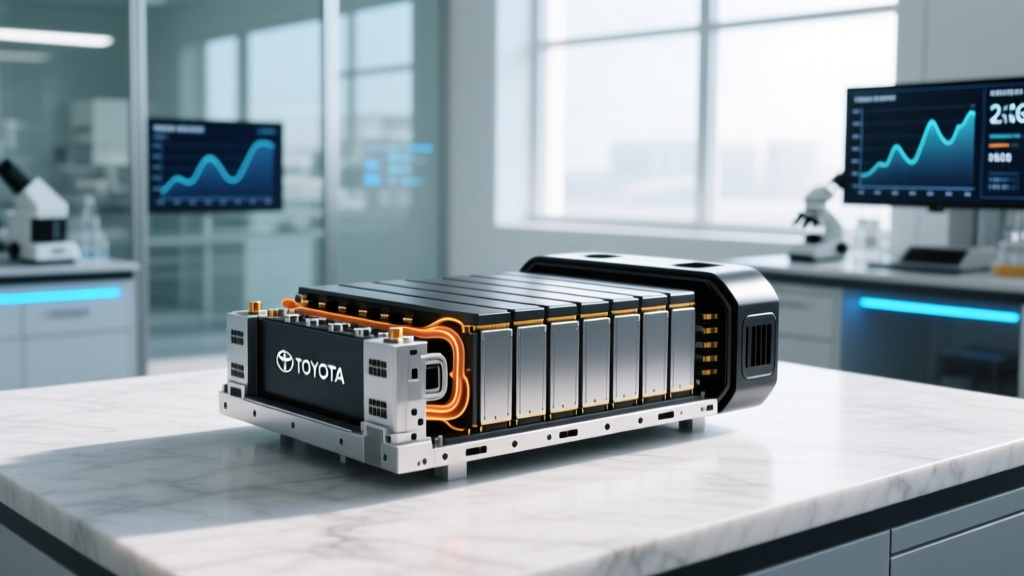
The bZ4X, Toyota's first mass-market BEV, uses a 71.4 kWh NMC (nickel manganese cobalt) lithium-ion pack. Toyota engineers designed the pack with individual cell monitoring, redundant cooling circuits, and a physical separation architecture meant to prevent thermal propagation if a single cell fails. According to NHTSA recall data, the bZ4X's most publicized recall involved wheel hub bolts — not battery safety.
Toyota Battery Safety Snapshot (through 2026):
- 25+ million electrified vehicles sold globally with Toyota battery packs
- No major NHTSA recall for bZ4X or Prius battery thermal events
- bZ4X battery: 71.4 kWh NMC, liquid-cooled, cell-level voltage/temp monitoring
- Prius: 1.3 kWh NiMH (2026 LE trim) — proven over 25+ years of production
Toyota Battery Chemistry: NiMH, NMC, and LFP Trade-Offs
Toyota uses three distinct battery chemistries across its lineup, each chosen for specific use cases. Understanding these is essential when you evaluate Toyota's approach to battery technology.
| Chemistry | Used In | Energy Density | Cycle Life | Cold Performance | Cost | Safety Profile |
|---|---|---|---|---|---|---|
| NiMH (Nickel-Metal Hydride) | Prius (standard trims) | Low (~70 Wh/kg) | Excellent (10+ yr proven) | Good | Low | Excellent — very thermally stable |
| NMC (Nickel Manganese Cobalt) | bZ4X, RAV4 Prime, Prius Prime | High (~200-250 Wh/kg) | Good (1,000-2,000 cycles) | Moderate (losses below 32°F) | High | Good — requires active thermal management |
| LFP (Lithium Iron Phosphate) | Upcoming bZ compact models (announced) | Medium (~140-160 Wh/kg) | Excellent (3,000-5,000 cycles) | Poorer (more cold-weather range loss) | Lower than NMC | Excellent — inherently stable chemistry |
What this means for buyers: NiMH is virtually bulletproof for longevity but too heavy and low-density for a long-range BEV. NMC gives the bZ4X its 252-mile EPA range but demands careful thermal management. LFP — which Toyota has announced for future compact EVs — offers the best safety-to-cost ratio but sacrifices cold-weather range and overall energy density.
Toyota's "bipolar NiMH" pack in the 2026 Prius is a notable engineering achievement: by stacking cells in a bipolar configuration, Toyota increased power density while keeping the chemically stable NiMH formula. The result is a 1.3 kWh pack that's smaller and lighter than previous Prius batteries while delivering stronger electric-assist performance.
Real-World Degradation Data: How Long Do Toyota Batteries Last?
The question "how long do EV batteries last?" has a concrete answer when looking at Toyota's track record. Toyota designs its battery packs with a large usable buffer — meaning the software prevents you from charging to true 100% or discharging to true 0%, which dramatically slows degradation.
Toyota Battery Degradation — Observed Data Points:
| Model | Years in Service | Mileage | Observed Capacity Loss | Source/Notes |
|---|---|---|---|---|
| Prius (NiMH, 2010-2015 gen) | 10-15 years | 150,000-250,000 mi | ~15-20% MPG decline over 150k mi | Consumer fleet data, fueleconomy.gov owner reports |
| RAV4 Prime (NMC PHEV, 18.1 kWh) | 3-4 years | 30,000-60,000 mi | ~3-5% electric range loss | Owner forums, early fleet data |
| bZ4X (NMC BEV, 71.4 kWh) | 2-3 years | 20,000-45,000 mi | ~2-4% estimated (limited long-term data) | Early owner reports, Toyota projects <10% over 10 yr |
Toyota has publicly stated a target of less than 10% capacity degradation over 10 years for the bZ4X pack. This is conservative compared to industry averages, where most NMC packs lose 10-15% capacity over 8 years and 100,000 miles. The key differentiator is Toyota's large buffer strategy and conservative charge/discharge rates.
Toyota Battery Warranty: What's Covered and What Isn't
Toyota's battery warranty terms are among the strongest in the industry, particularly for hybrid models. Here's the breakdown for current 2026 models:
| Model | Battery Type | Warranty Period | Mileage Limit | Capacity Threshold |
|---|---|---|---|---|
| bZ4X | NMC (71.4 kWh) | 8 years | 100,000 miles | 70% of original capacity |
| RAV4 Prime | NMC PHEV (18.1 kWh) | 8 years | 100,000 miles | 70% of original capacity |
| Prius / Prius Prime | NiMH / NMC | 10 years | 150,000 miles | Hybrid system coverage (no specific % stated) |
| Other Toyota Hybrids | NiMH / Li-ion | 10 years | 150,000 miles | Hybrid system coverage |
Key details: The bZ4X warranty guarantees the pack will retain at least 70% of its original 71.4 kWh capacity (roughly 50 kWh usable) for 8 years or 100,000 miles — whichever comes first. Toyota's hybrid warranty is even stronger at 10 years/150,000 miles, reflecting their confidence in NiMH longevity. Note that the warranty covers defects and abnormal degradation, not damage from accidents, flooding, or improper modifications.
According to Toyota's official warranty documentation, the hybrid battery warranty is fully transferable to subsequent owners at no cost, which supports resale value.
EV Battery Replacement Cost: Toyota Pricing and When It's Needed
Most Toyota hybrid and EV batteries will outlast the vehicle itself. But for buyers who plan to keep a car 15+ years or buy used with high mileage, replacement cost is a real consideration.
| Model | Battery Size | Estimated Replacement Cost (parts + labor) | Typical Replacement Trigger |
|---|---|---|---|
| Prius (NiMH) | ~1.3 kWh | $2,000 – $4,000 | 150,000-250,000+ mi, or 15+ years |
| RAV4 Prime (NMC) | 18.1 kWh | $8,000 – $12,000 | Rarely needed; projected 200,000+ mi lifespan |
| bZ4X (NMC) | 71.4 kWh | $12,000 – $18,000 | Rarely needed; projected 200,000+ mi lifespan |
Context that matters: A $15,000 bZ4X battery replacement sounds alarming until you realize that most owners will never need one. Toyota's engineering target is less than 10% degradation over 10 years, meaning a 15-year-old bZ4X might still have 85%+ capacity. Prius owners have routinely exceeded 200,000 miles on original NiMH packs. The real risk is not gradual degradation but physical damage — a collision that compromises the pack enclosure, for instance.
For out-of-warranty replacements, Toyota offers refurbished hybrid battery packs at a lower cost (typically $1,000-$2,500 for a Prius), and third-party refurbishers have emerged as a lower-cost alternative.
Maximizing Battery Health: What Toyota Owners Should Know
Battery degradation is inevitable, but the rate is largely within your control. Here's how to monitor and maximize your Toyota EV or hybrid battery's State of Health (SoH):
Battery Care Checklist for Toyota EV/PHEV Owners:
- Avoid sustained 100% SoC: For NMC packs (bZ4X, RAV4 Prime), set your charge limit to 80-90% for daily use. Use 100% only for road trips. Toyota's software already buffers the top and bottom, but staying below 90% further reduces stress.
- Limit DC fast charging frequency: Occasional DCFC is fine, but daily fast charging accelerates degradation. Toyota's bZ4X peaks at ~150 kW (CCS models) or ~130 kW (NACS adapter), and frequent sessions at this rate generate heat that stresses cells. Charge at Level 2 (7-11 kW) overnight when possible.
- Precondition before fast charging: The bZ4X supports battery preconditioning — it warms the pack to optimal temperature before you arrive at a DC fast charger. Enable this in the navigation settings for faster charging and less cell stress.
- Avoid extreme SoC in extreme temperatures: Don't leave the car at 100% SoC in 100°F+ heat or at near-0% in sub-freezing weather for extended periods. A 40-60% SoC is ideal for long-term parking.
- Monitor SoH through the Toyota app: The Toyota app (for bZ4X and newer PHEVs) shows estimated battery health. Third-party OBD-II tools like OBDeleven or Carista can pull more granular cell-voltage data.
- Use regenerative braking wisely: Toyota's multi-mode regen (in the bZ4X, adjustable via paddle shifters) recaptures energy without the heat stress of aggressive one-pedal driving. Moderate regen settings are easier on the pack.
Checking State of Health (SoH): For the bZ4X, navigate to Settings → Vehicle → Battery in the infotainment system to view an estimated SoH percentage. For Prius and RAV4 Prime owners, SoH is not displayed natively in the vehicle — you'll need an OBD-II scanner with Toyota-specific software (Techstream or a compatible app) to read hybrid battery health data. The most reliable metric is comparing your current electric-only range to the EPA-rated range when new; a 10% range drop suggests ~10% capacity loss.
Solid-State Batteries and Beyond: Toyota's Forward-Looking Roadmap
Toyota holds over 1,300 patents related to solid-state battery technology — more than any other automaker. But patents don't equal production cars, and it's critical to separate Toyota's announcements from what's actually available to buy in 2026.
What Toyota has announced (not yet available):
- Solid-state batteries: Toyota has targeted a 2027-2028 commercialization timeline for solid-state packs, initially in limited-production models. Projected specs include 750+ km (466+ mi) range and 10-minute 10-80% charging. These figures are preliminary and unverified in production vehicles.
- Bipolar LFP packs: Toyota has announced plans to use bipolar LFP chemistry in future affordable compact EVs, targeting 2026-2027 model years. LFP offers lower cost and excellent cycle life, though with reduced energy density.
- Performance lithium-ion (NMC): A next-generation "Performance" battery targeting 800+ km range and reduced cost per kWh is expected around 2026-2027 in premium Toyota/Lexus EVs.
Reality check: As of early 2026, no Toyota vehicle on sale uses solid-state batteries. The bZ4X and all current Toyota PHEVs use conventional liquid-electrolyte lithium-ion cells. Toyota's solid-state timeline has slipped multiple times — originally announced for the early 2020s, then pushed to 2025, and now targeted at 2027-2028. Buyers should make purchasing decisions based on current, proven technology rather than future announcements.
Verdict: Is Toyota's Battery Technology the Safest Choice?
Choose Toyota's battery technology if:
- You prioritize proven longevity and thermal safety over maximum range or fastest charging
- You want the strongest battery warranty in the industry (10 yr/150k mi on hybrids)
- You plan to keep the vehicle 10+ years and want minimal degradation risk
- You're buying a PHEV (RAV4 Prime, Prius Prime) and want electric-assist without full EV commitment
Look elsewhere if:
- You need 300+ miles of EPA range (the bZ4X tops out at 252 mi EPA)
- You want the fastest DC charging (bZ4X peaks at ~150 kW vs. 250-350 kW from Hyundai/Kia or Tesla)
- You want LFP chemistry now (Toyota hasn't released an LFP model yet in the US)
- You want cutting-edge energy density — Toyota's conservative approach means lower specs today
When you evaluate Toyota on battery safety, the company's conservative engineering philosophy is both its greatest strength and its most visible limitation. Toyota batteries degrade slowly, carry industry-leading warranties, and have an exceptional thermal safety record. The trade-off is that Toyota's current BEV offerings lag competitors in range, charging speed, and energy density. For buyers who measure value in decades rather than spec-sheet headlines, Toyota's battery technology remains one of the safest bets in electrification.
Frequently Asked Questions
How long do Toyota EV batteries last?
Toyota targets less than 10% capacity loss over 10 years for the bZ4X NMC pack. Prius NiMH batteries routinely exceed 200,000 miles and 15 years with manageable degradation. Based on historical data, most Toyota batteries will outlast the vehicle's practical lifespan.
How much does a Toyota EV battery cost to replace?
A Prius NiMH replacement runs $2,000-$4,000. A bZ4X NMC pack replacement is estimated at $12,000-$18,000 including labor. However, replacements are rarely needed within the warranty period (8 yr/100k mi for BEVs, 10 yr/150k mi for hybrids).
What does Toyota's battery warranty cover?
The bZ4X warranty covers battery capacity falling below 70% of original for 8 years/100,000 miles. Toyota hybrid warranties cover the hybrid battery and related components for 10 years/150,000 miles. Both are fully transferable to second owners.
LFP vs NMC — which Toyota battery chemistry is better?
NMC offers higher energy density (more range per kg) and better cold-weather performance but costs more and has shorter cycle life. LFP is cheaper, safer, and lasts longer (3,000-5,000 cycles vs. 1,000-2,000) but is heavier and loses more range in cold weather. Toyota currently uses NMC in the bZ4X and plans LFP for future compact models.
How do I check my Toyota battery's State of Health?
For the bZ4X, check via Settings → Vehicle → Battery in the infotainment system. For hybrids, use an OBD-II scanner with Toyota-compatible software (Techstream, Carista) to read battery health data. Comparing your current electric-only range to the original EPA rating is also a practical proxy.
Has Toyota ever had a battery fire recall?
As of early 2026, Toyota has not issued a major NHTSA recall specifically for battery thermal runaway or fire risk in its hybrid or BEV lineup. The bZ4X's notable recall involved wheel hub bolt separation, not the battery system.