Toyota All-Electric Cars: The Quick Answer
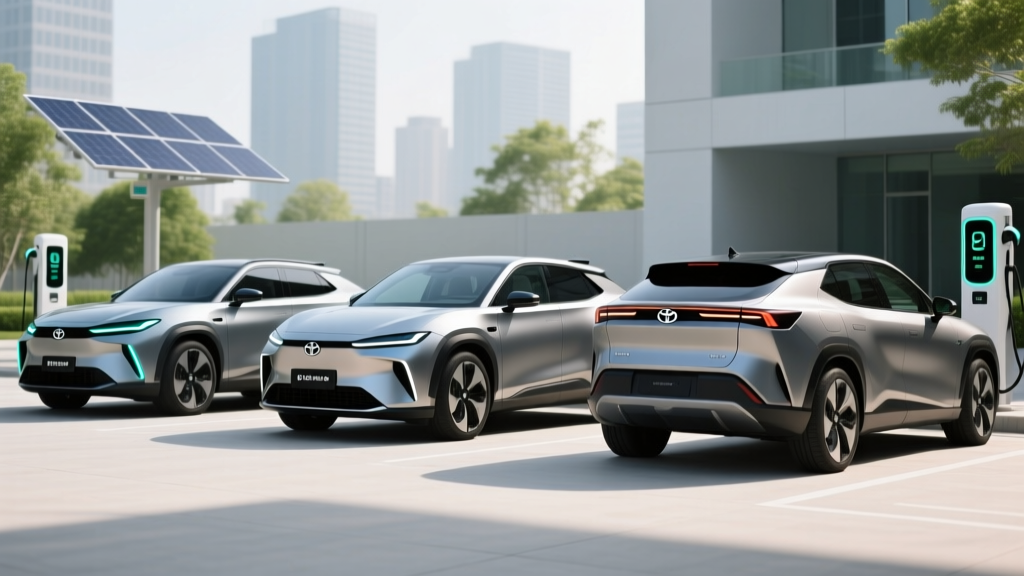
As of 2026, Toyota sells two all-electric vehicles in the U.S.: the bZ4X crossover (EPA range up to 252 miles, starting at $38,465) and the newly launched bZ Woodland SUV (EPA range up to 260 miles, starting at $42,150). Both use a 71.4 kWh usable NMC battery, support DC fast charging up to 150 kW, and qualify for partial or full §30D federal tax credits depending on battery sourcing and buyer income. If you need a third-row or 350+ mile range, Toyota doesn't yet offer it — consider the bZ Large SUV (announced, expected late 2026) or a competitor. For most buyers cross-shopping Toyota, a RAV4 Hybrid or RAV4 Prime PHEV still delivers lower upfront cost and zero charging dependency.
Toyota's 2026 All-Electric Lineup at a Glance
Toyota was slow to the BEV party, and the 2023 bZ4X launch was rough — early recall for wheel-hub bolts and underwhelming range didn't help. By 2026, the lineup has stabilized and expanded. Here's what you can actually buy today:
| Spec | 2026 bZ4X (XLE AWD) | 2026 bZ Woodland (AWD) |
|---|---|---|
| EPA Range | 252 mi (XLE AWD); 236 mi (Limited AWD) | 260 mi (est.) |
| Battery (usable) | 71.4 kWh, NMC | 71.4 kWh, NMC |
| Horsepower | 214 hp (AWD dual motor) | ~338 hp (dual motor, tuned for torque) |
| 0-60 mph | ~5.8 sec (AWD) | ~5.0 sec (est.) |
| Peak DC Fast Charge | 150 kW (CCS1) | 150 kW (CCS1/NACS adapter avail.) |
| 10-80% DC Charge Time | ~30 min (with preconditioning) | ~30 min |
| Level 2 (240V) Rate | ~6.6 kW (~23 mi/hr) | ~6.6 kW (~23 mi/hr) |
| MPGe (combined) | 114 MPGe (XLE AWD) | ~110 MPGe (est.) |
| Base MSRP | $38,465 (XLE AWD) | $42,150 |
| Battery/Powertrain Warranty | 8 yr / 100,000 mi | 8 yr / 100,000 mi |
Real-world range caveat: The EPA 252-mile figure for the bZ4X XLE AWD assumes moderate temperatures and mixed driving. In sustained 75 mph highway testing, expect closer to 215-230 miles. In freezing temperatures (below 32°F), range can drop to 180-200 miles due to cabin heating and battery chemistry limitations — Toyota does not include a standard heat pump on all trims, which matters in cold climates.
bZ4X vs bZ Woodland: Which Toyota EV Fits You?
The bZ4X is a compact crossover aimed at urban commuters and small families. The bZ Woodland, introduced for 2026, is a rugged, slightly larger SUV with more ground clearance, standard AWD with X-MODE, and a tow rating (up to 3,500 lbs). Both share the same 71.4 kWh battery platform, meaning the Woodland's extra mass and off-road tires trade a small amount of efficiency for capability.
Decision Framework: Which Toyota All-Electric Car Should You Pick?
Choose the bZ4X if:
- You commute under 60 miles round-trip and want the lowest monthly payment
- You live in a mild climate (rarely below 25°F)
- You prioritize interior tech and the available panoramic roof
- You want the best MPGe in the Toyota EV lineup
Choose the bZ Woodland if:
- You need ground clearance for snow, dirt roads, or light trail use
- You tow a small camper, jet skis, or utility trailer (up to 3,500 lbs)
- You want more cargo volume and a boxier, more traditional SUV shape
- You plan to use roof racks for kayaks or cargo boxes regularly
Wait or look elsewhere if:
- You need three rows (watch for the bZ Large SUV, announced for late 2026)
- You regularly drive 300+ miles between charging stops (consider Hyundai Ioniq 5 or Tesla Model Y)
- You lack home charging access and rely entirely on public DC fast chargers — 150 kW peak is adequate but not class-leading
EV vs Hybrid vs Gas: Toyota Ownership Cost Compared
Toyota dominates hybrids, and many buyers wonder: why go all-electric when the RAV4 Hybrid gets 39 MPG combined and costs less upfront? Here's a concrete 5-year cost comparison assuming 15,000 miles/year, $3.50/gal gas, and $0.14/kWh home electricity (national average).
| Cost Factor (5 Years) | bZ4X XLE AWD | RAV4 Hybrid XLE AWD | RAV4 Gas LE AWD |
|---|---|---|---|
| Base MSRP | $38,465 | $34,075 | $31,575 |
| Est. Federal Tax Credit (§30D) | Up to $7,500* | $0 | $0 |
| Effective Purchase Price | ~$30,965 | $34,075 | $31,575 |
| Fuel/Energy (75,000 mi) | ~$3,255 (home charging) | ~$6,474 | ~$9,032 |
| Maintenance (5 yr) | ~$1,800 | ~$3,200 | ~$3,800 |
| Insurance (5 yr avg) | ~$9,500 | ~$7,800 | ~$7,500 |
| 5-Year Total Cost | ~$45,520 | ~$51,549 | ~$51,907 |
*§30D credit eligibility depends on MSRP caps (under $80,000 for SUVs), buyer AGI limits ($150K single / $300K joint), and battery critical-mineral/critical-sourcing requirements. Verify current-year eligibility at IRS.gov. The bZ4X qualifies as of early 2026, but sourcing rules change — confirm before purchase. Credit can now be transferred to the dealer at point of sale, reducing your drive-off price.
Key takeaway: With the tax credit, the bZ4X undercuts both RAV4 variants on 5-year total cost — but only if you can charge at home. If you rely on public DC fast charging at $0.35-$0.50/kWh, your energy cost jumps to $8,100-$11,600 over 5 years, erasing much of the savings advantage.
Charging Toyota All-Electric Cars: What You Need to Know
The bZ4X and bZ Woodland both use a 71.4 kWh (usable) NMC lithium-ion battery. Here's what charging looks like across all three levels:
| Level | Power | Speed (Miles Added/Hr) | Full Charge Time | Use Case |
|---|---|---|---|---|
| Level 1 (120V household) | ~1.4 kW | ~4-5 mi/hr | ~50+ hours | Emergency top-off only |
| Level 2 (240V home/work) | ~6.6 kW | ~23 mi/hr | ~11 hours (0-100%) | Daily overnight charging |
| DC Fast Charge | Peak 150 kW | ~500+ mi/hr (at peak) | ~30 min (10-80%) | Road trips |
Understanding kW vs kWh: kW (kilowatts) measures power — how fast energy flows into the battery. kWh (kilowatt-hours) measures energy — the battery's total capacity. A 150 kW charger doesn't deliver 150 kW the entire session; it peaks early and tapers as the battery fills, especially above 80% State of Charge (SoC). That's why the 10-80% time (~30 min) is the meaningful metric, not a theoretical 0-100% calculation.
Preconditioning matters: Both models support battery preconditioning — when you set a DC fast charger as your navigation destination, the car warms or cools the battery to optimal temperature before arrival. Skip this and your peak charge rate may drop to 80-100 kW in cold weather, adding 10-15 minutes to your stop. Always precondition.
Connector note: The 2026 bZ4X ships with CCS1. Toyota has announced NACS (Tesla-style) adapter availability and future native NACS ports. For now, CCS1 gives you access to Electrify America, EVgo, and ChargePoint DC networks. You can use Tesla Superchargers only with a manufacturer-approved adapter — check Toyota's compatibility list before relying on this for road trips.
Real-World Ownership: What First-Time Toyota EV Buyers Miss
| Myth | Fact |
|---|---|
| "I'll get 252 miles no matter how I drive." | EPA range assumes mixed driving at moderate temps. Sustained 75+ mph highway driving reduces range by 10-15%. Below-freezing weather can cut 20-30%. |
| "I don't need home charging — public chargers are everywhere." | Public DC charging costs 2-4x more than home charging. Reliability remains inconsistent — expect 1 in 5 sessions to have a connectivity or hardware issue on some networks. |
| "The battery will need replacing and cost $20,000." | NMC batteries in modern Toyota EVs are warrantied for 8 years/100,000 miles at 70% capacity retention. Real-world degradation data from similar platforms shows ~8-12% loss over 150,000 miles. Full replacement is rare and covered under warranty if premature. |
| "EV maintenance is free." | No oil changes or spark plugs, but tire wear is 15-25% faster due to instant torque and heavier weight. Budget for tire rotation every 5,000 miles and replacement every 30,000-40,000 miles. |
| "The federal tax credit is guaranteed $7,500." | §30D has income caps ($150K single / $300K joint AGI), MSRP caps ($80K for SUVs), and critical-mineral/battery-component sourcing requirements that change annually. Always verify at IRS.gov before purchase. |
Home Charging Installation: Budget Realistically
If you're buying a Toyota all-electric car, Level 2 home charging is nearly essential. Here's what installation actually costs:
| Item | Typical Cost Range |
|---|---|
| Level 2 charger (32-48A, hardwired) | $400 - $750 |
| Electrician labor (240V/50A circuit run) | $800 - $2,500 |
| Electrical permit | $50 - $200 |
| Panel upgrade (if 100A panel is maxed out) | $1,500 - $3,500 |
| Total (no panel upgrade) | $1,250 - $3,450 |
| Total (with panel upgrade to 200A) | $2,750 - $6,950 |
Get three quotes from licensed electricians. Ask specifically whether your existing panel has capacity for a 50A breaker — many homes with 100A service need an upgrade before adding EV charging, especially if you already run electric HVAC, a dryer, and an electric range.
Should You Buy a Toyota All-Electric Car or Go Hybrid Instead?
This is the most important decision for Toyota shoppers. Here's the honest framework:
Buy the bZ4X or bZ Woodland (All-Electric) If:
- You can install a Level 2 charger at home (garage, driveway, or dedicated parking spot with electrical access)
- Your daily driving is under 80 miles round-trip, with occasional 200-mile road trips
- You qualify for the §30D federal tax credit (check income and sourcing rules)
- You want the lowest per-mile energy cost (~$0.04/mi on home electricity vs ~$0.12/mi for a gas RAV4)
- You value quiet, instant-torque acceleration and minimal scheduled maintenance
Buy the RAV4 Hybrid or RAV4 Prime PHEV Instead If:
- You live in an apartment or street-park with no charging access
- You regularly drive 300+ miles in rural areas with sparse DC charging infrastructure
- You live in extreme cold (regularly below 10°F) where EV range loss is severe
- You want the lowest purchase price and don't qualify for the EV tax credit
- You want Toyota's longest-proven reliability track record (the RAV4 Hybrid powertrain is now in its third generation)
The RAV4 Prime PHEV Compromise:
The RAV4 Prime offers 42 miles of electric-only range, 38 MPG after the battery depletes, and 302 hp. It starts at ~$44,500 and may qualify for a reduced §30D credit. It's the best option for buyers who want electric commuting without range anxiety on longer trips — but it costs more upfront than either the bZ4X or the RAV4 Hybrid.
Frequently Asked Questions
Does Toyota make any all-electric cars with over 300 miles of range?
Not yet in the U.S. market as of early 2026. The bZ4X tops out at 252 miles EPA and the bZ Woodland at approximately 260 miles. Toyota has announced a next-generation EV platform with longer range (potentially 400+ miles) expected around 2027-2028, and the bZ Large SUV arriving late 2026 may offer more range. If 300+ miles is non-negotiable today, look at the Hyundai Ioniq 5 (318 mi), Tesla Model Y (320 mi), or Chevrolet Equinox EV (319 mi).
Is the Toyota bZ4X eligible for the $7,500 federal tax credit in 2026?
The bZ4X has appeared on the IRS eligible vehicle list for partial or full §30D credit, but eligibility depends on your personal AGI (under $150K single / $300K joint), the vehicle's MSRP (under $80,000 for SUVs — the bZ4X qualifies), and battery-sourcing requirements that the IRS updates periodically. The credit can be transferred to the dealer at point of sale, reducing your out-of-pocket cost immediately. Always verify current eligibility at IRS.gov or with your tax professional before signing a purchase agreement.
How long does the Toyota bZ4X battery last, and what does replacement cost?
Toyota warranties the bZ4X battery for 8 years or 100,000 miles against capacity loss below 70%. Based on NMC battery degradation data from similar platforms (Subaru Solterra, Hyundai Ioniq 5), expect roughly 8-12% capacity loss over 150,000 miles under normal use. Out-of-warranty replacement is estimated at $12,000-$18,000 for the pack plus labor, but full replacements remain rare. To maximize battery life, avoid routinely charging to 100% on DC fast chargers and try to keep the battery between 20-80% SoC for daily use.
Can I charge a Toyota bZ4X at a Tesla Supercharger?
As of 2026, Toyota offers a NACS adapter for bZ4X models equipped with CCS1, enabling access to Tesla's Supercharger network. However, adapter availability and compatibility vary — confirm with your dealer that your specific model year and software version support it. Native NACS ports are expected on future Toyota EV models. You can also use fueleconomy.gov and apps like PlugShare to map CCS-compatible DC fast chargers along your routes.
Is the Toyota bZ4X good in snow and cold weather?
The AWD models (all U.S. bZ4X trims are AWD) provide confident traction in snow, and the low center of gravity from the under-floor battery helps stability. However, cold weather significantly impacts range — expect 20-30% loss below freezing, dropping a 252-mile EPA rating to roughly 180-200 real-world miles. Toyota does not include a heat pump on all trims; without one, cabin heating draws heavily from the traction battery. If you live where winters are harsh, precondition the cabin while plugged in and budget for more frequent charging stops.
How does Toyota's EV reliability compare to Tesla or Hyundai?
Toyota's brand-wide reliability reputation is strong, but the bZ4X is still relatively new — IIHS has tested it (earning top marks in crashworthiness), and early owner surveys show typical Toyota build quality with some software quirks in the infotainment system. The platform is shared with the Subaru Solterra, doubling the real-world data pool. Tesla and Hyundai have more miles logged on their respective platforms (Model Y and Ioniq 5), giving them a larger long-term reliability dataset. For conservative buyers, Toyota's 8-year/100,000-mile battery warranty and dealer network provide strong peace of mind.