Quick Answer: Does a 4Runner EV Exist?
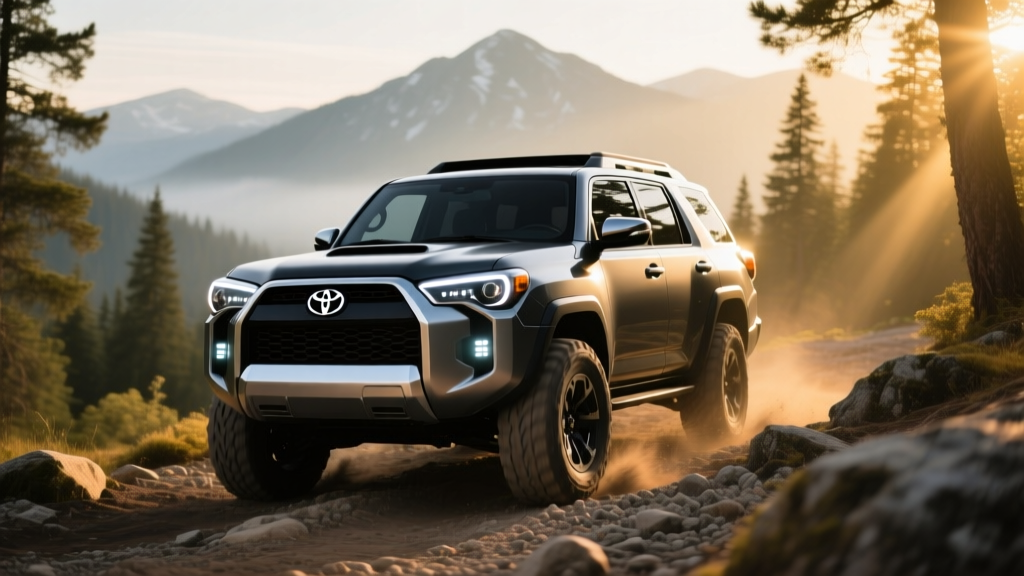
As of early 2026, Toyota has not announced or released a battery-electric 4Runner (4Runner EV). The current sixth-generation 4Runner (introduced for the 2025 model year) is offered exclusively as a hybrid (i-FORCE MAX) and turbocharged gasoline powertrain on the TNGA-F body-on-frame platform. While Toyota has hinted at expanding its EV lineup, no official 4Runner EV has been confirmed, priced, or given a release date. Buyers wanting an electrified 4Runner today can opt for the 4Runner i-FORCE MAX hybrid, which delivers an EPA-estimated 23 MPG combined — a meaningful improvement over prior generations.
Why the 4Runner EV Question Keeps Coming Up
The Toyota 4Runner has been one of the most popular midsize SUVs in the U.S. for years, prized for off-road capability, reliability, and resale value. As competitors like the Ford Bronco (with a rumored future EV variant), Jeep Wrangler 4xe (plug-in hybrid), and the fully electric Rivian R1S gain traction, the question "When is Toyota making a 4Runner EV?" appears constantly in forums and search engines.
Toyota's broader strategy adds fuel to the speculation. The automaker has committed to launching 30 battery-electric models globally by 2030, and its luxury brand Lexus has gone further, pledging a full BEV lineup by 2035. Models like the bZ4X (compact SUV) and the upcoming three-row electric SUV signal Toyota's willingness to electrify larger vehicles — but the body-on-frame truck and SUV segment has been slower to transition.
The TNGA-F Platform: Electric-Capable, Not Electric Yet
The current 4Runner rides on Toyota's TNGA-F platform, shared with the Tacoma, Land Cruiser, Sequoia, and Tundra. This ladder-frame architecture was engineered with multiple powertrain options in mind — gasoline, hybrid (i-FORCE MAX), and theoretically battery-electric.
However, Toyota has so far deployed TNGA-F exclusively with internal combustion and hybrid setups. The key constraints for a fully electric version include:
- Battery packaging: A body-on-frame SUV requires a large battery pack (likely 90-110 kWh for competitive range) mounted between or below the frame rails, which affects ground clearance — a critical metric for 4Runner buyers.
- Weight: The current 4Runner hybrid already weighs over 4,700 lbs. Adding a 100+ kWh battery could push curb weight past 5,500 lbs, impacting off-road dynamics, tire wear, and efficiency.
- Towing: The hybrid 4Runner is rated for up to 6,000 lbs of towing. EVs typically lose 30-50% of range when towing, which would be a major concern for buyers who use their 4Runner for trailers and boats.
- Market positioning: Toyota's Land Cruiser (also on TNGA-F, hybrid-only for 2024-2026) and Sequoia (hybrid-only) suggest the company views hybridization — not full electrification — as the near-term path for its rugged SUVs.
4Runner Hybrid vs. Gas: The Real Numbers
For buyers considering an electrified 4Runner today, the i-FORCE MAX hybrid is the only option. Here's how it compares to the standard turbocharged gas engine:
| Specification | 4Runner Turbo Gas (SR5) | 4Runner i-FORCE MAX Hybrid (TRD Off-Road) |
|---|---|---|
| Powertrain | 2.4L turbo 4-cyl | 2.4L turbo hybrid (i-FORCE MAX) |
| Horsepower | 278 hp | 326 hp |
| Torque | 317 lb-ft | 465 lb-ft |
| EPA Combined MPG | ~21 MPG | ~23 MPG |
| City MPG | ~20 MPG | ~23 MPG |
| Highway MPG | ~23 MPG | ~24 MPG |
| 0-60 mph (est.) | ~7.5 sec | ~6.5 sec |
| Towing Capacity | 6,000 lbs | 6,000 lbs |
| Starting MSRP (2026 est.) | ~$42,500 | ~$49,000 |
Sources: fueleconomy.gov, Toyota press materials. Exact 2026 EPA figures may vary by trim and options.
What Would a 4Runner EV Need to Compete?
If Toyota does develop a battery-electric 4Runner, it would need to match or exceed several benchmarks set by current and upcoming electric SUVs. Here's a speculative spec sheet based on competitive positioning:
| Spec / Feature | Hypothetical 4Runner EV | Rivian R1S (Dual-Motor) | Jeep Wrangler 4xe (PHEV) |
|---|---|---|---|
| Battery Capacity | ~100 kWh (est.) | 106 kWh (Standard) | 17 kWh (PHEV) |
| EPA Range | ~270-300 mi (est.) | 270-352 mi | 21 mi electric + gas |
| Peak DC Charge Rate | ~200-250 kW (est.) | 200 kW | N/A (Level 2 only) |
| 10-80% Charge Time | ~25-30 min (est.) | ~30 min | ~2 hr (Level 2) |
| Horsepower | ~350-400 hp (est.) | 533 hp | 375 hp combined |
| Ground Clearance | ~9.0 in (est.) | 8.7-14.9 in (adjustable) | 10.8 in |
| Starting Price | ~$55,000-$60,000 (est.) | $75,900 | $51,795 |
| Federal Tax Credit (§30D) | Up to $7,500 (if eligible) | $7,500 eligible | $3,750 (battery sourcing) |
4Runner EV figures are speculative estimates based on platform constraints and competitive analysis. Rivian and Jeep figures reflect current 2025/2026 model-year data from manufacturer sources and fueleconomy.gov.
Real Costs: Hybrid vs. Gas 4Runner Over 5 Years
For buyers weighing the 4Runner hybrid against the gas-only version, here's a five-year ownership cost comparison assuming 15,000 miles/year, $3.50/gallon gas, and typical maintenance:
| Cost Category | Gas 4Runner (SR5) | Hybrid 4Runner (TRD Off-Road) |
|---|---|---|
| Purchase Price (MSRP) | $42,500 | $49,000 |
| Fuel Cost (5 yr / 75,000 mi) | $12,500 | $11,413 |
| Maintenance (5 yr est.) | $3,200 | $3,000 |
| Insurance (5 yr est.) | $8,500 | $9,000 |
| Estimated Depreciation (5 yr) | $18,000 | $20,000 |
| 5-Year Total | $84,700 | $92,413 |
The hybrid's fuel savings (~$1,087 over five years) don't fully offset the ~$6,500 higher purchase price. However, the hybrid delivers significantly more torque (465 vs. 317 lb-ft), quicker acceleration, and a smoother driving experience — benefits that matter to many buyers beyond pure economics.
Common Misconceptions About a 4Runner EV
| Myth | Fact |
|---|---|
| "The 4Runner EV is already available." | No electric 4Runner exists as of 2026. Only hybrid (i-FORCE MAX) and gasoline versions are sold. |
| "Toyota is anti-EV, so they'll never make one." | Toyota has committed to 30 BEV models by 2030 and sells the bZ4X. Their strategy is multi-pathway (hybrid, PHEV, hydrogen, BEV), not anti-EV. |
| "An electric 4Runner would be terrible off-road." | EVs offer instant torque, precise wheel-by-wheel control, and a low center of gravity — all advantages off-road. The Rivian R1S and GMC Hummer EV prove this. |
| "The hybrid 4Runner qualifies for the $7,500 federal tax credit." | Standard hybrids do not qualify for the §30D clean vehicle credit. Only plug-in electric vehicles (BEV or PHEV) are eligible. See IRS rules. |
| "If I wait, a 4Runner EV will be out in 2027." | There is no confirmed timeline. Toyota has not announced an electric 4Runner for any model year. |
Decision Framework: Should You Wait or Buy Now?
If you need a 4Runner in the next 12-24 months:
- Choose the 4Runner Hybrid (i-FORCE MAX) if: You want better city MPG, more torque, quicker acceleration, and Toyota's proven hybrid reliability. Best for daily drivers who also hit trails on weekends.
- Choose the 4Runner Gas (SR5/SR5 Premium) if: You want the lowest entry price and don't mind ~21 MPG combined. The turbo four-cylinder is capable and proven.
If you want a fully electric midsize SUV now:
- Consider the Rivian R1S: 270-352 miles of range, genuine off-road capability, three-row seating, and available NACS charging. Starting at ~$75,900, it's pricier but delivers the EV experience a 4Runner EV would theoretically offer.
- Consider the Jeep Wrangler 4xe: A plug-in hybrid with 21 miles of electric-only range, solid off-road chops, and an MSRP starting around $51,795 (before potential tax credits). Not a full EV, but bridges the gap.
- Consider the Kia EV9: A three-row electric SUV with up to 304 miles of range, starting around $54,900. Less off-road focused, but practical for family hauling with DC fast charging up to 236 kW.
If you can wait 3+ years:
- A 4Runner EV may eventually arrive, but there is no confirmed date. Toyota's TNGA-F platform is theoretically EV-capable, and competitive pressure from Rivian, Ford, and GM may accelerate development. However, waiting indefinitely for an unannounced product carries opportunity cost — today's hybrid 4Runner will likely hold strong resale value regardless.
What First-Time EV Buyers Should Know (If You're Looking Beyond the 4Runner)
If the 4Runner EV search has you considering electric vehicles for the first time, here are the fundamentals:
- Home charging is essential for most owners. A Level 2 home charger (240V, typically 7-11 kW) adds 25-40 miles of range per hour. Installation costs range from $500-$2,500 depending on electrical panel capacity. Without home charging, EV ownership becomes significantly less convenient.
- Real-world range is 15-30% below EPA estimates in cold weather (below 30°F) and at sustained highway speeds above 70 mph. A vehicle rated at 300 miles EPA may deliver 210-250 miles in winter highway conditions.
- DC fast charging (Level 3) at public stations typically adds 150-250 miles in 20-30 minutes, but charging speed tapers significantly above 80% state of charge. Plan road trips around 10-80% charge cycles.
- The §30D federal tax credit offers up to $7,500 for eligible new EVs, but strict rules apply: buyer income caps ($150K single / $300K joint), MSRP caps ($55K sedans / $80K SUVs and trucks), and battery mineral/component sourcing requirements. Check IRS guidance and confirm eligibility before purchasing. A point-of-sale transfer option is available, reducing the purchase price at the dealer.
- Maintenance costs are lower for EVs — no oil changes, fewer moving parts, and regenerative braking extends brake pad life. However, tire wear can be 15-20% higher due to vehicle weight and instant torque.
Frequently Asked Questions
Is Toyota making an electric 4Runner?
Toyota has not announced a battery-electric 4Runner. The current sixth-generation 4Runner (2025-present) is available with a turbocharged gas engine or the i-FORCE MAX hybrid powertrain. Toyota has committed to expanding its EV lineup, but no 4Runner EV has been confirmed.
Does the 4Runner hybrid qualify for a federal tax credit?
No. The §30D Clean Vehicle Credit applies only to plug-in electric vehicles (battery-electric or plug-in hybrid). Conventional hybrids like the 4Runner i-FORCE MAX do not qualify. See IRS clean vehicle credit rules for eligible vehicles.
What is the closest electric alternative to a 4Runner?
The Rivian R1S is the closest electric equivalent — a body-on-frame (unibody with integrated frame), three-row SUV with genuine off-road capability, up to 352 miles of EPA range, and a starting price around $75,900. For a more budget-friendly option, the Jeep Wrangler 4xe plug-in hybrid offers 21 miles of electric range and strong off-road performance starting around $51,795.
Will the 4Runner hybrid save me money on gas?
The i-FORCE MAX hybrid improves combined MPG from ~21 to ~23, saving approximately $215 per year in fuel costs at 15,000 miles/year and $3.50/gallon. Over five years, savings total roughly $1,087 — not enough to offset the hybrid's higher MSRP, but the performance gains (465 lb-ft of torque, ~6.5 sec 0-60) are substantial.
How long do Toyota hybrid batteries last?
Toyota's hybrid battery warranty covers 10 years / 150,000 miles. Real-world data from millions of Toyota hybrids (Prius, Camry, RAV4 Hybrid) shows most batteries last 150,000-200,000+ miles with minimal degradation. Replacement costs, if needed outside warranty, typically range from $2,000-$4,000.