The Short Answer on the Toyota 4Runner EV
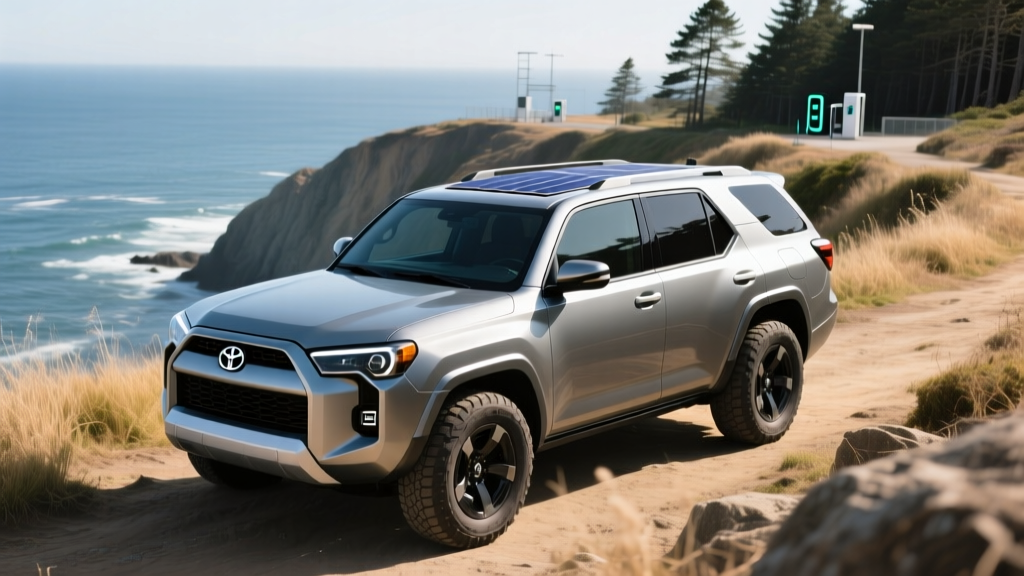
As of early 2026, Toyota has not announced a fully electric (BEV) 4Runner. The current sixth-generation 4Runner (introduced for the 2025 model year) is offered exclusively with the i-FORCE MAX hybrid powertrain — a turbocharged 2.4-liter four-cylinder paired with an electric motor, producing 326 horsepower and 465 lb-ft of torque. If you're searching for a "Toyota 4Runner EV" expecting a battery-electric, plug-in model with 250+ miles of all-electric range, that vehicle does not yet exist on Toyota's official product roadmap. What you can buy today is the 4Runner Hybrid, which uses a small 1.87 kWh battery pack and delivers an EPA-estimated 24 MPG combined — a modest improvement over the outgoing V6's 17 MPG combined, but not an electric vehicle by any standard definition.
Why the Toyota 4Runner EV Doesn't Exist Yet — And What Toyota Is Doing Instead
Toyota's electrification strategy has been notably cautious compared to competitors like Ford, Hyundai, and General Motors. While the bZ4X crossover represents Toyota's first dedicated BEV platform (e-TNGA), the company has repeatedly stated its multi-pathway approach: hybrids, plug-in hybrids, hydrogen fuel cells, and battery electrics will coexist based on market demand and regional infrastructure readiness.
The 4Runner occupies a specific niche that makes full electrification particularly challenging:
- Body-on-frame architecture: The 4Runner shares its TNGA-F platform with the Tacoma, Land Cruiser, and Tundra. Converting this ladder-frame platform to a dedicated BEV skateboard requires significant re-engineering — Toyota's BEV efforts have so far focused on unibody vehicles (bZ4X, bZ3 sedan in China).
- Off-road and towing duty cycles: 4Runner buyers expect serious trail capability and up to 6,000 lbs of towing capacity. Sustained high-load off-road driving and towing dramatically reduce BEV range — a factor that makes a pure-electric 4Runner a harder engineering and marketing proposition.
- Conservative buyer demographics: Toyota's truck and SUV customers have historically been slower to adopt electrification than sedan and crossover buyers. The i-FORCE MAX hybrid serves as a bridge technology that doesn't require charging behavior changes.
Toyota's CEO Akio Toyoda (and current CEO Koji Sato) have maintained that BEVs are "one option" rather than the sole path. As of 2026, Toyota's BEV roadmap includes a next-generation three-row SUV (expected to wear a bZ or new nameplate), a compact crossover, and several China-market models — but no body-on-frame electric truck or SUV has been officially confirmed for the U.S. market.
2026 Toyota 4Runner i-FORCE MAX Hybrid: The Electrified Option You Can Actually Buy
Since the Toyota 4Runner EV isn't available, let's look at what the current hybrid model actually delivers for buyers who want some level of electrification in Toyota's legendary off-roader.
| Specification | Value |
|---|---|
| Powertrain | 2.4L turbo 4-cyl + electric motor (i-FORCE MAX) |
| Horsepower | 326 hp (combined system output) |
| Torque | 465 lb-ft |
| Transmission | 8-speed automatic |
| Battery Pack | 1.87 kWh (nickel-metal hydride) |
| EPA Fuel Economy (4WD) | 23 city / 25 hwy / 24 combined MPG |
| Electric-Only Range | None (conventional hybrid, not PHEV) |
| Towing Capacity | Up to 6,000 lbs |
| 0-60 mph | ~6.5 seconds (est.) |
| Starting MSRP (SR5) | ~$42,650 |
| TRD Off-Road MSRP | ~$48,550 |
| TRD Pro MSRP | ~$57,300 |
| Hybrid System Warranty | 10 years / 150,000 miles |
Real-world fuel economy note: The EPA's 24 MPG combined figure is achievable in mixed suburban driving. However, sustained highway driving at 75+ mph yields closer to 21-22 MPG, and aggressive off-road trail use can drop figures into the mid-teens. The 1.87 kWh battery is far too small to provide meaningful electric-only driving — this system uses the electric motor primarily for torque fill at low RPMs and regenerative braking assistance.
4Runner Hybrid vs. Gas vs. a Hypothetical 4Runner EV: Cost and Efficiency Breakdown
To understand where the hybrid 4Runner sits — and what a future Toyota 4Runner EV would need to deliver — here's a data-driven comparison across the key ownership costs.
| Cost Category | 2026 4Runner Hybrid (i-FORCE MAX) | Previous-Gen 4Runner V6 (4.0L) | Hypothetical 4Runner EV (est.) |
|---|---|---|---|
| Purchase Price (base) | $42,650 | $38,000 (est. used/equivalent) | $55,000-$60,000 (est.) |
| Fuel / Energy (5 yr, 75,000 mi) | ~$9,400 (gas @ $3.50/gal, 24 MPG) | ~$13,200 (gas @ $3.50/gal, 17 MPG) | ~$3,750 (electricity @ $0.15/kWh, 2.5 mi/kWh) |
| Maintenance (5 yr) | ~$2,800 | ~$3,500 | ~$1,500 (est.) |
| Insurance (5 yr avg.) | ~$9,000 | ~$8,500 | ~$10,500 (est.) |
| Federal Tax Credit (§30D) | $0 (not a BEV or PHEV) | $0 | Up to $7,500 (if eligible) |
| Estimated 5-Year Total | ~$63,850 | ~$63,200 | ~$63,250-$68,250 (before credit); ~$55,750-$60,750 (with credit) |
Key takeaway: The i-FORCE MAX hybrid saves roughly $3,800 in fuel over five years compared to the outgoing V6, but the higher purchase price largely offsets that savings. A hypothetical battery-electric 4Runner with a ~100 kWh battery, 250-mile EPA range, and eligibility for the federal §30D clean vehicle credit could achieve meaningful fuel savings — but only if the buyer has reliable home charging access and the vehicle qualifies under current battery-sourcing and MSRP cap rules.
What a Future Toyota 4Runner EV Would Need to Deliver
If Toyota eventually green-lights a battery-electric 4Runner (or repositions the nameplate onto a BEV platform), here are the benchmarks it would need to meet to satisfy the 4Runner's core buyer base:
Range and Battery
Given the 4Runner's body-on-frame weight (current curb weight: ~4,700 lbs for the hybrid) and off-road/towing mission, a BEV version would likely require a 100-120 kWh usable battery to achieve an EPA-estimated 250-280 miles. In real-world highway driving, expect 20-25% less — meaning actual range could fall to 190-225 miles on a road trip. Cold-weather operation in sub-freezing temperatures could reduce range by an additional 15-30%, bringing winter highway range potentially below 170 miles.
Charging Speed
A 4Runner EV would need DC fast-charging capability of at least 250 kW (peak) to be competitive. At that rate, a 10-80% charge on a 110 kWh pack would take approximately 25-30 minutes — acceptable for road trips but slower than lighter BEVs. Sustained charging above 80% State of Charge (SoC) slows dramatically due to the charge curve taper; a full 10-100% session could take 45+ minutes. Home Level 2 charging at 11.5 kW would require roughly 10-11 hours for a full charge.
Off-Road Capability
Electric motors deliver instant torque — a potential advantage for rock crawling. However, sustained low-speed technical trail driving generates significant heat in electric motors and inverters, and battery packs mounted low in the chassis face vulnerability to rock strikes despite skid-plate protection. A 4Runner EV would need robust thermal management and serious underbody armor.
Towing Impact on Range
This is the single biggest hurdle for any electric body-on-frame SUV. Towing a 5,000-lb trailer at highway speeds can cut BEV range by 40-50%. A 4Runner EV rated at 260 miles EPA could realistically deliver only 130-155 miles while towing — making long-distance trailer trips a significant planning challenge with current charging infrastructure.
Should You Wait for a Toyota 4Runner EV or Buy the Hybrid Now?
This is where a practical decision framework helps cut through the speculation.
4Runner Buying Decision Framework
Buy the 2026 4Runner i-FORCE MAX Hybrid if:
- You need a midsize body-on-frame SUV now for off-road use, towing, or family hauling
- You drive in areas with limited DC fast-charging infrastructure (rural West, mountain regions)
- You regularly tow trailers over 3,000 lbs and need predictable range without route-planning anxiety
- You want Toyota's proven 10-year/150,000-mile hybrid warranty coverage
- You prefer not to modify your fueling habits (gas stations remain ubiquitous)
Wait and consider alternatives if:
- Your daily driving is under 60 miles round-trip and you have Level 2 home charging — a BEV like the Rivian R1S or Ford Explorer EV (when U.S. deliveries scale) may better serve commuting needs with lower operating costs
- You want true electric-only driving — the 4Runner hybrid is a conventional HEV with zero plug-in capability
- You're willing to wait 2-4 years to see if Toyota announces a dedicated BEV platform for its truck lineup
- Your primary use case is suburban commuting and light trail use rather than serious off-roading or heavy towing
Consider a plug-in hybrid (PHEV) competitor if:
- You want 30-40 miles of electric-only daily driving with gas-engine backup for road trips
- The Jeep Wrangler 4xe (25 miles EV range, 49 MPGe) or the Toyota Land Cruiser (if a PHEV variant becomes available) could bridge the gap between hybrid convenience and electric daily driving
Common Misconceptions About the Toyota 4Runner EV
| Myth | Fact |
|---|---|
| "The new 4Runner is an EV" | The 2025/2026 4Runner uses the i-FORCE MAX hybrid system. It has a 1.87 kWh battery that cannot be plugged in. It is not a BEV or PHEV. |
| "Toyota is releasing an electric 4Runner in 2026" | Toyota has made no official announcement of a BEV 4Runner. The current product roadmap includes the bZ series for BEVs, none of which are body-on-frame off-roaders. |
| "The hybrid 4Runner gets 40+ MPG" | The EPA rates the 4Runner i-FORCE MAX at 23-24 MPG combined. It is heavier and less aerodynamic than a RAV4 Hybrid (which achieves ~39 MPG). |
| "A 4Runner EV would be cheaper to own" | A BEV 4Runner would likely carry a $12,000-$17,000 price premium over the hybrid. Fuel savings (~$5,650 over 5 years) would partially offset this, but insurance and higher upfront cost narrow the gap significantly. |
| "The hybrid system reduces towing capacity" | The i-FORCE MAX hybrid actually increases torque (465 lb-ft vs. the old V6's 266 lb-ft), maintaining the 6,000-lb tow rating with stronger low-end pulling power. |
Real-World Ownership Considerations for Electrified 4Runner Buyers
Home Charging Access
If you're hoping for a future 4Runner EV, start by assessing your charging situation. A 100+ kWh battery pack requires a dedicated Level 2 (240V) home charger to be practical. Installation costs for a Level 2 setup (such as a ChargePoint Home Flex or Emporia Vue) typically range from $800 to $2,500 including equipment and electrician labor, but can exceed $4,000 if your electrical panel requires an upgrade from 100A to 200A service. Without home charging, BEV ownership becomes significantly less convenient — public DC fast charging costs 2-3x more per kWh and requires dedicated time.
Climate Impact
4Runner buyers in cold-weather states (Colorado, Montana, Minnesota, New England) should understand that battery chemistry is temperature-sensitive. A BEV 4Runner's range could drop 20-30% in sustained sub-20°F operation, and DC fast-charging speeds are substantially reduced when battery temperature is low — even with active preconditioning. The current hybrid 4Runner faces no such limitation; its gasoline engine operates efficiently regardless of ambient temperature.
Driving Patterns
The hybrid 4Runner excels in the stop-and-go driving where regenerative braking recovers the most energy — suburban commutes, school runs, and trail access roads. Highway-heavy drivers will see less benefit from the hybrid system, with real-world fuel economy dropping to 21-22 MPG at sustained 75 mph speeds. For a future BEV 4Runner, highway-heavy driving is similarly the worst-case scenario for range, as aerodynamic drag on a tall, boxy SUV is substantial.
Competitors Already Offering Electric or Plug-In Off-Road SUVs
While the Toyota 4Runner EV remains hypothetical, several competitors already offer electrified alternatives in the off-road-capable SUV segment:
- Rivian R1S (Dual-Motor): 352-mile EPA range (Max Pack), 105 kWh usable battery, peak 220 kW DC charging, ~$79,900 MSRP. True BEV with serious off-road capability, but significantly more expensive than a 4Runner.
- Jeep Wrangler 4xe: 25-mile electric-only range, 2.0L turbo PHEV, 49 MPGe, ~$51,000 MSRP. Plug-in capability for short commutes, but limited EV range and a rougher ride than the 4Runner.
- Jeep Grand Cherokee 4xe: 26-mile electric-only range, 2.0L turbo PHEV, 56 MPGe, ~$60,000 MSRP. More refined than the Wrangler, closer in size and comfort to the 4Runner, but not as trail-capable.
- Ford Bronco (no electrified variant as of 2026): Direct 4Runner competitor still relying on conventional ICE powertrains.
Frequently Asked Questions
Is Toyota making an all-electric 4Runner?
Not as of early 2026. Toyota has not announced a battery-electric 4Runner. The current sixth-generation 4Runner uses the i-FORCE MAX hybrid system, which is a conventional (non-plug-in) hybrid. Toyota's BEV plans center on the bZ series, which currently includes unibody crossovers and sedans.
Does the 4Runner hybrid qualify for the federal EV tax credit?
No. The IRS §30D clean vehicle credit applies only to battery-electric vehicles (BEVs) and plug-in hybrids (PHEVs) with a minimum battery capacity of 7 kWh. The 4Runner's 1.87 kWh hybrid battery does not qualify. Only BEVs and PHEVs meeting battery-sourcing, MSRP cap ($80,000 for SUVs), and buyer income limits are eligible for up to $7,500.
How much fuel does the 4Runner hybrid save vs. the old V6?
The previous-generation 4Runner 4WD achieved approximately 17 MPG combined. The 2026 i-FORCE MAX hybrid achieves 24 MPG combined — a 41% improvement. At 15,000 miles per year and $3.50/gallon, that translates to roughly $760 in annual fuel savings, or about $3,800 over five years.
Will Toyota ever make a plug-in hybrid (PHEV) 4Runner?
It's possible but unconfirmed. Toyota offers PHEV variants of the RAV4 (RAV4 Prime, 42 miles EV range) and Prius Prime (44 miles EV range). Extending PHEV technology to the TNGA-F truck platform would require packaging a larger battery pack (likely 15-20 kWh) without compromising ground clearance or cargo space. No official announcement has been made.
What's the best electrified SUV for off-road use right now?
For true off-road capability with electrification, the Rivian R1S offers the most capable BEV option (quad-motor variant with tank turns and 352-mile range), while the Jeep Wrangler 4xe provides plug-in hybrid flexibility for shorter trails. The 4Runner i-FORCE MAX remains the most proven and affordable option for serious trail use, though its hybrid system offers efficiency gains rather than electric driving.