The Bottom Line on the 2027 Toyota Highlander EV
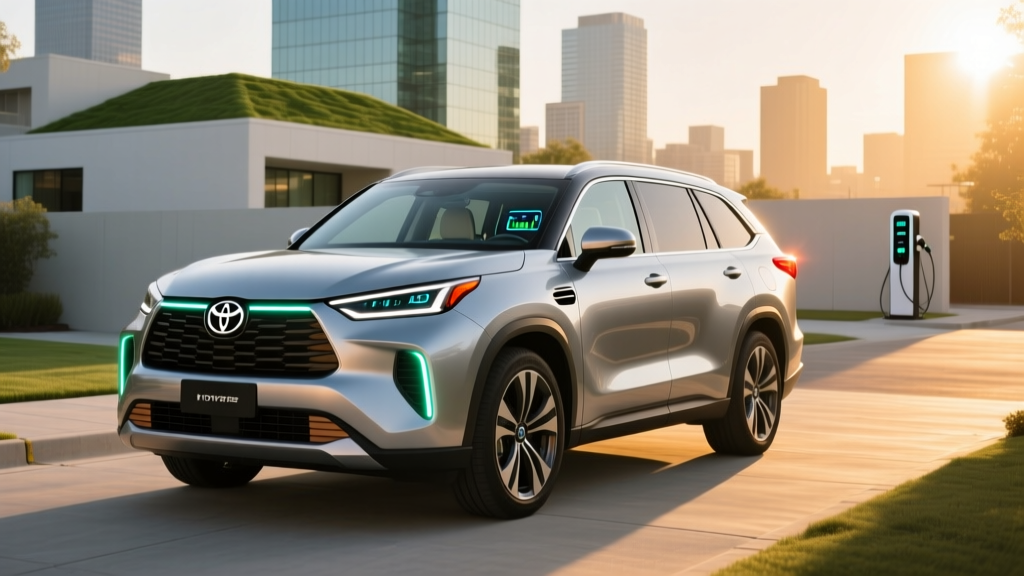
Yes — Toyota confirmed the 2027 Highlander electric three-row SUV, and it's shaping up to be one of the most anticipated mainstream EVs in the family-hauler segment. Announced as part of Toyota's accelerated battery-electric roadmap, the three-row electric Highlander is expected to arrive in U.S. dealerships in late 2026 or early 2027 as a 2027 model year vehicle. Based on Toyota's e-TNGA platform evolution and recent battery technology announcements, we project an EPA-estimated range of 280–320 miles, a starting MSRP near $52,000–$56,000, and DC fast-charging capability in the 150–200 kW range. It will compete directly with the Kia EV9, Hyundai Ioniq 9, and Rivian R1S. However, all specs remain preliminary — Toyota has not released final EPA certifications or pricing. Here's everything confirmed so far, plus the ownership math you need to decide whether to wait.
What Toyota Has Actually Confirmed About the Electric Highlander
Toyota's electric three-row SUV confirmation came through the company's global EV strategy updates, which outlined a next-generation battery-electric platform with improved energy density and a dedicated large-SUV architecture. The Highlander EV will ride on an evolved version of Toyota's e-TNGA platform — the same modular skateboard architecture underpinning the bZ4X, but stretched and upgraded for a larger, heavier vehicle with third-row seating.
Key confirmed or strongly indicated details:
- Platform: Next-generation e-TNGA, purpose-built for three-row electric SUVs
- Battery chemistry: Toyota has indicated a shift toward bipolar lithium-ion cells with higher energy density, and has also been investing in LFP (lithium iron phosphate) for more affordable trims
- Seating: Three rows, targeting 6- or 7-passenger configurations
- Production: Expected to be built at Toyota's Kentucky or Indiana U.S. plants, which matters for §30D tax credit battery-sourcing requirements
- Availability: Late 2026 to early 2027 as a 2027 model year
What Toyota has not yet confirmed: exact battery capacity (kWh), EPA-certified range, peak DC charge rate (kW), horsepower, 0–60 time, or final MSRP by trim. Everything below is our analyst projection based on Toyota's published battery roadmap, competitive positioning, and platform physics.
Projected Specs: Range, Battery, Charging, and Performance
Here's what the numbers are likely to look like based on the competitive landscape and Toyota's technology trajectory. Treat these as informed estimates, not final specifications.
| Attribute | Estimated Value | Competitive Benchmark |
|---|---|---|
| Battery Capacity (usable) | 90–105 kWh | Kia EV9: 99.8 kWh |
| Battery Chemistry | NMC (bipolar Li-ion) or LFP (base trim) | EV9: NMC; Tesla Model Y: LFP/NMC |
| EPA Range (est.) | 280–320 miles | EV9 RWD: 304 mi; EV9 AWD: 270 mi |
| Real-World Highway Range | 240–275 miles | EV9 real-world: ~240–260 mi highway |
| Peak DC Fast Charge Rate | 175–210 kW | EV9: 236 kW peak |
| 10–80% DC Fast Charge Time | 22–28 minutes | EV9: ~24 minutes (10–80%) |
| Level 2 Charging (240V) | 11–14 kW (approx. 7.5 kW usable) | EV9: 10.9 kW onboard |
| Powertrain | Dual-motor AWD (likely standard) | EV9: RWD or AWD options |
| Horsepower (est.) | 340–400 hp | EV9 AWD: 379 hp |
| 0–60 mph (est.) | 5.5–6.5 seconds | EV9 AWD: 5.0 sec |
| Towing Capacity (est.) | 3,500–5,000 lbs | EV9: 5,000 lbs (with tow package) |
| Battery/Powertrain Warranty | 8 years / 100,000 miles (expected) | Hyundai/Kia: 10 yr / 100k mi |
Real-World Range Reality Check
EPA sticker (projected): ~300 miles
Expect in real-world highway driving (70–80 mph): 240–275 miles
In cold weather (below 30°F): 210–250 miles
Why the gap? Three-row SUVs are heavy (likely 5,200–5,600 lbs) and aerodynamically challenged. Highway speeds above 70 mph and cold temperatures sap efficiency significantly. If Toyota includes a heat pump — which the bZ4X offers — cold-weather losses will be less severe than competitors without one. This is a critical spec to watch for.
How the Electric Highlander Compares: EV vs. Gas vs. Hybrid
The current Highlander lineup includes a gas V6 and a hybrid powertrain. Many shoppers will be cross-comparing the incoming EV against these familiar options — and against rival electric three-row SUVs. Here's how the ownership math stacks up.
| Metric | Highlander EV (est.) | Highlander Hybrid (2026) | Highlander Gas V6 (2026) |
|---|---|---|---|
| Starting MSRP | $52,000–$56,000 | ~$42,000 | ~$39,000 |
| EPA Range / Tank Range | ~300 mi | ~540 mi (35 MPG × 15.3 gal) | ~420 mi (24 MPG × 17.9 gal) |
| MPGe / MPG Combined | ~90–100 MPGe | 35 MPG combined | 24 MPG combined |
| Fuel/Energy Cost per Mile | ~$0.04–$0.06 (home charging) | ~$0.10 (at $3.50/gal) | ~$0.15 (at $3.50/gal) |
| Annual Fuel/Energy (15k mi) | $600–$900 | $1,500 | $2,190 |
| Annual Maintenance (est.) | $300–$500 | $600–$800 | $700–$900 |
| Federal Tax Credit (§30D) | Up to $7,500 (if eligible) | $0 | $0 |
| 5-Year Energy + Maintenance | $4,500–$7,000 | $10,500–$11,500 | $14,500–$15,500 |
The numbers tell a clear story: the electric Highlander will cost $10,000–$15,000 more upfront than a gas or hybrid Highlander, but it will save $1,200–$1,800 per year in fuel and maintenance. Over five years, those savings recover roughly $6,000–$9,000 of the price gap — and if you qualify for the full $7,500 federal tax credit under IRS §30D, the effective purchase price drops to roughly $44,500–$48,500, narrowing the gap further.
However, the gas and hybrid Highlander still win on total range per fill-up and refueling convenience on road trips. The hybrid's 540-mile range and 5-minute fill-up are hard to beat for families who regularly drive 400+ miles in a day. If that's your pattern, the hybrid remains a strong choice.
Tax Credit Eligibility: Will the Highlander EV Qualify for $7,500?
This is the make-or-break question for many buyers. Under current IRS §30D rules, the federal clean vehicle credit offers up to $7,500, but eligibility depends on several factors that change frequently:
- MSRP cap: SUVs must have a base MSRP at or below $80,000 — the Highlander EV should clear this easily at a projected $52k–$56k starting price
- Buyer income cap: Adjusted gross income must not exceed $150,000 (single), $225,000 (head of household), or $300,000 (joint filers)
- Battery sourcing: A percentage of critical minerals and battery components must be sourced from the U.S. or free-trade-agreement countries — Toyota's U.S. production plans improve the odds, but final sourcing certification is pending
- Point-of-sale transfer: As of 2024, eligible buyers can transfer the credit to the dealer at purchase, reducing the out-of-pocket price immediately rather than waiting for a tax refund
- Assembly: Final assembly must occur in North America — Toyota's Kentucky and Indiana plants position this well
Our assessment: If Toyota manufactures the Highlander EV in the U.S. and meets critical-mineral thresholds, the credit is likely available — but always verify current-year eligibility on irs.gov before purchasing. Rules have changed annually since 2023 and may shift again by 2027.
Real-World Ownership: What First-Time EV Buyers Must Consider
Buying a three-row electric SUV isn't the same as buying a gas Highlander. Here are the practical factors that will define your daily experience:
Home Charging Access Is Non-Negotiable
For a vehicle this size, Level 2 home charging (240V, 40–48 amps) is essential. A 100 kWh battery charging at 11.5 kW (48 amps) will add roughly 30–35 miles per hour of charging, meaning a full 10–100% charge takes about 8–9 hours — perfect for overnight. Without home charging, you'll rely on public DC fast chargers, which cost 2–4× more per kWh than home electricity and require time you may not have.
Home Level 2 installation costs vary widely:
| Item | Low End | High End |
|---|---|---|
| Level 2 charger hardware (48A) | $400 | $750 |
| Electrician labor (240V circuit) | $500 | $1,500 |
| Electrical panel upgrade (if needed) | $0 | $2,500 |
| Permit and inspection | $50 | $300 |
| Total | $950 | $5,050 |
If your home has a 200-amp electrical panel with spare capacity, expect to spend $1,000–$2,000 total. If you need a panel upgrade to 200A or 400A, costs can reach $3,000–$5,000. Always get a quote from a licensed electrician before committing to an EV purchase.
Cold-Weather Range Loss Is Real
If you live in a climate where temperatures regularly drop below freezing, expect 15–30% range reduction in winter. A 300-mile EPA sticker could mean 210–255 miles on a 20°F day. This is physics, not a defect — lithium-ion batteries are less efficient in cold, and cabin heating consumes significant energy. A heat pump (if Toyota includes one) mitigates this by 5–10 percentage points.
Road Trip Charging Requires Planning
On a 600-mile family road trip, you'll need at least one DC fast-charge stop. At a 175–200 kW charger, expect a 10–80% session in roughly 25 minutes — add time for finding the charger, plugging in, and stretching legs, and budget 35–45 minutes per stop. This compares to the hybrid's 5-minute gas fill-up. Networks like Electrify America and the expanding Tesla Supercharger network (now open to NACS-equipped non-Tesla vehicles) are improving coverage, but rural charging deserts remain a real concern in parts of the Mountain West and rural South.
Common Misconceptions About the Electric Highlander
| Myth | Fact |
|---|---|
| "It will have 400+ miles of range." | Unlikely. A 5,000+ lb three-row SUV with a ~100 kWh battery will realistically achieve 280–320 EPA miles. Physics limits efficiency at this weight and frontal area. |
| "I can charge it on a regular 120V outlet overnight." | Level 1 (120V) charging adds roughly 3–4 miles per hour. A full charge from 10% would take over 24 hours. Level 2 (240V) is mandatory for daily use of a large-battery EV. |
| "The battery will need replacing in 5 years." | Modern EV batteries are designed for 15–20 years of service. Toyota's projected 8-year/100,000-mile battery warranty covers capacity below 70%. Real-world degradation data from similar platforms shows 8–12% loss over 100,000 miles. |
| "It will be self-driving." | Toyota Safety Sense and any advanced driver-assist features will be SAE Level 2 — the driver must remain fully engaged and hands-on (or eyes-on, depending on the system). This is not autonomous driving. |
| "It qualifies for the $7,500 credit automatically." | Eligibility depends on your income, the vehicle's MSRP, battery sourcing, and North American assembly. Always verify on irs.gov before purchasing. |
Competitive Landscape: What Else Should You Consider?
The three-row electric SUV segment is getting crowded by 2027. Here's how the Highlander EV stacks up against confirmed rivals:
| Spec | Toyota Highlander EV (est.) | Kia EV9 (2026) | Hyundai Ioniq 9 (2026) | Rivian R1S (Dual-Motor) |
|---|---|---|---|---|
| Starting MSRP | $52,000–$56,000 | $54,900 | $56,000 (est.) | $75,900 |
| EPA Range | 280–320 mi | 270–304 mi | ~300 mi (est.) | 352–410 mi |
| Peak DC Charge (kW) | 175–210 kW | 236 kW | ~200+ kW (est.) | 200+ kW |
| 10–80% Time | 22–28 min | ~24 min | ~24 min (est.) | ~25 min |
| Third-Row Usability | TBD | Adults (short trips) | TBD | Adults (comfortable) |
| Towing | 3,500–5,000 lbs | 5,000 lbs | TBD | 7,700 lbs |
| Tax Credit (§30D) | Likely eligible | Partial / varies by trim | Likely eligible | Eligible (some trims) |
The Kia EV9 currently leads on DC fast-charge speed (236 kW peak) and is already on sale. The Rivian R1S offers the most range and towing, but at a significantly higher price point. Toyota's advantage will likely be brand trust, dealer network, resale value, and Toyota Safety Sense integration — factors that matter enormously to the family-SUV buyer who isn't an early adopter.
Should You Wait or Buy Now? A Decision Framework
Choose the Electric Highlander (Wait) If:
- You want a mainstream-brand three-row EV with Toyota's reliability reputation and dealer support
- You have home Level 2 charging (or can install it for under $2,500)
- Your daily driving is under 100 miles and you road-trip less than once a month
- You qualify for the §30D federal tax credit (income under $150k single / $300k joint)
- You plan to keep the vehicle 7+ years, making long-term fuel savings meaningful
- You want to support U.S.-assembled EVs and maximize battery-sourcing credit eligibility
Buy the Kia EV9 or Hybrid Highlander Now If:
- You need a three-row SUV today and can't wait until late 2026 or 2027
- You regularly drive 400+ miles in a single day (the hybrid's 540-mile range and 5-minute fill-ups are unbeatable)
- You lack home charging access and your area has limited public DC fast-charging infrastructure
- You live in an extremely cold climate and need maximum range security (hybrid doesn't lose range in winter the way EVs do)
- You want proven, real-world specs rather than projected estimates
5-Year Cost of Ownership: The Full Picture
| Cost Category | Highlander EV (est.) | Highlander Hybrid | Highlander Gas |
|---|---|---|---|
| Purchase Price (base MSRP) | $54,000 | $42,000 | $39,000 |
| Federal Tax Credit | –$7,500 | $0 | $0 |
| Effective Purchase Price | $46,500 | $42,000 | $39,000 |
| Energy/Fuel (75k miles) | $3,500 | $7,500 | $10,950 |
| Maintenance (5 years) | $2,000 | $3,500 | $4,000 |
| Insurance (5 years, est.) | $9,000 | $7,500 | $7,000 |
| Home Charger Install | $1,500 | $0 | $0 |
| Estimated Depreciation (5 yr) | $18,000 | $14,000 | $15,000 |
| Total 5-Year Cost | $80,500 | $74,500 | $75,950 |
The EV's higher insurance premiums (typically 15–25% more than equivalent gas vehicles) and depreciation partially offset fuel savings. Over five years, the total cost gap between the EV and hybrid narrows to roughly $6,000 — and if electricity costs in your area are low (under $0.12/kWh) or gas prices rise above $4/gallon, the EV could break even or come out ahead.
One important note: EV insurance costs vary significantly by insurer and state. Get quotes before purchasing — some companies now offer EV-specific policies that are more competitive.
Frequently Asked Questions
When will the 2027 Toyota Highlander EV be available to buy?
Toyota has confirmed the vehicle but has not announced an exact on-sale date. Based on typical Toyota product timelines and the company's EV acceleration strategy, we expect U.S. deliveries to begin in late 2026 or early 2027. Reservations may open several months before deliveries.
Will the electric Highlander have a third row that adults can use?
Toyota has indicated three-row seating, but third-row dimensions haven't been published. For reference, the Kia EV9's third row fits adults on short trips but is tight for long journeys. The Rivian R1S offers the most comfortable adult third row in the segment. We'll update this when Toyota releases interior measurements.
What connector will the Highlander EV use — NACS or CCS?
Toyota has committed to adopting the NACS (Tesla) charging standard for its future EVs in North America, starting with models arriving in the 2025–2026 timeframe. It is highly likely the 2027 Highlander EV will ship with a native NACS port, giving it access to Tesla's Supercharger network — currently the most reliable and extensive DC fast-charging network in the U.S. This is a significant advantage over CCS-equipped rivals that still rely on Electrify America and other networks with more variable uptime.
How long will the battery last, and what does replacement cost?
Based on data from similar battery platforms, expect 8–12% degradation over 100,000 miles, meaning a 300-mile-new range might become ~265–275 miles at 100k miles. Toyota's battery warranty is expected to guarantee at least 70% capacity retention for 8 years / 100,000 miles. A full battery replacement outside warranty currently costs $12,000–$20,000 for a pack of this size, though prices are declining as battery manufacturing scales.
Is the electric Highlander better than the Kia EV9?
It depends on your priorities. The EV9 is available now with proven specs, faster DC charging (236 kW), and strong reviews. The Highlander EV's advantages will likely be Toyota's brand reliability, U.S. assembly for tax credit purposes, NACS native charging, and potentially stronger resale value. If you can wait, the comparison will be worth making. If you need a vehicle now, the EV9 is the segment leader among mainstream brands.
Can I tow with the electric Highlander?
Toyota hasn't published towing specs, but based on the platform and competitive positioning, expect 3,500–5,000 pounds — adequate for a small boat, utility trailer, or light camper. Note that towing reduces EV range by 30–50% depending on trailer weight and aerodynamics. A 300-mile range could drop to 150–200 miles while towing. The Rivian R1S leads the segment at 7,700 lbs if heavy towing is a priority.
Note: All specifications for the 2027 Toyota Highlander EV in this article are projections based on Toyota's published EV roadmap, competitive analysis, and platform engineering data. Final EPA-certified range, pricing, and tax credit eligibility will be confirmed closer to the vehicle's on-sale date. Always verify current information on fueleconomy.gov and irs.gov before making a purchase decision.