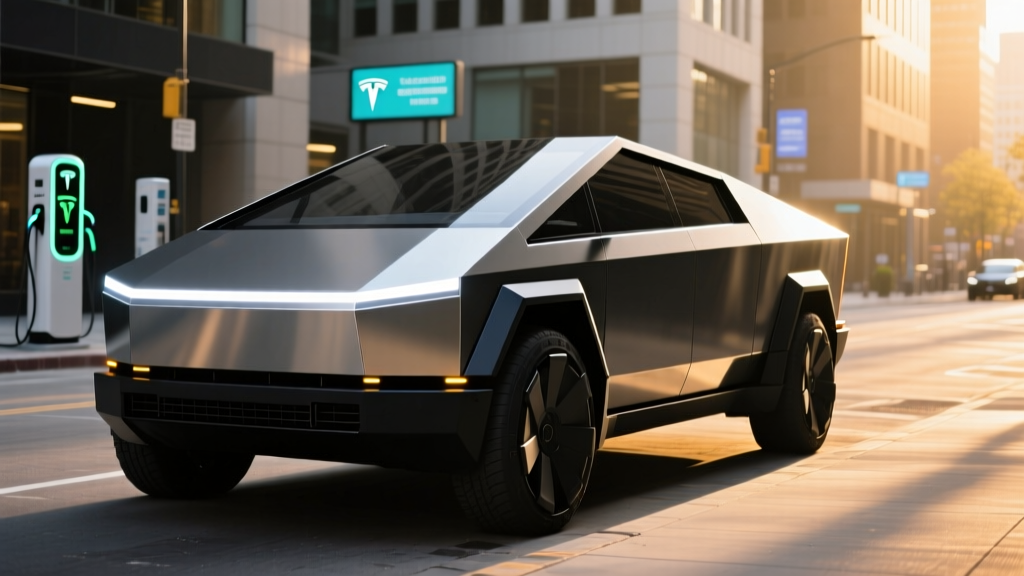
Love it or hate it, the Tesla Cybertruck is no longer a concept-car curiosity — it's a production vehicle with real sales figures, real owners, and real-world trade-offs. As we move through 2026, the question on many EV shoppers' minds isn't just whether the Cybertruck exists, but how it's actually performing in the market and on the road. This review breaks down total Cybertruck sales context alongside the full ownership picture: EPA range, 800-volt DC fast charging, pricing after federal tax credits, and the everyday realities of living with Tesla's angular electric pickup.
Total Cybertruck Sales: Where Does It Stand in 2026?
Tracking total Cybertruck sales requires some nuance. Tesla does not break out model-specific delivery numbers in its quarterly reports the way legacy automakers do, but registration data and industry estimates from Cox Automotive and Kelly Blue Book paint a clear picture. Since deliveries began in late 2023, the Cybertruck ramped through 2024 and into 2025 as Tesla expanded production capacity at Giga Texas. By early 2026, cumulative total Cybertruck sales are estimated to have surpassed the 200,000-unit mark in the U.S., making it one of the faster-ramping electric pickups in history — though still trailing the Ford F-150 Lightning in cumulative volume.
Monthly delivery rates have settled into a range of roughly 8,000–12,000 units, depending on production cadence and trim mix. The Cybertruck's sales trajectory matters because it signals whether Tesla's bet on a radically different truck design has resonated beyond early adopters and reservation holders into mainstream truck buyers. The answer: partially. The Cybertruck sells well in tech-forward coastal markets and among existing Tesla owners adding a utility vehicle, but it faces steeper resistance in traditional truck heartland where the F-150 Lightning and Rivian R1T have established dealer-adjacent credibility.
Range, Battery, and Real-World Efficiency
The 2026 Cybertruck is available in three configurations, each with distinct range profiles. Tesla uses a structural battery pack with a 4680-cell architecture (nickel-based NMC chemistry), which prioritizes energy density and structural rigidity over the cycle-life advantages of LFP.
- Dual Motor AWD: EPA 340 miles — expect ~280–310 miles highway at 70 mph, ~240–260 miles in freezing temperatures.
- Cyberbeast (Tri-Motor AWD): EPA 320 miles — expect ~260–290 miles highway, ~220–250 miles in cold weather.
- Rear-Wheel Drive (base): EPA 250 miles — expect ~210–230 miles highway.
The stainless-steel exoskeleton adds mass (curb weight over 6,600 lbs for Cyberbeast), and the angular shape creates a higher drag coefficient than a sleek sedan, meaning highway range drops more sharply above 70 mph than in a Model Y or Model S. Cold-weather losses of 15–25% are consistent with NMC packs in heavy vehicles.
| Spec | Dual Motor AWD | Cyberbeast (Tri-Motor) | RWD (Base) |
|---|---|---|---|
| EPA Range | 340 mi | 320 mi | 250 mi |
| Battery (usable) | ~123 kWh (NMC 4680) | ~123 kWh (NMC 4680) | ~100 kWh (NMC 4680) |
| Efficiency | ~50 MPGe / 67 kWh/100mi | ~48 MPGe / 70 kWh/100mi | ~54 MPGe / 62 kWh/100mi |
| 0-60 mph | 3.9 sec | 2.6 sec | 6.5 sec |
| Horsepower | 600 hp | 845 hp | ~315 hp |
| Drivetrain | Dual-motor AWD | Tri-motor AWD | Single-motor RWD |
| Max Tow Capacity | 11,000 lbs | 11,000 lbs | 7,500 lbs |
| Base MSRP | $79,990 | $99,990 | $60,990 |
Charging Speed: 800V Architecture in Practice
The Cybertruck uses an 800-volt electrical architecture, which is the same high-voltage platform found in the Hyundai Ioniq 5 and Porsche Taycan. This enables impressively fast DC charging — but with important real-world caveats about sustained charge rates and connector compatibility.
| Charging Level | Max Rate | Speed / Time |
|---|---|---|
| DC Fast Charge (Tesla Supercharger V4) | Peak 350 kW | 10–80% in ~18–22 min (sustained ~250 kW average) |
| DC Fast Charge (CCS adapter, non-Tesla) | Peak ~250 kW | 10–80% in ~25–30 min |
| Level 2 (Tesla Wall Connector, 48A) | 11.5 kW | ~37 miles of range per hour |
| Level 2 (standard 240V/32A outlet) | 7.7 kW | ~25 miles of range per hour |
| Level 1 (120V standard outlet) | ~1.4 kW | ~4–5 miles of range per hour |
The critical insight for buyers: peak kW is not sustained kW. The Cybertruck's charge curve tapers significantly above 60% state of charge (SoC). You'll see 350 kW briefly in the 10–30% window on a V4 Supercharger with a preconditioned battery, but the rate drops to ~150 kW by 70% and below 50 kW past 90%. This is normal physics for NMC cells at high SoC, but it means a 10–90% session takes closer to 35–40 minutes, not the 18 minutes Tesla advertises for 10–80%.
On the NACS connector front: the Cybertruck ships with a native NACS port, meaning seamless plug-and-charge at Tesla Superchargers. For Electrify America, EVgo, and other CCS-based networks, you'll need Tesla's CCS adapter (included with some trims, ~$175 standalone). As of 2026, the U.S. charging infrastructure has shifted heavily toward NACS, so this is less of a friction point than it was in 2024.
Pricing, Tax Credits, and Total Cost
The Cybertruck's pricing has been a moving target since its reveal. As of the 2026 model year, the lineup spans from the base RWD to the Cyberbeast tri-motor. Here's how the numbers actually work when you factor in the federal EV tax credit under IRS §30D rules.
| Trim | Base MSRP | §30D Credit Eligible? | Effective Price (if eligible) |
|---|---|---|---|
| RWD | $60,990 | Yes (under $80K truck cap) | ~$53,490 |
| Dual Motor AWD | $79,990 | Yes (at $80K truck cap) | ~$72,490 |
| Cyberbeast | $99,990 | No (exceeds $80K truck cap) | $99,990 |
- MSRP cap: Trucks/vans/SUVs must be ≤ $80,000. The Cyberbeast is excluded.
- Buyer income cap: AGI ≤ $150K single / $300K married filing jointly.
- Battery sourcing: Critical minerals and battery components must meet phased-in domestic/FTEA sourcing thresholds. Tesla's 4680 cells use varying supply chains — confirm VIN eligibility at fueleconomy.gov.
- Point-of-sale transfer: Eligible buyers can apply the credit at purchase, reducing the financed amount.
- Assembled in North America: Yes (Giga Texas).
The Cyberbeast's exclusion from the credit is a real financial hit. At $99,990 before options, you're paying sticker plus any delivery fees and state registration. The Dual Motor AWD at $79,990 squeaks under the truck cap and qualifies if your income and the VIN's battery sourcing meet requirements — but always verify with a tax professional before counting on the credit.
Performance, Cargo, and Daily-Use Practicality
Performance figures for the Cybertruck are genuinely supercar-rivaling in the Cyberbeast trim: 2.6 seconds to 60 mph in a vehicle that weighs over three tons. The Dual Motor AWD's 3.9-second run is more than adequate for any real-world merging or passing scenario. Even the base RWD at 6.5 seconds is brisk for a full-size pickup.
Where the Cybertruck diverges from competitors is in practicality. The 6.5-foot bed (styled as a "vault") offers approximately 67 cubic feet of lockable storage with the tonneau cover closed. The rear seats provide ~41 inches of legroom — adequate for adults on medium trips but tighter than an F-150 Lightning's rear row. The frunk (front trunk) adds roughly 7 cubic feet of additional secure storage.
Visibility is a known compromise. The massive A-pillars and angular rear profile create substantial blind spots. Tesla compensates with camera-based mirror views on the 18.5-inch center touchscreen, but traditional truck buyers accustomed to large side mirrors find the adjustment period frustrating. The steer-by-wire system (no mechanical connection between steering wheel and wheels) takes roughly a week of daily driving to feel natural, and some drivers report fatigue from the hyper-responsive ratio at low speeds.
Tech, Driver Assistance, and Safety
The Cybertruck runs Tesla's latest infotainment stack on the large center display, with a secondary rear-seat screen. Over-the-air updates continue to add features post-purchase. Autopilot (basic lane-keeping and adaptive cruise) is standard; Full Self-Driving (Supervised) is a $8,000 add-on or $99/month subscription.
Tesla Autopilot and FSD (Supervised) are SAE Level 2 driver-assistance systems. The driver must remain fully engaged, hands on the wheel (or applying torque), and eyes on the road at all times. This is not autonomous or self-driving capability. Level 4 driverless operation is only available in limited geofenced areas via services like Waymo — not in any consumer vehicle sold today.
Safety ratings for the Cybertruck have been a point of controversy. As of early 2026, the NHTSA has completed frontal and side crash testing, awarding 5 stars overall. The IIHS testing is more mixed, with the Cybertruck earning "Good" in moderate overlap front and side tests but facing challenges in the updated side-impact protocol due to its mass and stiffness transferring force to adjacent vehicles — a concern unique to ultra-heavy EVs.
Warranty, Ownership Costs, and Who Should Buy
Tesla covers the Cybertruck with a 4-year/50,000-mile basic warranty and an 8-year/120,000-mile battery and drive unit warranty, with a guaranteed minimum 70% capacity retention over that period. This is competitive with Rivian's 8-year/175,000-mile battery warranty but falls short of the Hyundai-backed confidence some buyers seek.
- Best-in-class DC fast charging (800V, 350 kW peak on Superchargers)
- Supercar-level acceleration in Cyberbeast and Dual Motor trims
- Stainless steel body eliminates paint concerns and resists dents
- Lockable bed vault and frunk for secure cargo
- Access to Tesla Supercharger network (most reliable U.S. DC network)
- OTA updates continuously improve functionality
- Cyberbeast excluded from §30D tax credit (over $80K MSRP cap)
- Real-world highway range significantly below EPA sticker
- Steer-by-wire and visibility require a steep adjustment period
- Stainless steel panels show fingerprints and are difficult to repair
- No Apple CarPlay or Android Auto integration
- Insurance premiums 20–40% higher than comparable F-150 Lightning
Cybertruck vs. F-150 Lightning vs. Rivian R1T: Is It Worth Buying?
The Cybertruck competes in a three-way electric pickup segment. Here's the decision framework:
- You prioritize DC fast charging speed and Tesla Supercharger access
- You want the fastest acceleration available in any production truck
- You're already in the Tesla ecosystem (Powerwall, Solar, other Tesla vehicles)
- You value the lockable bed vault and don't need a traditional 8-foot bed
- You need maximum towing familiarity and a traditional truck layout
- You want Ford dealer service access in rural areas
- Pro Power Onboard (V2L/V2H) is important for job-site or home backup use
- You want the best off-road capability (quad-motor, tank turns)
- Build quality and interior materials are a priority
- You need a gear tunnel for creative cargo solutions
On total cost of ownership over five years, the Dual Motor AWD Cybertruck (with tax credit) costs roughly $72,490 + ~$4,200 electricity (at $0.14/kWh, 15K mi/yr) + ~$12,000 insurance = ~$88,690 before depreciation. The F-150 Lightning Lariat (with credit) lands around $85,000 total. The Rivian R1T Dual-Motor starts higher at ~$73,000 after credit but with pricier insurance. Depreciation data for the Cybertruck is still maturing — early indications suggest stronger-than-average retention due to Tesla brand loyalty, but the polarizing design could suppress resale in truck-traditional markets.
Frequently Asked Questions
What is the real-world range of the Cybertruck?
The Dual Motor AWD achieves an EPA-estimated 340 miles, but real-world highway driving at 70 mph yields approximately 280–310 miles. In freezing temperatures (below 32°F), expect 240–260 miles due to NMC battery chemistry losses and cabin heating demands. The Cyberbeast's real-world highway range is typically 260–290 miles.
How fast does the Cybertruck charge at home and on the road?
On DC fast charging, the Cybertruck peaks at 350 kW on Tesla V4 Superchargers, achieving a 10–80% charge in roughly 18–22 minutes. At home on a 48-amp Level 2 Tesla Wall Connector (11.5 kW), you'll add about 37 miles of range per hour — a full overnight session (10 hours) recovers ~370 miles, more than enough for daily use. Level 1 charging on a standard 120V outlet adds only 4–5 miles per hour and is suitable only for emergency trickle charging.
Does the Cybertruck qualify for the $7,500 federal EV tax credit?
The RWD ($60,990) and Dual Motor AWD ($79,990) trims qualify under the §30D truck MSRP cap of $80,000, provided the buyer's AGI is under $150K (single) or $300K (married) and the VIN's battery meets critical-mineral and component sourcing thresholds. The Cyberbeast ($99,990) does not qualify. Always verify eligibility at fueleconomy.gov and consult a tax professional before purchase.
Is the Cybertruck worth buying over the F-150 Lightning or Rivian R1T?
It depends on your priorities. The Cybertruck wins on DC charging speed and acceleration. The F-150 Lightning wins on traditional truck practicality, dealer service, and V2H backup power. The Rivian R1T wins on off-road capability and interior quality. For daily commuting and road trips with Supercharger access, the Cybertruck Dual Motor AWD is the strongest pick. For towing-heavy or job-site use, the Lightning remains the safer bet.
What are the biggest Cybertruck ownership drawbacks?
The most-cited complaints from owners include: steep learning curve with steer-by-wire, limited rear visibility, stainless steel panels that show smudges and are difficult for body shops to repair, no Apple CarPlay/Android Auto, and insurance premiums that run 20–40% higher than equivalent Ford or Rivian pickups. Range in cold weather and at highway speeds also falls noticeably short of the EPA sticker.
How do total Cybertruck sales compare to competitors?
Estimated cumulative total Cybertruck sales through early 2026 exceed 200,000 units in the U.S. The Ford F-150 Lightning has sold more cumulatively (over 250,000 since 2022 launch) due to broader dealer distribution and fleet sales. The Rivian R1T trails both at roughly 80,000 cumulative units, reflecting its higher price point and single-factory production. The Cybertruck's monthly sales pace of 8,000–12,000 units positions it as a strong segment player, though not yet the dominant electric truck Tesla projected at unveil.