Tesla built its brand on performance. From the original Roadster to today's lineup, every Tesla sedan and SUV offers acceleration that embarrasses six-figure supercars. But raw 0-60 times tell only part of the story. Buyers searching for the top speed Tesla models also need to know what that speed costs in range, how fast the car charges, and whether the federal tax credit applies.
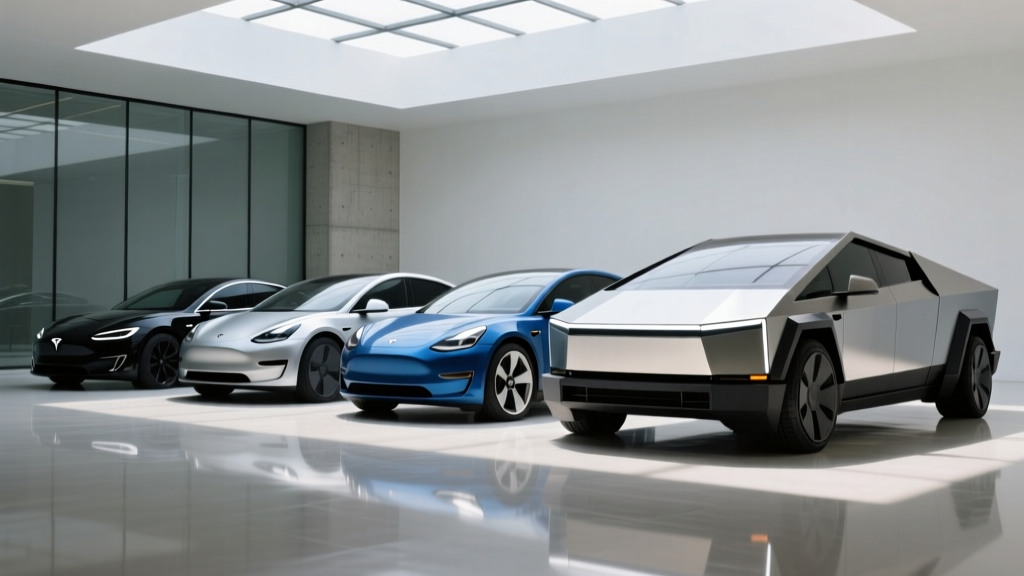
For 2026, Tesla sells five core vehicles in the U.S.: the Model S, Model 3, Model Y, Model X, and Cybertruck. Each offers multiple trims with vastly different performance profiles. Below, we rank every current Tesla by top speed, then break down the full ownership picture — range, charging, pricing, and real-world usability — for the models that matter most to performance buyers.
Tesla Top Speed Rankings: Every 2026 Model
Here's how the current Tesla lineup stacks up by top speed, from the quickest and fastest to the most utilitarian. All figures reflect manufacturer-published specs for the 2026 model year.
| Model / Trim | Top Speed | 0–60 mph | Horsepower | Drivetrain |
|---|---|---|---|---|
| Model S Plaid | 200 mph | 1.99 s | 1,020 hp | Tri-motor AWD |
| Model S (Dual Motor) | 155 mph | 3.1 s | 670 hp | Dual-motor AWD |
| Model 3 Performance | 163 mph | 2.9 s | 510 hp | Dual-motor AWD |
| Model X Plaid | 163 mph | 2.5 s | 1,020 hp | Tri-motor AWD |
| Model X (Dual Motor) | 155 mph | 3.8 s | 670 hp | Dual-motor AWD |
| Cybertruck Cyberbeast | 130 mph | 2.6 s | 845 hp | Tri-motor AWD |
| Cybertruck AWD | 112 mph | 3.9 s | 600 hp | Dual-motor AWD |
| Model Y Performance | 155 mph | 3.5 s | 510 hp | Dual-motor AWD |
| Model Y Long Range AWD | 135 mph | 4.8 s | 384 hp | Dual-motor AWD |
| Model 3 Long Range AWD | 145 mph | 4.2 s | 346 hp | Dual-motor AWD |
| Model 3 RWD | 125 mph | 5.8 s | 271 hp | Rear-wheel drive |
The Model S Plaid dominates with a 200 mph top speed (with the optional Carbon Ceramic Brake package and 21-inch wheels) and a sub-2-second 0–60 time. It remains the fastest-accelerating production sedan sold in the U.S. For buyers who want serious speed without the Plaid premium, the Model 3 Performance offers 163 mph and a 2.9-second sprint at roughly half the price.
Model S Plaid: The Ultimate Top Speed Tesla
If top speed is your primary filter, the Model S Plaid is the answer. But a $90,000+ performance sedan must deliver beyond the drag strip. Here's the complete picture.
| Spec | Value |
|---|---|
| EPA Range | 396 miles (19" wheels) / 359 miles (21" wheels) |
| Battery Capacity | ~100 kWh usable, NMC chemistry |
| Efficiency | 120 MPGe combined / 28 kWh/100 mi |
| Max DC Fast Charge | 250 kW peak (V3 Supercharger) |
| 10–80% DC Charge Time | ~27 minutes |
| Level 2 Home Charge Rate | 11.5 kW (~41 mi/hr) |
| 0–60 mph | 1.99 seconds |
| Top Speed | 200 mph (w/ Carbon Ceramic Brake pkg) |
| Horsepower | 1,020 hp (tri-motor) |
| Cargo Volume | 28 cu ft (rear) + frunk |
| Base MSRP | $89,990 |
| Battery Warranty | 8 years / 150,000 miles |
Charging Speed & Infrastructure
The Model S Plaid peaks at 250 kW on Tesla's V3 Superchargers, adding roughly 200 miles in 15 minutes under ideal conditions. However, the charge curve tapers significantly above 60% State of Charge (SoC). The full 10–80% session takes about 27 minutes. On a 48-amp Level 2 home charger (11.5 kW), a full overnight charge takes roughly 9–10 hours — sufficient for daily driving.
The Model S uses the NACS connector natively, giving access to Tesla's Supercharger network — the most reliable DC fast-charging network in the U.S. by a wide margin, according to J.D. Power's public charging satisfaction studies.
Who the Model S Plaid Suits
This is a niche vehicle: the buyer who wants supercar-rivaling acceleration in a four-door sedan with real daily usability. It works as a commuter (quiet, smooth, excellent visibility), a road-tripper (396-mile EPA range and Supercharger access), and a weekend track car. It does not suit budget-conscious buyers or those needing three-row seating (that's the Model X).
Model 3 Performance: Best Value in Tesla Speed
The Model 3 Performance delivers 90% of the thrill at roughly 55% of the Plaid's price. It's the most accessible entry into Tesla's high-performance tier.
| Spec | Value |
|---|---|
| EPA Range | 315 miles |
| Battery Capacity | ~79 kWh usable, NMC chemistry |
| Efficiency | 121 MPGe combined / 27 kWh/100 mi |
| Max DC Fast Charge | 250 kW peak |
| 10–80% DC Charge Time | ~25 minutes |
| Level 2 Home Charge Rate | 11.5 kW (~44 mi/hr) |
| 0–60 mph | 2.9 seconds |
| Top Speed | 163 mph |
| Horsepower | 510 hp (dual-motor) |
| Cargo Volume | 23 cu ft (rear) + 3.1 cu ft frunk |
| Base MSRP | $52,990 |
| Battery Warranty | 8 years / 120,000 miles |
The refreshed Model 3 (internally called "Highland") brought a notably quieter cabin, adaptive damping on the Performance trim, ventilated front seats, and a rear touchscreen for passengers. It's a meaningfully better daily driver than the pre-refresh car.
Does the Model 3 Performance Qualify for the Federal Tax Credit?
This is where 2026 buyers need to pay close attention. Under IRS §30D rules, the federal EV tax credit (up to $7,500) has three critical gates:
- MSRP Cap: Sedans must be at or below $55,000. The Model 3 Performance starts at $52,990 — it qualifies on MSRP, but adding options (FSD, special paint, wheels) can push the transaction price above the cap.
- Income Cap: Modified adjusted gross income must not exceed $150,000 (single), $225,000 (head of household), or $300,000 (joint).
- Battery Sourcing: Critical minerals and battery components must meet phased-in domestic-content and free-trade-agreement thresholds that tighten annually through 2030. Tesla's supply chain has shifted substantially, but the exact credit amount ($3,750, $7,500, or $0) depends on the specific battery pack in your delivery vehicle.
The credit can now be transferred to the dealer at point of sale, functioning as an instant discount rather than a tax-year refund. Always verify eligibility on your specific VIN before signing — the IRS clean vehicle credit page has current sourcing requirements.
Model X Plaid, Cybertruck, and Model Y: Speed in Context
Not every Tesla buyer is cross-shopping a Plaid. Here's how the rest of the lineup handles the speed-vs-utility trade-off.
Model X Plaid — 163 mph, Family Hauler
The Model X Plaid puts 1,020 hp into a three-row SUV with falcon-wing rear doors. It hits 60 mph in 2.5 seconds and tops out at 163 mph. EPA range sits at 326 miles. The trade-off: a $94,990 base price, lower efficiency (~100 MPGe combined), and a massive 5,000+ lb curb weight that shows in cornering. It's the fastest three-row SUV you can buy, but the Model S Plaid is a sharper driver's car.
Cybertruck Cyberbeast — 130 mph, 845 hp
The tri-motor Cyberbeast makes 845 hp and runs to 60 mph in 2.6 seconds, but its aerodynamic profile and 6,800+ lb weight limit top speed to 130 mph. EPA range is 320 miles (with the range-extender battery option). At $99,990, it's a niche lifestyle purchase — incredible as a truck, compromised as a daily driver due to its size, visibility limitations, and polarizing design.
Model Y Performance — 155 mph, the Pragmatic Pick
The Model Y Performance offers 155 mph and a 3.5-second 0–60 at roughly $48,990. EPA range is 285 miles. It's the best-selling vehicle in the world for a reason: crossover practicality, strong performance, and access to the Supercharger network. However, it doesn't crack the "top speed Tesla" conversation — buyers here prioritize cargo space and family comfort over outright velocity.
Pricing, Tax Credits, and Total Cost
| Model | Base MSRP | §30D Credit Eligible? | Effective Price (w/ max credit) |
|---|---|---|---|
| Model S Plaid | $89,990 | No (above $55K sedan cap) | $89,990 |
| Model S Dual Motor | $74,990 | No (above $55K sedan cap) | $74,990 |
| Model 3 Performance | $52,990 | Yes (if sourcing + income qualify) | ~$45,490 |
| Model 3 Long Range AWD | $45,240 | Yes (if sourcing + income qualify) | ~$37,740 |
| Model X Plaid | $94,990 | Yes (SUV cap is $80K — wait, No*) | $94,990 |
| Cybertruck Cyberbeast | $99,990 | No (above $80K truck cap) | $99,990 |
| Model Y Performance | $48,990 | Yes (if sourcing + income qualify) | ~$41,490 |
*The Model X is classified as an SUV under IRS rules, which carries an $80,000 MSRP cap. The Dual Motor Long Range ($79,990 base) may qualify; the Plaid ($94,990) does not. Always confirm on fueleconomy.gov for the specific model year and trim.
Insurance costs for Tesla performance trims run 15–30% higher than equivalent non-performance EVs. Model S Plaid owners report annual premiums of $3,000–$4,500 depending on state and driving record. Factor this into your total cost of ownership.
Tech, Driver Assistance, and Notable Drawbacks
Every 2026 Tesla comes standard with Autopilot (lane centering + adaptive cruise control). Full Self-Driving (Supervised) is available as a $8,000 option or $99/month subscription.
Standout Tech
- 17-inch center touchscreen (Model S/X) or 15.4-inch (Model 3/Y) with excellent responsiveness
- Over-the-air updates that add features post-purchase
- Tesla Supercharger network — 6,000+ V3/V4 stalls in the U.S. with industry-leading uptime
- Track Mode (Model S Plaid / Model 3 Performance) — adjustable torque vectoring, cooling, and regen for closed-course driving
- Sentry Mode dashcam surveillance when parked
Notable Drawbacks
- No Apple CarPlay or Android Auto — Tesla's proprietary interface only
- Model 3/Y have no instrument cluster — all info is on the center screen
- Build quality has improved but still inconsistent (panel gaps, interior trim alignment)
- FSD (Supervised) remains a Level 2 system despite its name — buyer expectations often exceed reality
- Limited service center capacity in some regions — body repair wait times can extend to weeks
Pros
- Class-leading acceleration across the lineup
- Supercharger network reliability
- OTA updates keep vehicles current
- Strong efficiency for the performance delivered
- Minimal maintenance (no oil, plugs, or exhaust)
Cons
- High insurance premiums on performance trims
- No smartphone integration (CarPlay/Android Auto)
- FSD name overpromises vs. Level 2 reality
- Service center availability varies by region
- Plaid models ineligible for federal tax credit
Frequently Asked Questions
What is the fastest Tesla you can buy in 2026?
The Model S Plaid with the Carbon Ceramic Brake package and 21-inch wheels has a top speed of 200 mph, making it the fastest Tesla and one of the fastest production sedans in the world. It accelerates from 0–60 mph in 1.99 seconds.
How does Tesla's top speed compare to competitors?
The Model S Plaid (200 mph) exceeds the Lucid Air Sapphire (205 mph is higher, but at $249,000) and the Porsche Taycan Turbo GT (190 mph, $230,000+). At $89,990, the Plaid delivers supercar speed at a fraction of the price. The Model 3 Performance (163 mph, $52,990) undercuts the BMW i4 M50 (155 mph, $67,795) and Porsche Taycan (143 mph base, $92,000+).
Does top speed affect real-world range significantly?
Yes. Aerodynamic drag increases with the square of speed. Driving a Model S Plaid at 85 mph vs. 65 mph can reduce range by 25–35%. Sustained high-speed driving also generates battery heat, which can temporarily reduce charging speeds until thermal management catches up. For road trips, driving at 70–75 mph optimizes the range-vs-time equation.
Can I charge a Tesla at non-Tesla chargers?
All 2026 Teslas use the NACS (North American Charging Standard) connector natively. This is now the dominant standard — Ford, GM, Rivian, Volvo, and others have adopted NACS, meaning Tesla owners have always had access to the best network, and that network is growing as more automakers join. You can also use a CCS adapter for Electrify America and other CCS networks.
Is the Model 3 Performance worth it over the Long Range?
If you value the 2.9-second 0–60, Track Mode, adaptive suspension, and 163 mph top speed, the $7,750 premium over the Long Range AWD ($45,240) is justified. If you primarily commute and take occasional road trips, the Long Range's 341-mile EPA range, lower insurance cost, and adequate 4.2-second 0–60 make it the smarter financial pick. The Performance is for driving enthusiasts; the Long Range is for efficiency-focused buyers.
How long will the battery last on a performance Tesla?
Tesla warranties the Model S/X battery for 8 years or 150,000 miles (whichever comes first) with a minimum 70% capacity retention. The Model 3/Y warranty is 8 years or 120,000 miles at 70% retention. Real-world data from Tesla's fleet shows NMC batteries retaining approximately 85–90% capacity after 100,000 miles under normal use. Track use and frequent DC fast charging accelerate degradation slightly, but not dramatically.