The Short Answer on the Timu Electric Jet Boat
The Timu electric jet boat is a niche, battery-electric personal watercraft that targets buyers who want silent, zero tailpipe-emission operation on lakes and calm waterways. However, autoedgeview.com focuses on electric cars, trucks, SUVs, and related EV ownership infrastructure — not marine vessels. This article explains why the Timu electric jet boat falls outside our core coverage, what EV car buyers can learn from its battery and charging architecture, and how to evaluate whether adding an electric watercraft to your EV garage makes financial and logistical sense in 2026.
Why an EV Car Site Is Covering the Timu Electric Jet Boat
Search interest in the Timu electric jet boat has grown among EV-curious buyers who already own or are considering an electric vehicle. The overlap is real: both product categories rely on lithium-ion battery packs, DC charging (or lack thereof), and a shift away from internal combustion. But the differences matter enormously when you're budgeting, planning charging infrastructure, or comparing total cost of ownership.
We wrote this guide because readers kept asking: "If I'm going electric with my car, does it make sense to go electric on the water too?" The honest answer requires looking at battery chemistry, energy density constraints, charging logistics, and real costs — the same analytical framework we apply to every EV we review.
What the Timu Electric Jet Boat Actually Is (and Isn't)
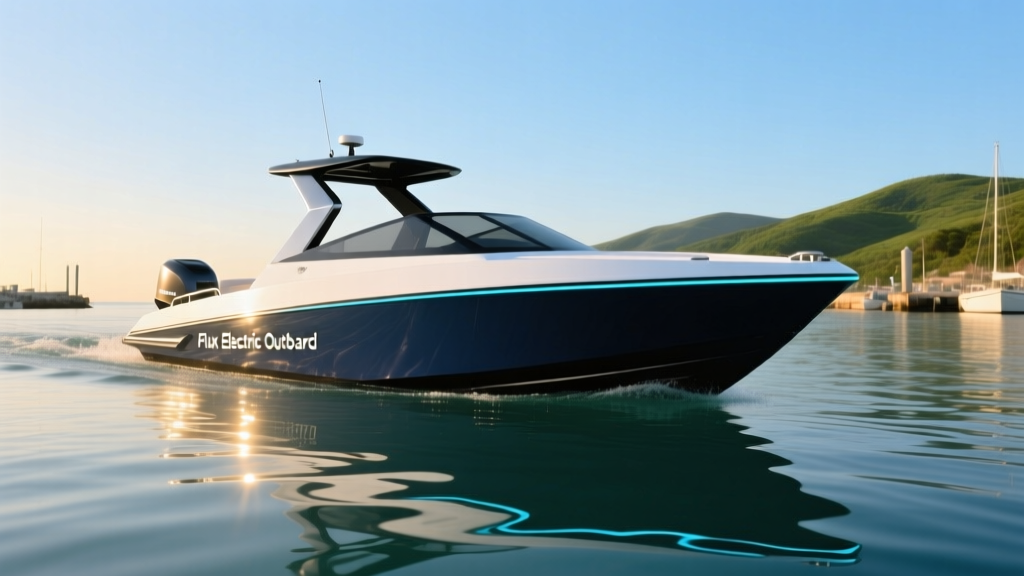
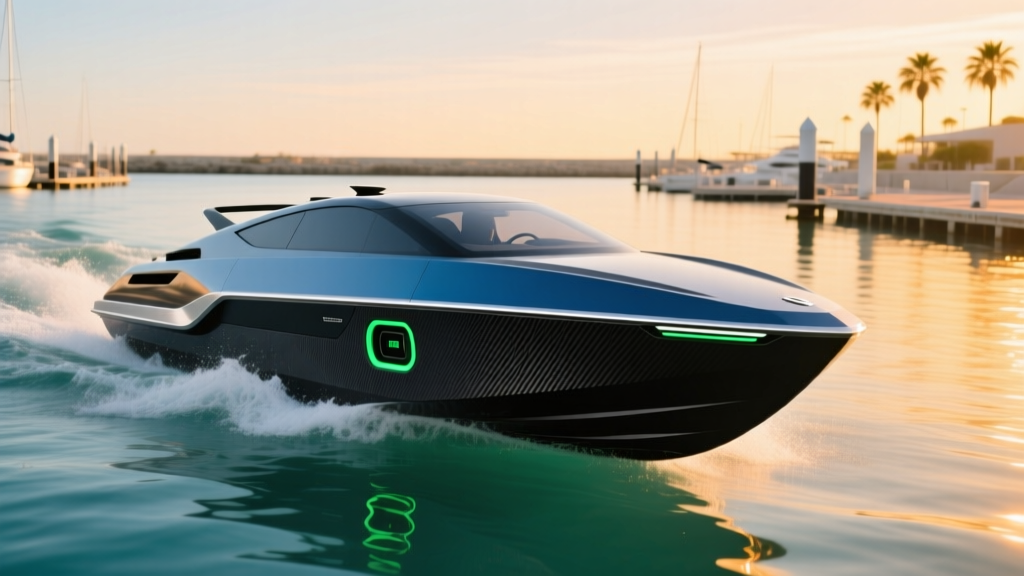
The Timu electric jet boat is a compact, battery-powered watercraft that uses an electric motor driving a waterjet propulsion system rather than a traditional propeller. Jet drives are common in personal watercraft (think Sea-Doo, Yamaha WaveRunner) and offer shallow-water operation with no exposed spinning blades.
Here's what buyers should understand about the category:
- Propulsion: Electric motor coupled to a waterjet pump — no gasoline, no exhaust, no oil changes on the water.
- Battery type: Typically lithium-ion (NMC chemistry in most marine applications for energy density), though exact kWh capacity varies by model and configuration.
- Charging: Most electric watercraft in this class charge via standard 120V (Level 1 equivalent) shore power; DC fast charging is generally not available on small personal watercraft.
- Use case: Calm lakes, slow-speed cruising, fishing in no-wake zones — not offshore or high-speed performance.
If you're looking for detailed marine-vessel reviews, we recommend specialized publications. Our expertise is helping you understand how an electric boat purchase interacts with your EV ownership ecosystem.
Electric Boat vs. Gas Watercraft: The Numbers That Matter
Even though we don't review boats, the EV-vs-gas comparison framework applies directly. Here's how a typical small electric jet boat stacks up against a comparable gasoline-powered personal watercraft or small jet boat:
| Factor | Electric Jet Boat (Typical) | Gas Jet Boat / PWC (Typical) |
|---|---|---|
| Energy/Fuel Cost Per Hour | ~$1.50–$3.00 (at $0.15/kWh) | ~$12–$25 (at $3.80/gal, 3–6 GPH) |
| "Refuel" / Recharge Time | 4–10 hours (120V shore power) | 5 minutes (gas station or portable tank) |
| Operating Range | 20–50 miles equivalent (speed dependent) | 80–150+ miles |
| Noise Level | Near-silent at low speed | 75–95 dB at cruise |
| Annual Maintenance | ~$100–$300 (minimal) | ~$500–$1,200 (oil, impeller, winterization) |
| Purchase Price (New) | $15,000–$45,000+ | $8,000–$20,000 |
| Winterization | Simplified (no engine fluids) | Full engine winterization required |
Key takeaway: Electric watercraft win on operating cost and noise but lose significantly on range, refueling speed, and upfront price. This mirrors the EV car trade-off, but the gaps are wider on the water because marine battery packs face stricter weight and waterproofing constraints.
Real Costs: Adding an Electric Boat to Your EV Garage
If you already own an EV or are planning to buy one, here's what adding something like the Timu electric jet boat means for your wallet and your electrical setup:
| Cost Category | Year 1 | Years 2–5 (Annual Avg) |
|---|---|---|
| Purchase Price (Estimated) | $20,000–$40,000 | — |
| Trailer & Registration | $1,500–$3,000 | $150–$300 |
| Marine Insurance | $500–$1,500 | $500–$1,500 |
| Charging Electricity | $80–$200 | $80–$200 |
| Battery Replacement Reserve | — | $500–$1,000/yr (save for 8–10 yr replacement) |
| Storage / Dock Fees | $1,200–$4,800 | $1,200–$4,800 |
| Maintenance | $100–$300 | $100–$300 |
Charging logistics are the hidden challenge. Most electric boats charge on standard 120V AC. If you store the boat at home, you'll need a dedicated outdoor GFCI-protected 120V outlet near your trailer or dock. If you keep it at a marina, confirm that shore power is included in your slip fee and that the amperage supports the charger's draw. Unlike EV home charging where a 240V Level 2 installation is a one-time $800–$2,000 investment, marine charging often relies on slower, shared infrastructure.
Federal Tax Credits: Does the Timu Electric Jet Boat Qualify?
This is where many buyers get confused. The federal IRS §30D Clean Vehicle Credit applies to new clean vehicles for road use — specifically, four-wheeled vehicles with a gross vehicle weight rating under 14,000 pounds that are primarily for use on public streets, roads, and highways.
Myth vs. Fact: Electric Boat Tax Credits
| Myth | Fact |
|---|---|
| "I'll get $7,500 off an electric boat." | §30D applies to road vehicles only. Marine vessels do not qualify for the federal EV tax credit. |
| "My state gives rebates for any electric vehicle." | Most state EV rebates are also limited to on-road vehicles. Check your specific state energy office — some states offer separate clean marine or off-road equipment incentives, but these are rare and location-specific. |
| "I can write it off as a business expense." | Possibly, if used for a qualifying commercial purpose — consult a tax professional. Personal recreational use does not qualify for §30D or most business deductions. |
For your EV car purchase, the §30D credit still offers up to $7,500 for qualifying new vehicles in 2026, subject to MSRP caps ($55,000 for sedans, $80,000 for SUVs/trucks/vans), buyer income limits ($150K single / $300K joint), and critical-mineral/battery-component sourcing requirements. The credit is now transferable at the point of sale, meaning you can apply it as a down-payment reduction at the dealer. Always verify current rules at IRS.gov and consult a tax professional before relying on credit eligibility.
Decision Framework: Should You Buy Electric on the Water?
Here's the practical framework we'd apply if a reader asked us whether to pair their EV car purchase with an electric jet boat:
If / Then Decision Guide
- IF you boat primarily on small, calm lakes with no-wake zones and easy shore-power access → THEN an electric jet boat makes sense. Silent operation is a genuine advantage for fishing and wildlife areas.
- IF you need range over 40 miles per outing, high speeds, or operate on large reservoirs/coastal waters → THEN stick with gasoline. Battery energy density in marine applications hasn't caught up to liquid fuel.
- IF you already have a 240V outlet at home (for your EV) and can store the boat on a trailer nearby → THEN charging logistics are manageable. You can charge overnight between outings.
- IF you keep your boat at a marina without dedicated shore power at your slip → THEN charging becomes a real problem. Confirm electrical access before purchasing.
- IF your total electrification budget is under $60,000 → THEN prioritize your EV car purchase first. The daily fuel savings and §30D tax credit on a road vehicle deliver far more financial return than an electric boat.
- IF you boat fewer than 15 days per year → THEN the fuel savings of electric won't offset the higher purchase price. A used gas watercraft is more economical.
Common Misconceptions About Electric Watercraft
| Misconception | Reality |
|---|---|
| "Electric boats have zero environmental impact." | Zero tailpipe emissions on the water, yes. But the electricity still comes from your local grid mix, and battery manufacturing has an upstream carbon footprint — the same nuance that applies to EV cars. |
| "I can fast-charge an electric boat like my EV." | Most small electric watercraft charge at 1–3 kW on 120V. There's no CCS or NACS port on a jet boat. A full charge can take 6–12 hours depending on battery size. |
| "The battery will last forever." | Marine lithium-ion packs degrade similarly to EV batteries — expect 70–80% capacity retention after 8–10 years depending on usage cycles and storage conditions. Replacement costs $5,000–$15,000+ depending on capacity. |
| "Electric means no maintenance." | You'll still maintain the jet drive impeller, hull, electrical connections, trailer bearings, and bilge systems. The electric motor itself is low-maintenance, but the boat is not maintenance-free. |
What This Means for Your EV Car Purchase
If you're researching the Timu electric jet boat alongside an EV car purchase, here's our practical advice: separate the two decisions entirely.
Your EV car should be evaluated on its own merits — EPA range, charging speed (peak kW and 10–80% time), home charging feasibility, §30D credit eligibility, and total cost of ownership versus a gas or hybrid alternative. Adding an electric boat to the mix does not improve your car's economics, does not share a tax credit, and introduces separate charging and storage requirements.
For comprehensive EV car reviews with exact specs — EPA range, battery kWh, charge curves, real-world efficiency, and tax-credit-adjusted pricing — browse our EPA-referenced vehicle profiles. The fueleconomy.gov database remains the gold standard for verified range and MPGe figures across every EV on the US market.
Frequently Asked Questions
Does the Timu electric jet boat qualify for the $7,500 federal EV tax credit?
No. The IRS §30D Clean Vehicle Credit applies only to four-wheeled road vehicles. Marine vessels, including electric boats and personal watercraft, are not eligible. Some states may offer separate clean-equipment incentives, but these vary by jurisdiction — check your state energy office.
How do I charge an electric jet boat at home?
Most electric watercraft in this class use a standard 120V AC charger, similar to a Level 1 EV charger. You'll need a dedicated, GFCI-protected outdoor outlet rated for the charger's amperage. Expect 6–12 hours for a full charge depending on battery capacity. A licensed electrician should verify your circuit can handle continuous draw, especially if you're also charging an EV on the same electrical panel.
Is an electric jet boat cheaper to own than a gas watercraft?
Operating costs are lower — electricity costs roughly $1.50–$3.00 per hour versus $12–$25 for gasoline. But the upfront purchase price is typically 2–3x higher, and battery replacement after 8–10 years adds $5,000–$15,000+. If you boat more than 30 days per year, the fuel savings can eventually close the gap. For casual use under 15 days per year, gas is usually more economical overall.
Can I use my home EV charger to charge an electric boat?
Generally, no. Electric boats use marine-specific connectors and onboard chargers designed for 120V AC input. Your Level 2 (240V) home EV charger with a J1772 or NACS connector is not compatible with marine battery systems. They are separate charging ecosystems.
What's the realistic range of an electric jet boat?
Range varies heavily by speed and conditions, but most small electric jet boats deliver 20–50 miles of equivalent range at moderate speeds. High-speed operation drains batteries rapidly — similar to how highway driving at 80 mph reduces an EV car's range below its EPA estimate. Always plan outings well within the rated range, as there are no "charging stations" on most waterways.