Quick Answer: Tidal Electric Generators and Your EV
Tidal electric generators are turbines that convert the kinetic energy of ocean tides into electricity, much like underwater wind turbines. As of 2026, tidal energy contributes a tiny fraction of global electricity — roughly 500 MW of installed capacity worldwide — and is only available on specific power grids (notably in the UK, France, Canada's Bay of Fundy, and parts of South Korea). If you charge an EV in a region with tidal energy on the grid, your car may use a small percentage of tidal-generated electricity. However, tidal power does not affect EV purchase decisions, charging costs, or range in any meaningful way today. It remains a niche renewable source with high infrastructure costs ($3,000–$8,000 per installed kW) and limited geographic viability.
What Are Tidal Electric Generators and How Do They Work?
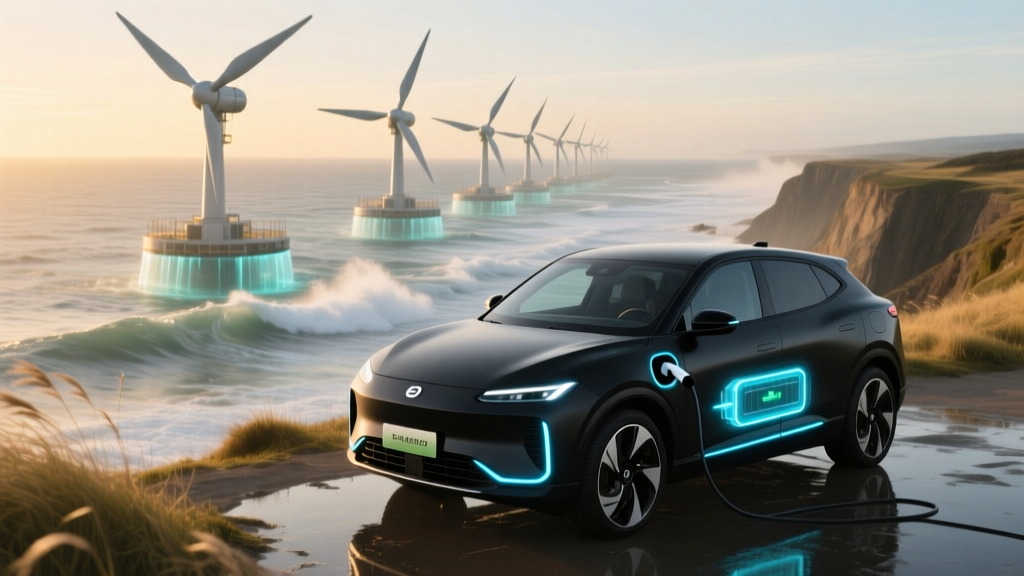
Tidal electric generators harness the predictable rise and fall of ocean tides to produce electricity. Unlike solar and wind, which depend on weather, tides are driven by gravitational forces from the moon and sun, making them among the most predictable renewable energy sources available.
There are three primary types of tidal generation technology:
- Tidal stream generators: Underwater turbines placed in fast-moving tidal currents. These resemble submerged wind turbines and are the most common modern approach. Individual units typically produce 1–2 MW of power.
- Tidal barrages: Dam-like structures built across estuaries that capture water at high tide and release it through turbines at low tide. The 240 MW La Rance facility in France has operated since 1966.
- Tidal lagoons: Artificial circular walls built in the ocean that trap tidal water and generate power as water flows in and out through turbines. As of 2026, no large-scale lagoon projects are operational.
The total global installed tidal generation capacity sits around 500 MW as of early 2026, according to IEA Renewables reporting. For comparison, global solar PV capacity exceeds 1,600 GW — over 3,000 times larger. The largest tidal installation is South Korea's Sihwa Lake facility at 254 MW, followed by France's La Rance at 240 MW.
Can Tidal Energy Actually Charge Your EV?
Technically yes — but practically, the answer depends entirely on where you live and which utility provides your electricity.
When you plug in an electric vehicle at home or at a public charger, the electricity comes from the local grid mix. That mix might include natural gas, nuclear, hydro, wind, solar, coal, and — in a few specific regions — tidal power. You don't choose the generation source; the utility delivers a blend.
Here's what tidal energy on the grid actually looks like in regions where it exists:
| Region | Tidal Capacity | % of Local Grid Mix | EV Charging Impact |
|---|---|---|---|
| Nova Scotia, Canada (Bay of Fundy) | ~20 MW | <1% | Negligible |
| Brittany, France | ~240 MW (La Rance) | ~3-4% regional | Small contribution |
| Orkney Islands, Scotland | ~6 MW (pilot) | ~5-8% local | Modest local share |
| South Korea (Sihwa Lake) | 254 MW | <0.5% national | Negligible nationally |
If you live in Nova Scotia and charge a 2026 Hyundai Ioniq 6 (77.4 kWh usable battery, EPA-rated at 342 miles of range), the tidal portion of your electricity would account for less than 1% of the electrons flowing into your battery. You'd be charging predominantly on hydro, natural gas, and wind.
The Real Cost Comparison: EV Charging vs. Gas in 2026
Whether your electricity comes from tidal generators, wind turbines, or a natural gas plant, the cost to charge an EV depends on your local electricity rate — not the generation source. Here's what EV ownership economics look like compared to a gasoline vehicle in 2026:
| Cost Factor | EV (2026 Tesla Model Y LR) | Gas (2026 Toyota RAV4 AWD) |
|---|---|---|
| Base MSRP | $44,990 | $32,350 |
| Fed. Tax Credit (§30D, if eligible) | Up to $7,500 (see IRS §30D rules) | $0 |
| Effective Purchase Price | ~$37,490 | $32,350 |
| Energy Cost per Mile | $0.04–$0.06 (home, $0.15/kWh avg) | $0.13–$0.16 ($3.40/gal, 28 MPG) |
| Annual Energy (15,000 mi/yr) | $600–$900 | $1,950–$2,400 |
| Annual Maintenance | ~$300–$500 | ~$800–$1,200 |
| Insurance (annual avg) | ~$1,800–$2,400 | ~$1,400–$1,800 |
| 5-Year Energy + Maintenance | ~$4,500–$7,000 | ~$13,750–$18,000 |
The energy savings are significant regardless of how your electricity is generated. Over five years, an EV owner charging at home saves roughly $7,000–$12,000 in fuel and maintenance compared to a comparable gas vehicle. Whether a tidal generator or a coal plant produced those electrons doesn't change the math on your monthly bill.
The federal §30D tax credit for 2026 still offers up to $7,500 for qualifying new EVs, but eligibility depends on battery component sourcing, critical mineral requirements, MSRP caps ($55,000 for SUVs, $55,000 for sedans), and buyer income limits ($150,000 single / $300,000 joint AGI). Point-of-sale transfer is available through registered dealers. Consult a tax professional and check IRS guidance for current-year specifics.
Why Tidal Energy Doesn't Factor Into EV Buying Decisions
When evaluating an EV purchase, buyers should focus on the variables that directly affect ownership experience and cost:
- Real-world range: EPA estimates are a starting point. A 2026 Chevrolet Equinox EV (EPA 319 miles) will deliver roughly 250–270 miles at sustained highway speeds of 75 mph, and potentially 200–220 miles in 20°F weather. Cold reduces battery efficiency and increases cabin heating demand.
- Home charging access: A Level 2 home charger (240V, 7.7–11.5 kW) adds 25–44 miles of range per hour of charging. Installation costs $800–$2,500 depending on electrical panel capacity and conduit runs. This is the single biggest ownership convenience factor.
- DC fast charging speed: Peak charge rate matters. The 2026 Kia EV6 peaks at 240 kW on a 350 kW charger, reaching 10–80% State of Charge in approximately 18 minutes. But sustained rates taper significantly above 80% — the full 10–100% session takes closer to 40 minutes.
- Battery chemistry and warranty: LFP (lithium iron phosphate) batteries tolerate daily 100% charging and generally show slower degradation but offer lower energy density than NMC (nickel manganese cobalt) cells. Most manufacturers warrant the battery for 8 years/100,000 miles at 70% capacity retention minimum.
None of these factors are influenced by whether tidal generators contribute to your grid. The electricity is fungible once it enters the transmission system.
Tidal Energy Myths vs. Facts for EV Owners
| Myth | Fact |
|---|---|
| "Tidal energy makes EVs truly zero-emission." | EV emissions depend on the full grid mix, not a single source. Even in grids with tidal power, most electricity comes from other sources. The upstream manufacturing footprint of the EV itself also matters. |
| "I should move to a tidal-powered region to charge greener." | Grid mix is only one factor in EV ownership cost and convenience. Relocating for tidal power would have negligible impact on your carbon footprint compared to simply driving an EV instead of a gas car anywhere in the US. |
| "Tidal generators will soon replace fossil fuels for EV charging." | Tidal energy is geographically limited to coastal areas with high tidal ranges or strong currents. Global scalability is severely constrained. Solar and wind will dominate renewable grid growth through 2030 and beyond. |
| "Tidal-powered charging costs less." | Electricity pricing is set by utilities and market dynamics, not by individual generation sources. Tidal energy is actually among the most expensive renewables at $0.20–$0.40/kWh levelized cost, compared to solar at $0.03–$0.06/kWh. |
Where Tidal Energy Is Headed — and What It Means for EVs
Tidal energy development continues, but growth is slow. The UK's MeyGen project in Scotland's Pentland Firth is the world's largest tidal stream array, with approximately 6 MW installed and plans to scale to 86 MW. Nova Scotia's Fundy Ocean Research Center for Energy (FORCE) hosts pilot turbines, but the harsh marine environment has caused equipment failures and high maintenance costs.
The fundamental challenge is economics. Tidal generation infrastructure must withstand saltwater corrosion, biofouling, extreme currents, and storms — all of which drive costs far above wind or solar. The levelized cost of energy (LCOE) for tidal remains roughly $0.20–$0.40 per kWh, making it difficult to compete without substantial government subsidies.
For the 99.9% of EV owners who don't live on a grid with meaningful tidal generation, this technology is an interesting footnote in the renewable energy landscape, not a factor in purchase decisions. The more impactful trend for EV owners is the steady greening of the overall US grid: according to the EIA, renewables (primarily wind and solar) generated approximately 24% of US electricity in 2025, up from 20% in 2023. Every year your EV gets cleaner simply because the grid gets cleaner — tidal or not.
Decision Framework: What Actually Matters When Buying an EV
If you have access to home charging (garage or driveway with 240V capability): An EV is likely a strong choice. You'll charge overnight at $0.04–$0.06 per mile equivalent, wake up to a full battery daily, and rarely visit public chargers. Consider models like the 2026 Hyundai Ioniq 5 ($42,600 base, 315 mi EPA) or Tesla Model Y ($44,990, 330 mi EPA).
If you rely on apartment/curbside parking without charging access: Evaluate your local public charging infrastructure before committing. A PHEV like the 2026 Toyota RAV4 Prime ($44,500, 42 mi electric-only range, 38 MPG combined after battery depletion) may be a more practical bridge, since it never requires plugging in to function.
If you regularly drive 300+ miles in a single trip: Prioritize DC fast-charge speed over total range. A vehicle that charges at 250+ kW (like the Kia EV6 or Hyundai Ioniq 5) will get you back on the road in 18–22 minutes (10–80%), while a slower-charging EV might take 35–45 minutes for the same session.
If you live in a cold climate (sub-30°F winters): Budget for 25–35% range reduction in winter. A vehicle with a heat pump (standard on most 2026 Hyundai/Kia/Tesla models) will mitigate cabin-heating energy draw. Choose an EV with at least 300 miles of EPA range to maintain a comfortable 200+ mile real-world winter buffer.
Frequently Asked Questions
Are tidal electric generators a practical power source for EV charging stations?
Not currently. Tidal generators are geographically constrained to specific coastal locations with strong tidal ranges or currents. A charging station in a tidal-energy-rich region like Brittany, France, might receive a small percentage of tidal electricity through the grid, but this is incidental rather than intentional. Building a dedicated tidal-powered EV charging station would cost millions per megawatt of capacity and serve far fewer vehicles than equivalent solar or wind installations.
Does the source of electricity affect my EV's battery health?
No. Your EV's battery management system (BMS) receives electricity as alternating current (AC) from the grid, which the onboard charger converts to direct current (DC) for battery storage. The BMS doesn't know or care whether those electrons originated from a tidal turbine, a solar panel, or a coal plant. Battery health is affected by charging habits (avoiding sustained 100% State of Charge on NMC batteries, minimizing DC fast charging frequency), ambient temperature, and total cycle count — not generation source.
Is tidal energy more reliable than solar or wind for powering EVs?
Tidal energy is more predictable than solar or wind because tidal cycles follow well-understood astronomical patterns. You can forecast tidal generation output years in advance. However, predictability doesn't equal practicality. Tidal generators only produce power during tidal flows (roughly 18–20 hours per day with dead periods at slack tide), and the infrastructure cost per kWh is 5–10 times higher than utility-scale solar. For grid operators, a mix of solar, wind, battery storage, and dispatchable sources (hydro, natural gas) provides better economics and reliability than tidal alone.
Should I consider tidal energy availability when choosing where to live as an EV owner?
No. The factors that meaningfully impact EV ownership satisfaction are home charging capability, local electricity rates, proximity to DC fast-charging corridors, and climate (for range considerations). Tidal energy contributes negligibly to any grid's total supply and has no bearing on charging cost, convenience, or vehicle performance.
What renewable energy sources actually matter most for EV owners?
The most impactful renewable trend for EV owners is the overall decarbonization of the US electric grid. As utilities retire coal plants and add wind and solar capacity, every EV on the road gets cleaner automatically. If you want to maximize your EV's environmental benefit, consider pairing it with rooftop solar panels ($15,000–$25,000 installed for a typical 8–10 kW system) and a home battery like the Tesla Powerwall. This combination lets you charge on genuinely clean, self-generated electricity — something tidal power can't offer individual homeowners.