Why You Won't Find a Throttle Body Reset Procedure for a Volvo Polestar EV
If you've been searching for a throttle body reset procedure for Volvo Polestar, you're likely carrying over maintenance knowledge from internal-combustion Volvos — the XC90, S60, V60, and other turbocharged models where throttle body cleaning and electronic throttle recalibration are routine service items. Here's the critical distinction: Polestar's electric vehicles do not have throttle bodies.
A throttle body is a mechanical valve that meters airflow into a gasoline engine's intake manifold. Battery-electric vehicles (BEVs) like the Polestar 2 and Polestar 3 have no intake manifold, no combustion chambers, and no air metering hardware. The accelerator pedal in a Polestar EV sends a signal to the motor controller, which adjusts electrical current to the drive motors — entirely by wire, with zero mechanical air-management components.
So what should you do if your Polestar EV feels unresponsive, surges, or exhibits drivetrain hesitation? The answer lies in software resets, motor controller diagnostics, and EV-specific service procedures — not throttle body work. Below, we break down what actually causes drivability issues in a Polestar EV, how to address them, and provide a complete ownership profile of the current Polestar lineup so you know exactly what you're maintaining.
What Replaces the Throttle Body in a Polestar EV
In a gasoline Volvo, the throttle body works with the mass airflow sensor and ECU to regulate engine power. In a Polestar EV, the equivalent system is the inverter and motor control unit, which modulates power delivery from the high-voltage battery to the permanent magnet synchronous motors. When you press the accelerator, the vehicle's control software commands the inverter to adjust current flow — measured in kilowatts (kW), not airflow.
Common symptoms that would prompt a throttle body reset on a gas Volvo — rough idle, hesitation, stalling — simply don't manifest the same way in an EV. Electric motors don't idle. They don't stall from air/fuel mixture problems. If your Polestar 2 or 3 exhibits sluggish acceleration, unexpected power reduction, or a drivetrain warning, the root cause is typically one of the following:
- Software glitch in the motor control module — resolved via an over-the-air (OTA) update or dealer-level diagnostic reset
- 12V auxiliary battery degradation — a weak 12V battery can cause erratic behavior in control modules, including the drive system
- High-voltage battery thermal management fault — if the battery cooling system is compromised, the car will limit power to protect the cells
- Accelerator pedal position sensor fault — rare, but a failing pedal sensor can mimic throttle-response issues
- Brake drag or regenerative braking calibration error — can create a sensation of reduced power when the issue is actually resistance
How to Perform an EV Equivalent: Motor Controller and System Resets
While there's no throttle body to clean or recalibrate, Polestar EV owners can perform several resets that address the same class of drivability concerns:
Infotainment and Vehicle Computer Soft Reset
Press and hold the center display's home button (or the volume knob on newer models) for approximately 20 seconds until the screen goes black and the Polestar logo reappears. This reboots the Android Automotive OS and can clear transient software glitches affecting drivetrain displays, regen behavior, and pedal-response mapping.
Full Vehicle Power Cycle
Exit the vehicle, lock it, and walk away with the key fob for at least 15 minutes. This allows all control modules — including the motor controller and battery management system (BMS) — to fully power down and reset. Return, unlock, and start normally. This is the EV equivalent of "turning it off and on again" and resolves many intermittent faults.
Dealer-Level Motor Controller Reset
If drivetrain hesitation or power-delivery irregularities persist after a soft reset and power cycle, a Polestar service center can perform a motor control module recalibration using the VIDAS diagnostic system (the same tool Volvo/Polestar uses for ICE throttle body adaptations). This is the closest procedural equivalent to a throttle body reset, but it addresses electrical parameters rather than mechanical ones.
Polestar 2 Full Review: 2025–2026 Specs, Range, and Ownership Profile
Since many readers searching for Volvo Polestar maintenance procedures are current or prospective Polestar 2 owners, here's a complete data-driven profile of the vehicle.
| Specification | Standard Range (Single Motor) | Long Range (Single Motor) | Long Range (Dual Motor AWD) |
|---|---|---|---|
| EPA Range | 276 miles | 320 miles | 298 miles |
| Battery (Usable) | 69 kWh (LFP) | 78 kWh (NMC) | 78 kWh (NMC) |
| Horsepower | 299 hp | 299 hp | 421 hp |
| 0–60 mph | 6.2 sec | 6.2 sec | 4.3 sec |
| Drivetrain | RWD | RWD | AWD (Dual Motor) |
| Max DC Fast Charge | 135 kW | 205 kW | 205 kW |
| 10–80% DCFC Time | ~34 min | ~26 min | ~26 min |
| Level 2 Charge Rate | 11 kW (~35 mi/hr) | 11 kW (~35 mi/hr) | 11 kW (~35 mi/hr) |
| Efficiency (Combined) | 107 MPGe | 111 MPGe | 98 MPGe |
| Base MSRP | $49,900 | $53,400 | $56,900 |
Source: EPA fueleconomy.gov and Polestar US specifications. Figures reflect 2025 model year. Always confirm current-year specs with Polestar.
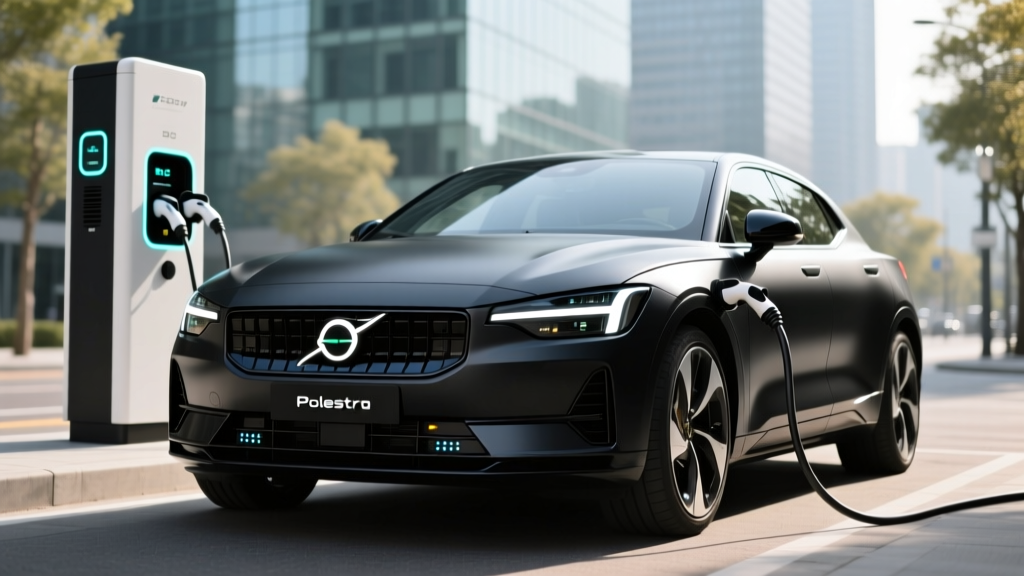
Charging the Polestar 2: What You Need to Know
The Polestar 2 uses the CCS1 connector for DC fast charging on Standard and Long Range models. Polestar has confirmed that future models sold in North America (including the Polestar 3 and updated Polestar 4) will adopt the NACS connector, aligning with Tesla's Supercharger network access.
| Charge Level | Power | Miles Added per Hour | Full Charge Time (10–100%) |
|---|---|---|---|
| Level 1 (120V household) | ~1.4 kW | ~4 mi/hr | 50+ hours |
| Level 2 (240V, 48A) | 11 kW | ~35 mi/hr | ~8 hours |
| DC Fast Charge (Long Range) | Peak 205 kW | ~650 mi/hr (peak) | 10–80% in ~26 min |
| DC Fast Charge (Std Range LFP) | Peak 135 kW | ~430 mi/hr (peak) | 10–80% in ~34 min |
Charging curve reality check: The 205 kW peak rate on Long Range models is sustained only between roughly 10–40% state of charge. Above 60%, the rate tapers significantly — typically to 80–100 kW — and above 80%, it drops below 50 kW. This is normal lithium-ion battery behavior to protect cell health. For road trips, plan your stops around the 10–80% window for maximum charging efficiency.
The LFP (lithium iron phosphate) battery in the Standard Range model has a different charging profile: it charges more slowly overall but can be routinely charged to 100% without the degradation concerns that NMC batteries have at high states of charge. Polestar recommends periodic 100% charges for LFP models to help the BMS accurately calibrate range estimates.
Pricing, Tax Credits, and Ownership Costs
| Trim | Base MSRP | §30D Federal Credit | Effective Price (if eligible) |
|---|---|---|---|
| Standard Range Single Motor | $49,900 | $0 (LFP battery sourcing may not meet critical mineral requirements) | $49,900 |
| Long Range Single Motor | $53,400 | Up to $7,500 (verify current sourcing rules) | ~$45,900 |
| Long Range Dual Motor AWD | $56,900 | Up to $7,500 (verify current sourcing rules) | ~$49,400 |
Tax credit caveats: The IRS §30D clean vehicle credit has strict eligibility requirements that change as battery supply chains evolve. Key rules include:
- MSRP cap: Sedans/wagons must be priced at or below $55,000. The Long Range Dual Motor at $56,900 may exceed this cap depending on model-year classification — confirm with your dealer and tax professional.
- Income limits: Modified adjusted gross income must not exceed $150,000 (single), $225,000 (head of household), or $300,000 (joint filing).
- Battery sourcing: A percentage of critical minerals and battery components must be sourced from the US or free-trade-agreement countries. These percentages increase annually. The LFP Standard Range battery (often sourced from CATL in China) may not qualify, while the NMC Long Range battery has a better chance of meeting requirements — but this changes year to year.
- Point-of-sale transfer: As of 2024, eligible buyers can transfer the credit to the dealer for an immediate price reduction at purchase rather than waiting to claim it on their tax return.
Always verify current eligibility on the IRS website and with a qualified tax professional before making a purchase decision based on credit assumptions.
Interior, Cargo, and Daily Practicality
The Polestar 2 is a fastback-style liftback, which gives it an advantage over traditional sedans for cargo loading:
- Cargo volume (rear seats up): 14.4 cu ft
- Cargo volume (rear seats folded): 40.5 cu ft
- Front trunk (frunk): 1.4 cu ft — enough for charging cables and a small bag
- Rear legroom: 35.7 inches — adequate for adults on shorter trips, tight for tall passengers on long drives
- Front headroom: 40.1 inches (without panoramic roof); reduced with the fixed glass roof option
The interior is minimalist and vegan-material-focused, with an 11.2-inch center touchscreen running Android Automotive OS — the same platform underlying Google Maps, Google Assistant, and the Google Play Store for in-car apps. Navigation integrates EV routing with automatic charging stop planning, which is one of the strongest infotainment experiences in the EV market.
Notable drawbacks: The rear seat is tighter than competitors like the Tesla Model 3 (which offers 35.2 inches of legroom but more shoulder room) and significantly tighter than the Hyundai Ioniq 6. Visibility out the rear is compromised by the thick C-pillars and high trunk line. The optional Performance Pack with Öhlins dampers and Brembo brakes is excellent for driving dynamics but adds cost and a firmer ride that not all commuters will appreciate.
Warranty and Long-Term Reliability
Polestar provides the following warranty coverage for the Polestar 2:
- Battery warranty: 8 years / 100,000 miles (whichever comes first), covering defects and capacity loss below 70% of original capacity
- Powertrain warranty: 8 years / 100,000 miles (electric motors, inverter, reduction gear)
- Bumper-to-bumper: 4 years / 50,000 miles
- Corrosion: 12 years, unlimited mileage
- Roadside assistance: 4 years, unlimited mileage
The 70% capacity retention threshold is industry-standard — matching Tesla, Hyundai, and Kia. Real-world degradation data from early Polestar 2 owners (2021–2023 models) suggests approximately 5–8% capacity loss in the first 50,000 miles, which is within normal expectations for NMC chemistry. LFP batteries in the Standard Range model are expected to degrade more slowly but have less total capacity to begin with.
Driver Assistance and Safety Technology
The Polestar 2 comes equipped with Polestar Pilot Assist as standard, which includes:
- Adaptive cruise control with stop-and-go
- Lane centering assist
- Blind spot monitoring with steering assist
- Cross-traffic alert with automatic braking
- Run-off road mitigation
Polestar Pilot Assist is a Level 2 driver-assistance system per SAE International's classification. This means the vehicle can control steering and acceleration simultaneously under certain conditions, but the driver must remain fully attentive, keep hands on the wheel, and be prepared to take over at any moment. This is not self-driving.
The Polestar 2 earned a 5-star overall safety rating from NHTSA and Top Safety Pick+ designation from IIHS, making it one of the safest vehicles in its class.
Who the Polestar 2 Is For — and Who Should Look Elsewhere
- You want a premium, understated EV that avoids the tech-bro image of a Tesla
- Android Automotive's Google-native infotainment appeals to you
- You prioritize build quality and Scandinavian design over maximum range-per-dollar
- You commute 30–80 miles daily and can charge at home overnight
- You value IIHS Top Safety Pick+ credentials and Volvo's safety heritage
- You need 350+ miles of real-world range for frequent road trips (consider the Hyundai Ioniq 6 Long Range or Tesla Model 3 Long Range)
- You regularly carry rear-seat passengers over 6 feet tall
- You need a NACS connector today for Tesla Supercharger access without an adapter
- Maximum federal tax credit eligibility is a deal-breaker and the Polestar 2's battery sourcing doesn't qualify in your purchase year
Pros and Cons at a Glance
- Excellent build quality and interior materials
- Android Automotive OS with native Google Maps EV routing
- Strong safety ratings (NHTSA 5-star, IIHS TSP+)
- 205 kW DC fast charging on Long Range (competitive with class)
- Available Öhlins/Brembo Performance Pack for enthusiasts
- LFP option for buyers who want simpler battery care
- Rear seat is tighter than key competitors
- CCS1 connector (no native NACS/Supercharger access yet)
- Federal tax credit eligibility uncertain due to battery sourcing rules
- Real-world highway range falls notably short of EPA estimate
- Relatively small frunk
- Dealer/service network smaller than Tesla or legacy OEMs
Frequently Asked Questions
Does the Polestar 2 have a throttle body?
No. The Polestar 2 is a battery-electric vehicle with no internal combustion engine. It has no throttle body, no intake manifold, and no air metering components. Power delivery is controlled entirely by the inverter and motor control module, which regulate electrical current from the battery to the electric motors.
What should I do if my Polestar 2 feels sluggish or unresponsive?
First, try a full vehicle power cycle: lock the car, walk away with the key for 15+ minutes, then return and drive normally. If the issue persists, check for pending OTA software updates in the vehicle settings. If neither resolves it, schedule a diagnostic appointment with a Polestar service center to check the motor control module, accelerator pedal sensor, and 12V battery health.
What is the real-world range of the Polestar 2?
The Long Range Single Motor is EPA-rated at 320 miles. Real-world highway driving at 70 mph in moderate temperatures yields approximately 265–285 miles. In cold weather (below 32°F), expect 220–250 miles. The Standard Range LFP model (EPA 276 miles) delivers roughly 230–250 miles in moderate conditions and 210–240 miles in winter.
How fast does the Polestar 2 charge?
Long Range models peak at 205 kW on a DC fast charger, achieving a 10–80% charge in approximately 26 minutes. The Standard Range LFP model peaks at 135 kW, taking about 34 minutes for 10–80%. At home on a Level 2 charger (240V, 48A), all trims charge at 11 kW, adding roughly 35 miles of range per hour — a full overnight charge takes about 8 hours.
Does the Polestar 2 qualify for the $7,500 federal EV tax credit?
Eligibility depends on current IRS §30D rules regarding battery critical-mineral sourcing, component manufacturing origin, buyer income limits, and MSRP caps. The Long Range NMC models have historically had a stronger path to qualification than the Standard Range LFP model, but rules change annually. Verify current eligibility at IRS.gov and consult a tax professional before purchasing.
Is the Polestar 2 worth buying vs. the Tesla Model 3 or Hyundai Ioniq 6?
The Polestar 2 wins on build quality, interior design, and safety credentials. The Tesla Model 3 Long Range offers more real-world range (~330+ highway miles), native Supercharger access, and a lower starting price. The Hyundai Ioniq 6 offers the best efficiency (up to 140 MPGe) and more rear-seat room. Your choice depends on whether you prioritize premium feel (Polestar), charging network (Tesla), or efficiency and space (Hyundai).
What maintenance does a Polestar 2 require?
Far less than a gas Volvo. There's no oil, no spark plugs, no air filter, no throttle body, and no transmission fluid. Scheduled maintenance includes cabin air filter replacement (~every 2 years), brake fluid check (every 2 years), windshield washer fluid, tire rotation (every 5,000–7,500 miles), and wiper blade replacement. The regenerative braking system significantly extends brake pad life — many EV owners go 80,000+ miles on original pads.