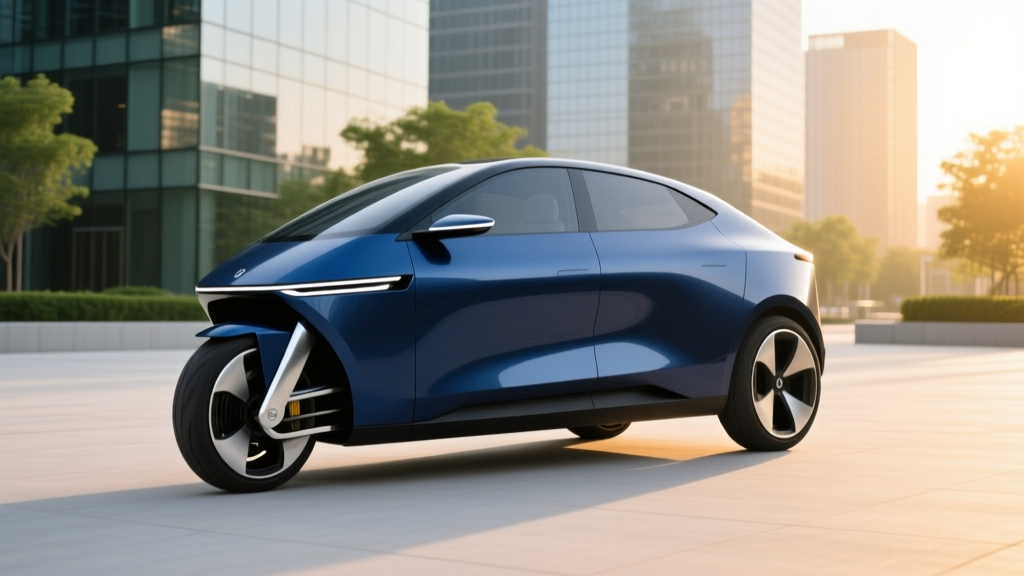
When most U.S. buyers hear "three wheeler electric auto," they picture either a neighborhood runabout or an enclosed commuter pod. In 2026, the market is still niche but growing: federally, most three-wheeled electric vehicles are classified as autocycles (FMVSS 500) or low-speed vehicles (LSVs), not full passenger cars. That distinction governs everything from safety testing to tax-credit eligibility and highway access.
The Short Answer
A three wheeler electric auto is a practical city commuter for single occupants or couples who can charge at home and drive under 40 miles a day. Expect 60–120 miles of real-world range, Level 2 charging in 3–6 hours, and base prices between $18,000 and $40,000. However, most do not qualify for the federal §30D new EV tax credit (because they fall outside EPA light-duty classification), and highway use is restricted by state law. They save dramatically on fuel and maintenance versus a gas trike, but trade crash protection, range, and resale liquidity.
What Exactly Qualifies as a Three Wheeler Electric Auto?
Unlike a conventional four-wheeled BEV reviewed on fueleconomy.gov, three-wheeled vehicles sit in a regulatory gray zone. The NHTSA classifies them under FMVSS 500 as low-speed vehicles if their top speed is 20–25 mph, or as autocycles/motorcycles if they exceed that. This matters because:
- EPA range stickers are rarely published — manufacturers often quote in-house or ideal-condition figures.
- §30D tax credit eligibility generally requires a four-wheeled vehicle with ≥4 wheels and a GVWR under 14,000 lbs per IRS guidance. Most three-wheelers are excluded.
- State registration varies wildly — some states require a motorcycle endorsement, others treat them like NEVs restricted to roads ≤35 mph.
Popular 2026-era examples in the U.S. market include the Arcimoto FUV (enclosed tandem, ~75-mile range, ~$21,900 base), the ElectraMeccanica SOLO (single-seat cargo pod, discontinued but still on the used market), and imported LSV-class trikes from Chinese manufacturers sold under various badge names. High-performance outliers like the Polaris Slingshot remain gas-only as of 2026.
Real-World Range and Efficiency: What the Sticker Doesn't Tell You
Three-wheeler electric autos typically carry small battery packs — 12 to 22 kWh usable, usually NMC chemistry given the weight and packaging constraints. The trade-off versus a mainstream BEV (which averages 60–100 kWh) is stark: lighter weight means less energy per mile, but also less total range.
| Metric | Three-Wheeler EV (2026 class avg.) | Gas Trike (Slingshot baseline) |
|---|---|---|
| Usable battery / fuel tank | 18 kWh NMC | 9.8 gal gasoline |
| Claimed range | 80–120 miles | ~250 miles |
| Real-world range (mixed, 70°F) | 60–95 miles | ~220 miles |
| Cold-weather range loss (30°F) | 20–35% (~45–70 mi) | Negligible |
| Efficiency | 150–220 Wh/mile (≈150–225 MPGe) | 27–33 MPG combined |
| 0–60 mph | 7.5–12 sec | ~5.0 sec |
| Top speed | 75–85 mph (LSV: 25 mph) | 125 mph |
Real-World Range Reality Check
Manufacturer-quoted 100-mile ranges assume 45-mph flat-terrain city driving at 70°F. On a 65-mph highway loop with A/C, expect 65–75 miles from an 18 kWh pack. In freezing weather with cabin heat, budget 45–55 miles. Small packs have little thermal buffer, so range drops hit harder than in a 75-kWh BEV.
Charging: Home Is Mandatory, DC Fast Charging Is Rare
The small packs on three-wheelers charge quickly on Level 2 but almost never support DC fast charging — the charge curves simply don't justify the hardware cost. Most use a standard J1772 inlet limited to 6.6 kW or even 3.3 kW onboard.
| Level | Power (kW) | Miles per Hour of Charging | 0–100% Time |
|---|---|---|---|
| Level 1 (120V household) | 1.2–1.4 kW | 6–8 mi/hr | 13–16 hours |
| Level 2 (240V home) | 3.3–6.6 kW | 18–35 mi/hr | 3–6 hours |
| DC Fast Charge | Usually not available | — | — |
Home charging access is non-negotiable. With no DC fast-charge capability, public-charging reliance becomes a daily inconvenience. If you can't install a 240V Level 2 circuit at home or work, a three-wheeler EV is a poor fit. Installation for a Level 2 home charger typically runs $800–$2,200 including panel assessment, wiring, and permit — but some older homes need a $2,500–$5,000 panel upgrade to support a 40A circuit.
Cost Breakdown: Purchase, Fuel, Maintenance, Insurance
The economics of a three-wheeler electric auto look great on a per-mile basis but require careful framing on the purchase side, because the federal §30D credit almost never applies.
| Cost Category | Three-Wheeler EV ($24k base) | Gas Trike ($28k base) |
|---|---|---|
| Purchase price (after credits) | $24,000 (no §30D) | $28,000 |
| Fuel / electricity (5 yrs) | $2,850 (@ $0.16/kWh) | $12,900 (@ $3.70/gal, 30 MPG) |
| Maintenance (5 yrs) | $600 (tires, cabin filter, fluid top-offs) | $3,400 (oil, plugs, belts, brakes) |
| Insurance (5 yrs) | $6,200 (specialty-classified, higher rates) | $5,800 |
| Depreciation (est.) | $13,200 (niche, thin resale market) | $9,800 |
| Total 5-year | $46,850 | $59,900 |
| Cost per mile | $0.63 | $0.80 |
The EV wins on operating costs by roughly $13,000 over five years, but steeper depreciation (niche buyers, thin used market) and slightly higher insurance premiums (specialty vehicle classification) narrow the gap. Buyers should check state and utility incentives — some states offer rebates for autocycles and NEVs that partially offset the missing federal credit.
Tax Credits and Incentives: The §30D Reality
Under current IRS §30D rules, the up-to-$7,500 federal new clean vehicle credit requires a four-wheeled vehicle. Three-wheelers are generally ineligible. This is the single biggest financial surprise for buyers comparing a $24,000 three-wheeler EV to a $30,000 four-wheeled BEV that qualifies for the full credit — the effective price gap often flips.
- §30D new EV credit: Not eligible (vehicle must have 4 wheels per IRS definitions)
- Used EV credit (§25E): Possible if sold through a registered dealer and meeting income caps — confirm with a tax professional
- State/local incentives: Vary widely; check DSIRE and your state DMV
- Utility rebates: Many co-ops and IOUs offer $250–$1,000 for Level 2 charger install
Common Misconceptions — Myth vs. Fact
| Myth | Fact |
|---|---|
| "Three-wheelers are as safe as cars." | They lack NHTSA crash-test ratings and the crumple zones of enclosed 4-wheel BEVs. Rollover risk is higher. |
| "I'll get the $7,500 federal tax credit." | §30D requires 4 wheels. Most three-wheelers are excluded. |
| "I can drive them anywhere." | LSV-class trikes are restricted to roads ≤35 mph in most states. Autocycles may be highway-legal but often require a motorcycle endorsement. |
| "The small battery means cheap replacement." | Out-of-warranty pack replacement runs $4,000–$8,000 — a significant fraction of the vehicle's value. |
| "I can fast-charge on road trips." | DC fast charging is rarely available. Plan trips within round-trip range of home or Level 2 destinations. |
Decision Framework: Is a Three-Wheeler EV Right for You?
Choose a Three-Wheeler Electric Auto If…
- Your daily driving is under 40 miles round-trip on low-speed roads
- You have reliable home Level 2 charging (garage or dedicated outdoor circuit)
- You live in a mild climate or accept 30% winter range loss
- You want a single-occupant commuter and don't need rear seats or cargo volume
- You value the open-air or motorcycle-like experience with EV efficiency
Choose a Four-Wheeled BEV or PHEV Instead If…
- You need highway access, 200+ mile range, or DC fast charging for road trips
- You carry passengers or cargo regularly
- You want the §30D federal tax credit (up to $7,500)
- You live where winters regularly drop below freezing
- Resale value and insurance cost are top priorities
Frequently Asked Questions
Do I need a motorcycle license to drive a three-wheeler electric auto?
It depends on your state and the vehicle's classification. Autocycles (top speed >25 mph) often require a motorcycle endorsement, though some states waive it for enclosed three-wheelers. LSV-class vehicles usually only need a standard driver's license. Check your state DMV before purchasing.
How long does the battery last on a three-wheeler EV?
Expect 8–12 years of usable life with typical degradation of 15–25% over that period, depending on chemistry (NMC degrades faster than LFP under heat and high SoC). Most manufacturers offer a 3-year/36,000-mile battery warranty — shorter than the 8-year/100,000-mile federal minimum on four-wheeled BEVs, because three-wheelers aren't covered by the same mandate.
Can I take a three-wheeler electric auto on the highway?
Only if it's classified as an autocycle with a top speed above 55 mph. LSV-class vehicles (20–25 mph top speed) are legally barred from most highways. Even highway-legal autocycles feel exposed at 70 mph alongside semi-trucks — test-drive at speed before committing.
How does insurance compare to a gas trike or a regular EV?
Insurance is typically 5–15% higher than a comparable gas trike because specialty EV parts are costlier and adjusters are less familiar. It's usually higher than a mainstream four-wheeled BEV because the vehicle class is niche. Get quotes from at least three insurers before buying.
Is a three-wheeler EV cheaper than a used Nissan LEAF or Chevy Bolt?
On purchase price, often yes — a new three-wheeler at $22,000 can undercut a used 4-wheel BEV. On total cost and practicality, usually no: used LEAFs and Bolts have DC fast charging, 150+ mile range, §30D-used eligibility (up to $4,000), better crash protection, and stronger resale. The three-wheeler wins only on novelty, parking footprint, and per-mile efficiency in city use.