The Quick Answer on 3 Wheeled Electric Vehicles
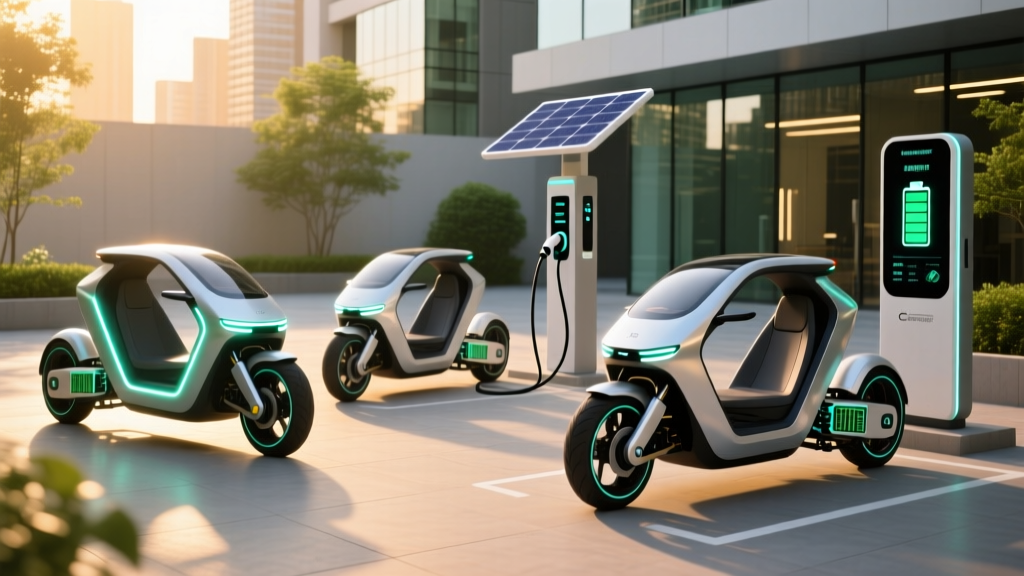
Most 3 wheeled electric vehicles available in the U.S. are classified as autocycles or NEVs (Neighborhood Electric Vehicles), not full passenger cars. The most prominent highway-capable model — the Arcimoto FUV (Fun Utility Vehicle) — offers an EPA-estimated range of around 102 miles in its largest battery configuration, starts near $21,000, and charges via a standard J1772 connector. However, Arcimoto ceased production in 2023 after filing for bankruptcy, meaning the current 3 wheeled electric market in 2026 is limited primarily to NEVs (top speed 25 mph), electric trike motorcycles like the Harley-Davidson Tri Glide Electric concept (not yet in production), and imported micro-vehicles. If you need a practical daily driver with highway capability, a conventional 4-wheel EV or PHEV will deliver more range, safety, and charging infrastructure access for a comparable or lower total cost.
What Qualifies as a 3 Wheeled Electric Vehicle?
The term "3 wheeled electric" covers a wide spectrum of vehicles with very different legal classifications, capabilities, and use cases. Understanding these categories is essential before spending money, because what you can legally drive — and where — depends heavily on how your state classifies the vehicle.
Autocycles (Highway-Capable)
Autocycles are three-wheeled vehicles that meet federal motor vehicle safety standards for motorcycles but have car-like controls (steering wheel, pedals, enclosed or semi-enclosed cabin). Examples include the now-defunct Arcimoto FUV and the Polaris Slingshot (gas-only). Most states require a standard driver's license or a motorcycle endorsement. These can travel on highways and interstates.
Neighborhood Electric Vehicles (NEVs)
NEVs are federally limited to a top speed of 25 mph and can only operate on roads with speed limits of 35 mph or below (varies by state). They are governed by FMVSS 500 standards, which require far less crash protection than full passenger vehicles. Common NEV brands include GEM (Polaris) and various Chinese-manufactured models. Typical range is 30–60 miles on lead-acid or small lithium batteries (5–15 kWh).
Electric Trike Motorcycles
These are motorcycle-class vehicles with two rear wheels and one front wheel (or a reverse-trike layout). As of 2026, the market is sparse: Harley-Davidson has teased electric trike concepts, and smaller manufacturers like Can-Am have focused on gas-powered Spyder models. Fully electric, highway-capable trike motorcycles remain largely unavailable in the U.S. market.
Range, Battery, and Charging: What the Numbers Actually Show
Because the 3 wheeled electric segment is so fragmented, specs vary enormously. Below is a comparison of the most relevant models and categories available or recently available in the U.S.:
| Vehicle / Category | Battery (kWh) | EPA Range (mi) | Real-World Range | Charge Rate (kW) | 0–60 mph | Base MSRP |
|---|---|---|---|---|---|---|
| Arcimoto FUV (17.3 kWh, discontinued) | 17.3 usable | 102 | ~75–85 mi (mixed driving) | ~6.6 kW (L2); no DCFC | 7.5 sec | ~$21,000 (used market) |
| GEM e2 NEV (NEV class) | ~11.5 kWh (Li-ion) | N/A (NEV) | 30–45 mi at 25 mph | ~1.9 kW (L1/120V) | N/A (25 mph top) | ~$12,000–$15,000 |
| Generic Imported NEV | 5–10 kWh (often lead-acid) | N/A | 15–30 mi | ~1.0–1.5 kW (L1) | N/A | $5,000–$10,000 |
| 2026 Nissan Leaf S (4-wheel EV, baseline) | 40 kWh (NMC) | 149 | ~120–130 mi highway | 50 kW DCFC; 6.6 kW L2 | 7.9 sec | $28,140 |
| 2026 Chevy Equinox EV 2LT (4-wheel EV) | 85 kWh (NMC) | 319 | ~260–280 mi highway | 150 kW DCFC; 11.5 kW L2 | 7.9 sec | $33,600 |
Key takeaway: No current-production 3 wheeled electric vehicle matches the range, charging speed, or safety equipment of a mainstream 4-wheel EV. The Arcimoto FUV came closest, but its lack of DC fast charging (DCFC) meant a full recharge took roughly 2.5 hours on Level 2 — impractical for anything beyond local commuting.
Real-World Range Reality Check
The Arcimoto FUV's 102-mile EPA rating assumed ideal urban conditions at moderate speeds. In real-world testing, highway driving at 55–65 mph reduced range to approximately 60–70 miles due to the vehicle's poor aerodynamic profile (high frontal area relative to its weight) and lack of a thermal management system for the battery. Cold-weather operation (below 40°F) further reduced range by 20–35%, consistent with EVs lacking active battery heating. NEVs, operating exclusively at low speeds, see less range variance but are irrelevant for any commute exceeding neighborhood distances.
Cost Breakdown: 3 Wheeled Electric vs. Gas and 4-Wheel EVs
One of the primary motivations for considering a 3 wheeled electric vehicle is cost savings. But does the math actually work? Let's compare a representative NEV and the discontinued Arcimoto FUV against a gas-powered commuter car and a mainstream EV over five years and 60,000 miles.
| Cost Category | GEM e2 NEV (30 mi/day limit) | Arcimoto FUV (used) | 2026 Honda Civic Gas | 2026 Chevy Equinox EV |
|---|---|---|---|---|
| Purchase Price | $14,000 | $15,000 (used) | $24,950 | $33,600 |
| Federal Tax Credit (§30D) | $0 (NEV ineligible) | $0 (used credit expired/discontinued mfr) | $0 | Up to $7,500 (see IRS eligibility) |
| Net Purchase | $14,000 | $15,000 | $24,950 | ~$26,100 |
| Fuel/Energy (60k mi) | $1,200 (electric) | $2,400 (electric) | $7,200 (gas @ $3.50/gal, 33 MPG) | $3,600 (electric @ $0.15/kWh) |
| Maintenance | $800 | $1,500 | $3,600 | $1,200 |
| Insurance (5 yr) | $3,500 | $5,000 | $6,500 | $7,500 |
| 5-Year Total | $19,500 | $23,900 | $42,250 | $38,400 |
Analysis: The NEV wins on raw cost, but only because it cannot be driven on highways — it replaces a second car or a golf cart, not a primary vehicle. The used Arcimoto FUV's total cost is competitive, but its limited range, lack of DCFC, and absence of manufacturer support (parts, warranty, service) make it a risky purchase. The Equinox EV, after the federal tax credit, delivers 319 miles of EPA range, full highway capability, DC fast charging at 150 kW (10–80% in approximately 30 minutes), modern ADAS features, and a full manufacturer warranty — for a modest premium that pays for itself in utility and resale value.
For current IRS §30D tax credit rules, including MSRP caps ($55,000 for cars, $80,000 for SUVs/trucks), buyer income limits ($150,000 single / $300,000 joint), and critical-mineral/battery-sourcing requirements, consult the IRS directly or a tax professional. Eligibility is not guaranteed and changes with battery supply-chain rules.
Safety, Insurance, and Regulatory Considerations
This is where 3 wheeled electric vehicles face their steepest challenge. Safety testing for autocycles and NEVs is far less rigorous than for standard passenger vehicles.
Crash Protection
NEVs are exempt from most FMVSS crash standards. They lack airbags, crumple zones, electronic stability control, and modern ADAS features like automatic emergency braking (AEB) or lane-keeping assist. The Arcimoto FUV included a steel roll cage, three-point seatbelts, and a windshield, but was never crash-tested by the NHTSA or IIHS. In any collision with a full-size vehicle, occupants of a 3 wheeled electric vehicle are at significantly greater risk of injury.
Insurance
Insurance for autocycles is typically classified under motorcycle policies, which can be cheaper than auto insurance in some states but may offer less medical coverage. NEV insurance is often available through specialty carriers. Expect annual premiums of $600–$1,200 for NEVs and $900–$1,500 for autocycles, depending on your state and driving record.
Registration and Licensing
Requirements vary by state. Most states classify autocycles as motorcycles, requiring either a standard license or a motorcycle endorsement. NEVs require a standard license but are restricted to low-speed roads. Before purchasing, verify your state's specific classification through your local DMV.
Home Charging and Infrastructure Reality
A common misconception is that 3 wheeled electric vehicles are easier to charge because their batteries are smaller. While technically true, the practical charging picture is more nuanced.
| Charging Level | Power (kW) | Arcimoto FUV (17.3 kWh) | GEM e2 NEV (11.5 kWh) | Miles Added Per Hour |
|---|---|---|---|---|
| Level 1 (120V household) | 1.0–1.4 kW | ~15–17 hours (0–100%) | ~9–11 hours (0–100%) | ~4–8 mi/hr |
| Level 2 (240V, 32A) | 6.6–7.7 kW | ~2.5 hours (0–100%) | Not supported (some models) | ~25–40 mi/hr |
| DC Fast Charge | 50–350 kW | Not supported | Not supported | N/A |
Critical distinction — kW vs. kWh: kW (kilowatts) measures the rate of energy flow — how fast you're charging. kWh (kilowatt-hours) measures total energy capacity — the size of the battery. A 17.3 kWh battery charged at 6.6 kW takes roughly 2.6 hours from empty to full. This is analogous to filling a 17-gallon tank through a hose that flows at 6.6 gallons per hour.
Neither the Arcimoto FUV nor any current NEV supports DC fast charging. This means road trips are impractical: even the FUV's 102-mile EPA range, combined with multi-hour Level 2 recharge stops, limits realistic travel to about 80 miles from home in a single day. For context, a 2026 Hyundai Ioniq 5 with a 77.4 kWh battery charges from 10–80% at a 350 kW DCFC station in approximately 18 minutes, adding roughly 200 miles of range.
If you have access to home Level 2 charging (a 240V circuit, typically requiring a 40–50A dedicated breaker installed by a licensed electrician at a cost of $500–$2,000 depending on panel capacity and run length), overnight charging of a 3 wheeled electric is straightforward. Without home charging, relying on public Level 2 infrastructure is feasible for NEVs due to their small batteries, but the limited public availability of Level 2 chargers in many areas remains a constraint.
Common Misconceptions: Myths vs. Facts
| Myth | Fact |
|---|---|
| "3 wheeled electric vehicles qualify for the $7,500 federal EV tax credit." | NEVs are not eligible — they do not meet the §30D requirement of a minimum 4 kWh battery AND a gross vehicle weight rating that qualifies as a highway-capable motor vehicle. Autocycles may qualify if they meet all IRS sourcing, MSRP, and income requirements, but no current-production autocycle is widely available. Always verify at irs.gov. |
| "Smaller battery means cheaper ownership." | Smaller batteries degrade faster when cycled deeply (frequent 100% to 0% use), and replacement costs for niche vehicles can exceed $5,000–$8,000 with limited availability. Mainstream EV batteries (60–100 kWh) benefit from economies of scale and robust warranty networks. |
| "A 3 wheeler is more efficient because it's lighter." | Weight is only one factor. Aerodynamic drag dominates energy consumption above 40 mph. The Arcimoto FUV's upright, open design produced a real-world efficiency of roughly 3.5–4.0 miles per kWh at highway speeds — comparable to or worse than a streamlined 4-wheel EV like the Tesla Model 3 (3.8–4.2 mi/kWh) that offers 4x the range and far more safety. |
| "NEVs are street-legal everywhere." | NEVs are legal on roads with speed limits of 35 mph or below in most states, but local ordinances can further restrict them. Some HOAs, private roads, and municipalities ban NEVs entirely. Check local regulations before purchasing. |
| "You don't need insurance for a 3 wheeled electric." | Both NEVs and autocycles require insurance in virtually all U.S. states. Minimum liability coverage is mandatory, and operating without it can result in fines, registration suspension, and personal liability in an accident. |
Decision Framework: Is a 3 Wheeled Electric Vehicle Right for You?
Choose a 3 Wheeled Electric (NEV) If:
- Your daily driving is exclusively under 25 miles on roads with speed limits ≤ 35 mph
- You already own a primary vehicle for highway travel and longer trips
- You live in a planned community, retirement community, or small town with low-speed infrastructure
- Your budget is under $15,000 and you need basic enclosed transportation
- You have reliable access to a standard 120V outlet for overnight charging
Choose a Mainstream 4-Wheel EV If:
- You need highway capability for commuting or road trips
- You want DC fast charging for travel beyond your local area
- Safety (crash testing, AEB, airbags, ADAS) is a priority
- You want to take advantage of the federal §30D tax credit (up to $7,500 on eligible models)
- You want manufacturer warranty support, dealer service, and strong resale value
- Your daily driving exceeds 40 miles or includes varied terrain and weather
Consider a PHEV (Plug-In Hybrid) If:
- You lack reliable home charging but want some electric-only driving
- You regularly drive long distances where charging infrastructure is sparse
- You want the flexibility of gas backup without range limitations
- Models like the 2026 Toyota RAV4 Prime (42 mi electric-only, 38 MPG gas) offer a practical bridge
Frequently Asked Questions
Are 3 wheeled electric vehicles street-legal on highways?
Autocycles (like the discontinued Arcimoto FUV) are highway-legal in most states, though some require a motorcycle endorsement. NEVs are explicitly prohibited from highways and roads with speed limits above 35 mph in most jurisdictions. Always confirm with your state DMV before purchasing.
Can I get a federal tax credit for a 3 wheeled electric vehicle?
Possibly, but it's unlikely for most options. The IRS §30D credit requires the vehicle to be a new, qualified plug-in electric vehicle with at least 4 kWh of battery capacity, manufactured by an eligible OEM, meeting critical-mineral and battery-component sourcing requirements, and falling within MSRP and buyer income caps. NEVs generally do not qualify. Check current eligibility at fueleconomy.gov and consult a tax professional.
How long do 3 wheeled electric vehicle batteries last?
Lithium-ion batteries in autocycles like the Arcimoto FUV typically retain 80–90% capacity after 5 years of moderate use. However, because these batteries are small and frequently cycled to near-empty, degradation can accelerate. Lead-acid batteries in budget NEVs typically last 2–4 years before replacement ($1,500–$3,000). Mainstream EV batteries from major manufacturers carry 8-year/100,000-mile warranties with guaranteed capacity retention thresholds (typically 70%).
What does it cost to charge a 3 wheeled electric vehicle at home?
With a 17.3 kWh battery (Arcimoto FUV) and a national average electricity rate of $0.16/kWh (per EIA data), a full charge costs approximately $2.77. For a 5–10 kWh NEV battery, a full charge costs $0.80–$1.60. Compare this to fueling a 33 MPG gas car for the same 100 miles of driving at $3.50/gallon: $10.61. The per-mile energy savings are real, but the total-cost picture must account for the vehicle's limitations.
Is a 3 wheeled electric vehicle safer than an e-bike or scooter?
In terms of occupant protection, an enclosed autocycle with a roll cage and three-point belts offers more protection than an e-bike or scooter. However, neither matches the crashworthiness of a modern passenger car or SUV. NEVs offer minimal crash protection — they are essentially golf carts with basic enclosures. For any vehicle operating in mixed traffic with full-size cars and trucks, mass and structural engineering matter enormously in a collision.
What should a first-time EV buyer know before considering a 3 wheeler?
First, understand that the 3 wheeled electric market in 2026 is not comparable to the mainstream EV market. You are choosing a niche vehicle with limited manufacturer support, restricted range, no DC fast charging, minimal crash safety testing, and potentially difficult resale. If your goal is to reduce emissions and fuel costs, a mainstream 4-wheel EV from an established manufacturer (Chevrolet, Hyundai, Tesla, Ford, Nissan) will deliver dramatically more capability, safety, and long-term value. Reserve 3 wheeled electric vehicles for specific, limited use cases where their constraints align with your needs — not as a primary vehicle replacement.