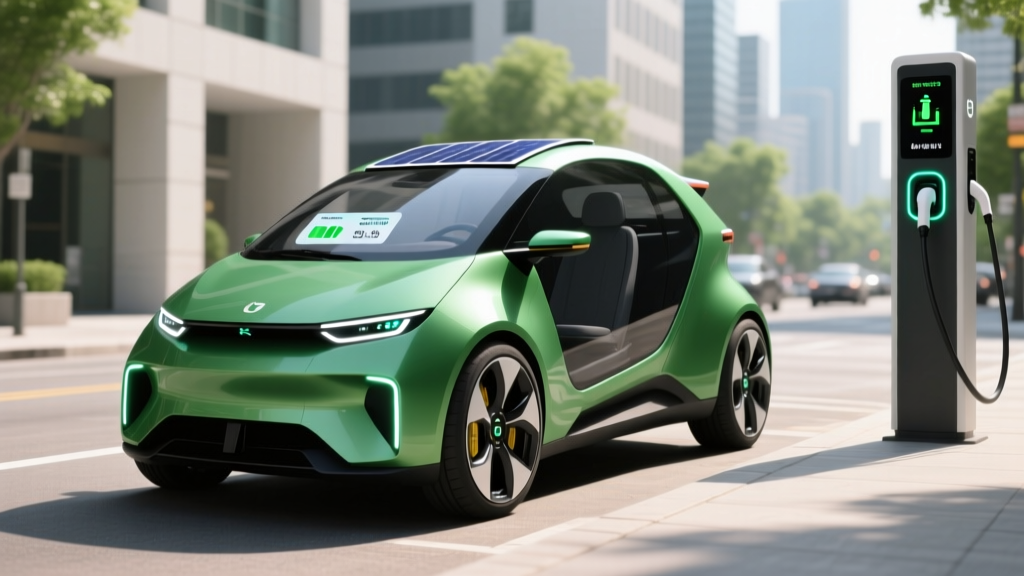
Most EV shoppers focus on four-wheeled sedans, SUVs, and trucks. But the three-wheeled electric car segment — led by autocycles like the Arcimoto FUV and the upcoming Aptera solar-electric — fills a niche for ultra-efficient, low-cost commuting. These vehicles typically deliver 70–100 miles of EPA-estimated range on battery packs under 15 kWh, charge fully on a standard 120V outlet overnight, and cost well under $30,000 before incentives. They're best understood not as car replacements, but as hyper-efficient second vehicles for solo commuters covering under 50 miles round-trip in fair-weather climates.
Quick Answer: Is a Three-Wheeled Electric Car Right for You?
A three-wheeled electric car makes sense only if: (1) you need a secondary commuter vehicle, not a primary family car; (2) your daily round-trip is under 50 miles; (3) you live in a mild or warm climate (these vehicles lose 20–35% range in freezing temps with no heat-pump protection); and (4) you have access to a standard 120V outlet at home. If you need highway cruising above 65 mph, back-seat space, or year-round comfort in cold states, a conventional four-wheel EV or PHEV is the practical choice.
What Exactly Is a Three-Wheeled Electric Car?
In the U.S., most three-wheeled electric vehicles are classified as autocycles — a legal category recognized by the NHTSA and most state DMVs. Autocycles have three wheels, a steering wheel (not handlebars), and typically require a standard driver's license (though some states require a motorcycle endorsement). They must meet a subset of Federal Motor Vehicle Safety Standards (FMVSS), though they are exempt from many crash-test requirements that apply to four-wheel passenger cars.
The current market has two primary production contenders and one notable upcoming model:
- Arcimoto FUV (Fun Utility Vehicle): Based in Eugene, Oregon. Enclosed cabin, side-by-side tandem seating, available in several trims. Has been in low-volume production since 2020, with 2026 models still available via direct order.
- Aptera Launch Edition: A solar-integrated, ultra-aerodynamic three-wheeler with claimed ranges up to 400 miles on the largest battery pack. After multiple delays, Aptera has begun limited deliveries of its Launch Edition as of early 2026, with broader production expected to ramp later in the year. Specs remain preliminary for higher-range trims.
- ElectraMeccanica Solo: A single-seat, three-wheeled commuter EV that was briefly available in the U.S. before the company wound down operations. Used examples may appear on the secondary market, but new production has ceased.
Specs at a Glance: Range, Battery, Charging & Performance
Here's how the current and near-production three-wheeled electric cars compare on the numbers that matter most. All figures are manufacturer-published; EPA certification for autocycles can differ from standard passenger-car testing.
| Spec | Arcimoto FUV (2026 Premier) | Aptera Launch Edition (2026) |
|---|---|---|
| EPA-Est. Range | ~102 miles (Premier trim, 17.3 kWh) | ~250 miles (40 kWh pack) / up to ~400 miles (100 kWh, announced) |
| Battery Capacity (usable) | 17.3 kWh (NMC lithium-ion) | 40 kWh (Launch) / 60 & 100 kWh (announced trims) |
| Max DC Fast Charge | Not available (Level 2 AC only) | ~50 kW DC (estimated, CCS) |
| Level 2 Charge (240V) | ~6.6 kW; 0–100% in ~3 hours | ~7.7 kW; 0–100% in ~5.5 hours (40 kWh) |
| Level 1 Charge (120V) | ~1.4 kW; 0–100% in ~12 hours | ~1.4 kW; ~28 hours for 40 kWh pack |
| 0–60 mph | ~7.5 seconds | ~5.5 seconds (40 kWh, est.) |
| Top Speed | ~80 mph | ~110 mph |
| Solar Integration | None | Up to ~700W rooftop/hood solar (adds ~25–40 mi/day in ideal sun) |
| Base MSRP | ~$27,900 (Premier) | ~$33,200 (Launch Edition, 40 kWh) |
| Seating | 2 (tandem) | 2 (side-by-side) |
| Cargo Volume | ~10 cu ft (rear pod) | ~25 cu ft (rear hatch) |
| Warranty (Battery/Powertrain) | 3 years / 36,000 miles | Not yet finalized (preliminary) |
Real-World Range Reality Check
Arcimoto FUV: The 102-mile EPA figure assumes moderate speeds and mild temperatures. Expect 75–85 miles at sustained 65 mph highway driving, and as low as 60–70 miles in freezing conditions with cabin heat on. The FUV uses resistive heating, not a heat pump, which draws heavily from the 17.3 kWh pack.
Aptera 40 kWh: The 250-mile claim benefits from an extremely low drag coefficient (Cd ~0.13). In real-world mixed driving, expect 200–220 miles. Cold-weather loss may be partially offset by solar trickle charging in sunny climates, but don't count on solar to replace plugging in — 700W of solar adds roughly 4–5 kWh per day in peak summer sun, or about 25–30 miles.
Three-Wheeled EV vs. Gas Commuter Car: The Cost Breakdown
The economic argument for a three-wheeled electric car rests on rock-bottom fueling and maintenance costs — not on purchase price. Let's compare a five-year ownership scenario against a typical gas-powered commuter car (using a 2026 Honda Civic as a baseline).
| Cost Category (5 Years / 75,000 Miles) | Arcimoto FUV (Premier) | Aptera 40 kWh (Launch) | 2026 Honda Civic (Gas, 33 MPG Combined) |
|---|---|---|---|
| Purchase Price (MSRP) | $27,900 | $33,200 | $25,500 |
| Federal Tax Credit (§30D) | $0 (autocycle — not eligible*) | $0 (autocycle — not eligible*) | N/A |
| Fueling / Charging Cost | ~$1,875 (at $0.15/kWh, 4 mi/kWh) | ~$2,250 (at $0.15/kWh, 4 mi/kWh; solar offsets ~15%) | ~$8,525 (at $3.75/gal, 33 MPG) |
| Maintenance (5 Years) | ~$500 (tire rotation, cabin filter, brake fluid) | ~$600 (similar) | ~$3,200 (oil changes, filters, brakes, transmission fluid) |
| Insurance (Est. Annual × 5) | ~$4,500 ($900/yr — specialty autocycle rate) | ~$5,500 ($1,100/yr — limited carrier availability) | ~$6,000 ($1,200/yr) |
| Estimated Depreciation | ~$12,000 (limited resale market) | ~$10,000 (strong early demand, uncertain long-term) | ~$9,500 |
| Total 5-Year Cost | ~$46,775 | ~$51,550 | ~$52,725 |
*Federal §30D tax credit eligibility: Autocycles are classified differently from standard passenger vehicles under IRS rules. As of 2026, the §30D credit applies to qualifying "new clean vehicles" that meet four-wheel passenger car or light truck classifications. Three-wheeled autocycles generally do not qualify. Some states offer separate incentives for low-speed or electric autocycles — check your state's energy office. Source: IRS §30D guidelines.
Charging a Three-Wheeled Electric Car: What You Need to Know
One of the most practical advantages of these vehicles is charging simplicity. With battery packs under 20 kWh (Arcimoto) or around 40 kWh (Aptera base), a full charge requires far less energy than a mainstream EV like the Tesla Model Y (75 kWh usable) or Hyundai Ioniq 5 (77.4 kWh).
| Charging Level | Power (kW) | Arcimoto FUV (Miles/Hour) | Aptera 40 kWh (Miles/Hour) |
|---|---|---|---|
| Level 1 (120V household) | ~1.4 kW | ~5–6 mi/hr | ~5–6 mi/hr |
| Level 2 (240V, 32A) | ~6.6–7.7 kW | ~25–28 mi/hr | ~28–32 mi/hr |
| DC Fast Charging | Varies | Not supported | ~50 kW peak (est.), ~150 mi/hr at peak |
Key insight: kW (kilowatts) measures power — how fast energy flows into the battery. kWh (kilowatt-hours) measures energy capacity — how much the battery holds. A 17.3 kWh battery at 6.6 kW charge rate fills in roughly 2.6 hours mathematically, though real-world charging includes taper time near 100%.
Home charging access is straightforward: the Arcimoto FUV can fully recharge overnight on a standard 120V outlet, making it one of the few EVs that genuinely doesn't require a dedicated Level 2 home installation for daily use. However, if your commute approaches the vehicle's range limit, a Level 2 charger ($500–$1,200 for equipment and basic installation) provides a meaningful buffer. For the Aptera's larger 40 kWh pack, Level 1 charging is impractical for daily full recharges — plan on a Level 2 installation.
Road-trip charging is the critical limitation. The Arcimoto FUV has no DC fast-charging capability, meaning highway trips require multi-hour Level 2 stops. The Aptera is expected to support ~50 kW DC charging, which is modest — a 10–80% charge would take approximately 35–45 minutes, far slower than the 18–20 minutes achievable on modern 250 kW-capable EVs.
Real-World Ownership: Climate, Safety, and Practical Limitations
Before purchasing a three-wheeled electric car, weigh these ownership realities that spec sheets don't convey:
Cold-Weather Range Loss
Small battery packs are disproportionately affected by cold temperatures. Lithium-ion cells lose efficiency below 40°F, and resistive cabin heating (used by the FUV) can consume 2–4 kW continuously — a devastating draw on a 17.3 kWh pack. In sub-freezing climates (Minnesota, Maine, Colorado winters), expect 30–40% range reduction on the Arcimoto. The Aptera's larger pack provides more buffer, but its solar contribution drops to near-zero in short winter days.
Safety Considerations
Autocycles are subject to fewer FMVSS requirements than four-wheel passenger cars. They are not crash-tested by the IIHS or NHTSA in the same manner as mainstream vehicles. While both the FUV and Aptera include standard seatbelts, airbags, and stability control, their lighter weight (roughly 1,400–2,000 lbs vs. 3,500–4,500 lbs for a typical EV) puts them at a physics disadvantage in collisions with larger vehicles. According to NHTSA autocycle regulations, these vehicles meet applicable standards for their class, but buyers should understand this is a lower bar than full passenger-car certification.
Highway and Weather Practicality
Three-wheeled autocycles handle differently than four-wheeled cars, particularly in crosswinds and on wet roads. The Arcimoto's 80 mph top speed limits highway usability on interstates with 75 mph speed limits. Neither vehicle is suited for heavy rain, snow, or ice driving without significant caution.
Common Misconceptions About Three-Wheeled Electric Cars
| Myth | Fact |
|---|---|
| "They qualify for the $7,500 federal tax credit." | Autocycles generally do not qualify for the §30D new clean vehicle credit. The IRS defines eligible vehicles as four-wheeled passenger automobiles or light trucks. Some state-level incentives may apply — verify with your state energy office and a tax professional. |
| "Solar panels mean you never need to plug in." | Even Aptera's 700W solar array generates roughly 4–5 kWh per day in ideal conditions — about 25–35 miles of range. If your daily commute exceeds that, plugging in is still required. Solar is a supplement, not a replacement for grid charging. |
| "A three-wheeler is as safe as a regular car." | Autocycles meet a reduced set of federal safety standards. They are not subjected to the same IIHS crash-test protocols as mainstream vehicles. Their lighter mass is a disadvantage in multi-vehicle collisions. |
| "They charge at public DC fast-charging stations." | The Arcimoto FUV has no DC fast-charge port. The Aptera is expected to support ~50 kW DC charging — usable but far slower than mainstream EVs at 150–350 kW stations. |
| "They're practical as a primary vehicle." | With limited range, minimal cargo, no fast charging (FUV), reduced cold-weather performance, and lower crash protection, three-wheeled EVs work best as secondary commuter vehicles in mild climates. |
Decision Framework: Should You Buy a Three-Wheeled Electric Car?
Choose a Three-Wheeled Electric Car If:
- You need a dedicated secondary commuter for solo trips under 50 miles round-trip.
- You live in a mild or warm climate (Southern California, Arizona, Texas, Florida, Pacific Northwest).
- You have home charging access — at minimum a dedicated 120V outlet, ideally a 240V Level 2 circuit.
- You want to minimize fueling costs to under $40/month for commuting.
- You're comfortable with the safety trade-offs of a lightweight autocycle vs. a full-size vehicle.
- You're interested in the Aptera's solar integration for offsetting a portion of charging in sunny climates.
Choose a Conventional Four-Wheel EV or PHEV Instead If:
- This will be your only vehicle — you need road-trip capability, back seats, and year-round usability.
- You live in a cold-weather state where winter range loss and cabin heating demands would cripple a small battery pack.
- You regularly drive on high-speed highways (70+ mph interstates) or in heavy rain/snow.
- You need DC fast-charging for longer trips — the FUV doesn't support it, and the Aptera's ~50 kW is slow by modern standards.
- You want full crash-test ratings from IIHS/NHTSA and the protection of a 4,000+ lb vehicle structure.
- You want to claim the federal §30D tax credit (up to $7,500) — autocycles don't qualify, but many four-wheel EVs do, subject to MSRP caps, income limits, and battery-sourcing rules per IRS guidelines.
Frequently Asked Questions
Do I need a motorcycle license to drive a three-wheeled electric car?
It depends on your state. Most U.S. states classify vehicles like the Arcimoto FUV and Aptera as "autocycles" and allow operation with a standard Class C driver's license. However, a handful of states still require a motorcycle endorsement (Class M) for any three-wheeled vehicle. Check your state DMV's autocycle classification before purchasing.
Can I take a three-wheeled EV on a road trip?
Practically, it's very difficult. The Arcimoto FUV has no DC fast-charging capability, meaning a 200-mile trip would require two or three multi-hour Level 2 stops. The Aptera's expected ~50 kW DC charging makes road trips possible but slow — expect 35–45 minute stops for 10–80% charges. For comparison, a Hyundai Ioniq 5 at a 350 kW charger does 10–80% in about 18 minutes. Plan three-wheeled EV trips around Level 2 charging infrastructure mapped on the Alternative Fuels Data Center.
What does insurance cost for a three-wheeled electric autocycle?
Insurance for autocycles is a specialty market. Major carriers like GEICO, Progressive, and State Farm may offer coverage, but rates and availability vary significantly by state and vehicle. Expect annual premiums between $800–$1,400 — sometimes lower than a conventional car due to low mileage use, but sometimes higher due to limited actuarial data on autocycles. Get quotes before committing to a purchase.
How long will the battery last in a three-wheeled electric car?
Both the Arcimoto and Aptera use NMC (nickel manganese cobalt) lithium-ion chemistry, which typically retains 80–90% capacity after 1,000 full charge cycles. For a 17.3 kWh pack charged daily, that translates to roughly 15–20 years of commuter use before significant degradation. The Arcimoto's battery warranty is 3 years/36,000 miles — shorter than the 8-year/100,000-mile warranties standard on mainstream four-wheel EVs. Replacement cost for the FUV's battery pack is estimated at $5,000–$8,000 out of warranty.
Is the Aptera actually available to buy in 2026?
Aptera has begun limited deliveries of its Launch Edition (40 kWh, ~250-mile range) to reservation holders as of early 2026. Higher-range trims (60 kWh and 100 kWh) remain in pre-production with announced but not finalized specs. If you're not a current reservation holder, expect a wait — production volume is very low compared to mainstream automakers. The Arcimoto FUV, by contrast, is available for direct order with shorter lead times.
Are three-wheeled electric cars eligible for any incentives?
The federal §30D tax credit does not apply to autocycles. However, some states and local utilities offer rebates for electric vehicles broadly — including low-speed or neighborhood electric vehicles (NEVs) and autocycles. For example, certain California, Oregon, and Colorado utility districts offer $500–$2,000 rebates for qualifying electric vehicles. Check your state energy office and local utility for current programs, as these change frequently.