The Reality of 3 Wheel Electric Vehicles for Daily Driving
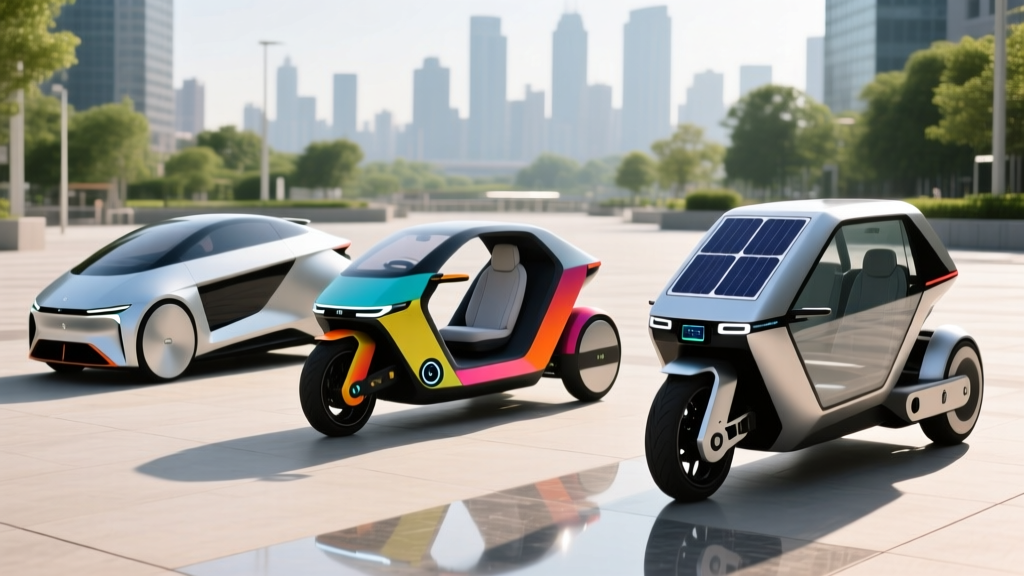
If you are researching 3 wheel electric vehicles, you are likely looking for a hyper-efficient commuter, an open-air urban runabout, or a niche recreational trike. The practical answer for most buyers in 2026 is this: fully enclosed, highway-capable 3-wheel EVs remain rare in the US market, largely dominated by the Polaris Slingshot (which is still primarily gas-powered with an E-variant) or classified under motorcycle/autocycle regulations. Most electric trikes currently available are Neighborhood Electric Vehicles (NEVs) limited to 25 mph or powersports toys.
Quick Verdict
Best for: Urban micro-commuting, campus use, or fair-weather recreation.
Not for: Highway road trips, cold climates, or families needing crash-test-rated safety.
Core constraint: Most 3-wheel EVs fall under motorcycle or NEV regulations, meaning they may not qualify for the full §30D federal EV tax credit and often lack EPA range testing.
Market Snapshot: What You Can Actually Buy
Unlike the broader EV market, the 3-wheel electric segment is fragmented. Buyers must choose between street-legal autocycles (requiring a motorcycle endorsement in many states) and low-speed NEVs.
| Category | Example Models | Top Speed | Typical Range | Licensing |
|---|---|---|---|---|
| Autocycle (Enclosed) | Polaris Slingshot (E-Concept) | 100+ mph | 100-150 mi (est.) | Motorcycle Endorsement |
| Open-Air Trike | Can-Am Ryker (Gas/EV concepts) | 60-90 mph | Varies | Motorcycle Endorsement |
| NEV / LSV | Arcimoto SRK, various imports | 25 mph | 40-70 mi | Standard Driver's License |
Cost Breakdown: 3-Wheel EV vs. Gas Commuter
Because many 3-wheel EVs are classified as motorcycles or NEVs, they often bypass standard automotive safety and efficiency testing. However, we can compare the operating economics of a highway-speed electric trike against a 35 MPG gas commuter car.
| Metric | Electric Trike (Est.) | 35 MPG Gas Car |
|---|---|---|
| Upfront Cost (Avg) | $25,000 - $35,000 | $24,000 - $28,000 |
| Energy Cost per Mile | $0.04 (at $0.15/kWh) | $0.10 (at $3.50/gal) |
| Annual Maintenance | $150 (Tires/Fluid) | $600 (Oil/Filters/Brakes) |
| Insurance (Annual) | $800 - $1,500 (High risk) | $1,200 |
Charging and Battery Realities
Most 3-wheel EVs utilize smaller battery packs (10 kWh to 30 kWh) compared to standard EVs. This means home charging is incredibly fast, often requiring only a standard 120V (Level 1) outlet to reach a full charge overnight.
- Level 1 (1.4 kW): Adds ~4-5 miles of range per hour. Sufficient for most NEV trikes.
- Level 2 (7.2 kW): Fills a 20 kWh pack in ~3 hours. Required for daily high-mileage commuters.
- DC Fast Charging: Rarely available on 3-wheelers due to weight and cost constraints of the hardware.
Tax Credits and Incentives (§30D)
A common misconception is that all plug-in vehicles qualify for the $7,500 federal tax credit. For 3-wheelers, the IRS definition of a "motor vehicle" is critical. To qualify for the Clean Vehicle Credit (§30D), the vehicle must have four wheels and a GVWR under 14,000 lbs. Most 3-wheelers are ineligible for the federal credit, though some may qualify for state-level motorcycle rebates or off-highway vehicle incentives.
Ownership Considerations and Safety
Before purchasing a 3-wheel electric vehicle, consider your local climate and infrastructure.
Myth vs. Fact
Myth: 3-wheelers are as safe as a car.
Fact: They lack the crumple zones and airbag counts of modern 4-wheel EVs. Always wear a DOT-approved helmet if open-air.
Myth: You can drive them anywhere.
Fact: NEVs are legally restricted to roads with speed limits of 35 mph or less in most jurisdictions.
Decision Framework: Is a 3-Wheel EV Right for You?
Choose a 3-Wheel EV if: You live in a temperate climate, have a sub-30-mile commute on low-speed roads, and want minimal operating costs with open-air visibility.
Choose a 4-Wheel EV or Hybrid if: You need highway speeds, carry passengers, require year-round weather protection, or want to utilize the $7,500 federal tax credit.
Frequently Asked Questions
Do I need a motorcycle license for a 3-wheel EV?
In most US states, any vehicle with fewer than four wheels requires a motorcycle endorsement (M-class license), even if it has a steering wheel and car-like controls.
What is the real-world range in cold weather?
Like all EVs, expect a 20-30% reduction in range when temperatures drop below freezing. Because 3-wheelers have smaller batteries, this loss is felt more acutely.
Are there any highway-capable 3-wheel EVs?
As of 2026, options are extremely limited. The Polaris Slingshot has explored electrification, but most high-speed autocycles remain gas-powered due to the weight-to-range ratio required for highway speeds.