Quick Answer: Is a Three-Wheel Electric Vehicle Right for You?
A three-wheel electric vehicle (EV) is a niche but practical choice for urban commuters, short-distance drivers, and those seeking a low-cost, open-air electric ride. Models like the Arcimoto FUV (Fun Utility Vehicle) and the ElectraMeccanica Solo offer EPA-estimated ranges between 70 and 100 miles on a single charge, with base prices ranging from roughly $15,000 to $25,000. Charging at home on a standard 120V outlet (Level 1) adds about 10–15 miles of range per hour, while a 240V Level 2 charger can fully replenish most three-wheel EVs in 3–5 hours.
These vehicles are best suited for warm-climate, city-speed driving under 50 mph. They are not highway cruisers, lack the crash protection of enclosed four-wheel EVs, and may not qualify for the full $7,500 federal EV tax credit under current IRS §30D rules due to battery sourcing and MSRP requirements.
What Exactly Is a Three-Wheel Electric Vehicle?
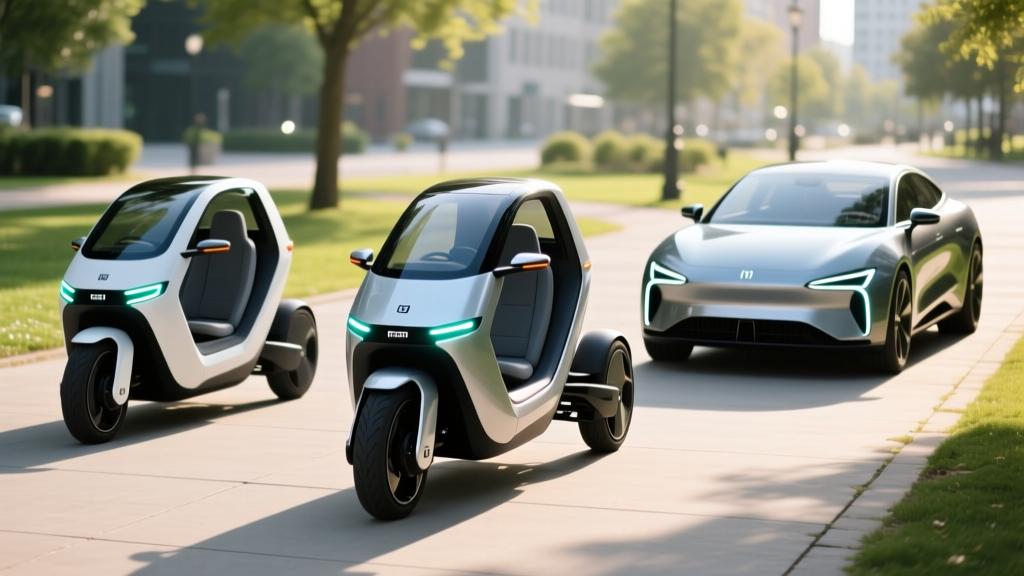
A three-wheel electric vehicle is a battery-electric vehicle (BEV) with three wheels — typically two in front and one in the rear, or one in front and two in the rear. In the U.S., most are classified by the NHTSA as either motorcycles (if they have a straddle seat and handlebars) or autocycles (if they have a steering wheel, enclosed or semi-enclosed cabin, and bucket or bench seats). This classification matters because it affects registration, insurance, licensing, and eligibility for federal EV incentives.
The two most prominent three-wheel EVs available or recently available in the U.S. market are:
- Arcimoto FUV — a tandem-seat, handlebar-steered autocycle with an EPA-estimated range of roughly 102 miles (base 12 kWh battery pack) and a top speed of 75 mph.
- ElectraMeccanica Solo — a single-seat, enclosed three-wheeler with an EPA-estimated range of approximately 100 miles and a 17.3 kWh battery pack. (Note: ElectraMeccanica was acquired by Xos, Inc. in 2023; Solo production status should be confirmed with dealers before purchasing.)
Both use NMC (nickel manganese cobalt) lithium-ion battery chemistry and support Level 1 and Level 2 AC charging. Neither supports DC fast charging, which is a significant limitation for road trips but irrelevant for most daily commutes under 40 miles round-trip.
Spec Comparison: Three-Wheel EVs at a Glance
| Spec | Arcimoto FUV (Base) | ElectraMeccanica Solo (Cargo) |
|---|---|---|
| EPA Range | ~102 mi | ~100 mi |
| Battery Capacity | 12 kWh (NMC) | 17.3 kWh (NMC) |
| Peak Charge Rate (Level 2) | ~3.3 kW | ~6.6 kW |
| Level 1 Charge Time (0–100%) | ~10–12 hours | ~14–16 hours |
| Level 2 Charge Time (0–100%) | ~4–5 hours | ~3–4 hours |
| Top Speed | 75 mph | 80 mph |
| 0–60 mph | ~7.5 sec | ~8.0 sec |
| Motor Power | 57 kW (~77 hp) | 62 kW (~83 hp) |
| Base MSRP | ~$19,900 | ~$18,500 |
| Federal Tax Credit (§30D) | Eligibility varies — confirm battery sourcing | Eligibility varies — confirm battery sourcing |
| Warranty (Battery) | 3 years / 36,000 mi | 3 years / 36,000 mi |
Sources: fueleconomy.gov, manufacturer specifications. Real-world range may be 15–25% lower in cold weather or at sustained highway speeds above 60 mph.
EV vs Gas: How Does a Three-Wheel EV Compare to a Gas Commuter?
To put the economics in perspective, here's how a three-wheel EV stacks up against a fuel-efficient gas car like the Honda Civic (combined 35 MPG) for a commuter driving 30 miles per day, 250 days per year (7,500 miles/year):
| Factor | Three-Wheel EV (Avg) | Honda Civic (Gas) |
|---|---|---|
| Annual Fuel/Energy Cost | $180–$270 (electricity at $0.15/kWh) | $750 (gas at $3.50/gal) |
| Cost Per Mile | $0.025–$0.036 | $0.10 |
| Annual Maintenance | $100–$200 (no oil, fewer moving parts) | $400–$600 (oil changes, filters, brakes) |
| 5-Year Fuel + Maintenance Total | $1,400–$2,350 | $5,750–$6,750 |
| Purchase Price (Base) | $18,500–$19,900 | $24,000–$28,000 |
| Insurance (Annual Avg) | $800–$1,400 (varies widely by state/classification) | $1,200–$1,800 |
The three-wheel EV saves roughly $800–$1,200 per year in fuel and maintenance alone. Over five years, that's $4,000–$6,000 in savings — enough to offset most of the purchase price difference. However, insurance costs can be unpredictable because some insurers classify three-wheel EVs as motorcycles, which may increase premiums in certain states.
Real Costs of Owning a Three-Wheel EV
Beyond the sticker price, here's a realistic cost breakdown for a first-time buyer:
| Cost Item | Estimated Amount | Notes |
|---|---|---|
| Vehicle Purchase | $18,500–$25,000 | Before any incentives |
| Federal Tax Credit (§30D) | $0–$7,500 | Depends on battery sourcing, MSRP cap, and buyer income — see IRS rules |
| Home Level 2 Charger (Equipment) | $300–$700 | Optional; Level 1 (120V) included with vehicle |
| Home Charger Installation | $500–$2,000 | Depends on panel capacity and outlet distance |
| Annual Electricity Cost | $180–$270 | Based on 7,500 mi/yr at $0.15/kWh |
| Annual Insurance | $800–$1,400 | Motorcycle-classified vehicles may cost more |
| Annual Maintenance | $100–$200 | Tire rotation, cabin filter, brake fluid check |
| 5-Year Total Cost of Ownership | $22,000–$35,000 | Varies by credit eligibility, insurance, and charging setup |
Federal Tax Credit: What You Actually Qualify For
The IRS §30D Clean Vehicle Credit offers up to $7,500 for qualifying new EVs, but eligibility for three-wheel EVs is not guaranteed. Key requirements for 2026 include:
- MSRP cap: Vans, SUVs, and pickup trucks are capped at $80,000; other vehicles (including most three-wheelers) are capped at $55,000.
- Buyer income cap: Modified adjusted gross income must not exceed $150,000 (single), $225,000 (head of household), or $300,000 (joint).
- Battery sourcing: A percentage of critical minerals and battery components must be sourced from the U.S. or free-trade-agreement countries. This percentage increases annually, and some smaller manufacturers may not meet the threshold.
- Point-of-sale transfer: As of 2024, buyers can transfer the credit to the dealer for an immediate price reduction — but only if the vehicle qualifies.
Always verify eligibility on the official fueleconomy.gov tax credit page before purchasing. Do not assume a three-wheel EV qualifies simply because it's electric.
Charging a Three-Wheel EV: What First-Time Buyers Need to Know
Most three-wheel EVs charge exclusively via AC charging (Level 1 or Level 2). They do not have DC fast-charging capability, which means you won't be pulling into an Electrify America or Tesla Supercharger station for a quick top-up. For the typical use case — daily commuting under 40 miles — this is rarely a problem.
| Charging Level | Power (kW) | Miles of Range Added Per Hour | Typical Use Case |
|---|---|---|---|
| Level 1 (120V household outlet) | 1.2–1.4 kW | 8–12 miles | Overnight charging; sufficient for <30 mi/day commuters |
| Level 2 (240V, home or public) | 3.3–6.6 kW | 20–40 miles | Recommended for daily use; full charge in 3–5 hours |
| DC Fast Charging | Not available | N/A | Three-wheel EVs typically lack DCFC hardware |
Key distinction: kW (kilowatts) measures charging power — how fast energy flows into the battery. kWh (kilowatt-hours) measures battery capacity — how much energy the battery holds. A 12 kWh battery charged at 3.3 kW will take roughly 3.6 hours from 0% to 100% (in practice, slightly longer due to charging-curve taper above 80% SoC).
Do You Need a Home Charger?
If you drive fewer than 30 miles per day, a standard 120V household outlet (Level 1) is usually sufficient — you'll recover 80–120 miles of range overnight. However, a Level 2 home charger is strongly recommended if:
- Your daily commute exceeds 40 miles round-trip
- You live in a cold climate (below 40°F), where battery efficiency drops 15–25%
- You want the flexibility to fully recharge mid-day
Level 2 installation requires a 240V circuit (similar to a dryer outlet) and typically costs $500–$2,000 for the electrician work, plus $300–$700 for the charging unit itself. Always consult a licensed electrician to verify your electrical panel has sufficient capacity — some older homes may require a panel upgrade ($1,500–$3,000 additional).
Common Misconceptions About Three-Wheel EVs
| Myth | Fact |
|---|---|
| "Three-wheel EVs are just golf carts" | Modern three-wheel EVs like the Arcimoto FUV have 77+ hp, reach 75 mph, and are street-legal on most U.S. roads (including highways in many states). They are federally classified vehicles, not off-road toys. |
| "You need a motorcycle license to drive one" | It depends on your state. Many states classify enclosed three-wheel EVs as autocycles, which require only a standard driver's license. Check your state DMV for specific requirements. |
| "The battery will need replacing in 3–5 years" | NMC batteries in three-wheel EVs are warrantied for at least 3 years/36,000 miles, and real-world data from similar small EVs suggests 80%+ capacity retention at 8–10 years with normal use. Avoid routinely charging to 100% or draining to 0% to maximize longevity. |
| "They're unsafe compared to regular cars" | Three-wheel EVs offer less crash protection than enclosed four-wheel vehicles — this is a real limitation. They lack the mass, crumple zones, and airbag count of a full-size EV. They are best used as secondary commuter vehicles, not primary family transport. |
| "They qualify for the full $7,500 tax credit" | Not automatically. §30D eligibility depends on battery sourcing, MSRP caps, and buyer income. Many smaller EV manufacturers have not confirmed compliance with 2026 critical-mineral sourcing rules. |
Decision Framework: Should You Buy a Three-Wheel EV?
Choose a three-wheel electric vehicle if:
- Your daily commute is under 40 miles round-trip
- You live in a warm or moderate climate (rarely below 30°F)
- You have access to home charging (garage, driveway, or dedicated outlet)
- You want a low-cost EV entry point under $25,000
- You're comfortable with an open-air or semi-enclosed cabin
- You're buying a secondary commuter vehicle, not a primary family car
Look elsewhere (four-wheel EV or PHEV) if:
- You regularly drive more than 60 miles per day
- You live in a cold climate with extended sub-freezing winters
- You need to carry more than one passenger or significant cargo
- You frequently drive on highways above 65 mph
- You lack any access to home or workplace charging
- You need the crash protection and safety features of a full-size vehicle
Frequently Asked Questions
Are three-wheel electric vehicles street-legal in all 50 states?
Most three-wheel EVs are street-legal in the majority of U.S. states, but regulations vary. Some states restrict them from certain highways or require specific equipment (windshield, wipers, turn signals). Always check with your state's DMV before purchasing.
Can I charge a three-wheel EV at a public charging station?
You can use public Level 2 (J1772 connector) stations, which are widely available. However, three-wheel EVs typically cannot use DC fast-charging stations (CCS, CHAdeMO, or NACS) because they lack the hardware. Plan accordingly for trips beyond your vehicle's range.
How long will the battery last in a three-wheel EV?
NMC lithium-ion batteries in three-wheel EVs typically retain 80–90% of their original capacity after 5–8 years of normal use. Warranty coverage is usually 3 years/36,000 miles — shorter than the 8-year/100,000-mile warranties offered by major automakers like Tesla, Hyundai, and Ford. Battery replacement costs, if needed out of warranty, can range from $3,000–$6,000 depending on the model.
Is a three-wheel EV safer than a gas scooter or motorcycle?
A three-wheel EV with an enclosed or semi-enclosed cabin generally offers more protection than a two-wheel scooter or motorcycle, but significantly less than a four-wheel enclosed vehicle. Stability is better than a two-wheeler (no balancing required at stops), but crash energy absorption is limited. Always wear appropriate safety gear and follow speed limits.
What happens if I run out of charge on the road?
Unlike a gas car that can be refueled in 5 minutes, a depleted three-wheel EV requires towing or a lengthy Level 1/Level 2 charge. Most roadside assistance plans cover EV towing. To avoid this, treat the EPA range estimate conservatively — expect 15–25% less range in cold weather, at highway speeds, or with aggressive acceleration.
Always verify current pricing, tax credit eligibility, and state registration requirements directly with the manufacturer, the IRS, and your local DMV before making a purchase decision. EV incentives and regulations change frequently.