The Short Answer on Three Wheel Electric Cars
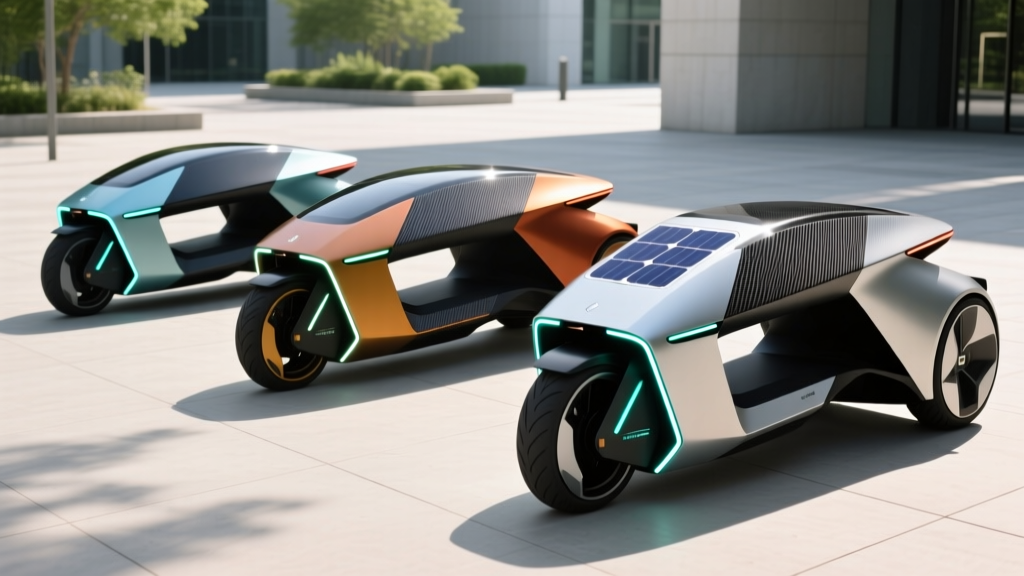
Three wheel electric cars—classified federally as motorcycles but built with car-like enclosed cabins, steering wheels, and safety features—are a niche but increasingly viable option for urban commuters and fair-weather drivers. The two dominant models available in the US for the 2026 model year are the Aptera Launch Edition (solar-assisted, up to 400 miles EPA-estimated range, starting around $33,800) and the ElectraMeccanica Solo Cargo (single-seat commuter, ~100 miles range, ~$18,500). They cost pennies per mile to charge, require minimal maintenance, and can be driven with a standard driver's license in most states. However, they lack the crash-test ratings of conventional EVs, offer limited cargo and passenger space, and are not suited for highway-heavy commutes in severe winter climates. If you need a second vehicle for short urban trips and have home charging, a three wheel electric car can genuinely save you thousands annually. If you need a primary vehicle for family hauling or all-weather driving, look at a conventional four-wheel EV or PHEV instead.
What Exactly Is a Three Wheel Electric Car?
Three wheel electric cars sit in a regulatory gray zone that works in the buyer's favor. The National Highway Traffic Safety Administration (NHTSA) classifies enclosed three-wheel vehicles as motorcycles under federal law, which exempts them from many Federal Motor Vehicle Safety Standards (FMVSS) that apply to passenger cars—things like mandatory airbags, specific crash-test protocols, and bumper standards. That said, reputable manufacturers voluntarily incorporate car-grade safety engineering: crumple zones, roll cages, three-point harnesses, and in some cases, advanced driver-assistance systems.
From a driver's perspective, these vehicles feel more like small cars than motorcycles. You sit in an enclosed cabin, use a steering wheel and pedals, and are protected from the elements. Most states allow you to drive them with a standard Class C driver's license—no motorcycle endorsement required—though you should verify your state's specific rules, as regulations vary in states like California, New York, and Florida.
The trade-off is clear: you gain extreme efficiency and low cost, but you sacrifice the regulatory safety net and physical mass that protect occupants in conventional vehicles.
The Current Three Wheel Electric Car Lineup for 2026
The market remains small but is no longer a one-vehicle show. Here is what you can actually order or buy in the US as of early 2026:
| Specification | Aptera Launch Edition (2026) | ElectraMeccanica Solo Cargo (2026) |
|---|---|---|
| Vehicle Class | 3-wheel enclosed autocycle | 3-wheel enclosed autocycle |
| Seating | 2 (tandem) | 1 |
| EPA-Est. Range | Up to 400 mi (100 kWh pack) | ~100 mi (17.5 kWh pack) |
| Battery Chemistry | NMC lithium-ion | NMC lithium-ion |
| Battery Capacity (usable) | 40 / 60 / 100 kWh options | 17.5 kWh |
| Solar Integration | Yes — ~40 mi/day from solar alone (in ideal conditions) | No |
| Peak DC Fast Charge | ~60 kW (est.) | Not equipped (Level 2 only) |
| Level 2 Charge Time (0–100%) | ~6–10 hrs (varies by pack size) | ~3 hrs |
| 0–60 mph | ~3.0 sec (AWD Launch Edition) | ~8.0 sec |
| Horsepower | ~201 hp (AWD) | ~82 hp |
| Top Speed | ~110 mph | ~85 mph |
| Cargo Volume | ~15 cu ft (rear hatch) | ~37 cu ft (rear cargo area) |
| Base MSRP | ~$33,800 (40 kWh) | ~$18,500 |
| Federal §30D Tax Credit Eligibility | Not eligible (classified as motorcycle) | Not eligible (classified as motorcycle) |
| Battery/Powertrain Warranty | 5 yr / 60,000 mi (est.) | 3 yr / 36,000 mi |
Key takeaway: The Aptera is the range and technology leader, with solar integration that can meaningfully offset charging needs in sunny climates. The Solo Cargo is the budget-friendly, utilitarian choice for single-occupant urban delivery or commuting. Neither qualifies for the federal §30D EV tax credit (up to $7,500), because the IRS restricts that credit to four-wheeled vehicles with a gross vehicle weight under 14,000 pounds. Some state incentives may still apply—check your local energy office.
Real-World Range: What the EPA Sticker Doesn't Tell You
The Aptera's headline 400-mile range figure requires context. That number applies to the top-tier 100 kWh battery pack, which adds roughly $10,000–$12,000 to the base price. The entry-level 40 kWh pack delivers approximately 160 miles EPA-estimated. More importantly, real-world range in a three wheel electric car is heavily influenced by factors that hit these lightweight, aerodynamic vehicles differently than a heavy SUV:
Aptera Real-World Range Expectations
EPA sticker (100 kWh pack): ~400 miles
Real-world highway (70 mph, mild weather): ~320–350 miles — the Aptera's extreme aerodynamic efficiency (drag coefficient ~0.13 Cd) actually helps it hold range on highways better than most EVs.
Real-world city/mixed (moderate climate): ~360–390 miles — regenerative braking recovers energy in stop-and-go traffic.
Cold weather (below 30°F, heater on): ~250–300 miles — the Aptera uses a heat pump, which mitigates but does not eliminate cold-weather losses. Expect 25–35% range reduction in sustained sub-freezing driving.
Solar bonus (clear sky, parked outdoors 8 hrs): Up to ~25–40 additional miles per day from integrated solar panels, depending on latitude and season. This is real but modest—it offsets daily commuting, not road trips.
ElectraMeccanica Solo Cargo Real-World Range
EPA sticker: ~100 miles
Real-world city commuting: ~80–95 miles
Cold weather (below 30°F): ~55–70 miles — the Solo's smaller 17.5 kWh battery and lack of a heat pump (it uses resistive heating) mean cold weather hits harder proportionally.
Charging a Three Wheel Electric Car: Speeds and Setup
Charging logistics for three wheel electric cars are simpler than for full-size EVs, because the batteries are smaller and most owners will rely exclusively on home charging.
| Charging Level | Power (kW) | Aptera (100 kWh) | Solo Cargo (17.5 kWh) |
|---|---|---|---|
| Level 1 (120V household outlet) | ~1.2 kW | ~4 mi/hr — full charge in 80+ hrs | ~4 mi/hr — full charge in ~15 hrs |
| Level 2 (240V home charger) | ~7.2–11.5 kW | ~25–40 mi/hr — full charge in 6–10 hrs | ~30 mi/hr — full charge in ~3 hrs |
| DC Fast Charge (where equipped) | Up to ~60 kW (Aptera) | 10–80% in ~50–60 min (est.) | Not available |
Practical reality: The Solo Cargo's lack of DC fast charging means it is strictly a home-and-commute vehicle. You cannot take it on a road trip without accepting multi-hour Level 2 stops. The Aptera's ~60 kW peak DC charge rate is modest by 2026 standards (mainstream EVs charge at 150–350 kW), but its small battery means the 10–80% session is still under an hour.
Home charging setup: Most three wheel electric car owners will install a Level 2 home charger. Expect to pay $500–$1,200 for a quality Level 2 EVSE (like a ChargePoint Home Flex or Emporia Vue) and $800–$2,500 for professional electrician installation, depending on whether your electrical panel needs an upgrade. A 200-amp panel is usually sufficient; older homes with 100-amp service may need a $1,500–$3,500 panel upgrade.
Cost Breakdown: Three Wheel Electric Car vs. Gas Car vs. Conventional EV
This is where three wheel electric cars make their strongest case. Let's compare the five-year total cost of ownership (TCO) for a solo commuter driving 12,000 miles per year in a moderate-cost state.
| Cost Category (5 Years / 60,000 mi) | Aptera 40 kWh ($33,800) | Honda Civic Gas (~$26,000) | Chevy Bolt EV (~$28,000, after credit) |
|---|---|---|---|
| Purchase Price (after incentives) | $33,800 (no federal credit) | $26,000 | $20,500 (est. after §30D credit) |
| Fuel / Electricity | $1,800 (home charging at $0.14/kWh; solar offsets ~30%) | $7,500 (at $3.50/gal, 33 MPG combined) | $3,600 (home charging at $0.14/kWh) |
| Maintenance | $600 (tire rotation, cabin filter, brake fluid) | $3,500 (oil changes, brakes, transmission fluid, filters) | $1,200 (tire rotation, cabin filter, coolant) |
| Insurance (est. avg.) | $5,500 (niche vehicle, limited actuarial data) | $6,000 | $6,500 |
| Depreciation (est.) | $13,500 (~40% over 5 yr) | $10,400 (~40%) | $12,000 (~58% — EVs depreciate faster currently) |
| Estimated 5-Year TCO | $55,200 | $53,400 | $43,800 |
The honest read: The Aptera's fuel savings are dramatic—roughly $5,700 less than the Civic over five years—but those savings don't fully close the gap created by its higher purchase price and lack of federal tax credit eligibility. The Chevy Bolt EV (or its 2026 successor platform) remains the more financially rational choice for most buyers who qualify for the §30D credit. The three wheel electric car wins specifically when:
- You already own a primary vehicle and want a hyper-efficient second car
- You live in a sunny climate where solar integration meaningfully offsets charging costs
- You drive mostly short urban trips where the Aptera's efficiency shines
- You value the novelty and conversation factor (an honest reason many buyers cite)
Safety, Insurance, and the Crash-Test Gap
This is the most important section for any prospective three wheel electric car buyer to read carefully.
Because NHTSA classifies these vehicles as motorcycles, they are not required to undergo the same crash testing as passenger cars. You will not find NHTSA star ratings or IIHS Top Safety Pick designations for any three wheel electric car. The Aptera's manufacturer claims its safety cell exceeds FMVSS standards and incorporates a composite structure designed to absorb impacts, but independent, standardized crash-test data does not exist.
What Three Wheel Electric Cars Do NOT Offer
- No standardized crash-test ratings — you are trusting manufacturer engineering claims without independent validation.
- Less mass and fewer crumple zones than a 4,000-lb conventional EV. In a collision with a full-size truck or SUV, physics is not on your side.
- Limited ADAS — no Super Cruise, BlueCruise, or advanced Level 2 driver-assist suites as of 2026. Basic features like automatic emergency braking may be available on the Aptera, but not the sophisticated sensor fusion of mainstream EVs.
- Stability concerns — three-wheeled vehicles are inherently less stable in emergency lane-change maneuvers and crosswinds compared to four-wheeled vehicles. Electronic stability control helps but cannot eliminate this physics limitation.
- Insurance complexity — some major insurers don't have actuarial categories for these vehicles, which can mean higher premiums or difficulty getting quotes. Get an insurance quote before you order.
Common Misconceptions About Three Wheel Electric Cars
| Myth | Fact |
|---|---|
| "You need a motorcycle license to drive one." | In most US states, a standard Class C driver's license is sufficient. However, a handful of states do require a motorcycle endorsement—check your state DMV before purchasing. |
| "They're not street-legal." | They are federally street-legal as motorcycles and can be registered and insured in all 50 states, though local registration processes vary. |
| "The solar panels make it self-charging." | Aptera's solar panels add up to ~40 miles of range per day in ideal conditions (full sun, optimal angle, summer). That's meaningful for short commutes but won't eliminate plug-in charging for most owners, especially in cloudy climates or winter. |
| "They qualify for the $7,500 federal EV tax credit." | They do not. IRS §30D requires four wheels and a GVWR under 14,000 lbs. Three wheel electric cars are classified as motorcycles and are excluded. Some state-level incentives may apply. |
| "They're as safe as a regular car." | Without standardized crash testing, this claim cannot be verified. The enclosed cabin and safety cell are better than a motorcycle, but they do not offer the proven protection of a crash-tested four-wheel vehicle. |
| "They can't handle highway speeds." | Both the Aptera (~110 mph top speed) and Solo (~85 mph) can sustain highway speeds. However, range drops significantly at 75–80 mph, and the three-wheel configuration feels less planted than a conventional car in crosswinds. |
Decision Framework: Should You Buy a Three Wheel Electric Car?
Choose a Three Wheel Electric Car If:
- You need a second car for solo commuting and errands, and already own a primary vehicle for family trips and bad weather.
- Your daily commute is under 60 miles round-trip, making the Solo Cargo's 100-mile range or the Aptera 40 kWh's 160-mile range more than sufficient.
- You have reliable home charging (garage or driveway with a 240V outlet) and won't rely on public charging infrastructure.
- You live in a mild or sunny climate where cold-weather range loss is manageable and the Aptera's solar integration provides real value (Southwest, Southeast, coastal California).
- You accept the safety trade-off and understand that you are driving a vehicle without independent crash-test validation.
- You want to minimize per-mile operating costs and are willing to accept a higher purchase price to get there.
Choose a Conventional Four-Wheel EV or PHEV Instead If:
- This will be your only vehicle and you need to handle road trips, family passengers, or all-weather driving.
- You want the federal §30D tax credit (up to $7,500) to reduce your effective purchase price. Qualifying four-wheel EVs like the Chevy Equinox EV, Hyundai Ioniq 5, or Tesla Model 3 can be significantly cheaper after the credit.
- You need proven safety ratings from NHTSA or IIHS for peace of mind or insurance purposes.
- You live in a cold climate with sustained sub-freezing winters where range loss and three-wheel stability on icy roads are genuine concerns.
- You need DC fast charging for road trips or don't have home charging access.
- You want advanced Level 2 driver-assist features like GM Super Cruise, Ford BlueCruise, or Tesla Autopilot for highway driving.
First-Time Buyer Checklist
If you've decided a three wheel electric car fits your use case, here's what to do before you place an order:
- Verify your state's licensing and registration requirements. Contact your DMV or check their website for three-wheel autocycle rules.
- Get an insurance quote. Call at least two insurers (GEICO, Progressive, and State Farm are among the more likely to have categories for these vehicles) and get a written premium estimate.
- Assess your home electrical setup. Determine if you have a 240V outlet near your parking spot or if you'll need an electrician. Budget $1,300–$3,700 for a complete Level 2 home charging installation.
- Check your state incentives. While the federal §30D credit doesn't apply, some states offer rebates for electric motorcycles or autocycles. Your state energy office or fueleconomy.gov can help identify what's available.
- Test-drive or ride in one if possible. The tandem seating, low driving position, and three-wheel dynamics feel different from any car. Aptera has hosted demo events; check for availability in your region.
- Confirm delivery timelines. Aptera and ElectraMeccanica have both experienced production delays. Get a written estimated delivery date and understand the deposit refund policy before committing.
Frequently Asked Questions
How long does the battery last in a three wheel electric car?
Both the Aptera and Solo Cargo use NMC lithium-ion batteries similar to those in mainstream EVs. Expect 80–90% capacity retention after 8–10 years or 100,000+ miles under normal use. Avoid routinely charging to 100% or letting the battery sit at 0% for extended periods to maximize longevity. The Aptera's warranty covers the battery for an estimated 5 years/60,000 miles against defects and excessive degradation (below ~70% capacity).
Can I take a three wheel electric car on a road trip?
The Aptera with the 100 kWh pack (400-mile range) is genuinely capable of road trips, with DC fast charging adding ~200 miles in about 30 minutes at a compatible station. The Solo Cargo, with ~100 miles of range and no DC fast charging, is not practical for road trips unless your route has reliable Level 2 chargers at every stop and you don't mind 3-hour charging breaks.
Are three wheel electric cars safe in rain and snow?
They are enclosed and weatherproof, so rain is not an issue beyond reduced visibility from smaller windows. Snow and ice are a different story: the single front wheel (on the Aptera) or single rear wheel (on the Solo) provides less traction and stability than four wheels. Electronic stability control helps, but three wheel electric cars are not recommended as primary vehicles in regions with significant winter weather.
Do three wheel electric cars qualify for any tax credits or incentives?
Not the federal §30D clean vehicle credit—that requires four wheels. However, some states treat electric autocycles as eligible for state EV rebates, HOV lane access, or reduced registration fees. Check with your state's energy or environmental agency. Additionally, if you use the vehicle for business purposes (e.g., last-mile delivery with the Solo Cargo), you may be able to deduct operating costs or claim depreciation—consult a tax professional.
What happens if a three wheel electric car company goes out of business?
This is a legitimate risk with low-volume manufacturers. ElectraMeccanica faced financial challenges and underwent restructuring; Aptera is a startup that has navigated production delays. Before buying, consider: parts availability, third-party service options in your area, and the transferability of any warranty if the company ceases operations. Buying from a startup always carries this risk—price it into your decision.
How does the Aptera's solar charging actually work?
The Aptera has approximately 700 watts of integrated solar cells embedded in its body panels. In full sun, these cells trickle-charge the battery continuously while parked or driving. In optimal conditions (clear sky, high sun angle, vehicle parked facing south), this can add up to 40 miles of range per day. In practice, most owners in moderate climates will see 15–25 miles per day from solar. This is enough to cover a short commute without ever plugging in, but it's not a replacement for Level 2 charging for higher-mileage drivers.