Quick Answer: Is the Thor Vision Vehicle Electric RV Ready for Real Ownership?
The Thor Vision Vehicle is a battery-electric Class B motorhome built on the Ram ProMaster EV chassis. As of early 2026, Thor has showcased the Vision Vehicle as a concept and announced production intent, but final EPA range, pricing, and delivery timelines remain preliminary. Based on the ProMaster EV platform's known specs, expect roughly 162 miles of EPA-estimated range, a 110 kWh usable battery, and DC fast charging up to 150 kW. Estimated pricing starts near $110,000–$130,000 before incentives. The Vision Vehicle is best suited for weekend trips, campground hopping with shore power access, and boondocking with solar — not long-haul cross-country travel without careful route planning.
What Is the Thor Vision Vehicle Electric RV?
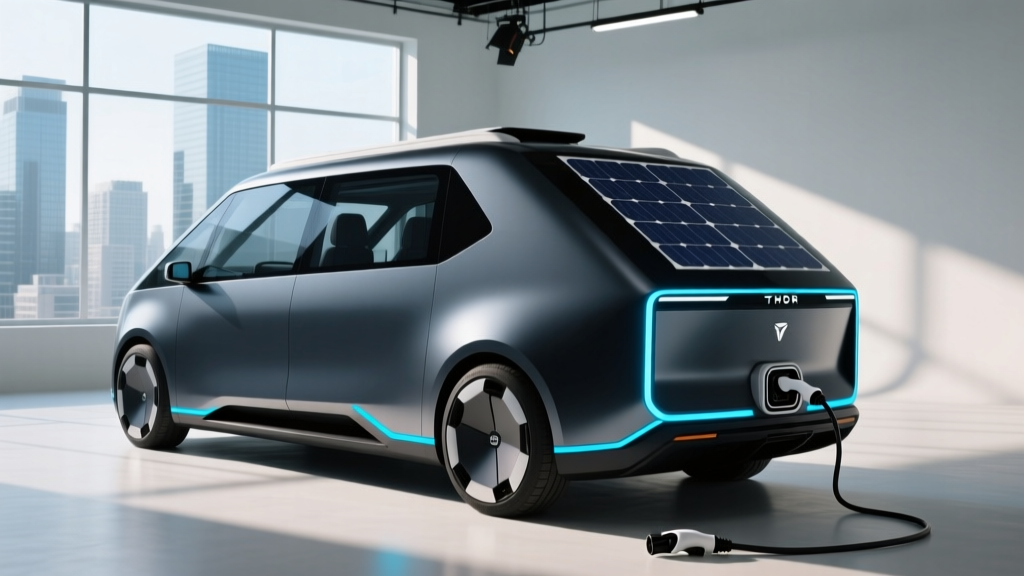
The Thor Vision Vehicle is Thor Industries' entry into the battery-electric RV segment, developed in partnership with the Harbinger Motors chassis platform (an EV-skateboard specialist acquired by Thor). The Vision Vehicle targets the Class B motorhome market — essentially a camper van — with a fully electric drivetrain, integrated solar panels on the roof, and a residential-style interior with induction cooking, electric heating, and a lithium house-battery system separate from the traction battery.
Unlike Winnebago's earlier e-RV (built on the Ford E-Transit with just 108 miles of range), the Vision Vehicle benefits from a purpose-built EV chassis with a larger battery pack. However, it still faces the fundamental physics problem of every electric RV: heavy vehicles with poor aerodynamics consume energy rapidly, limiting real-world highway range well below what a passenger EV like a Tesla Model Y or Hyundai Ioniq 5 achieves.
Thor has stated the Vision Vehicle is targeting production, though exact model-year availability and final MSRP have not been confirmed as of this writing. The specs below are based on the Harbinger chassis platform's published figures and Thor's concept disclosures.
Estimated Specs: Range, Battery, and Charging
| Specification | Value |
|---|---|
| Chassis | Harbinger Motors EV platform (Class B) |
| Battery (traction, usable) | ~110 kWh (estimated, NMC chemistry) |
| EPA Range (estimated) | ~162 miles (based on chassis testing) |
| Real-World Range (highway, 70 mph) | ~110–130 miles (heavy load, poor aero) |
| Real-World Range (camping, 45–55 mph) | ~140–155 miles |
| DC Fast Charge (peak) | ~150 kW (CCS connector) |
| 10–80% DC Fast Charge Time | ~45–55 minutes (estimated) |
| Level 2 Charging (240V) | ~11.5 kW onboard charger |
| Level 2 Full Charge Time | ~10–12 hours (0–100%) |
| Solar Roof Array | Integrated panels, ~400–600W (trickle/house battery) |
| Towing Capacity | Not rated / not recommended (range impact) |
| Estimated 0–60 mph | ~10–12 seconds (loaded) |
| Estimated Base MSRP | $110,000–$130,000 |
| Federal §30D Tax Credit | Not eligible (GVWR > 14,000 lb likely; commercial credit §45W may apply) |
Real-World Range Reality Check
EPA estimate: ~162 miles. In practice, a fully loaded Class B motorhome with passengers, water tanks, camping gear, and the aerodynamic profile of a box van will see significant range reduction. Expect 110–130 miles at sustained highway speeds (70+ mph), and potentially 90–110 miles in cold weather (below 40°F) where battery efficiency drops 15–30%. For campground-to-campground driving at 45–55 mph on secondary roads, 140–155 miles is achievable. Plan charging stops accordingly.
Electric RV vs. Gas Class B Motorhome: Cost & Practicality
The most direct comparison to the Vision Vehicle is a gas-powered Class B motorhome on the Mercedes-Benz Sprinter or Ram ProMaster chassis — models like the Airstream Interstate, Winnebago Revel, or Thor's own own Tellaro. Here's how the numbers stack up:
| Factor | Thor Vision Vehicle (Electric) | Gas Class B (Sprinter/ProMaster) |
|---|---|---|
| Purchase Price (base) | $110,000–$130,000 | $100,000–$140,000 |
| Fuel/Energy Cost per Mile | $0.08–$0.14 (home/public charging mix) | $0.25–$0.35 (diesel, 16–18 MPG) |
| Annual Fuel/Energy (8,000 mi) | $640–$1,120 | $2,000–$2,800 |
| Maintenance (annual avg) | $300–$500 (no oil, fewer fluids) | $800–$1,500 (oil, filters, DEF, transmission) |
| Range per Fill/Charge | 110–162 miles | 350–450 miles (25-gal tank) |
| Refuel/Recharge Time | 45–55 min (DC fast, 10–80%) | 5–10 min (diesel pump) |
| Campsite Power (shore power) | Can charge from 30A/50A pedestal | Generator needed or idle engine |
| Boondocking (off-grid) | Solar trickle + house battery; no generator noise | Gas/diesel generator required for AC/outlets |
| Drivetrain Warranty | 5 yr / 60,000 mi (est. from Harbinger) | 5 yr / 60,000 mi (typical OEM) |
Where the Electric RV Wins
- Per-mile energy cost is 50–70% lower than diesel, saving $1,000–$1,800 annually at 8,000 miles/year.
- Silent camping — no generator noise at campgrounds; run AC and appliances from the battery without disturbing neighbors.
- Shore-power charging — many RV parks offer 30A or 50A pedestals that can fully recharge the traction battery overnight via Level 2.
- Lower maintenance — no oil changes, no DEF fluid, no diesel particulate filter regeneration cycles.
Where the Gas Class B Still Wins
- Range and route flexibility — 350+ miles on a tank means cross-country travel without DC fast-charger dependency.
- Refueling speed — 5 minutes at any diesel pump vs. 45+ minutes at a CCS fast charger.
- Charging infrastructure — public DC fast chargers are not designed for large RVs. Pull-through stalls are rare, and most Electrify America or EVgo stations require you to disconnect a towed vehicle or squeeze into a tight spot.
- Cold-weather reliability — diesel range drops modestly in cold; EV range drops 15–30%.
Charging the Vision Vehicle: What Owners Need to Know
| Level | Power (kW) | Miles Added per Hour | Use Case |
|---|---|---|---|
| Level 1 (120V household) | ~1.4 kW | ~3–4 mi/hr | Emergency trickle only; not practical for full recharge |
| Level 2 (240V, 48A home/RV park) | ~11.5 kW | ~28–35 mi/hr | Overnight full charge (~10–12 hrs); RV park shore power |
| DC Fast Charge (CCS) | Up to ~150 kW | ~120–150 mi/hr (peak) | Road-trip top-ups; 10–80% in ~45–55 min |
Home Charging Setup
Most RV owners store their vehicle in a driveway, garage (if it fits), or storage facility. A Level 2 home charger (240V, 48-amp circuit) is essential for practical ownership. Installation costs vary significantly:
| Item | Cost Range |
|---|---|
| Level 2 EVSE (hardwired, 48A) | $500–$900 |
| Electrical panel upgrade (200A service, if needed) | $1,500–$3,500 |
| Wiring & conduit (50–100 ft run to driveway/pad) | $800–$2,500 |
| Permit & inspection | $100–$400 |
| Electrician labor | $1,000–$3,000 |
| Total (typical) | $2,500–$7,500 |
RV storage facilities may or may not offer 240V access — confirm before purchasing. If your storage lot only has 120V, expect a full recharge to take 3–4 days on Level 1, making it impractical for regular use.
Public DC Fast Charging — The RV Problem
Public charging infrastructure remains the biggest practical hurdle for electric RV owners. As of 2026, the CCS/NACS fast-charging networks (Electrify America, EVgo, Tesla Superchargers with Magic Dock) are designed for passenger vehicles. Key challenges:
- No pull-through stalls at most sites — you cannot tow a trailer or car behind the Vision Vehicle while charging.
- Tight parking spots — a Class B motorhome is ~20 feet long and 7 feet wide; many charging spots are too narrow.
- Charging-curve taper — the Vision Vehicle's 150 kW peak rate is not sustained. Expect the charge rate to drop significantly above 60% SoC, meaning the last 20% (60–80%) takes nearly as long as the first 50%.
Tax Credits, Incentives, and Total Cost of Ownership
Because the Thor Vision Vehicle is built on a heavy chassis (likely exceeding 14,000 lb GVWR), it does not qualify for the standard §30D Clean Vehicle Credit ($7,500 for personal-use light-duty EVs). However, it may qualify for the §45W Commercial Clean Vehicle Credit, which offers up to $7,500 for vehicles under 14,000 lb GVWR or up to $40,000 for heavier vehicles — but this credit applies to business/commercial use, not personal purchases. Consult a tax professional and review current IRS guidelines before counting on incentive dollars.
Some states offer additional EV incentives for heavier vehicles or RVs, but these vary by jurisdiction. Check your state's energy office or department of environmental quality for current programs.
5-Year Cost of Ownership Breakdown
| Category | Vision Vehicle (Electric) | Gas Class B Motorhome |
|---|---|---|
| Purchase Price (mid-trim) | $120,000 | $115,000 |
| Fuel / Energy (40,000 mi) | $4,000 | $12,000 |
| Maintenance (5 years) | $2,000 | $6,000 |
| Insurance (5 years) | $9,000 | $7,500 |
| Home Charger Install | $4,000 | $0 |
| Depreciation (est. 5-yr) | $48,000 (40%) | $40,000 (35%) |
| Total 5-Year Cost | $187,000 | $180,500 |
The electric RV saves significantly on fuel and maintenance but faces higher insurance premiums (specialty EV RV policies are still limited) and potentially steeper depreciation due to range concerns in the used RV market. The break-even point on fuel savings alone takes roughly 6–7 years of average RV use (8,000 mi/year).
Common Misconceptions About Electric RVs
| Myth | Fact |
|---|---|
| "You can tow a car behind it." | Towing drastically reduces an already limited range. Most electric RVs, including the Vision Vehicle, are not rated for flat-towing a dinghy vehicle. Plan trips without a towed car. |
| "Solar panels will fully recharge the battery." | The roof-mounted solar array (~400–600W) adds roughly 1–3 miles of range per hour of peak sun — enough to offset parasitic loads and maintain the house battery, not recharge the 110 kWh traction pack. |
| "You can camp off-grid indefinitely." | The house battery powers lights, fridge, and outlets for days, but running roof AC from the traction battery will deplete it quickly. Boondocking in hot climates still requires careful energy management. |
| "It qualifies for the $7,500 EV tax credit." | The §30D credit has GVWR and MSRP caps. Heavy Class B motorhomes likely exceed these limits. The commercial §45W credit may apply for business use only. |
| "Charging at RV parks is free." | Most RV parks include shore power in the nightly site fee, but some are beginning to meter EV charging separately. Always ask before plugging into a 50A pedestal. |
Decision Framework: Is the Thor Vision Vehicle Right for You?
Choose the Thor Vision Vehicle Electric RV If:
- You primarily take weekend trips under 150 miles from home and return to a Level 2 charger.
- You camp at RV parks with 30A/50A shore power and can charge overnight at your site.
- You value silent, generator-free camping and want to run AC/appliances without noise.
- You have home charging access (garage, driveway, or storage with 240V).
- You drive mostly in mild climates where cold-weather range loss is minimal.
- You want lower per-mile operating costs and less drivetrain maintenance.
Choose a Gas/Diesel Class B Motorhome If:
- You take cross-country trips and need 350+ miles of range without route-planning around chargers.
- You tow a vehicle or carry heavy loads regularly.
- You camp in remote areas far from DC fast chargers and need a generator for off-grid power.
- You store your RV at a facility without 240V electrical access.
- You camp in cold climates (below 30°F) where EV range drops sharply.
- You need immediate availability — the Vision Vehicle's production timeline and dealer inventory are still limited.
What First-Time Electric RV Buyers Should Know
If the Vision Vehicle is your first EV and your first RV, the learning curve is steeper than either alone. Key considerations:
- Plan trips around charging, not destinations. Use apps like A Better Routeplanner (ABRP) or PlugShare to map DC fast chargers along your route. Add 45–60 minutes per charging stop.
- Understand kW vs. kWh. Your battery holds ~110 kWh of energy. A 150 kW charger delivers energy at that rate — but only at peak. The average rate over a 10–80% session is closer to 90–110 kW.
- Precondition the battery. If the Vision Vehicle supports battery preconditioning (warming the pack before DC fast charging), always use it. A cold battery charges slower and can be damaged by high-rate charging below 40°F.
- Monitor State of Health (SoH). Like all EVs, the traction battery will degrade over time. Expect 85–90% capacity retention after 5 years or 50,000 miles under normal use. Warranty details from Harbinger/Thor should specify a minimum retention threshold (typically 70% over 8 years).
- Budget for insurance early. Specialty RV insurance for electric motorhomes is still a niche market. Get quotes before purchasing — premiums may be 20–40% higher than comparable gas Class B policies.
Frequently Asked Questions
Can the Thor Vision Vehicle tow a car or trailer?
Thor has not published an official towing rating for the Vision Vehicle. Even if rated, towing a 2,000–3,500 lb vehicle would reduce the already-limited 162-mile range by an estimated 30–40%, making it impractical for anything beyond very short trips. Most electric RV owners travel without a towed vehicle.
How long does it take to fully charge at an RV park?
At a 50A/240V RV park pedestal (providing ~12 kW), a full 0–100% charge takes approximately 10–12 hours. At a 30A pedestal (~7.2 kW), expect 15–18 hours. Plan to arrive at your campground with enough charge to last overnight, or arrive early enough to top up before bedtime.
Does the Thor Vision Vehicle qualify for any federal tax credits?
The standard §30D Clean Vehicle Credit is designed for light-duty personal vehicles and has MSRP and buyer-income caps. Heavy Class B motorhomes likely fall outside these parameters. The §45W Commercial Clean Vehicle Credit may apply if the RV is used for business purposes (e.g., a mobile office or rental fleet). Always consult a tax professional for your specific situation.
What happens if the battery degrades significantly?
Lithium-ion traction batteries degrade gradually, not suddenly. Expect ~85–90% capacity after 5 years. If the battery falls below the warranty threshold (likely 70% retention over 8 years/100,000 miles), the manufacturer would replace or refurbish it. Out-of-warranty replacement of a 110 kWh pack would cost $15,000–$25,000 — a significant consideration for long-term ownership.
Is the Thor Vision Vehicle available to order now?
As of early 2026, the Vision Vehicle has been showcased at RV trade shows and Thor has announced production plans, but widespread dealer availability and final pricing have not been confirmed. Contact Thor dealers for the latest status, and verify any quoted specs against the manufacturer's official production specifications before placing a deposit.
How does cold weather affect the Vision Vehicle's range?
Battery chemistry becomes less efficient below 40°F. Expect 15–25% range loss in 20–40°F conditions and 25–35% loss below 20°F. Running the electric cabin heater further reduces range. If you camp in winter, plan for 90–110 miles of usable range and keep charging stops conservative.