Why Thomas Dmytryk's Departure Matters for Tesla Buyers
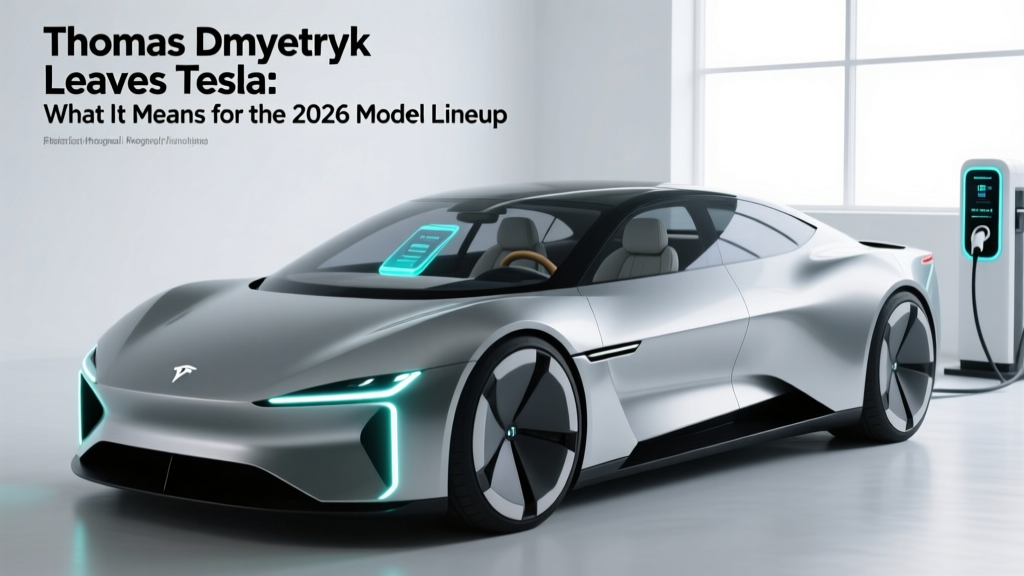
When news broke that Thomas Dmytryk leaves Tesla in early 2026, the EV community took notice. Dmytryk, a senior engineering leader who contributed to Tesla's battery integration and powertrain efficiency work, exits at a pivotal moment — just as the refreshed Model Y "Juniper" ramps up globally and Cybertruck scales production. While Tesla's depth of engineering talent is substantial, leadership changes at this level can signal shifts in development priorities, platform timelines, and the pace of iterative improvements that directly affect what lands in your driveway.
Rather than speculate on corporate politics, this analysis focuses on what matters to buyers: how Tesla's current 2026 lineup stands on hard specs — range, charging, pricing, and tax-credit eligibility — and whether Dmytryk's departure changes the calculus for anyone shopping a Tesla today.
2026 Tesla Lineup at a Glance: Specs That Matter
Below is a snapshot of Tesla's core consumer models as they stand for the 2026 model year. These are the vehicles most buyers are cross-shopping, and the ones most likely to see engineering evolution (or stagnation) depending on how Tesla backfills key technical roles.
| Model | EPA Range | Battery (kWh) | Chemistry | 0-60 mph | Drivetrain | Base MSRP |
|---|---|---|---|---|---|---|
| Model 3 RWD | 272 mi | ~57.5 kWh (usable) | LFP | 5.8 sec | RWD | $38,990 |
| Model 3 Long Range AWD | 341 mi | ~75 kWh (usable) | NMC | 4.2 sec | Dual-motor AWD | $44,990 |
| Model Y Long Range AWD | 320 mi | ~75 kWh (usable) | NMC | 4.8 sec | Dual-motor AWD | $44,990 |
| Model Y RWD | 280 mi | ~57.5 kWh (usable) | LFP | 6.4 sec | RWD | $39,990 |
| Cybertruck AWD | 340 mi | ~123 kWh (usable) | NMC | 4.1 sec | Dual-motor AWD | $79,990 |
Sources: fueleconomy.gov, Tesla specifications. Real-world results vary by temperature, terrain, and driving style.
Real-World Range: What the EPA Sticker Doesn't Tell You
EPA estimates assume a mix of city and highway driving at moderate temperatures. In real-world testing:
• Highway-only at 75 mph: Expect 10–15% less than EPA (e.g., Model 3 LR: ~290–305 mi actual)
• Cold weather (below 32°F): Range drops 20–30% without preconditioning; LFP packs are slightly more susceptible to cold-induced resistance
• City/regenerative driving: Often matches or exceeds EPA thanks to regen recapture
Tesla's thermal management system — including the heat pump standard on all 2026 models — mitigates cold-weather losses better than most competitors. However, LFP-equipped RWD trims (Model 3 RWD, Model Y RWD) show more pronounced range drop in sub-freezing conditions compared to their NMC Long Range counterparts. If you live in the northern tier states, the Long Range AWD trims offer a meaningful real-world buffer.
For the Cybertruck, aerodynamic drag is the dominant range variable. At sustained highway speeds above 70 mph, expect closer to 280–290 miles despite the 340-mile EPA rating. The truck's mass and frontal area work against it on long, flat interstate runs.
Charging Speed: DC Fast Charge and Home Level 2
| Model | Peak DC kW | 10–80% Time | Level 2 Rate (kW) | Miles/Hour (L2) |
|---|---|---|---|---|
| Model 3 RWD (LFP) | 170 kW | ~25 min | 11.5 kW | ~37 mi/hr |
| Model 3 Long Range | 250 kW | ~18 min | 11.5 kW | ~44 mi/hr |
| Model Y Long Range | 250 kW | ~20 min | 11.5 kW | ~40 mi/hr |
| Model Y RWD (LFP) | 170 kW | ~25 min | 11.5 kW | ~37 mi/hr |
| Cybertruck AWD | 250 kW | ~28 min | 11.5 kW | ~30 mi/hr |
A few notes on what these numbers mean in practice:
- kW vs kWh: kW measures charging power (how fast energy flows); kWh measures battery capacity (how much energy is stored). A 250 kW peak rate doesn't mean you're pulling 250 kW for the entire session — the charge curve tapers significantly above 50–60% State of Charge.
- Preconditioning matters: Navigate to a Supercharger using the Tesla app or in-car nav, and the battery will warm to optimal temperature before you arrive. Skipping this step in cold weather can add 10+ minutes to your charge session.
- LFP charging pattern: Tesla recommends charging LFP packs to 100% at least weekly to maintain accurate State of Charge calibration. This is the opposite of NMC best practice (80% daily, 100% for trips only).
- Supercharger network: Tesla's NACS connector is now the North American standard, with Ford, GM, Rivian, and others gaining Supercharger access. This actually strengthens Tesla's moat — even as Dmytryk departs, the charging ecosystem remains a core competitive advantage.
Pricing, Trims, and Federal Tax Credit Eligibility
Federal tax credit rules under IRS §30D remain complex and model-specific. For 2026, the $7,500 credit is available as a point-of-sale transfer (applied at the dealer), but eligibility depends on three intersecting requirements:
- MSRP Cap: Sedans ≤ $55,000; SUVs/trucks ≤ $80,000
- Buyer Income Cap: AGI ≤ $150K (single), $225K (head of household), $300K (joint)
- Battery Sourcing: Critical minerals and battery components must meet escalating domestic/free-trade-partner thresholds
- FEOC Restriction: No battery components from Foreign Entities of Concern (primarily targeting Chinese supply chains)
- Point-of-Sale: Credit can be transferred to dealer at purchase for immediate price reduction
| Model | Base MSRP | §30D Eligible? | Effective Price (est.) |
|---|---|---|---|
| Model 3 RWD | $38,990 | Yes (meets MSRP + sourcing) | ~$31,490 |
| Model 3 Long Range | $44,990 | Yes | ~$37,490 |
| Model Y RWD | $39,990 | Yes | ~$32,490 |
| Model Y Long Range | $44,990 | Yes | ~$37,490 |
| Cybertruck AWD | $79,990 | Yes (under $80K SUV cap) | ~$72,490 |
Note: Options, destination fees, and trim upgrades can push MSRP above caps. The Model 3 Performance ($52,990) exceeds the sedan cap and does NOT qualify. Verify your exact build configuration.
Performance, Efficiency, and Daily-Use Specs
Tesla's powertrain efficiency remains class-leading. The Model 3 Long Range achieves approximately 132 MPGe combined (per EPA), translating to roughly 25 kWh/100 miles — among the best in the industry for a dual-motor AWD sedan. The Model Y Long Range sits at about 122 MPGe combined, while the Cybertruck's mass and aero yield around 70 MPGe equivalent.
Interior and cargo dimensions for the 2026 lineup:
- Model 3: 23 cu ft trunk + rear seat fold; 42.2" front legroom, 35.2" rear legroom
- Model Y: 34 cu ft behind second row, 76 cu ft with seats folded; 41.8" front / 38.4" rear legroom
- Cybertruck: 6.5-ft bed (74 cu ft), front trunk (frunk) ~7 cu ft; 41.5" front / 38.2" rear legroom
Driver Assistance: Autopilot and FSD (Supervised)
Tesla Autopilot and Full Self-Driving (Supervised) are SAE Level 2 systems. The driver must remain fully engaged, hands on or near the wheel, eyes on the road, and ready to take over at any moment. These are NOT autonomous or "self-driving" systems. Only Level 4 services like Waymo operate without a driver. Tesla's FSD (Supervised) costs $8,000 upfront or $99/month as of 2026.
Tesla's vision-only approach (no lidar, no radar on current models) continues to improve in lane-centering stability and intersection handling, but the system still requires active supervision. NHTSA continues to monitor Tesla's Autopilot safety data. Buyers should factor in that FSD's value proposition remains debated — it does not yet deliver on the "full self-driving" name, and the subscription model may suit cautious adopters better than the $8,000 purchase.
Warranty, Battery Longevity, and the Dmytryk Factor
Tesla's warranty structure for 2026:
- Basic Vehicle: 4 years / 50,000 miles
- Battery & Drive Unit (RWD/LFP): 8 years / 100,000 miles (70% minimum capacity retention)
- Battery & Drive Unit (Long Range/Performance): 8 years / 120,000 miles (70% minimum capacity retention)
Real-world degradation data from high-mileage Tesla fleets suggests NMC packs typically retain 85–90% capacity at 100,000 miles when charged responsibly (daily 80%, occasional 100%). LFP packs show similar long-term retention but require periodic 100% charges for BMS calibration. Battery replacement out of warranty runs approximately $12,000–$16,000 for Model 3/Y packs, though full replacements remain rare within typical ownership periods.
Regarding Dmytryk's departure: battery integration and cell-level engineering are team efforts at Tesla, and the company's institutional knowledge in this area is deep. The 4680 cell ramp for Cybertruck and future platforms continues. However, if you're weighing a purchase timeline, the current Juniper-refreshed Model Y and Model 3 represent mature, well-tested products — their specs won't retroactively change regardless of personnel moves.
Pros, Cons, and Who Should Buy
- Supercharger network access (largest, most reliable in North America)
- Class-leading efficiency (kWh/100mi)
- Strong §30D eligibility on most trims
- OTA updates add features post-purchase
- Heat pump standard (cold-weather advantage)
- Resale value remains above EV average
- No Apple CarPlay / Android Auto
- Minimalist interior polarizing (no instrument cluster)
- Panel gaps and build consistency still variable
- FSD (Supervised) is Level 2, not autonomous — $8K for a driver-assist
- Insurance premiums above segment average
- Service center wait times in some markets
- Choose Model 3 RWD if: You want the most affordable entry point, commute under 50 miles daily, and have reliable home charging. LFP is ideal for daily 100% charging.
- Choose Model 3 Long Range if: You road-trip regularly, live in cold climates, or want AWD traction. NMC chemistry gives better cold-weather buffer.
- Choose Model Y Long Range if: You need SUV cargo space and family seating with minimal range compromise. The Juniper refresh improved ride quality substantially.
- Choose Cybertruck if: You need a truck bed, want standout design, and accept the size/efficiency trade-offs. Best for those with garage space for a large vehicle.
- Look elsewhere if: You need Apple CarPlay, prefer physical controls, want a traditional dealership experience, or need Level 4 autonomy today.
Frequently Asked Questions
What is the real-world range of the 2026 Tesla Model Y Long Range?
The EPA rates it at 320 miles. Expect approximately 275–295 miles on highway-heavy trips at 70–75 mph, and 250–270 miles in sustained cold weather (below 32°F) without consistent preconditioning. City driving with regenerative braking often yields results close to or slightly above the EPA figure.
How fast does a Tesla charge on DC fast charging and at home?
Long Range models peak at 250 kW on V3/V4 Superchargers, achieving 10–80% in roughly 18–20 minutes. RWD/LFP models peak at 170 kW (10–80% in ~25 minutes). At home on a 48-amp Level 2 circuit (11.5 kW), expect 37–44 miles of range added per hour of charging — a full overnight session easily replenishes daily driving.
Does the 2026 Tesla Model 3 qualify for the $7,500 federal tax credit?
The Model 3 RWD ($38,990) and Long Range ($44,990) both fall under the $55,000 sedan MSRP cap and currently meet battery-sourcing requirements. However, buyer income must not exceed IRS AGI limits ($150K single / $300K joint), and the credit can be applied at point of sale. Always confirm your specific build's eligibility on irs.gov before purchasing, as sourcing compliance can shift with supply-chain changes.
Is Tesla still worth buying after Thomas Dmytryk leaves the company?
Dmytryk's departure is notable but Tesla's engineering bench is deep. The current Model 3 and Model Y (Juniper refresh) are mature, well-tested products with strong efficiency and charging infrastructure advantages. The vehicles shipping today won't change based on this personnel move. If the specs, pricing, and Supercharger access meet your needs, there's no reason to delay a purchase based on a single departure.
How does Tesla's warranty compare to Hyundai or Kia?
Tesla offers 8 years/100,000–120,000 miles on battery and drive units (depending on trim), with a 70% minimum capacity retention guarantee. Hyundai and Kia offer 10 years/100,000 miles on EV batteries with similar retention thresholds. Tesla's basic vehicle warranty (4yr/50K) matches the industry standard but falls short of Hyundai/Kia's 10yr/100K powertrain coverage on the non-battery components.
What's the biggest risk in buying a Tesla in 2026?
The primary risks are above-average insurance premiums (20–40% higher than comparable ICE vehicles in many states), potential service-center wait times in growing markets, and the polarizing minimal-interior design that offers no fallback instrument cluster. The vehicles themselves are mechanically sound, and the Supercharger network remains the gold standard for road-trip charging reliability.