The Quick Answer on the Think City Electric
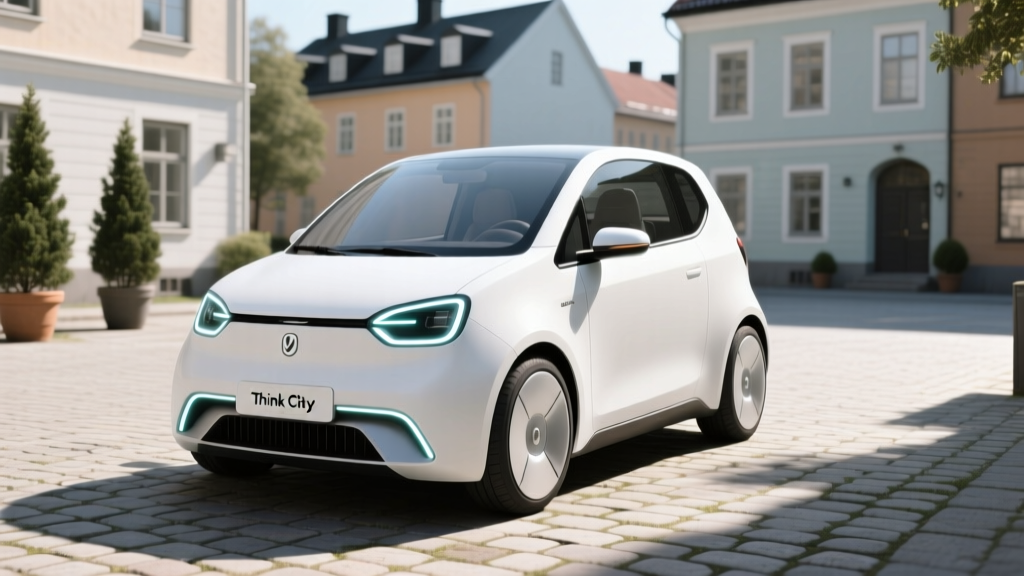
The Think City was a compact, two-seat electric car produced by Norway's Think Global AS between 2008 and 2011. It offered roughly 100 miles of real-world range from a 22–26 kWh ZEBRA or lithium-ion battery pack, a top speed of 68 mph, and a 0–30 mph time around 4.0 seconds. Production ended permanently in 2011 after the company's final bankruptcy. No new Think City vehicles are available, parts support is effectively nonexistent, and the car cannot be recommended as a daily driver in 2026. However, the Think City electric remains historically significant as one of the earliest modern highway-capable production EVs — predating the Nissan Leaf and Chevy Volt — and its story offers practical lessons for today's EV buyers about battery chemistry, charging infrastructure, and the economics of small-scale EV manufacturing.
What Was the Think City Electric Car?
The Think City originated from a Norwegian company called Pivco Industries, which later became Think Global AS. The concept was straightforward: a lightweight, two-seat urban commuter built from recyclable thermoplastic body panels on an aluminum chassis, powered entirely by electricity. The vehicle was designed for European city driving, where short commutes and dense urban cores make a small footprint advantageous.
The first generation (the Think City A308) launched in limited numbers around 1999–2002 using nickel-cadmium (NiCd) batteries. Ford briefly held a stake in the company but divested in 2003. After a corporate restructuring, the second-generation Think City (sometimes designated A312) entered production in 2008 at a factory in Uusikaupunki, Finland, operated by Valmet Automotive — the same contract manufacturer that would later build vehicles for Mercedes-Benz and Porsche.
The 2008–2011 Think City was the version that attracted genuine attention. It featured a more conventional design, available with either a ZEBRA (sodium-nickel-chloride) battery or an EnerDel lithium-ion pack, and was sold primarily in Norway and select European markets. A small number reached the United States through fleet sales and a brief consumer program in Indiana, where the state government offered incentives to attract Think's planned US assembly plant.
Think City Electric: Specifications and Performance
Understanding the Think City's numbers helps contextualize how far EV technology has progressed. Here are the key specifications from the 2008–2011 production model:
| Specification | Think City (2008–2011) |
|---|---|
| Battery Capacity | ~22 kWh (ZEBRA) / ~26 kWh (EnerDel Li-ion) |
| Battery Chemistry | Na-NiCl₂ (ZEBRA) or NMC lithium-ion |
| Estimated Range | ~100 miles (160 km) real-world |
| Top Speed | 68 mph (110 km/h) |
| 0–30 mph | ~4.0 seconds |
| Motor Power | 30 kW (40 hp) continuous |
| Charging (AC Level 2) | ~3.3 kW onboard charger |
| Charge Time (0–100%) | ~8 hours on 230V/16A |
| DC Fast Charging | Not available |
| Curb Weight | ~2,435 lbs (1,105 kg) |
| Seats | 2 |
| Original MSRP (Europe) | ~€25,000–35,000 (varies by market/battery lease) |
A few observations stand out. The 3.3 kW onboard charger meant that even on a dedicated Level 2 circuit, a full charge took roughly 8 hours — acceptable for overnight home charging but impractical for any mid-day top-up. The absence of DC fast charging (no CCS, no CHAdeMO, no NACS) meant the Think City was strictly tethered to its overnight charge radius. And the 30 kW motor, while adequate for city acceleration, limited highway merging confidence.
The ZEBRA battery option deserves specific mention. Sodium-nickel-chloride chemistry operates at high temperatures (around 270°C / 520°F internally) and offers excellent cycle life and thermal stability. However, the battery must be kept heated even when the car is parked, which parasitically drains energy if the vehicle sits unused for extended periods. The EnerDel lithium-ion option was more conventional but still early-generation NMC, with energy density and degradation characteristics far behind 2026 standards.
Think City vs. Modern Compact EVs: A Generational Comparison
To understand what the Think City electric represented — and what modern buyers get instead — consider this comparison against current compact EVs available in 2026:
| Attribute | Think City (2008–2011) | 2026 Chevrolet Equinox EV (2LT) | 2026 Hyundai Kona Electric (SEL) |
|---|---|---|---|
| EPA Range | ~100 mi (est.) | 319 mi | 261 mi |
| Battery Capacity | 22–26 kWh | 85 kWh (usable) | 64.8 kWh (usable) |
| DC Fast Charge (peak) | None | 150 kW | 100 kW |
| 10–80% DC Charge | N/A | ~30 min | ~43 min |
| Horsepower | 40 hp | 213 hp | 201 hp |
| 0–60 mph | N/A (top speed 68 mph) | ~7.9 sec | ~7.6 sec |
| Seats | 2 | 5 | 5 |
| Cargo (behind rear seats) | Minimal | 26.4 cu ft | 25.8 cu ft |
| Base MSRP | Discontinued | ~$33,000 | ~$32,975 |
| Federal Tax Credit (§30D) | N/A | Up to $7,500* | Up to $7,500* |
| Battery Warranty | N/A | 8 yr / 100,000 mi | 10 yr / 100,000 mi |
*Federal tax credit eligibility under IRS §30D rules depends on buyer income caps, MSRP limits, battery sourcing requirements, and point-of-sale transfer availability. Always verify current eligibility with a tax professional.
The generational gap is stark. A 2026 Hyundai Kona Electric delivers 2.6 times the range, 5 times the power, DC fast charging that adds 100+ miles in 20 minutes, five seats, modern ADAS (forward collision avoidance, lane-keeping, adaptive cruise), and a 10-year battery warranty — at a price point that, after the federal credit, can undercut what the Think City cost in Europe before its demise.
Why Think Global Failed: Lessons for EV Buyers
Think Global AS filed for bankruptcy in 2011, its third financial collapse. Understanding why provides useful context for evaluating today's EV startups and the risks of buying from low-volume manufacturers.
Scale Economics
Think never achieved the production volume necessary to amortize development costs or negotiate favorable battery supply contracts. At peak production, the company was building roughly 2,500 vehicles per year — a fraction of what a single Tesla or BYD factory produces in a week. Small-scale manufacturing meant high per-unit costs, which made the Think City expensive relative to its capabilities.
Battery Supply Chain Instability
Think switched battery suppliers multiple times — from NiCd to ZEBRA to EnerDel lithium-ion — each transition requiring engineering rework and creating parts-support headaches. When EnerDel itself encountered financial difficulties, Think lost its primary battery source. This supply-chain fragility is a recurring risk for small automakers.
Charging Infrastructure Gap
In 2008–2011, public EV charging was virtually nonexistent outside a handful of pilot programs. The Think City's 100-mile range and 8-hour charge time made it viable only for drivers with reliable home or workplace charging and predictable commutes. The infrastructure simply wasn't there to support broader adoption.
Post-Bankruptcy Ownership Reality
For the small number of Think City owners, the company's collapse meant orphaned vehicles with no warranty support, no dealer network, no diagnostic software updates, and increasingly scarce replacement parts. The ZEBRA battery's requirement for continuous heating added a unique failure mode: if the battery cooled below its operating threshold, it could be permanently damaged. Today, finding a qualified technician to service a Think City electric in the US is essentially impossible.
Real-World EV Ownership Costs: Then vs. Now
The Think City's story illustrates why total cost of ownership (TCO) analysis matters for any EV purchase. Here's how a modern compact EV compares to a comparable gas car across five years, using concrete 2026 figures:
| Cost Category (5-Year) | 2026 Hyundai Kona Electric (SEL) | 2026 Hyundai Kona Gas (SEL AWD) |
|---|---|---|
| Purchase Price (MSRP) | $32,975 | $28,450 |
| Federal Tax Credit (§30D) | –$7,500 (if eligible)* | $0 |
| Effective Purchase Price | $25,475 | $28,450 |
| Home Charger Install (Level 2) | $800–$2,000 | $0 |
| Fuel/Energy (75,000 mi) | $2,400–$3,800 (home charging at $0.14/kWh avg) | $7,500–$9,000 (gas at $3.40/gal, 30 MPG avg) |
| Maintenance (5 yr) | $1,200–$1,800 (no oil, fewer brakes) | $3,000–$4,500 (oil, filters, brakes) |
| Insurance (5 yr avg) | $7,500–$9,500 | $6,000–$8,000 |
| Estimated 5-Year Total | $36,575–$42,075 | $44,950–$49,950 |
Data sources: fueleconomy.gov for efficiency figures; insurance estimates based on national averages from industry data; electricity costs based on EIA average residential rates.
The takeaway: even with a higher sticker price and home charger installation, the EV's lower fuel and maintenance costs produce meaningful 5-year savings — provided the buyer qualifies for the federal credit and has reliable home charging access. Without the credit, the gap narrows substantially. And for buyers who rely exclusively on public DC fast charging at $0.35–$0.50/kWh, the energy cost advantage shrinks or reverses.
Common EV Misconceptions: Myth vs. Fact
The Think City era was rife with misinformation about electric vehicles. Many of those myths persist. Here's a data-grounded correction of the most common ones:
| Myth | Fact |
|---|---|
| "EV batteries need replacing every few years." | Modern NMC and LFP packs are warrantied for 8–10 years / 100,000+ miles with ≤30% degradation. Real-world data from Tesla, Hyundai, and others shows median degradation of 10–15% at 150,000 miles. The Think City's early ZEBRA and EnerDel packs were less durable, which contributed to the myth. |
| "EVs are worse in cold weather." | EVs do lose 15–30% of range in sub-freezing temperatures due to battery chemistry and cabin heating demands. However, preconditioning (warming the battery and cabin while plugged in) recovers much of that loss. Gas cars also lose efficiency in cold weather — roughly 10–15% MPG reduction per fueleconomy.gov — but nobody calls that a dealbreaker. |
| "There aren't enough chargers." | As of 2026, the US has over 200,000 public charging ports, with Tesla's Supercharger network (now open to NACS-equipped non-Tesla EVs) adding significant coverage. Charging deserts still exist in rural areas, but for the 80%+ of drivers who can charge at home, public charging is a road-trip supplement, not a daily necessity. |
| "EVs cost more to insure." | Generally true — EV insurance premiums run 10–25% higher on average due to higher repair costs and total-loss thresholds. However, the gap is narrowing as the EV fleet grows and repair networks expand. Always get quotes before purchasing. |
| "The electric grid can't handle EVs." | Most EV charging happens overnight during off-peak hours when grid capacity is underutilized. A Level 2 home charger draws 7–11 kW — comparable to an electric dryer or oven. Utilities are upgrading distribution infrastructure, but the grid is not at risk of collapse from EV adoption at current rates. |
Decision Framework: Should You Buy an EV in 2026?
The Think City electric proved that early EV adoption required accepting real compromises. In 2026, those compromises are far smaller — but they still exist. Use this framework to decide:
Choose a Battery EV (BEV) If:
- You have reliable home or workplace Level 2 charging access
- Your typical daily driving is under 200 miles (covering 95%+ of US drivers)
- You qualify for the federal §30D tax credit (income caps: $150K single / $300K joint for new EVs) and/or state incentives
- You take 1–4 road trips per year and can plan around DC fast charging (15–30 min stops every 200–250 miles)
- You want the lowest per-mile energy cost and minimal maintenance
Choose a Plug-In Hybrid (PHEV) If:
- You lack reliable home charging but want some electric-only driving (typically 25–45 miles of EV range)
- You frequently drive in areas with poor charging infrastructure
- You want a single vehicle for daily commuting and long road trips without planning charging stops
- Your budget is tighter — PHEVs often start $5,000–$10,000 below comparable BEVs
Choose a Conventional Hybrid (HEV) If:
- You have zero charging access at home or work
- You want maximum MPG without any plug-in behavior change
- You drive high annual miles (20,000+) where hybrid efficiency pays off quickly
Wait or Reconsider If:
- You live in an apartment or condo without charging access and your workplace doesn't offer it
- Your budget cannot absorb the higher upfront cost even after incentives
- You regularly tow heavy loads or drive in extreme cold (below –20°F) where range loss compounds
- You are considering a vehicle from a startup with no established service network (the Think City lesson)
What First-Time EV Buyers Should Know
If you're transitioning from a gas car to an EV in 2026, here are the practical realities that spec sheets don't always convey:
kW vs. kWh — Know the Difference
This is the single most common source of confusion. kW (kilowatts) measures power — how fast energy flows, like the flow rate of a gas pump nozzle. kWh (kilowatt-hours) measures energy — how much is stored, like the gallons in a fuel tank. A 75 kWh battery charged at 11 kW takes roughly 7 hours from empty. A 150 kW DC fast charger can add significant range in minutes. Never confuse the two.
EPA Range vs. Real-World Range
EPA range estimates are standardized laboratory tests. In real-world driving, expect:
- Highway driving (70+ mph): 10–20% less than EPA due to aerodynamic drag
- Cold weather (below 32°F): 15–30% less due to battery chemistry and cabin heating
- Combined highway + cold: 25–40% less — plan accordingly on winter road trips
- City driving with regen braking: Often matches or exceeds EPA estimates
Charging Curve Taper
DC fast charging doesn't sustain peak kW from 0 to 100%. Most EVs hit peak charge rate between 10–50% State of Charge, then taper significantly above 80% to protect battery health. A "250 kW peak" charge rate might average 100–130 kW across a 10–80% session. This is why manufacturers quote 10–80% charge times rather than 0–100%.
Home Charging Is the Foundation
Over 80% of EV charging happens at home. A Level 2 home charger (240V, 32–48 amps, 7.7–11.5 kW) adds 25–45 miles of range per hour of charging and costs $500–$2,000 installed, depending on whether your electrical panel needs an upgrade. If your home has a 200-amp panel with available capacity, installation is straightforward. If you have a 100-amp panel or the charger run exceeds 50 feet, expect higher costs — potentially $2,000–$5,000 with a panel upgrade. Always get a licensed electrician's assessment before purchasing equipment.
Federal Tax Credit Nuances
The §30D clean vehicle credit offers up to $7,500 for qualifying new EVs, but eligibility depends on:
- Buyer income caps: Modified AGI ≤ $150,000 (single) / $300,000 (married filing jointly)
- Vehicle MSRP caps: ≤ $55,000 for sedans / ≤ $80,000 for SUVs, vans, and trucks
- Battery sourcing: Increasing percentages of critical minerals and battery components must be sourced from the US or free-trade-agreement partners — these thresholds tighten annually
- Point-of-sale transfer: As of 2024+, the credit can be transferred to the dealer at purchase, reducing the purchase price directly rather than waiting for a tax refund
Verify current rules at IRS.gov and consult a tax professional. The credit is non-refundable and subject to change.
Frequently Asked Questions
Is the Think City electric car still available to buy?
No. Think Global AS ceased operations and filed for final bankruptcy in 2011. Approximately 10,000 Think City vehicles were produced across all generations. A small number exist in private hands and collections, primarily in Norway, but there is no manufacturer support, no parts supply chain, and no practical path to daily ownership in 2026.
What was the Think City's real-world range?
The 2008–2011 Think City achieved approximately 100 miles (160 km) of range under moderate driving conditions with the lithium-ion battery option. The ZEBRA battery variant offered similar range but required continuous thermal management, which consumed energy when parked. Cold weather reduced range by an estimated 20–30%, consistent with EV behavior of that era.
How does the Think City compare to the original Nissan Leaf?
The first-generation Nissan Leaf (2011) offered 73 miles of EPA-rated range from a 24 kWh battery, 107 hp, and a top speed of 90 mph. It also had DC fast charging (CHAdeMO) on higher trims, five seats, and Nissan's dealer network for service. The Leaf was a more practical vehicle despite slightly lower range, largely because of its charging flexibility and manufacturer backing. The Think City's two-seat configuration and lack of fast charging were significant limitations.
What happened to Think Global's factory and employees?
The Uusikaupunki, Finland production line (operated by Valmet Automotive) was repurposed for other contract manufacturing after Think's collapse. Valmet Automotive went on to build Mercedes-Benz A-Class and GLB vehicles, as well as battery packs for multiple OEMs. Think's Norwegian engineering team dispersed across the Scandinavian EV and energy sector. Some former Think engineers contributed to subsequent Norwegian EV infrastructure and battery recycling ventures.
What's the cheapest new EV I can buy in 2026?
As of 2026, the most affordable new EVs in the US market include the Nissan Leaf S (~$28,140 MSRP, 149-mile range, CHAdeMO), the Mini Cooper SE (~$30,900 MSRP, 114-mile range, CCS), and the Hyundai Kona Electric SE (~$32,975 MSRP, 261-mile range, NACS/CCS). After the federal §30D credit (where eligible), effective prices can drop to $20,640–$25,475. Compare this to the Think City's ~€25,000–35,000 price for a vehicle with less range, no fast charging, and no support network — modern buyers have dramatically better options.
Should I buy a used EV from a defunct manufacturer like Think, Fisker, or Lordstown?
Generally, no. Orphaned vehicles from bankrupt manufacturers present severe risks: no warranty coverage, no software updates, no dealer service network, and scarce replacement parts. Battery degradation or failure becomes a total-loss scenario. If you're considering a used EV, prioritize models from manufacturers with active service networks and available parts — Tesla, Hyundai/Kia, Ford, GM, BMW, Volkswagen, and Nissan all offer substantially lower ownership risk.