When Tesla is offering zero percent APR and free upgrades, it's worth paying close attention — not because the hype cycle demands it, but because financing math fundamentally changes the total cost of ownership. In early 2026, Tesla rolled out promotional 0% APR financing for well-qualified buyers on select Model Y trims, alongside complimentary upgrades like premium interior packages or Full Self-Driving (Supervised) trial extensions. For buyers who've been waiting on the sidelines, this is the moment to run the numbers.
But incentives only matter if the underlying product delivers. The 2026 Tesla Model Y remains one of the best-selling electric vehicles in the United States for reasons that go beyond marketing: strong efficiency, access to the Supercharger network, and continuous over-the-air improvements. Below, we break down every spec that matters — from real-world range to charging curves to tax-credit eligibility — so you can decide whether this deal actually pencils out for your situation.
2026 Tesla Model Y: Core Specifications at a Glance
| Spec | Long Range RWD | Long Range AWD | Performance AWD |
|---|---|---|---|
| EPA Range | 320 mi | 308 mi | 285 mi |
| Battery (usable) | ~75 kWh (NMC) | ~75 kWh (NMC) | ~75 kWh (NMC) |
| Drivetrain | Rear-Wheel Drive | Dual-Motor AWD | Dual-Motor AWD |
| Horsepower | ~346 hp | ~384 hp | ~456 hp |
| 0–60 mph | 5.8 sec | 4.8 sec | 3.5 sec |
| Max DC Fast Charge | 250 kW | 250 kW | 250 kW |
| 10–80% DC Time | ~25 min | ~25 min | ~25 min |
| Level 2 Charge Rate | 11.5 kW (~44 mi/hr) | 11.5 kW (~44 mi/hr) | 11.5 kW (~44 mi/hr) |
| MPGe (combined) | 122 MPGe | 117 MPGe | 111 MPGe |
| Base MSRP | $44,990 | $47,990 | $52,490 |
Source: EPA fueleconomy.gov and Tesla's official specifications page. Figures reflect the 2026 model year and are subject to change by trim and production batch.
Real-World Range: What the EPA Number Doesn't Tell You
EPA Estimated: 320 miles (Long Range RWD)
Real-World Highway (70 mph, moderate climate): ~265–285 miles
Real-World Cold Weather (below 30°F, mixed driving): ~220–250 miles
City/Commuter (regenerative braking active): ~300–315 miles
The EPA's 320-mile estimate for the Long Range RWD is genuinely achievable in mild-weather city and suburban driving, where regenerative braking recaptures energy and speeds stay moderate. But highway road trips tell a different story. At sustained 70–75 mph speeds, aerodynamic drag pushes consumption higher, and you should plan for roughly 265–285 miles of usable range before needing to stop.
Cold weather is the bigger variable. In sub-freezing temperatures, the Model Y's heat pump helps, but battery chemistry still limits performance. Expect a 20–30% reduction in range during winter months in northern climates. Tesla's preconditioning feature — which warms the battery before you drive or charge — mitigates some of this loss, but it doesn't eliminate it. If your daily commute is under 60 miles round-trip, range is a non-issue year-round. If you regularly drive 200+ miles in winter, plan your charging stops accordingly.
Charging Speed: DC Fast Charging and Home Setup
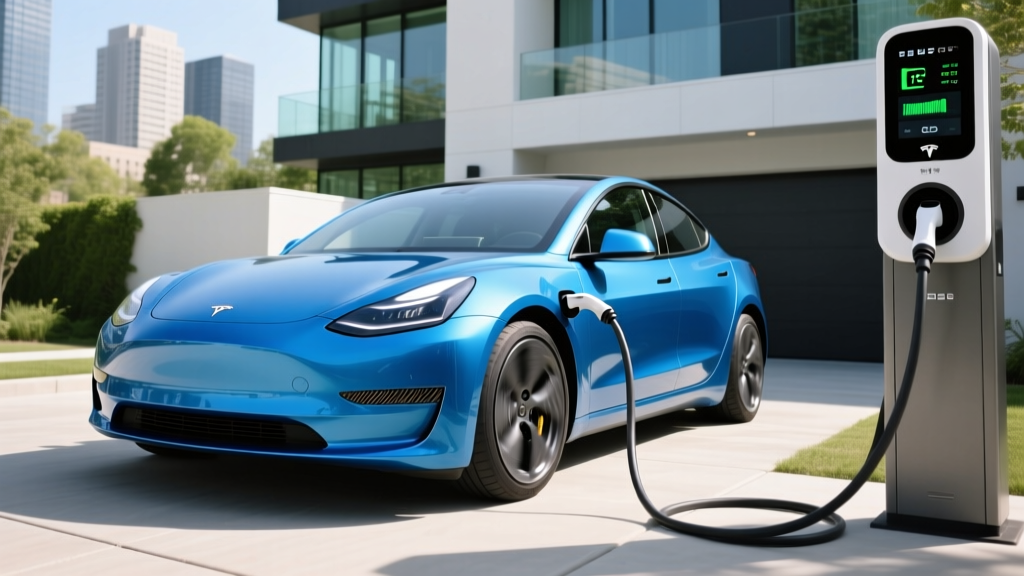
Charging speed is where Tesla's vertical integration pays dividends. The Model Y supports a peak DC fast-charge rate of 250 kW at V3 and V4 Superchargers, and the charge curve is well-managed. Here's what that means in practice:
| Charging Level | Power (kW) | Speed (miles added/hr) | Notes |
|---|---|---|---|
| Level 1 (120V household) | ~1.4 kW | ~5 mi/hr | Emergency/trickle only |
| Level 2 (240V, 48A Wall Connector) | 11.5 kW | ~44 mi/hr | Full overnight charge in ~7–8 hours |
| DC Fast (Tesla Supercharger V3/V4) | Peak 250 kW | ~162 mi in 15 min | 10–80% in ~25 min; tapers above 80% |
| DC Fast (CCS adapter, non-Tesla) | Peak ~150–170 kW | Varies by station | Requires optional CCS adapter ($175) |
The critical detail that spec sheets gloss over: peak kW is not sustained kW. The Model Y will hit 250 kW only at a low state of charge (roughly 10–20% SoC) and at a warm battery temperature. As the battery fills, the charge rate tapers — by 60% SoC you may see 100–120 kW, and above 80% it drops sharply to protect cell longevity. This is why Tesla (and most EV makers) quote 10–80% times rather than 0–100%.
For home charging, Tesla's Wall Connector at 48 amps delivers 11.5 kW, adding roughly 44 miles of range per hour. A full charge from 10% to 100% takes about 7–8 hours — easily accomplished overnight. Home installation typically costs $500–$2,000 depending on your electrical panel's capacity and the distance from panel to charger. If your home has a 200-amp panel with spare capacity, installation is straightforward. Older homes with 100-amp service may need a panel upgrade ($1,500–$3,000) — consult a licensed electrician for a site-specific quote.
Performance, Efficiency, and Daily Drivability
The 2026 Model Y lineup offers three distinct performance tiers. The Long Range RWD provides the best efficiency at 122 MPGe combined (roughly 28 kWh/100 miles), making it the range and value leader. The Long Range AWD adds dual-motor traction for all-weather confidence with only a modest efficiency penalty (117 MPGe). The Performance variant drops 0–60 to 3.5 seconds with 456 hp — genuinely sports-car acceleration — but sacrifices range (285 mi EPA) and ride comfort due to its sport-tuned suspension and 21-inch wheels.
Across all trims, the driving experience is defined by instant torque delivery, a low center of gravity from the under-floor battery pack, and one-pedal driving capability through aggressive regenerative braking. The steering is precise if somewhat numb, and the cabin is remarkably quiet at highway speeds thanks to acoustic glass introduced in the 2025 refresh.
Cargo and passenger space remains a Model Y strength:
- Cargo (rear seats up): 30.2 cu ft
- Cargo (rear seats folded): 72.1 cu ft
- Front trunk (frunk): 4.1 cu ft
- Rear legroom: 41.6 inches
- Front headroom: 41.0 inches
These numbers put the Model Y squarely in compact-SUV territory, competitive with the Hyundai Ioniq 5 and Ford Mustang Mach-E for family hauling. The flat floor and optional third-row seat (best suited for children) add versatility that sedans can't match.
Pricing, the 0% APR Deal, and Federal Tax Credit Eligibility
Here's where Tesla's current promotion demands scrutiny. When Tesla is offering zero percent APR and free upgrades, the financing savings are substantial — but eligibility is limited, and the tax credit picture requires careful navigation.
| Trim | Base MSRP | Est. Federal Credit (§30D) | Est. Price After Credit* | 0% APR Savings vs. 6.5% Loan† |
|---|---|---|---|---|
| Long Range RWD | $44,990 | Up to $7,500 | ~$37,490 | ~$7,800 over 60 months |
| Long Range AWD | $47,990 | Up to $7,500 | ~$40,490 | ~$8,300 over 60 months |
| Performance AWD | $52,490 | Up to $7,500 | ~$44,990 | ~$9,100 over 60 months |
* Assumes full §30D credit eligibility. Actual credit depends on battery sourcing, buyer income, and MSRP caps. † 0% APR savings calculated vs. a 6.5% APR 60-month loan with 10% down. Your actual savings depend on loan term and down payment.
- Buyer income cap: AGI ≤ $150,000 (single) / $300,000 (joint) — per IRS guidelines
- MSRP cap: SUVs/vans ≤ $80,000 (all Model Y trims qualify)
- Battery sourcing: Critical minerals and battery components must meet phased-in percentage thresholds that increase annually through 2026
- Point-of-sale transfer: You can transfer the credit to the dealer at purchase for an immediate price reduction (requires tax reconciliation at filing)
- Assembly: Must be assembled in North America (Model Y is built in Fremont, CA and Austin, TX — qualifies)
Battery-sourcing rules tighten each year. Confirm current eligibility on Tesla's website or with a tax professional before committing. State and local incentives may stack on top — check your state's energy office for details.
The 0% APR offer is typically available to buyers with excellent credit (generally FICO 720+) through Tesla's financing partners, and it may apply to 36-, 48-, or 60-month terms depending on the promotion window. The "free upgrades" component has included complimentary premium interior colors (normally $1,000–$2,000), FSD (Supervised) trial extensions, or free Supercharging miles. These rotate monthly — verify current offers on Tesla's design studio before ordering.
Tech, Driver Assistance, and the FSD Question
The Model Y's 15.4-inch center touchscreen controls virtually every vehicle function, from climate to mirror adjustment. The interface is fast and responsive, backed by an AMD Ryzen processor. Wireless phone mirroring is absent — Tesla uses its own app ecosystem — but native streaming (Spotify, Tidal, YouTube while parked) and a strong navigation system with real-time Supercharger routing make the omission less painful.
On the driver-assistance front, every Model Y includes Basic Autopilot (adaptive cruise control + lane centering) as standard. This is a competent SAE Level 2 system, meaning the driver must remain engaged, hands on or near the wheel, and eyes on the road at all times.
Tesla Autopilot and FSD (Supervised) are SAE Level 2 systems. They are not self-driving. The driver is legally and operationally responsible for the vehicle at all times. FSD (Supervised) can navigate highway interchanges, stop signs, and some city streets, but it makes errors and requires constant supervision. Only Level 4 services like Waymo operate without a human driver — and those are geofenced robotaxis, not consumer vehicles.
FSD (Supervised) remains a $8,000 add-on (or $99/month subscription as of early 2026). It adds automatic lane changes on highways, traffic-light and stop-sign recognition, and autosteer on some city streets. Capabilities improve with over-the-air updates, but the system is not a substitute for an attentive driver. According to NHTSA, all Level 2 systems require the same driver vigilance as driving without assistance.
Who Should Buy the 2026 Model Y — And Who Shouldn't
- You want access to the most reliable DC fast-charging network (17,000+ Superchargers in North America)
- Your daily commute is under 100 miles and you can charge at home
- You value over-the-air updates that add features post-purchase
- You need compact-SUV cargo space with the efficiency of a sedan
- You qualify for the 0% APR promotion and §30D credit, bringing effective cost well below $40,000
- You prefer physical buttons, knobs, and traditional instrument clusters
- You need a third row for adults (the optional third row fits children only)
- You regularly tow more than 3,500 lbs (Model Y max towing: 3,500 lbs)
- You live in a region with limited Supercharger coverage and no home charging
- You want Apple CarPlay or Android Auto integration
Pros, Cons, and How It Stacks Up
- Class-leading Supercharger network access
- Strong real-world efficiency (28 kWh/100 mi)
- Spacious cargo area with flat floor
- Excellent 250 kW DC fast-charge capability
- Continuous OTA improvements
- 0% APR deal dramatically lowers monthly cost
- Minimalist interior not for everyone
- No Apple CarPlay / Android Auto
- FSD (Supervised) is expensive and still Level 2
- Ride quality on Performance trim is firm
- Rear visibility is limited (no rear wiper on some builds)
- Insurance premiums above segment average
Against the Hyundai Ioniq 5 (EPA 305 mi, 800V charging at up to 350 kW, starting ~$42,000), the Model Y trades slightly slower peak charging for better range, a more mature charging network, and stronger resale value. Against the Ford Mustang Mach-E (EPA 312 mi Extended Range, starting ~$43,000), the Model Y offers more cargo space and faster DC charging but less conventional interior ergonomics. The BMW iX is more luxurious but starts above $70,000 and competes in a different price bracket entirely.
Battery Warranty and Long-Term Ownership
Tesla covers the Model Y's battery and drive unit for 8 years or 120,000 miles (Long Range/Performance), whichever comes first, with a minimum 70% capacity retention threshold. This is competitive with Hyundai's 10-year/100,000-mile battery warranty and better than the federal minimum of 8 years/100,000 miles for emissions-related components.
The NMC (nickel manganese cobalt) chemistry in the Long Range and Performance trims offers high energy density but benefits from daily charging limits of 80–90% for longevity. Tesla's battery management system handles this automatically if you set your daily charge limit in the app. For road trips, charging to 100% occasionally is fine — just don't let the car sit at 100% for extended periods.
Long-term degradation data from Tesla's fleet suggests approximately 10–12% capacity loss over 150,000 miles for NMC packs, based on the company's Impact Report. That translates to roughly 285 miles of real range from a new 320-mile pack after 150k miles — still very usable for daily driving.
Frequently Asked Questions
What is the real-world range of the 2026 Tesla Model Y?
The EPA rates the Long Range RWD at 320 miles, but real-world highway driving at 70 mph yields roughly 265–285 miles. In cold weather (below 30°F), expect 220–250 miles. City commuters using regenerative braking can approach or slightly exceed the EPA number in mild weather.
How fast does the Model Y charge at home and on the road?
At a Tesla V3/V4 Supercharger, the Model Y peaks at 250 kW and charges from 10–80% in approximately 25 minutes. At home on a 240V Level 2 Wall Connector (48A), it charges at 11.5 kW, adding about 44 miles per hour — a full overnight charge takes 7–8 hours.
How much does the Model Y cost after the federal tax credit?
If you qualify for the full $7,500 §30D credit, the Long Range RWD drops from $44,990 to approximately $37,490. However, eligibility depends on your income (≤$150K single / ≤$300K joint), battery-sourcing compliance, and North American assembly. The credit can be transferred at point of sale for an immediate price reduction. Always verify with a tax professional.
Is the 0% APR financing deal worth it?
If you qualify (typically FICO 720+), 0% APR on a 60-month loan saves roughly $7,800–$9,100 in interest compared to a 6.5% loan, depending on the trim. Combined with the $7,500 tax credit and any free upgrades, the effective monthly payment can be remarkably competitive with a gas-powered compact SUV. However, promotional financing may require you to forgo certain cash-back incentives — always compare the total out-of-pocket cost.
Is the Model Y worth buying vs. the Hyundai Ioniq 5 or Ford Mach-E?
The Model Y wins on charging-network reliability (Superchargers), cargo space, and efficiency. The Ioniq 5 charges faster on compatible 350 kW stations and offers a more conventional interior with physical controls. The Mach-E provides a more engaging driving feel and CarPlay support. If Supercharger access matters to you — and for road-trippers, it does — the Model Y retains a practical edge.
Does the Model Y qualify for the federal EV tax credit in 2026?
Yes, the Model Y is assembled in the US and falls under the $80,000 MSRP cap for SUVs. However, the §30D credit amount ($0–$7,500) depends on battery critical-mineral and component sourcing thresholds, which tighten annually. Check the latest eligibility on IRS.gov or Tesla's design studio before ordering.