Why Tesla Wrecks Flood the Salvage Market
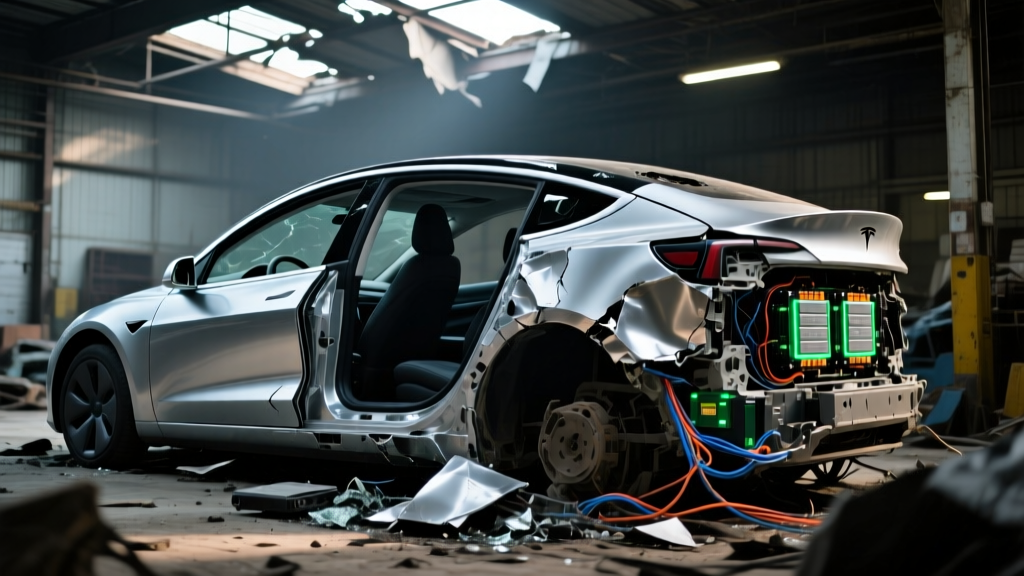
Tesla vehicles are disproportionately represented in salvage yards and Copart auctions. The reasons are structural, not anecdotal: aluminum-intensive unibody construction drives collision-repair costs above insurer thresholds, and Tesla's own insurance data shows higher-than-average claim severities for Models 3 and Y. A minor front-impact that might total a $25,000 sedan can easily write off a $42,000 Model Y because of sensor recalibration, structural adhesive requirements, and high-voltage safety protocols.
For bargain hunters, this creates an apparent opportunity: late-model Tesla wrecks selling for 40-60% below market value. But buying a salvaged EV is fundamentally different from buying a salvaged gas car. The high-voltage battery pack, thermal management system, and proprietary software ecosystem introduce risks that most salvage buyers underestimate.
The Battery Question: What Collision Damage Really Means
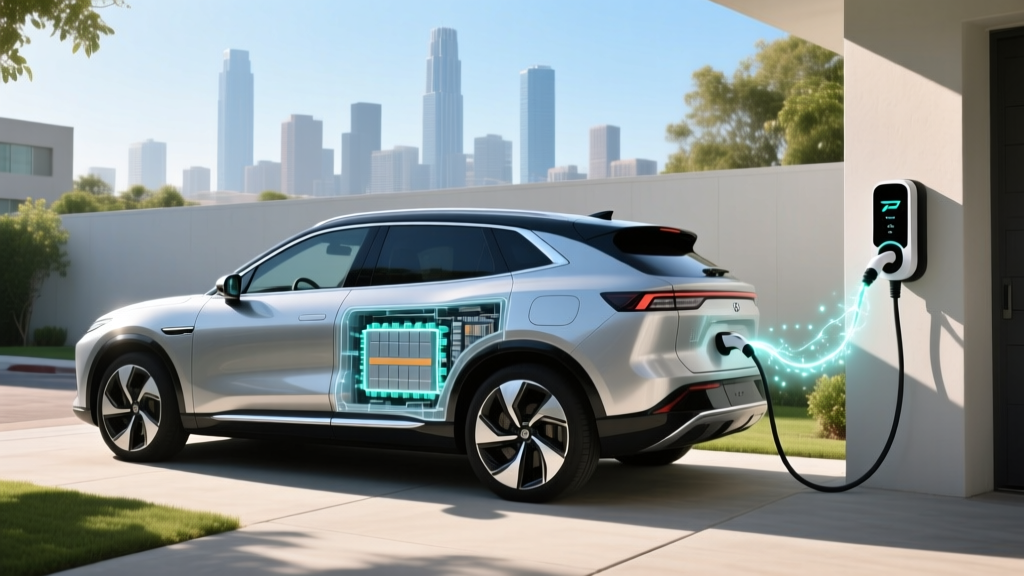
The traction battery in a Tesla Model 3 or Model Y is a structural component — it's bolted into the floor pan and contributes to chassis rigidity. In a side-impact or undercarriage strike, the battery enclosure can deform even when the cabin appears intact.
Tesla uses two primary battery chemistries depending on trim and model year:
| Chemistry | Trims (2024-2026) | Degradation Profile | Collision Sensitivity |
|---|---|---|---|
| NMC (Nickel Manganese Cobalt) | Long Range, Performance | ~8-12% loss over 100k miles | Moderate — cell venting risk if punctured |
| LFP (Lithium Iron Phosphate) | Model 3 RWD (Standard) | ~5-8% loss over 100k miles | Lower thermal runaway risk, but same structural vulnerability |
LFP chemistry is inherently more thermally stable — it's less prone to catastrophic thermal runaway if cells are punctured. But both chemistries suffer the same structural risk: a deformed battery enclosure means moisture ingress, compromised cooling channels, and potential cell imbalance that won't show up until weeks or months after a cheap repair.
What You Actually Lose With a Salvage-Title Tesla
The purchase price is only the first line item. Here's what a salvage or rebuilt title costs you downstream:
Federal Tax Credit — Gone Completely
The IRS §30D federal EV tax credit (up to $7,500 for new EVs, up to $4,000 for used) is not available for any vehicle with a salvage or rebuilt title. Per IRS guidelines, the used-EV credit requires a clean title and a sale price at or below $25,000 from a licensed dealer. A $22,000 salvage-title Model 3 might look like a deal until you realize a clean-title equivalent from a dealer could net you $4,000 back, narrowing the gap to nearly nothing.
Tesla's Warranty Is Voided
Tesla's new-vehicle limited warranty (4 years/50,000 miles) and battery warranty (8 years/100,000-120,000 miles depending on trim) are voided when a vehicle receives a salvage title. Tesla's service centers will still perform paid repairs on rebuilt-title vehicles, but you're paying out of pocket for everything — including $1,500+ drive unit replacements and $800+ MCU repairs that would otherwise be covered.
Insurance and Resale
Most major insurers will only offer liability coverage on rebuilt-title vehicles — not comprehensive or collision. That means if your rebuilt Model Y gets stolen, hail-damaged, or hit in a parking lot, you absorb the full loss. Resale value drops 30-40% versus a clean-title equivalent, and many buyers won't touch a rebuilt-title EV at any price due to battery uncertainty.
Charging and Performance: What Survives the Wreck
If the high-voltage system survives intact (a big "if"), a rebuilt Tesla retains its core EV specifications. Here's what you're working with across current-generation models:
| Spec | Model 3 RWD | Model 3 Long Range AWD | Model Y Long Range AWD |
|---|---|---|---|
| EPA Range | 272 mi | 341 mi | 308 mi |
| Real-World Highway Range | ~220-240 mi | ~275-300 mi | ~250-270 mi |
| Battery (usable) | 57.5 kWh (LFP) | 79 kWh (NMC) | 79 kWh (NMC) |
| Max DC Fast Charge | 170 kW | 250 kW | 250 kW |
| 10-80% DC Time | ~25 min | ~18 min (peak curve) | ~20 min |
| Level 2 Home Charge | 11.5 kW (~37 mi/hr) | 11.5 kW (~44 mi/hr) | 11.5 kW (~40 mi/hr) |
| 0-60 mph | 5.8 sec | 4.2 sec | 4.8 sec |
| Horsepower | 271 hp | 346 hp | 384 hp |
| EPA Efficiency | 132 MPGe (25 kWh/100mi) | 131 MPGe (25 kWh/100mi) | 122 MPGe (27 kWh/100mi) |
The charging curve matters: Tesla's 250 kW peak rate only holds between roughly 10-40% state of charge. Above 60%, the rate tapers significantly — expect 50-80 kW in the final stretch. A "25-minute 10-80%" claim assumes battery preconditioning is active, which happens automatically when you navigate to a Supercharger.
Repair Cost Reality: What the Auction Listing Won't Tell You
Here's a representative breakdown for a 2024 Model 3 Long Range with moderate front-end damage (crashed into a barrier at ~25 mph, airbags deployed, no battery damage):
| Repair Item | Estimated Cost (OEM Parts) | Aftermarket/Salvage Parts |
|---|---|---|
| Front bumper cover + sensors | $3,200 | $1,400 |
| Radar/camera recalibration | $1,800 | $1,800 (Tesla-only) |
| Headlights (pair, LED matrix) | $4,600 | $2,200 |
| Structural rail section + labor | $6,500 | N/A (requires OEM) |
| Airbag module replacement | $2,800 | $1,500 |
| High-voltage safety inspection | $800 | $800 |
| Total | $19,700 | $9,500 (if feasible) |
Tesla's parts ecosystem is tighter than legacy automakers. Many components — especially sensor arrays, MCU units, and drive inverters — are VIN-locked and require Tesla-authorized diagnostics to commission. Independent EV shops can handle mechanical repairs, but software-locked parts remain a bottleneck.
Autopilot and FSD on a Salvage Tesla: A Critical Warning
FSD (Supervised) costs $8,000 as a one-time purchase or $99/month as of 2026. It's transferable with the vehicle — but only if Tesla's systems recognize the hardware as intact and calibrated. A rebuilt-title car with a replaced front camera or radar module may show FSD as "unavailable" until Tesla performs a full sensor suite validation ($400-$800 at a service center).
Should You Buy a Tesla Wreck? A Decision Framework
Consider a salvage Tesla IF:
- You have access to a Tesla-certified or high-voltage-qualified independent shop
- The damage is cosmetic-only (no structural, no undercarriage, no battery enclosure contact)
- You plan to keep the car 5+ years (absorbing the resale hit)
- You can pay cash — most lenders won't finance rebuilt titles
- You understand you'll never qualify for any federal or state EV tax credit on this vehicle
Avoid a salvage Tesla IF:
- The battery pack or enclosure shows any deformation, scraping, or puncture
- You need comprehensive/collision insurance
- You're relying on the car for daily commuting with no backup vehicle
- The auction listing says "unknown condition" or "starts and drives" without video proof
- You can't independently verify the high-voltage system's state of health via Tesla diagnostics
Smarter Alternatives: Clean-Title EVs in the Same Budget
If your budget puts you in the $18,000-$28,000 range (where salvage Teslas cluster), consider these clean-title alternatives that preserve warranty, tax-credit eligibility, and insurability:
| Vehicle | Typical Clean-Title Used Price (2026) | EPA Range | Used EV Credit Eligible? | Key Advantage |
|---|---|---|---|---|
| 2022-2023 Model 3 RWD (clean) | $23,000-$27,000 | 272 mi | Yes — $4,000 if dealer-sold, ≤$25k | Supercharger access, OTA updates |
| 2022-2023 Hyundai Ioniq 5 | $24,000-$28,000 | 303 mi | Yes — same terms | 800V architecture, 10-80% in 18 min |
| 2022-2023 Chevrolet Bolt EUV | $18,000-$22,000 | 247 mi | Yes — same terms | Lowest cost of entry, spacious cabin |
| 2022-2023 Kia EV6 | $25,000-$29,000 | 310 mi | Yes — same terms | 350 kW charging capability (800V) |
The used-EV tax credit (§25E) requires: purchase from a licensed dealer, sale price ≤$25,000, buyer AGI ≤$75,000 single / $150,000 joint, and the vehicle must be at least 2 model years old. A $24,500 clean-title Model 3 from a dealer nets you $20,500 after the $4,000 credit — often less than a "bargain" salvage Tesla once repair costs are factored in. Verify current rules at IRS.gov.
Pros and Cons: Salvage-Title Tesla at a Glance
Pros
- Purchase price 40-60% below clean-title equivalent
- Access to Tesla Supercharger network (if hardware intact)
- Tesla's efficiency and performance remain class-leading if drivetrain is undamaged
- Over-the-air software updates continue on rebuilt-title vehicles
- Strong aftermarket for cosmetic and suspension parts
Cons
- Federal and state EV tax credits permanently forfeited
- Tesla factory warranty voided — all repairs out of pocket
- Battery damage risk is expensive and hard to assess pre-purchase
- Insurance limited to liability-only in most states
- Resale value permanently depressed 30-40%
- Sensor recalibration for ADAS is Tesla-dealer-dependent
- Financing is nearly impossible — cash purchase required
Frequently Asked Questions
What is the real-world range of a rebuilt-title Tesla?
If the battery and drivetrain are undamaged, real-world range matches a clean-title vehicle: approximately 220-240 highway miles for a Model 3 RWD, 275-300 for a Model 3 Long Range, and 250-270 for a Model Y Long Range. Subtract 20-30% in sustained cold weather (below 32°F). Any reduction beyond this suggests battery cell imbalance or cooling system damage from the collision.
How fast does a salvage Tesla charge at home and on DC fast chargers?
Charging speeds are hardware-dependent, not title-dependent. A Model 3 Long Range peaks at 250 kW DC (10-80% in ~18 minutes with preconditioning) and charges at 11.5 kW on Level 2 (~44 miles per hour). However, if the charge port, onboard charger, or battery management system was affected by the collision, you may see reduced rates or error codes. Always test-charge at a Supercharger before finalizing a purchase.
Does a rebuilt-title Tesla qualify for any tax credit?
No. The federal §30D new-vehicle credit and §25E used-vehicle credit both require clean titles. Most state incentives (California's CVRP, Colorado's Innovative Motor Vehicle Credit, etc.) have the same restriction. The total incentive loss can exceed $11,500 when combining federal and state programs.
Is it worth buying a Tesla wreck versus a clean-title competitor?
Rarely. A $20,000 salvage Model 3 with $8,000 in repairs and no tax credit costs you $28,000 — the same as a clean-title, dealer-sold Model 3 that qualifies for the $4,000 used-EV credit (net cost: $20,500-$24,500). The clean-title car also carries remaining factory warranty, full insurance options, and stronger resale. The salvage route only makes financial sense if the damage is provably cosmetic and repair costs stay under $4,000.
What are the biggest risks of driving a salvaged Tesla?
The top risks are: (1) undetected battery enclosure damage leading to moisture ingress and cell degradation over time, (2) miscalibrated ADAS sensors giving false confidence in Autopilot/FSD, (3) voided warranty leaving you exposed to $10,000+ drivetrain or battery failures, and (4) inability to get comprehensive insurance, meaning you absorb total-loss risk entirely.
Sources: EPA range and efficiency data via fueleconomy.gov; IRS EV credit rules at irs.gov; Tesla warranty and specification data via Tesla Owner's Manual.