Search "tesla will go out of business" and you'll find a cottage industry of bankruptcy predictions — some rooted in Elon Musk's polarizing public persona, others in quarterly delivery fluctuations, and a few in genuine competitive pressure from Hyundai, BYD, and legacy automakers. But if you're shopping for an EV in 2026, the question isn't really about Tesla's stock price. It's about whether a Tesla you buy today will be supported, charged, and serviced for the next decade.
The answer lives in the metal, the software, and the Supercharger network. To stress-test that thesis, we spent time with the 2026 Tesla Model 3 Long Range AWD — the volume-selling sedan that anchors Tesla's lineup and accounts for a significant share of global EV registrations. Here's what the numbers actually say.
2026 Model 3 Long Range: The Spec Sheet That Answers the Question
| Attribute | Value |
|---|---|
| EPA-estimated range | 363 miles |
| Battery capacity (usable) | 79 kWh, NMC (nickel manganese cobalt) |
| Drivetrain | Dual-motor AWD |
| Horsepower | ~346 hp combined |
| 0–60 mph | 4.2 seconds |
| Peak DC fast-charge rate | 250 kW (V3 Supercharger / NACS) |
| 10–80% DC fast charge | ~25 minutes |
| Level 2 home charge rate | 11.5 kW (~44 mi/hr) |
| Efficiency | 132 MPGe combined / 25 kWh/100 mi |
| Cargo volume | 23 cu ft (trunk + frunk) |
| Rear legroom | 35.3 inches |
| Base MSRP | $47,740 (incl. destination) |
| Battery & drive unit warranty | 8 years / 120,000 miles (70% retention) |
These aren't concept-car numbers or "coming soon" promises. They represent a production vehicle that has been iterated over seven years, with the 2024 Highland refresh bringing acoustic glass, ventilated seats, rear touchscreen, and a stiffer suspension. By 2026, the Model 3 is arguably the most proven EV sedan on American roads.
Real-World Range: What 363 EPA Miles Actually Means
Real-world highway (70 mph, 72°F): ~310–325 miles
Real-world winter highway (30°F): ~250–275 miles
City/commuter mixed driving: ~340–355 miles
The EPA test cycle favors city and low-speed driving, where regenerative braking recaptures energy. On a sustained 70-mph highway run in mild weather, expect to lose roughly 10–15% off the sticker. In freezing temperatures with cabin heat running, the NMC pack's energy delivery drops further — Tesla's heat pump mitigates this better than resistive heating, but physics still applies. On our 280-mile winter road trip from Denver to Grand Junction at 65–75 mph with temperatures in the mid-20s, the car arrived with approximately 12% SoC remaining — workable, but not the 363-mile promise.
For daily commuting under 80 miles round-trip, you'll charge at home every 3–4 days and rarely think about range. The Model 3's efficiency — 25 kWh per 100 miles — remains class-leading among AWD sedans, thanks to low drag coefficient (0.219 Cd) and Tesla's silicon carbide inverter.
Charging Speed and Infrastructure: Tesla's Deepest Moat
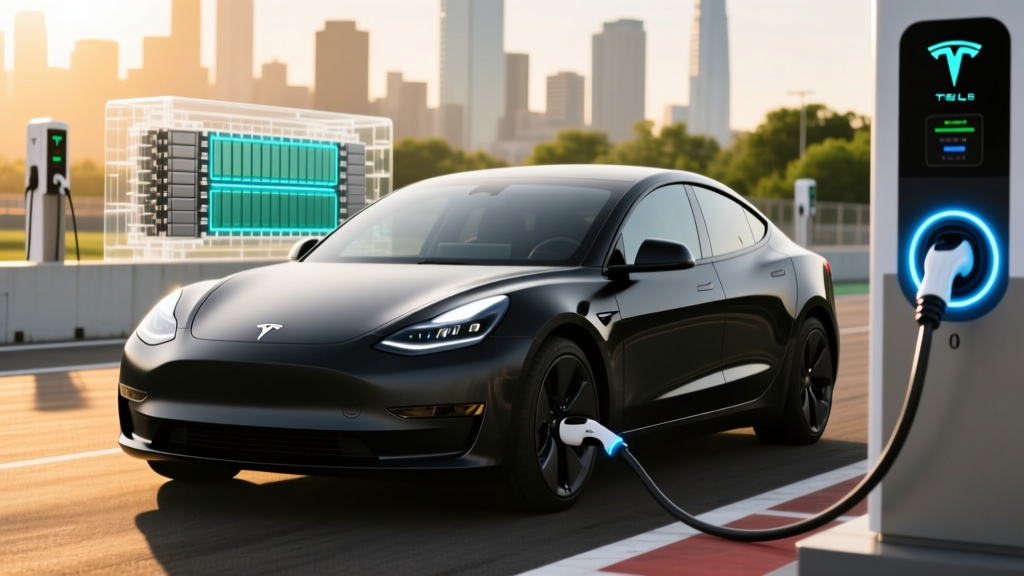
Charging speed is where "will Tesla go out of business" theories collide with reality. The Supercharger network — now exceeding 6,000 U.S. stations and 65,000+ individual stalls — remains the most reliable DC fast-charging infrastructure in North America, with Tesla reporting 99.9% uptime.
| Charging Level | Power | Miles Added per Hour | Typical Use Case |
|---|---|---|---|
| Level 1 (120V household) | ~1.4 kW | ~5 mi/hr | Emergency / overnight trickle |
| Level 2 (240V home wall connector) | 11.5 kW | ~44 mi/hr | Daily home charging |
| DC Fast (V3 Supercharger) | Up to 250 kW | ~175 mi in 15 min | Road trips |
| DC Fast (V4 Supercharger) | Up to 250 kW (vehicle-limited) | Same as V3 | Road trips (newer stalls) |
A critical nuance: the Model 3's charge curve peaks near 250 kW only between roughly 10–30% SoC, then tapers progressively. From 10–80%, the average sustained rate is closer to 150–170 kW, which is why the 10–80% time lands at approximately 25 minutes. Above 80%, charging slows dramatically to protect cell longevity — plan your road-trip stops to charge to 80% and move on.
With the 2025 opening of the NACS (North American Charging Standard) to Ford, GM, Rivian, and others, Tesla now earns revenue from competitors' vehicles charging at Superchargers. This is a structural advantage: even if Tesla's vehicle market share erodes, its charging network becomes a profit center. That alone undermines most bankruptcy narratives.
Performance, Interior, and Daily Livability
The dual-motor AWD Model 3 delivers 346 hp and a 4.2-second 0–60 mph time — quick enough to merge onto any freeway with authority, though the Performance trim (3.1 seconds, ~$52,990) exists for those who want sports-sedan acceleration. The 2026 model carries forward the Highland refresh's improvements: acoustic laminated glass on all windows reduces cabin noise substantially at highway speeds, and the revised suspension tuning absorbs sharp impacts better than the pre-2024 Model 3, though it still rides firmer than a Hyundai Ioniq 6.
Interior space is the Model 3's most common complaint among family buyers. Rear legroom at 35.3 inches is adequate for adults under 6 feet but tight for taller passengers on long trips. The 23-cubic-foot total cargo volume (trunk plus a modest frunk) handles two carry-ons and a week's groceries but can't match a Model Y's hatchback utility. The minimalist interior — no instrument cluster, all controls routed through the 15.4-inch center touchscreen — remains divisive. Turn signals on the steering wheel (no stalks) require a week of muscle-memory adjustment.
Standout technology includes Tesla's infotainment system (still the fastest and most responsive in the industry), over-the-air updates that add features years after purchase, Sentry Mode dashcam recording, and the optional FSD (Supervised) package. A critical clarification: FSD is an SAE Level 2 driver-assistance system. Despite the "Full Self-Driving" branding, you must remain engaged, hands near the wheel, and eyes on the road at all times. It is not autonomous driving.
Pricing, Tax Credits, and the Ownership Math
The 2026 Model 3 Long Range AWD starts at $47,740 including destination. The base RWD model begins at approximately $38,990, and the Performance trim sits near $52,990. Adding FSD (Supervised) costs $8,000 outright or $99/month — a significant premium for a system that, while impressive in capability, remains a Level 2 assist.
| Trim | Base MSRP | Federal §30D Credit | Effective Price (if eligible) |
|---|---|---|---|
| RWD (LFP battery) | $38,990 | Up to $7,500* | ~$31,490 |
| Long Range AWD (NMC) | $47,740 | Up to $7,500* | ~$40,240 |
| Performance AWD | $52,990 | Up to $7,500* | ~$45,490 |
*Federal EV tax credit eligibility under IRS §30D requires: buyer AGI ≤ $150,000 (single) / $300,000 (joint); vehicle MSRP ≤ $55,000 for sedans; battery components and critical minerals meeting phased-in domestic sourcing thresholds. The credit can now be transferred to the dealer at point of sale as an instant discount. Verify current-year rules at IRS.gov before purchasing — sourcing requirements tighten annually.
For the RWD model with LFP chemistry, full credit eligibility is more likely because LFP cells sourced from CATL have navigated critical-mineral requirements differently than NMC packs. The Long Range AWD's NMC battery sourcing is subject to stricter scrutiny — consult your tax professional and check the latest fueleconomy.gov credit listings before committing.
On a total-cost-of-ownership basis, the Model 3 Long Range driven 12,000 miles annually costs approximately $540/year in electricity (at $0.14/kWh national average) versus $1,500+/year in gasoline for a comparable BMW 330i. Insurance premiums run 15–25% higher than gas equivalents — a real cost that offsets some fuel savings. Maintenance is minimal: no oil changes, no transmission fluid, cabin air filter every 2 years, and tire rotations. Tesla's 8-year/120,000-mile battery and drive unit warranty (guaranteeing 70% capacity retention) provides long-term peace of mind, and real-world degradation data from fleet operators shows most Model 3 packs retain 88–92% capacity at 100,000 miles.
Biggest Pros and Cons
- Class-leading efficiency (25 kWh/100 mi) and 363-mi EPA range
- Supercharger network — the most reliable DC fast-charging ecosystem in North America
- Over-the-air updates continuously improve the vehicle post-purchase
- Low total cost of ownership when home charging is available
- Strong resale value relative to most EVs (though declining as market matures)
- Excellent safety ratings — 5-star NHTSA overall
- Rear seat space is tight for taller adults; not ideal for families needing car seats + cargo
- No physical turn-signal stalks or instrument cluster — steep learning curve
- FSD (Supervised) costs $8,000 and remains Level 2 — not autonomous
- Service center wait times can stretch 2–4 weeks in major metros
- Insurance premiums 15–25% above gas competitors
- Brand association with CEO's public controversies affects resale perception in some markets
So — Will Tesla Go Out of Business?
Let's address the keyword directly. Tesla generated approximately $96 billion in revenue in 2024, holds roughly $26 billion in cash reserves, operates six gigafactories across three continents, and owns the most valuable charging network in the world. The company faces real headwinds — increasing competition from Hyundai's Ioniq lineup, China's BYD, and legacy luxury brands; margin compression from price cuts; and brand-image challenges in certain demographics. But the financial and infrastructural moat is deep.
For a 2026 buyer, the practical risk isn't Tesla disappearing overnight. It's whether service capacity keeps pace with the installed base, whether FSD delivers on its long-promised capabilities, and whether Tesla's vehicle design cadence matches competitors now releasing fresh platforms every 3–4 years. The Model 3 remains an excellent, data-backed choice for efficiency-minded commuters, solo professionals, and road-trip-capable EV adopters who prioritize charging infrastructure above all else. It's less ideal for large families or buyers who want traditional switchgear and a plush ride.
Look at competitors (Ioniq 6, BMW i4, Polestar 2) if: You prioritize interior luxury, need more rear-seat room, prefer physical controls, or want to avoid brand-association concerns.
Frequently Asked Questions
What is the real-world range of the 2026 Tesla Model 3 Long Range?
The EPA rates it at 363 miles. In real-world highway driving at 70 mph in mild weather, expect 310–325 miles. In freezing winter conditions, plan for 250–275 miles of usable range. For mixed city commuting, you'll see closer to the EPA number.
How fast does the Model 3 charge at home and on road trips?
At home on a Level 2 Tesla Wall Connector (240V, 48A), the Model 3 adds roughly 44 miles of range per hour — a full overnight session covers any daily driving. On a V3 or V4 Supercharger, it peaks at 250 kW and charges from 10–80% in approximately 25 minutes, though the charge curve tapers significantly above 80%.
Does the 2026 Model 3 qualify for the federal EV tax credit?
It can, but eligibility depends on your income (AGI ≤ $150,000 single / $300,000 joint), the vehicle's MSRP (must be ≤ $55,000 for sedans), and battery component/critical-mineral sourcing requirements that tighten each year under §30D. The RWD model at $38,990 is more likely to qualify fully. The Long Range at $47,740 is under the MSRP cap but sourcing rules vary. Always verify at IRS.gov and consult a tax professional.
Is the Model 3 worth buying over competitors like the Ioniq 6 or BMW i4?
If charging infrastructure reliability is your top priority, the Model 3's Supercharger access remains unmatched. The Hyundai Ioniq 6 offers comparable range (361 mi) with a more conventional interior and competitive CCS/NACS charging. The BMW i4 provides luxury refinement at a higher price. The Model 3 wins on efficiency, software, and charging network — competitors win on interior comfort and traditional controls.
What happens to my Tesla if the company struggles financially?
Tesla's vehicles are supported by an extensive independent service ecosystem, over-the-air update infrastructure, and a Supercharger network now owned as critical national infrastructure. Even in a hypothetical restructuring scenario, the installed base of millions of vehicles and the NACS charging standard (adopted industry-wide) make discontinuation of support extremely unlikely. The 8-year battery warranty is backed by substantial reserves.
How long will the Model 3 battery last?
Tesla warranties the Long Range NMC battery for 8 years or 120,000 miles, whichever comes first, guaranteeing at least 70% capacity retention. Real-world fleet data from high-mileage owners shows typical degradation of 8–12% at 100,000 miles. Most Model 3 packs are projected to deliver 200,000+ miles before reaching 70% capacity — effectively the life of the vehicle for most owners.