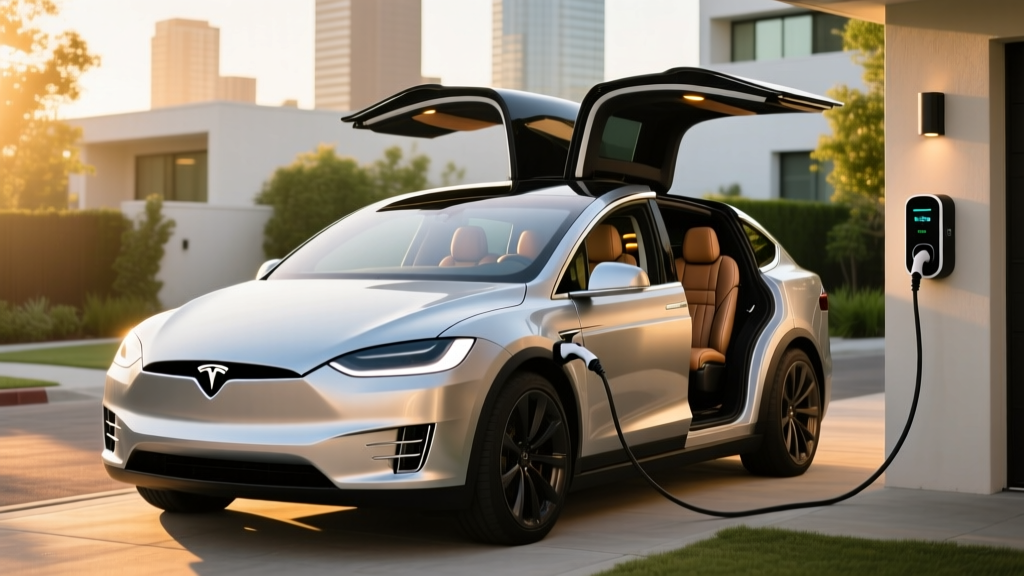
The Truth About a Tesla With Sunroof
If you've searched for a "Tesla with sunroof," you're not alone — it's one of the most common queries from buyers transitioning to electric. Here's the short answer: Tesla does not offer a traditional opening sunroof on any current-production vehicle. What Tesla does offer is a fixed, tinted glass roof that spans nearly the entire cabin ceiling on both the Model 3 and Model Y. It doesn't open, tilt, or slide — but it floods the interior with natural light and creates the airy, open-cabin feeling most sunroof shoppers are actually after.
This guide covers the 2026 Tesla Model 3 and Model Y — the two vehicles most buyers have in mind when they search for a Tesla with sunroof — with exact specs on range, charging, pricing, and federal tax credit eligibility under current IRS §30D rules.
2026 Tesla Model 3: Glass Roof, Range, and Full Specs
The refreshed Model 3 (internally called "Highland" and carried into 2026 with minor updates) comes standard with a fixed panoramic glass roof on every trim. The glass is heavily tinted and blocks a significant portion of UV and infrared radiation, but it does not open. Tesla's design philosophy prioritizes structural rigidity and headroom — the lack of a sunroof mechanism frees up roughly an inch of ceiling space.
| Spec | RWD (Base) | Long Range AWD | Performance |
|---|---|---|---|
| EPA Range | 272 mi | 341 mi | 315 mi |
| Battery (usable) | ~57.5 kWh (LFP) | ~75 kWh (NMC) | ~75 kWh (NMC) |
| Drivetrain | RWD, single motor | AWD, dual motor | AWD, dual motor |
| Horsepower | 271 hp | 346 hp | 510 hp |
| 0-60 mph | 5.8 sec | 4.2 sec | 2.9 sec |
| Efficiency (MPGe) | 132 MPGe | 125 MPGe | 119 MPGe |
| Peak DC Charge | 170 kW | 250 kW | 250 kW |
| 10-80% DC Time | ~28 min | ~22 min | ~22 min |
| Level 2 Rate | 11.5 kW (~44 mi/hr) | 11.5 kW (~44 mi/hr) | 11.5 kW (~44 mi/hr) |
| Cargo (rear + frunk) | 23 cu ft + 3.1 cu ft | 23 cu ft + 3.1 cu ft | 23 cu ft + 3.1 cu ft |
| Rear Legroom | 35.2 inches | ||
| Base MSRP | $38,990 | $47,740 | $54,990 |
| Battery Warranty | 8 yr / 100,000 mi | 8 yr / 120,000 mi | 8 yr / 120,000 mi |
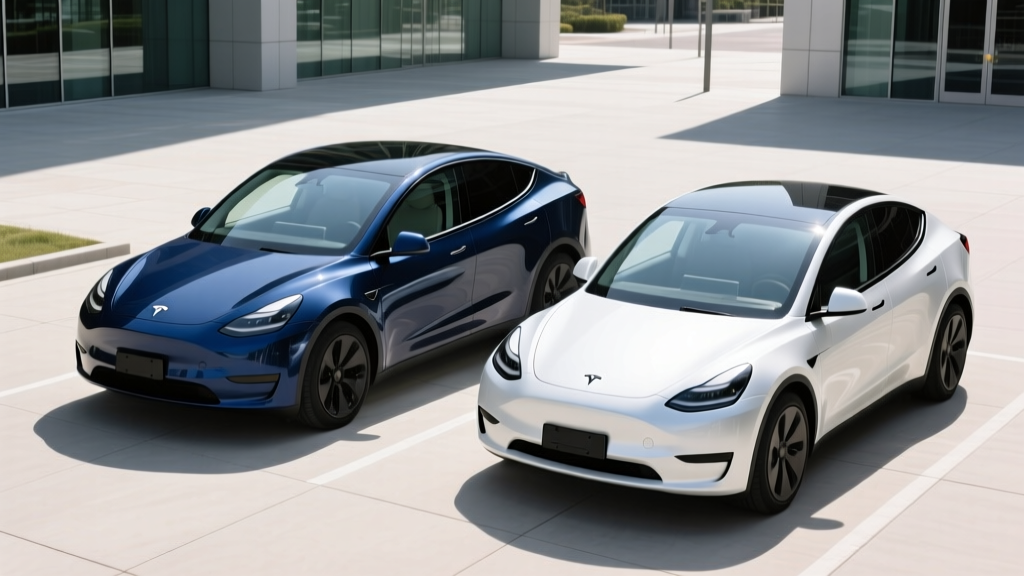
2026 Tesla Model Y: The Family EV With a Panoramic Glass Roof
The 2026 Model Y — now in its "Juniper" refresh generation — also features a fixed panoramic glass roof as standard equipment across all trims. The updated model introduced a full-width light bar, revised suspension tuning, and slightly improved efficiency. The glass roof extends from the windshield header to the rear hatch, giving both rows an expansive view skyward. Rear-seat passengers in particular notice the openness compared to competitors with traditional steel roofs and small glass panels.
| Spec | RWD (Base) | Long Range AWD | Performance |
|---|---|---|---|
| EPA Range | 260 mi | 320 mi | 293 mi |
| Battery (usable) | ~57.5 kWh (LFP) | ~75 kWh (NMC) | ~75 kWh (NMC) |
| Drivetrain | RWD, single motor | AWD, dual motor | AWD, dual motor |
| Horsepower | 295 hp | 384 hp | 510 hp |
| 0-60 mph | 5.9 sec | 4.8 sec | 3.5 sec |
| Efficiency (MPGe) | 123 MPGe | 117 MPGe | 111 MPGe |
| Peak DC Charge | 170 kW | 250 kW | 250 kW |
| 10-80% DC Time | ~28 min | ~22 min | ~22 min |
| Level 2 Rate | 11.5 kW (~39 mi/hr) | 11.5 kW (~39 mi/hr) | 11.5 kW (~39 mi/hr) |
| Cargo (rear + frunk) | 34 cu ft + 4.1 cu ft | 34 cu ft + 4.1 cu ft | 34 cu ft + 4.1 cu ft |
| Rear Legroom | 36.5 inches (Juniper refresh) | ||
| Base MSRP | $41,990 | $48,990 | $55,490 |
| Battery Warranty | 8 yr / 100,000 mi | 8 yr / 120,000 mi | 8 yr / 120,000 mi |
Charging Speed: DC Fast Charge and Home Level 2
Charging speed is where Tesla's Supercharger network advantage becomes tangible. Both the Model 3 and Model Y Long Range/Performance trims support up to 250 kW peak on V3 Superchargers. However, peak rate is not sustained rate — here's what actually happens during a session:
| State of Charge | Approximate Rate | What You'll See |
|---|---|---|
| 10-30% | 200-250 kW | Peak speed; fastest energy delivery |
| 30-55% | 150-190 kW | Gradual taper begins |
| 55-80% | 80-120 kW | Noticeable slowdown; thermal management active |
| 80-100% | 20-50 kW | Cell balancing; avoid unless needed for trip |
Home Level 2 charging at 11.5 kW (48A on a 60A circuit) adds roughly 39-44 miles of range per hour, meaning a full overnight session (8-10 hours) replenishes 310-440 miles — more than enough for virtually any daily commute. Installation typically costs $800-$2,000 depending on panel proximity and whether a service upgrade is needed. Tesla's Wall Connector retails for around $425 and is hardwired for maximum throughput.
Pricing, Tax Credits, and Total Cost
Tesla's pricing has shifted frequently, so treat these MSRP figures as current-listed starting points before destination fees ($1,390) and options. The critical question for most buyers is whether the federal EV tax credit under IRS §30D applies.
| Model/Trim | Base MSRP | MSRP Cap (§30D) | Income Cap (§30D) | Max Credit |
|---|---|---|---|---|
| Model 3 RWD | $38,990 | $55,000 (sedan) | $150K single / $300K joint | Up to $7,500* |
| Model 3 Long Range | $47,740 | $55,000 (sedan) | $150K single / $300K joint | Up to $7,500* |
| Model Y RWD | $41,990 | $80,000 (SUV) | $150K single / $300K joint | Up to $7,500* |
| Model Y Long Range | $48,990 | $80,000 (SUV) | $150K single / $300K joint | Up to $7,500* |
*Eligibility for the full $7,500 credit depends on battery critical-mineral and component sourcing requirements that change annually. As of the 2026 tax year, Tesla's US-built vehicles generally meet North American assembly requirements, but the critical-minerals and battery-component thresholds have tightened. Some trims may qualify for only $3,750 (half credit). Always verify current eligibility on fueleconomy.gov and consult a tax professional before relying on the credit. The point-of-sale transfer option allows dealerships to apply the credit as an immediate price reduction if you meet income requirements.
Glass Roof vs. Traditional Sunroof: What You're Actually Getting
Tesla's fixed glass roof is not a compromise — it's a deliberate engineering choice with trade-offs worth understanding:
Glass Roof Advantages
- No mechanical parts to fail, leak, or rattle
- Greater headroom (no sunroof cassette eating ceiling space)
- Full-cabin light — rear passengers benefit equally
- Structural contribution to roof crush rating
- UV and IR tinting reduces cabin heat vs. clear glass
Glass Roof Limitations
- Does not open — no fresh-air ventilation from above
- Summer solar load can raise cabin temperature when parked
- No retractable shade (aftermarket shades available ~$40-80)
- Replacement cost if damaged: estimated $1,500-$2,500
- Tint is fixed — cannot adjust opacity like electrochromic roofs
For buyers who want the open-air feeling without the maintenance and leak risk of a mechanical sunroof, Tesla's glass roof delivers. For those who want to actually open the roof to the sky — say, on a cool evening drive — you'll need to rely on the windows. Many owners purchase a removable fabric sunshade from Tesla's accessories store or third-party vendors to mitigate summer heat soak when parked outdoors.
Competitor Comparison: Glass Roof and Open-Air Alternatives
If an opening sunroof is a non-negotiable feature, several EV competitors offer traditional panoramic sunroofs that open or tilt:
| Vehicle | Roof Type | EPA Range | Base MSRP |
|---|---|---|---|
| Hyundai Ioniq 5 (w/ sunroof pkg) | Opening panoramic | 303 mi (LR AWD) | ~$47,500 |
| Kia EV6 (GT-Line w/ sunroof) | Opening panoramic | 282 mi (GT-Line AWD) | ~$52,000 |
| Volkswagen ID.4 (w/ panoramic) | Opening panoramic | 275 mi (Pro S AWD) | ~$49,000 |
| Ford Mustang Mach-E (Panoramic) | Fixed glass (no open) | 312 mi (ER RWD) | ~$43,000 |
The Ioniq 5 and EV6 share the E-GMP platform with 800V architecture capable of 350 kW peak charging — significantly faster than Tesla's 250 kW ceiling. However, they rely on CCS1 connectors for non-Tesla DC networks, which in 2026 are increasingly being supplemented by Tesla Supercharger access via adapters or native NACS ports on newer builds.
Driver-Assist Tech: Autopilot and FSD Supervised
Every Tesla ships with Basic Autopilot, a Level 2 driver-assistance system providing adaptive cruise control and lane centering on highways. The optional Full Self-Driving (Supervised) package ($8,000 one-time or $99/month as of 2026) adds automated lane changes, traffic light/stop sign recognition, and city-street steering assist.
Both Autopilot and FSD Supervised are SAE Level 2 systems — meaning the driver must remain fully attentive, keep hands on the wheel, and be prepared to take over at any moment. These are not self-driving systems. Tesla's steering-wheel torque monitoring and cabin camera attention alerts enforce engagement. No consumer Tesla vehicle operates at Level 3 or above.
The FSD Supervised system has improved substantially with Tesla's vision-only neural network approach, but it remains a driver-assist feature, not an autonomous system. Compare this to NHTSA's framework for automated driving, where Level 4 robotaxis like Waymo operate only in geofenced service areas without a human driver.
Who Should Buy a Tesla Model 3 or Model Y for the Glass Roof?
Choose the Model 3 if:
- You prioritize maximum range and efficiency (341 mi EPA on LR)
- You commute solo or with one passenger most days
- You want the lowest entry price in the Tesla lineup
- Sedan cargo space (23 cu ft) meets your needs
Choose the Model Y if:
- You need crossover cargo versatility (34 cu ft behind rear seats, 76 cu ft folded)
- You regularly carry rear-seat passengers (36.5" legroom)
- You want higher seating position and easier ingress/egress
- You plan to use a hitch-mounted rack (Model Y supports 3,500-lb towing on AWD)
Look elsewhere if:
- An opening sunroof is a must-have (consider Ioniq 5, EV6, or ID.4)
- You need 3-row seating (wait for refreshed Model X or consider Kia EV9)
- You want a physical instrument cluster or traditional control stalks
Frequently Asked Questions
Does any Tesla have a sunroof that opens?
No. Tesla has never offered a mechanically opening sunroof on the Model 3, Model Y, Model S, or Model X. The original Model S (pre-2018) offered a panoramic opening sunroof as an option, but Tesla discontinued it due to reported leak and reliability issues. Every current Tesla features a fixed glass roof.
Does the Tesla glass roof get hot in summer?
The glass roof's IR-blocking tint reduces heat transmission, but the glass surface itself does get warm in direct summer sun. Cabin temperature rise when parked is comparable to any vehicle with a dark interior. Most owners in hot climates use a removable aftermarket sunshade ($40-80) when parked, and Tesla's cabin overheat protection can be set to run the HVAC to maintain a target temperature.
Is the glass roof covered under warranty?
The glass roof is covered under Tesla's 4-year/50,000-mile new-vehicle limited warranty for defects. Impact damage (hail, debris) would fall under comprehensive insurance coverage. Replacement cost for the glass panel itself is estimated at $1,500-$2,500 including labor, depending on the model and service center.
How much does a Tesla with glass roof cost after the federal tax credit?
A 2026 Model 3 RWD at $38,990 could drop to approximately $31,490 if you qualify for the full $7,500 §30D credit via point-of-sale transfer. A Model Y Long Range AWD at $48,990 could drop to ~$41,490. However, credit eligibility depends on your adjusted gross income (under $150K single / $300K joint), the vehicle's battery sourcing compliance, and MSRP caps ($55K for sedans, $80K for SUVs). Confirm your specific eligibility with a tax professional and check fueleconomy.gov for the latest credit qualification status.
Can I add a sunroof to a Tesla aftermarket?
No reputable shop recommends cutting into a Tesla's roof structure. The glass roof is a bonded structural component, and modifying it would void the warranty, compromise crash safety, and risk water intrusion. If open-air driving is essential, a convertible or a competitor EV with a factory opening panoramic roof is the correct choice.