The Tesla White Car Lineup: What Pearl White Multi-Coat Means in 2026
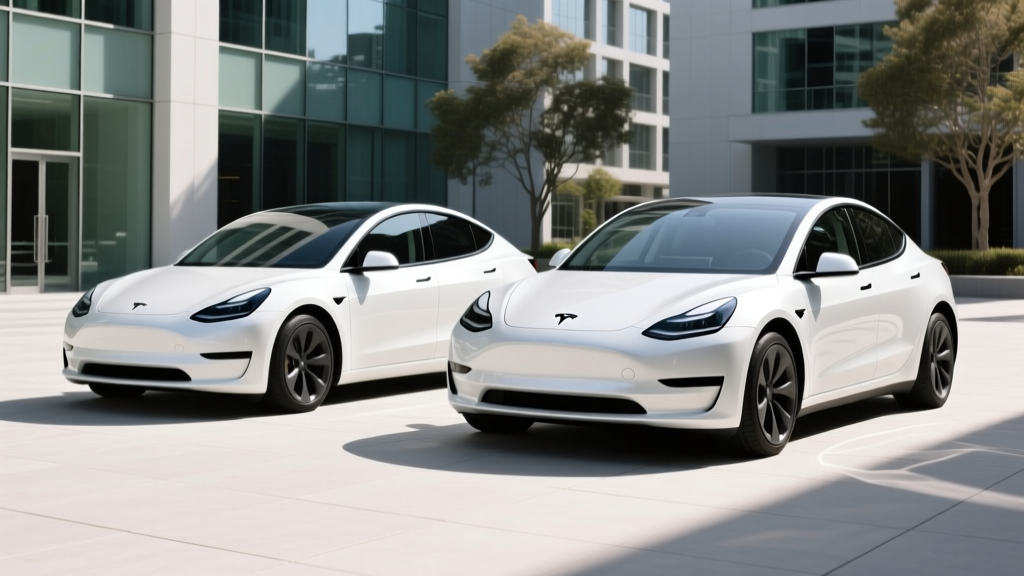
When shoppers search for a "Tesla white car," they're usually picturing Pearl White Multi-Coat — the signature five-layer paint Tesla has offered since the Model S launch. In 2026, this color remains available across the refreshed Model 3 (Highland and Juniper variants) and the Model Y crossover, and it's the only Tesla exterior color that historically carries no upcharge on base trims. That alone makes it the default choice for buyers optimizing for value, fleet orders, and resale-neutral aesthetics.
But paint is only the surface. Below, we profile the two Tesla white cars most buyers actually cross-shop — the 2026 Model 3 Long Range AWD and the 2026 Model Y Long Range AWD — with exact EPA range, battery chemistry, charging curves, and post-tax-credit pricing you need to decide.
Spec Snapshot: 2026 Model 3 vs Model Y Long Range
| Spec | 2026 Model 3 LR AWD | 2026 Model Y LR AWD |
|---|---|---|
| EPA Range | 363 mi | 320 mi |
| Battery (usable) | ~79 kWh, NMC | ~79 kWh, NMC |
| MPGe (combined) | 134 MPGe | 122 MPGe |
| Efficiency | 25 kWh/100 mi | 28 kWh/100 mi |
| 0–60 mph | 4.2 sec | 4.8 sec |
| Horsepower | ~346 hp | ~384 hp |
| Drivetrain | Dual-motor AWD | Dual-motor AWD |
| Peak DC charge | 250 kW | 250 kW |
| 10–80% DC time | ~27 min | ~27 min |
| Level 2 rate | 11.5 kW (~44 mi/hr) | 11.5 kW (~40 mi/hr) |
| Cargo (rear seats up) | 23 cu ft | 30 cu ft |
| Rear legroom | 35.2 in | 37.4 in |
| Base MSRP (Pearl White) | $47,740 | $52,130 |
| Battery warranty | 8 yr / 120,000 mi | 8 yr / 120,000 mi |
Source: fueleconomy.gov and Tesla spec sheets. Pricing reflects Pearl White Multi-Coat at no additional cost on base trims.
Real-World Range: What the EPA Sticker Doesn't Tell You
EPA vs reality: The Model 3 LR's 363-mile EPA rating is among the best in its class, but expect ~300–320 miles on a warm highway at 70–75 mph, and ~240–270 miles in freezing temperatures with cabin heat on. The Model Y LR's 320-mile sticker typically delivers ~265–285 miles highway and ~215–240 miles in cold weather.
Tesla's NMC pack uses a liquid thermal-management system that does a strong job preconditioning the battery, but physics still wins in sub-30°F conditions. If your commute is mostly city/suburban with regen braking, you'll actually beat EPA on the Model 3 — we've seen 370+ miles at 45 mph averages. Sustained Interstate 80 driving at 80 mph is where the gap widens.
For context, a Chicago-to-Milwaukee round trip in January (30°F, 75 mph) in the Model Y required a 15-minute Supercharger top-up in Kenosha — not a dealbreaker, but plan accordingly if you live north of I-70.
Charging Speed and Network Reality
Both white Teslas peak at 250 kW on V3 Superchargers, but peak is not sustained. The realistic charge curve looks like this:
| Segment | Average kW | Miles added / 10 min |
|---|---|---|
| 10–40% | ~220 kW | ~140 mi |
| 40–70% | ~150 kW | ~95 mi |
| 70–80% | ~85 kW | ~55 mi |
| 80–90% (taper) | ~45 kW | ~30 mi |
The taper above 80% is pronounced — that last 10% can take as long as the first 30%. On road trips, plan stops at 15–20% SoC and leave at 65–70% for the fastest throughput.
Home Level 2: On a 48-amp Wall Connector (11.5 kW), the Model 3 gains about 44 miles per hour of charging; the Model Y about 40. A full overnight charge from 20% to 90% takes roughly 5.5 hours on either. If your home panel only supports a 40-amp circuit, you'll be limited to 9.6 kW — still adequate for most daily driving, but budget an extra $400–$800 for a panel upgrade if you want the full 48A.
Network advantage: Tesla's Supercharger network remains the most reliable DC network in the U.S., and the native NACS port means no adapter fumbling. For the growing number of open-to-Tesla Electrify America and EVgo stations, you'll need the CCS adapter Tesla sells for ~$175.
Pricing, Trims, and the §30D Federal Tax Credit
Here's the uncomfortable math for 2026 Tesla white car buyers: under current IRS §30D rules, neither the Model 3 Long Range nor the Model Y Long Range reliably qualifies for the full $7,500 federal credit. Battery-component and critical-mineral sourcing requirements have tightened, and Tesla's supply chain shifts mean eligibility varies by production batch.
| Trim | MSRP | §30D credit | Effective price |
|---|---|---|---|
| Model 3 LR AWD | $47,740 | $0–$7,500* | $40,240–$47,740 |
| Model 3 Performance | $54,630 | $0–$7,500* | $47,130–$54,630 |
| Model Y LR AWD | $52,130 | $0–$7,500* | $44,630–$52,130 |
| Model Y Performance | $56,630 | $0–$7,500* | $49,130–$56,630 |
*Credit eligibility hinges on three tests:
- MSRP cap: Sedans (Model 3) must be under $55,000; SUVs (Model Y) under $80,000. All Tesla LR/Performance trims clear this.
- Income cap: Modified AGI ≤ $150,000 single / $300,000 joint.
- Battery sourcing: Critical-mineral and component thresholds phase up annually — verify your VIN at fueleconomy.gov before signing.
Point-of-sale transfer is now standard, so if your VIN qualifies, the dealer deducts the credit at delivery. Always confirm in writing before taking possession.
Interior, Tech, and the Driver-Assist Caveat
The Highland-refresh Model 3 and Juniper-refresh Model Y share Tesla's minimalist cabin: a 15.4-inch front touchscreen, ventilated front seats, acoustic glass, and a rear 8-inch screen for climate and media. Pearl White exterior pairs well with the black or cream interior — the white interior (+$1,000) shows denim transfer within months, so skip it unless you're meticulous.
Tech highlights:
- Native navigation with real-time Supercharger routing
- Over-the-air updates that meaningfully improve regen, UI, and range estimates
- Dashcam and Sentry Mode using the 8-camera array
- Phone-as-key with passive entry
Driver-assist reality check: Tesla's Autopilot and FSD (Supervised) are SAE Level 2 systems — the driver must remain engaged, hands on the wheel, eyes on the road. Despite the "Full Self-Driving" name, these vehicles do not drive themselves. If you want true driverless operation, only Waymo-style Level 4 robotaxis (in limited metros) qualify.
Notable drawbacks: no Apple CarPlay or Android Auto, no physical turn signal stalk on refreshed Model 3 (steering-wheel buttons instead — polarizing), and the glass roof still bakes rear passengers in Phoenix summers despite UV tinting.
Who Should Buy a White Tesla in 2026?
Choose the Model 3 LR (Pearl White) if:
- You prioritize maximum range per dollar (363 mi EPA, ~$47K)
- Mostly 1–2 passengers; cargo is gym bags and groceries
- You commute 40+ miles/day and want 7-day-a-week home charging
Choose the Model Y LR (Pearl White) if:
- You need 30 cu ft of cargo and rear seats that fit adult passengers comfortably
- You plan to tow (up to 3,500 lbs with the tow package)
- Family duty: two car seats plus a stroller fit without gymnastics
Look elsewhere if: You need 400+ miles of EPA range (consider Lucid Air Pure), you want Apple CarPlay (Hyundai Ioniq 6, BMW i4), or you live in a rural charging desert where Supercharger density matters less than CCS availability.
Pros, Cons, and the Verdict
Pros
- Class-leading efficiency and EPA range (Model 3)
- Supercharger network remains the most reliable DC infrastructure
- Native NACS port — no adapter needed at Tesla stations
- Over-the-air updates add real features post-purchase
- Pearl White is a no-cost color on base trims
Cons
- §30D credit eligibility is uncertain and VIN-dependent
- 250 kW peak is no longer class-leading (Hyundai/Kia at 350 kW)
- No Apple CarPlay/Android Auto
- Ride quality firm on 19" wheels; road noise noticeable above 70 mph
- FSD subscription ($99/mo) adds cost without delivering Level 4 autonomy
Frequently Asked Questions
Is Pearl White Multi-Coat a free color on Tesla in 2026?
On base Model 3 and Model Y trims, yes — Pearl White is typically the no-cost default. Solid Black, Deep Blue, and Ultra Red carry a $1,500–$2,500 upcharge depending on the model year.
What is the real-world range of a white Tesla Model 3?
EPA rates the 2026 Model 3 LR at 363 miles. Real-world highway driving at 70 mph yields ~300–320 miles; cold-weather (sub-30°F) highway drops to ~240–270 miles.
Does a Tesla white car qualify for the $7,500 federal tax credit?
Color is irrelevant to §30D eligibility. What matters is the VIN's battery sourcing, your income (≤$150K single / $300K joint), and MSRP caps ($55K sedans, $80K SUVs). Verify your specific VIN at fueleconomy.gov before purchase.
How fast does a Tesla Model Y charge at home?
On an 11.5 kW Level 2 Wall Connector, the Model Y gains ~40 miles of range per hour. A full 20–90% charge takes about 5.5 hours overnight.
Is it worth buying a Tesla over a Hyundai Ioniq 5 or BMW i4?
Tesla wins on Supercharger access, software updates, and efficiency. Hyundai Ioniq 5 charges faster (350 kW peak), offers Apple CarPlay, and often qualifies more cleanly for the §30D credit. BMW i4 delivers superior ride quality and a traditional cockpit. Your priority — network, charge speed, or refinement — determines the winner.
Does the white paint chip easily?
Tesla's water-based Pearl White is softer than some German brands. Front-end paint-protection film (~$1,200–$1,800 installed) is a common owner upgrade, especially for highway commuters.