The 2026 Tesla Model 3 remains the benchmark compact electric sedan, but smart buyers know the sticker price is only the beginning. Beyond the 0-60 times and minimalist interior, the real ownership story is written in the fine print: the battery warranty, long-term degradation data, charging infrastructure access, and whether the federal tax credit actually applies to your specific tax situation. This profile breaks down the 2026 Model 3 lineup—RWD, Long Range AWD, and Performance—with exact numbers on range, charging curves, warranty coverage, and total cost of ownership.
2026 Tesla Model 3: Trims, Pricing, and Federal Tax Credit
Tesla simplified the Model 3 lineup for 2026, offering three distinct configurations. Pricing below reflects base MSRP before destination fees and optional paint/wheel upgrades.
| Trim | Base MSRP | Drivetrain | EPA Range | 0-60 mph | Horsepower |
|---|---|---|---|---|---|
| Model 3 RWD | $38,990 | Rear-Wheel Drive | 272 miles | 5.8 sec | 271 hp |
| Model 3 Long Range AWD | $45,990 | Dual-Motor AWD | 341 miles | 4.2 sec | 384 hp |
| Model 3 Performance | $52,990 | Dual-Motor AWD | 315 miles | 2.9 sec | 510 hp |
Does the 2026 Model 3 Qualify for the Federal EV Tax Credit?
The short answer: yes, but with significant caveats. Under IRS §30D rules current for 2026, the Model 3 qualifies for up to $7,500 in federal tax credits, split into two $3,750 halves based on battery component and critical mineral sourcing requirements. However, eligibility is not universal:
- MSRP Cap: The Model 3 must have a base MSRP under $55,000. The RWD and Long Range trims qualify; the Performance trim's $52,990 base price is under the cap, but adding premium paint, 19-inch wheels, or FSD capability can push the final price over $55,000, disqualifying the credit.
- Buyer Income Cap: Adjusted gross income (AGI) must not exceed $150,000 for single filers, $225,000 for head of household, or $300,000 for married filing jointly.
- Battery Sourcing: As of 2026, Tesla sources LFP cells from CATL for the RWD trim, which may not meet the critical minerals requirement, potentially reducing the credit to $3,750 or $0 depending on your purchase date and Tesla's supply chain adjustments. The Long Range and Performance trims use NMC chemistry with higher North American content, typically qualifying for the full $7,500.
- Point-of-Sale Transfer: Since 2024, you can transfer the credit to the dealer at purchase, reducing your out-of-pocket cost immediately rather than waiting for tax refund.
Always verify current-year eligibility at IRS.gov or consult a tax professional. State and local incentives (California's $2,000 CVRP, Colorado's $5,000 credit, etc.) stack independently but vary by jurisdiction.
Real-World Range: EPA Estimates vs. Highway and Cold-Weather Reality
EPA Estimated Range: 272 mi (RWD) | 341 mi (Long Range) | 315 mi (Performance)
Real-World Expectation: EPA range is achieved under mixed city/highway driving at moderate temperatures (65-75°F). In real-world conditions:
- Highway-only (75 mph, flat terrain): Expect 85-90% of EPA range. The Long Range AWD delivers ~290-305 miles at sustained highway speeds.
- Cold weather (below 32°F): Range drops 20-30% due to battery heating demands and cabin HVAC load. The RWD trim may see 190-215 miles; Long Range drops to 240-270 miles.
- City driving with regenerative braking: Often exceeds EPA by 5-10% due to regen efficiency. RWD owners report 280-295 miles in stop-and-go traffic.
Efficiency: The Long Range AWD achieves 132 MPGe combined (25 kWh/100mi), among the most efficient vehicles in its class per fueleconomy.gov.
Battery Chemistry, Capacity, and the 8-Year Warranty Breakdown
The 2026 Model 3 uses two distinct battery chemistries depending on trim, each with different longevity profiles and warranty terms.
| Trim | Battery Capacity (Usable) | Chemistry | Warranty Coverage | Expected Degradation (100k mi) |
|---|---|---|---|---|
| RWD | 57.5 kWh | LFP (Lithium Iron Phosphate) | 8 years / 100,000 miles | 5-8% capacity loss |
| Long Range AWD | 75 kWh | NMC (Nickel Manganese Cobalt) | 8 years / 120,000 miles | 8-12% capacity loss |
| Performance | 75 kWh | NMC | 8 years / 120,000 miles | 8-12% capacity loss |
What the Tesla Warranty Actually Covers
Tesla's battery and drive unit warranty guarantees that the battery will retain at least 70% of its original capacity over the warranty period. If degradation exceeds 30% within 8 years or the mileage limit (whichever comes first), Tesla will repair or replace the battery at no cost. Key nuances:
- LFP Advantage: The RWD's LFP battery is rated for 3,000+ charge cycles (vs. ~1,500 for NMC), meaning it can theoretically handle 300,000+ miles before hitting 70% capacity. Real-world data from Tesla's 2025 Impact Report shows LFP packs averaging 92% state of health (SoH) at 100,000 miles.
- NMC Trade-Off: The Long Range and Performance trims sacrifice some cycle life for higher energy density (more range per kWh). Expect 88-92% SoH at 100,000 miles under normal use.
- Warranty Exclusions: Damage from accidents, floods, or unauthorized modifications voids coverage. Tesla also excludes "normal degradation" below the 70% threshold—so a pack at 72% capacity at 110,000 miles is not covered.
- Drive Unit Warranty: The electric motors and power electronics are covered for the same 8-year/100,000-120,000-mile period. Motor failures are rare but typically manifest as bearing noise or inverter faults.
Battery Replacement Cost: The Worst-Case Scenario
If your battery fails outside the warranty window (or due to excluded damage), replacement costs are significant. As of 2026, a Model 3 battery replacement ranges from $12,000 to $16,000 including labor, depending on trim and cell availability. This is a key reason to prioritize the warranty period in your ownership timeline—most owners sell or trade before 120,000 miles.
Charging Speed: DC Fast Charging, Home Level 2, and the Charge Curve
Charging speed is where the 2026 Model 3's engineering shines, but the numbers on the spec sheet don't tell the full story. Understanding the charge curve—how power tapers as the battery fills—is critical for road trip planning.
| Charging Method | Power (kW) | Miles Added per Hour | 10-80% Time | Notes |
|---|---|---|---|---|
| DC Fast Charge (Tesla Supercharger V4) | 250 kW (peak) | ~1,000 mi/hr (peak) | ~25 minutes | Peak rate sustained to ~50% SoC, then tapers |
| DC Fast Charge (CCS adapter, non-Tesla networks) | 150-170 kW (typical) | ~600-700 mi/hr | ~35 minutes | Requires $250 CCS adapter; Electrify America, EVgo compatible |
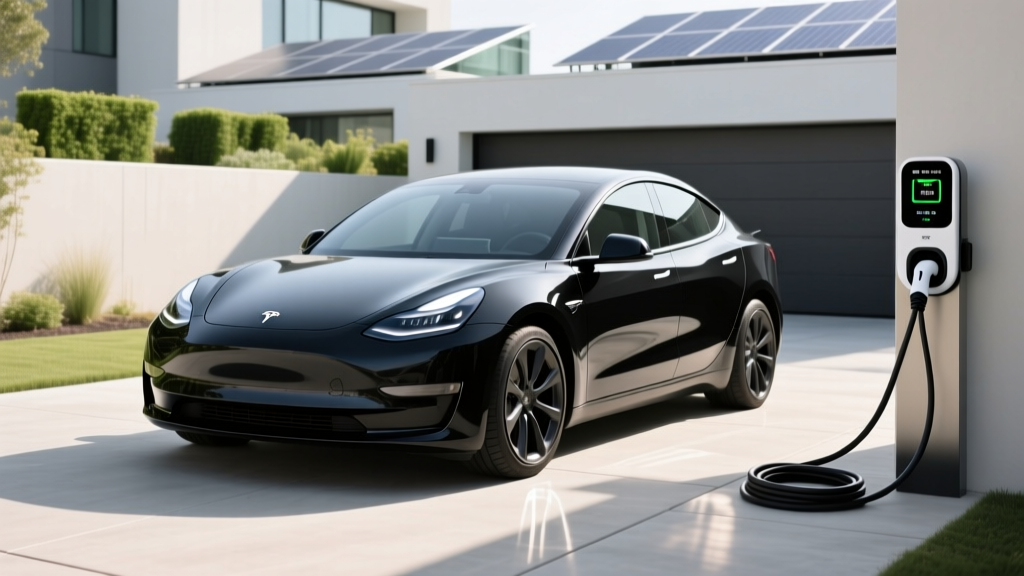
| Home Level 2 (Tesla Wall Connector, 48A) | 11.5 kW | ~44 mi/hr | N/A (overnight) | Requires 60A circuit; full charge in ~7 hours (Long Range) |
| Home Level 2 (standard 240V outlet, 32A) | 7.7 kW | ~30 mi/hr | N/A (overnight) | Uses Mobile Connector; full charge in ~10 hours |
| Level 1 (120V household outlet) | 1.4 kW | ~5 mi/hr | N/A (days) | Emergency/top-up only; not practical for daily use |
The Charge Curve Reality: Why 250 kW Doesn't Mean 25 Minutes Every Time
Tesla's 250 kW peak charge rate is achievable only under ideal conditions: battery preconditioned to optimal temperature (via navigation to a Supercharger), starting at 10-15% state of charge (SoC), and ambient temperatures above 50°F. The actual charge curve looks like this:
- 10-50% SoC: Sustained 200-250 kW (fastest phase)
- 50-80% SoC: Tapers to 80-120 kW to protect battery longevity
- 80-100% SoC: Drops to 20-40 kW (charging above 80% is slow and generates heat; avoid unless necessary for a specific trip)
For road trips, plan to charge from 10-80% (25 minutes) and skip the final 20% unless you need the full range to reach your next stop. This strategy minimizes total travel time.
Performance, Handling, and Daily Drivability
The 2026 Model 3's performance varies dramatically by trim, but all versions share Tesla's instant torque delivery and low center of gravity (battery pack mounted under the floor).
- RWD: 271 hp, 5.8-second 0-60 mph. Adequate for commuting and highway merging, but not thrilling. The single-motor setup is lighter, contributing to the RWD's slightly better efficiency (139 MPGe combined vs. 132 for Long Range).
- Long Range AWD: 384 hp, 4.2-second 0-60 mph. Dual-motor all-wheel drive provides confident traction in rain and light snow. This is the sweet spot for most buyers—fast enough to be fun, with the range to handle road trips without frequent stops.
- Performance: 510 hp, 2.9-second 0-60 mph. Track Mode adjusts torque distribution for cornering, and the adaptive dampers (standard on Performance) firm up for aggressive driving. However, the 20-inch wheels and low-profile tires reduce ride comfort and increase road noise compared to the Long Range's 18-inch setup.
Ride quality improved significantly with the 2024 "Highland" refresh—new suspension tuning, acoustic glass, and ventilated front seats addressed the most common complaints from pre-2024 owners. The 2026 model carries over these refinements.
Interior, Cargo, and Tech: Minimalism with Trade-Offs
The Model 3's interior is polarizing: clean, spacious, and tech-forward, but stripped of physical controls. Key dimensions and features:
- Cargo Volume: 23 cubic feet (trunk) + 3.1 cubic feet (front trunk/frunk) = 26.1 cu ft total. This is competitive with compact sedans like the BMW 3 Series (13 cu ft trunk) but less than hatchbacks like the Hyundai Ioniq 5 (27 cu ft behind rear seats).
- Passenger Space: 42.1 inches front legroom, 35.3 inches rear legroom. Rear headroom is tight for passengers over 6 feet due to the sloping roofline.
- Infotainment: 15.4-inch center touchscreen runs Tesla's proprietary OS. No Apple CarPlay or Android Auto—Tesla's native navigation, Spotify, and Netflix integration are robust, but phone mirroring is a dealbreaker for some buyers.
- Driver Assistance: Basic Autopilot (adaptive cruise + lane centering) is standard. Full Self-Driving (FSD) Capability ($8,000 one-time or $99/month) adds automatic lane changes, traffic light recognition, and "city streets" navigation. Important: FSD is SAE Level 2—you must remain engaged and supervise at all times. It is not a Level 4 autonomous system like Waymo.
Pros and Cons: The Honest Verdict
Pros
- Class-leading efficiency (132 MPGe Long Range) and real-world range (341 mi EPA)
- Extensive Supercharger network—over 50,000 stalls globally, with reliable plug-and-charge billing
- Over-the-air updates continuously add features (recent: improved regen customization, battery preconditioning algorithms)
- LFP battery in RWD trim offers exceptional longevity (3,000+ cycles)
- Strong resale value—Model 3 retains ~60% of value at 3 years, per Kelley Blue Book
Cons
- No Apple CarPlay/Android Auto—dealbreaker for buyers who prefer phone-based navigation
- Minimalist interior lacks physical climate/audio controls; everything requires touchscreen taps
- Rear visibility is compromised by the small rear window and thick C-pillars
- FSD is expensive ($8,000) and still requires full driver attention—questionable value vs. standard Autopilot
- Insurance costs are 20-30% higher than gas-powered competitors (average $2,200/year nationally, per NerdWallet)
Who Should Buy the 2026 Tesla Model 3?
Choose the Model 3 RWD ($38,990) if: You're a commuter driving under 40 miles/day, have reliable home Level 2 charging, and prioritize low upfront cost. The LFP battery is nearly bulletproof for daily use, and the 272-mile EPA range covers weekend trips with one charging stop.
Choose the Model 3 Long Range AWD ($45,990) if: You take regular road trips (300+ miles), live in a region with cold winters (AWD + longer range reduces range-anxiety), or need the dual-motor traction for snow. This is the best all-around trim for most buyers.
Choose the Model 3 Performance ($52,990) if: You want sports-car acceleration (2.9-second 0-60) and track-day capability, and you're willing to sacrifice 26 miles of range and some ride comfort for the performance upgrade. Note: adding options may push you over the $55,000 tax credit cap.
Look elsewhere if: You need hatchback cargo flexibility (consider the Hyundai Ioniq 5 or Tesla Model Y), require Apple CarPlay (most competitors offer it), or want a traditional dealership experience with in-person service (Tesla's mobile service and service centers are limited in rural areas).
Frequently Asked Questions
What is the real-world range of the 2026 Tesla Model 3?
The EPA estimates 272 miles (RWD), 341 miles (Long Range), and 315 miles (Performance). In real-world highway driving at 75 mph, expect 85-90% of those numbers. In cold weather (below 32°F), range drops 20-30% due to battery heating and cabin HVAC demands.
How fast does the Model 3 charge at home and on the road?
On a Tesla Supercharger (250 kW peak), the Model 3 charges from 10-80% in about 25 minutes. At home with a Level 2 Tesla Wall Connector (11.5 kW), you'll add ~44 miles of range per hour, fully charging a Long Range battery overnight in ~7 hours.
How much does the 2026 Model 3 cost after federal tax credits?
If you qualify for the full $7,500 federal credit (income under $150k/$300k, MSRP under $55k, battery sourcing requirements met), the effective prices are: RWD ~$31,490, Long Range ~$38,490, Performance ~$45,490. State incentives (e.g., California's $2,000 CVRP, Colorado's $5,000 credit) can reduce costs further. Verify eligibility at IRS.gov before purchasing.
Is the Tesla Model 3 worth buying vs. the Hyundai Ioniq 6 or BMW i4?
The Model 3 Long Range offers the best combination of range (341 mi), charging speed (250 kW), and Supercharger network access. The Ioniq 6 (361 mi EPA) has slightly more range and 800V charging (10-80% in 18 minutes), but lacks the Supercharger ecosystem. The BMW i4 is more luxurious but costs $10,000+ more and has shorter range (307 mi). If Supercharger reliability is a priority, the Model 3 wins.
What are the biggest pros and cons of the Model 3?
Pros: class-leading efficiency, Supercharger network, LFP battery longevity (RWD), strong resale value. Cons: no Apple CarPlay, touchscreen-only controls, compromised rear visibility, high insurance costs, and FSD's questionable value proposition.
Does the 2026 Model 3 qualify for the federal EV tax credit?
Yes, but eligibility depends on your income (under $150k single/$300k joint), the vehicle's MSRP (under $55k), and battery sourcing compliance. The Long Range and Performance trims typically qualify for the full $7,500; the RWD's LFP battery (sourced from CATL) may only qualify for $3,750 or $0 depending on your purchase date. Always check IRS.gov for current rules.
How long will the Model 3 battery last before needing replacement?
Tesla's warranty guarantees 70% capacity retention for 8 years or 100,000-120,000 miles (depending on trim). Real-world data suggests LFP batteries (RWD) will last 300,000+ miles before hitting 70% capacity, while NMC packs (Long Range/Performance) should reach 200,000-250,000 miles. Most owners sell or trade before replacement is needed.
The 2026 Tesla Model 3 remains the default choice for buyers entering the EV space, but the decision hinges on your specific needs: the RWD's bulletproof LFP battery for commuters, the Long Range's road-trip capability, or the Performance's sports-car thrills. Whichever trim you choose, prioritize the warranty window in your ownership plan, verify tax credit eligibility before signing, and install a home Level 2 charger to unlock the full convenience of EV ownership.