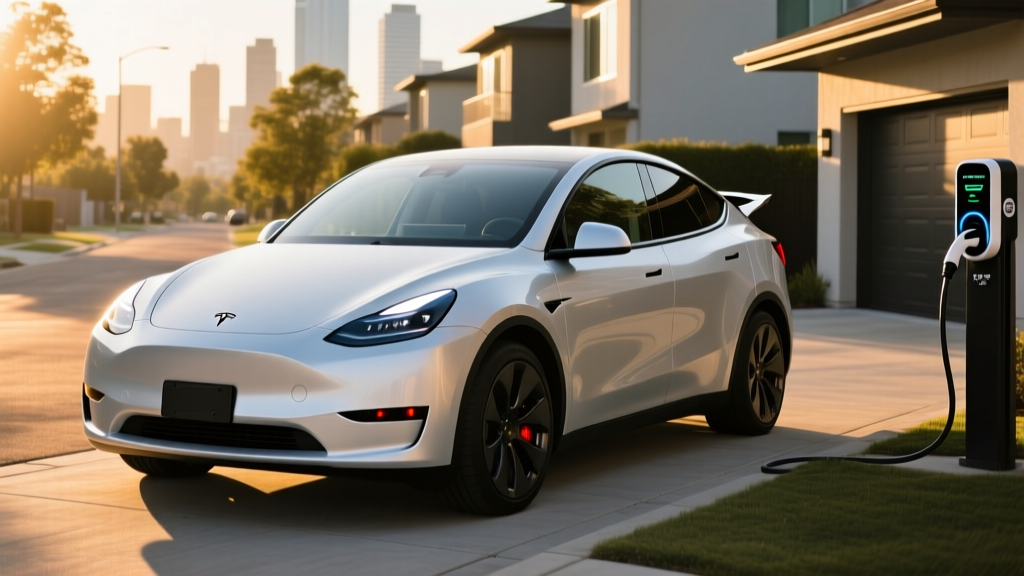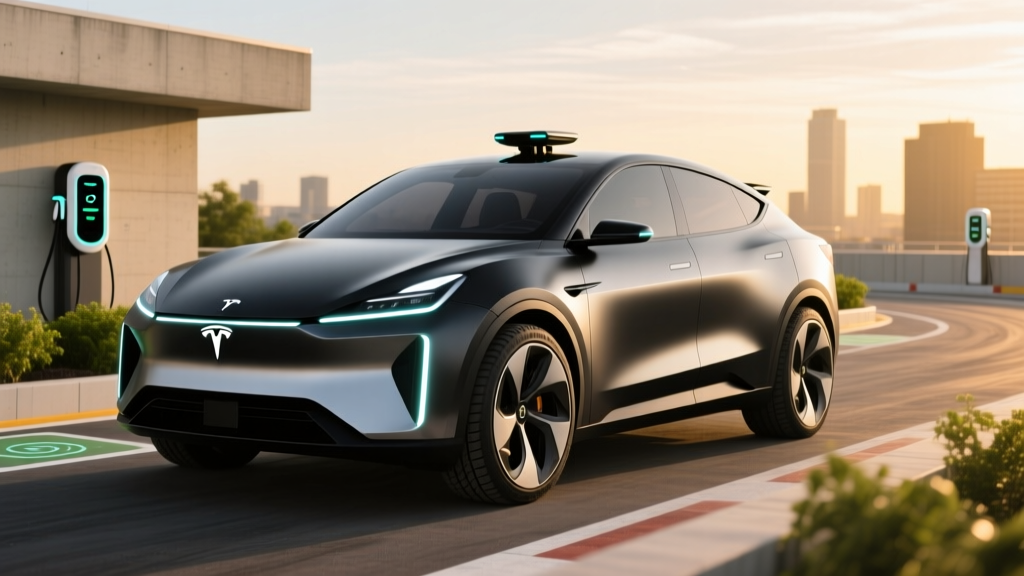
If you've been browsing EV forums or scanning Tesla investor updates, you've likely encountered the term Tesla VTG. It's become a catch-all label in the EV community for Tesla's next-generation vehicle platform — a smaller, more affordable electric car that CEO Elon Musk and Tesla executives have referenced in earnings calls and shareholder meetings. But as of early 2026, Tesla has not officially unveiled a production vehicle called the "VTG," and no finalized specs, pricing, or delivery timeline have been published on Tesla's website.
That hasn't stopped intense speculation. What we do know comes from Tesla's public statements, patent filings, supplier reports, and the company's well-documented engineering trajectory. This article separates confirmed facts from informed projections — and gives you a practical framework for deciding whether to wait or buy now.
What Is the Tesla VTG, Exactly?
"VTG" is not an official Tesla model name. It appears to be an internal codename or community shorthand for Tesla's next-generation vehicle architecture — a platform designed to be manufactured at significantly lower cost than the current Model 3 and Model Y. Tesla has discussed a "next-gen platform" that would roughly halve production costs compared to the Model 3/Y architecture, enabling a vehicle in the $25,000–$30,000 price range.
Key public statements from Tesla leadership include:
- References to a "next-generation platform" with a "revolutionary manufacturing process" during 2023–2024 investor days.
- Musk's repeated (though frequently delayed) timeline targets for a more affordable Tesla.
- Job postings and supplier contracts suggesting development of a compact vehicle with a smaller battery pack and a simplified, "unboxed" assembly method.
Whether the final product wears a "Model 2," "Model Q," or another badge entirely remains unknown. What matters for buyers is the engineering substance behind the codename.
Projected Specs: Range, Battery, and Efficiency
Based on Tesla's stated goals and industry analysis of the next-gen platform, here's what the VTG-class vehicle is expected to deliver — alongside the confirmed specs of the current Model 3 for comparison:
| Spec | Tesla VTG (Projected) | 2025 Model 3 RWD (Confirmed) |
|---|---|---|
| EPA Range | ~250–300 mi (est.) | 363 mi |
| Battery Capacity | ~50–60 kWh (est., LFP likely) | ~60 kWh usable (LFP) |
| Chemistry | LFP (projected) | LFP (RWD) / NMC (Long Range) |
| Efficiency | ~130–140 MPGe (est.) | 132 MPGe combined |
| Drivetrain | RWD (likely base), AWD possible | RWD / AWD |
| 0–60 mph | ~5.5–6.5 sec (est.) | 5.8 sec (RWD) |
| Base MSRP | $25,000–$30,000 (target) | $38,990 |
Charging Speed: What to Expect
Charging infrastructure access is the strongest argument for buying any Tesla. The VTG would ship with a native NACS (North American Charging Standard) port and full access to the Supercharger network — now the largest and most reliable DC fast-charging network in North America.
| Charging Level | Power (kW) | Speed / Time |
|---|---|---|
| Level 1 (120V household) | ~1.4 kW | ~3–4 mi/hr |
| Level 2 (240V home, 48A) | ~11.5 kW | ~35–40 mi/hr; full charge in ~5–6 hr |
| DC Fast Charge (Supercharger V4) | ~170–200 kW peak (est.) | 10–80% in ~20–25 min (projected) |
Charging-curve reality check: As with all current Teslas, peak kW is not sustained across the entire session. Expect maximum charge rates in the 10–40% state-of-charge (SoC) window, with significant tapering above 60% and a steep drop above 80%. A smaller battery (~55 kWh) means the absolute energy added per minute is lower than a Model S with a 100 kWh pack, even at comparable peak kW. Plan road-trip stops around 20–25 minutes each for a 10–80% fill.
Pricing, Trims, and Federal Tax Credit Eligibility
Tesla's stated goal is a starting price around $25,000, though inflation, supply-chain realities, and feature content could push the base MSRP closer to $28,000–$30,000 at launch. Multiple trims are likely, following Tesla's current playbook:
| Trim (Projected) | Est. MSRP | §30D Credit Eligibility | Effective Price |
|---|---|---|---|
| Base RWD | $25,000–$28,000 | Likely eligible (under MSRP cap) | $17,500–$20,500 |
| Long Range AWD | $33,000–$37,000 | Likely eligible (under $55K sedan cap) | $25,500–$29,500 |
| Performance | $38,000–$42,000 | Eligible if under MSRP cap | $30,500–$34,500 |
Federal tax credit rules (IRS §30D) — 2026 status: The full $7,500 credit requires the vehicle to meet critical-mineral and battery-component sourcing thresholds that tighten annually. Buyer income caps apply ($150K single / $300K joint for new vehicles). The vehicle MSRP must not exceed $55,000 for sedans or $80,000 for SUVs/trucks. The credit can now be transferred to the dealer at point of sale, reducing your purchase price directly. However, Tesla's battery supply chain has historically relied heavily on Chinese-sourced minerals, which could jeopardize partial or full credit eligibility depending on the year's sourcing thresholds. Always verify current eligibility on IRS.gov's clean vehicle credits page before purchasing.
Interior, Cargo, and Technology
The VTG is expected to be a compact vehicle — likely smaller than the Model 3 in overall dimensions, targeting urban-friendly proportions. Based on Tesla's design trajectory:
- Passenger space: Expect ~90–95 cu ft of passenger volume (vs. Model 3's ~101 cu ft), with adequate front legroom but tighter rear seats suited for children or shorter adults.
- Cargo: Approximately 15–18 cu ft trunk plus a modest frunk, totaling ~18–22 cu ft — enough for weekly groceries and a couple of carry-ons, but not family road-trip luggage for four.
- Infotainment: A single central touchscreen (likely 12–15 inches), Tesla's proprietary OS with OTA updates, streaming, navigation, and app ecosystem. No Apple CarPlay or Android Auto — Tesla has never offered either.
- Driver assistance: Basic Autopilot standard (lane-keeping, adaptive cruise — SAE Level 2). FSD (Supervised) available as an add-on or subscription, but still requires full driver attention at all times.
Warranty and Long-Term Ownership
Tesla's current warranty structure is expected to carry over to the VTG platform:
- Basic vehicle warranty: 4 years / 50,000 miles
- Battery and drive unit: 8 years / 100,000 miles (RWD) or 8 years / 120,000 miles (AWD), with a minimum 70% capacity retention threshold during the warranty period
- LFP advantage: If the VTG uses LFP cells (as projected), long-term degradation should be modest. LFP chemistry typically retains 90%+ capacity after 1,000 full charge cycles, translating to well over 200,000 miles before hitting the 70% warranty threshold. Tesla also recommends periodic 100% charges for LFP packs to maintain battery calibration — unlike NMC, where daily 80% limits are preferred.
Insurance consideration: Teslas carry higher-than-average insurance premiums due to repair costs and parts pricing. A $25,000 VTG might still cost $1,800–$2,400/year to insure depending on your state, age, and driving record — get quotes before committing.
VTG vs. the Competition: Should You Wait?
If you need an EV today, several compelling options already exist in the $25,000–$35,000 range (after credits):
| Vehicle | EPA Range | Peak DC Charge | Starting MSRP |
|---|---|---|---|
| Tesla VTG (projected) | ~250–300 mi | ~170–200 kW | $25,000–$28,000 |
| Chevrolet Equinox EV | 319 mi | 150 kW | ~$33,000 |
| Hyundai Ioniq 5 (Std Range) | 220 mi | ~150 kW | ~$39,000 |
| Nissan Leaf (if continued) | 212 mi | ~100 kW (CHAdeMO) | ~$28,000 |
Wait for the VTG if: You want the lowest possible entry price, prioritize Supercharger network access, and can defer your purchase by 12–24 months with no guarantees on final pricing or delivery dates.
Buy now if: You need a vehicle within 6 months, want confirmed EPA range and tax-credit eligibility, or prefer a larger vehicle (Equinox EV offers 319 mi EPA and more cargo room today). The fueleconomy.gov EV side-by-side tool lets you compare confirmed specs directly.
Frequently Asked Questions
What is the real-world range of the Tesla VTG?
Since the VTG is not yet in production, there is no EPA-certified or real-world tested range figure. If the vehicle ships with a ~55 kWh LFP battery targeting ~275 miles EPA, expect approximately 220–240 miles on the highway at 70 mph and 170–200 miles in sub-freezing conditions. We will publish tested figures once the vehicle is available.
How fast does the VTG charge at home and on the road?
Projected DC fast-charging peaks around 170–200 kW, enabling a 10–80% session in roughly 20–25 minutes. Home Level 2 charging at 11.5 kW (48A, 240V) would add approximately 35–40 miles of range per hour, fully replenishing the smaller battery overnight in about 5–6 hours.
Does the Tesla VTG qualify for the $7,500 federal EV tax credit?
Likely yes, based on projected MSRP (well under the $55,000 sedan cap). However, full credit eligibility depends on battery-component and critical-mineral sourcing requirements that tighten each year under IRS §30D. Buyer income caps also apply ($150K single / $300K joint). Verify on IRS.gov at time of purchase.
Is the VTG worth waiting for vs. buying a Model 3 or competitor today?
If your budget is strictly under $30,000 and you can wait indefinitely, the VTG could be transformative. If you need a vehicle soon, the Model 3 RWD at ~$38,990 (potentially ~$31,490 after the $7,500 credit) or the Chevrolet Equinox EV are confirmed, available options with proven range and charging infrastructure.
What are the biggest risks of waiting for the VTG?
Timeline uncertainty is the primary risk. Tesla has a documented history of delaying vehicle launches — the Roadster 2.0, Cybertruck, and Semi all shipped years past initial targets. Tax credit rules may also change, and the final production price could exceed the $25,000 target. There is no guaranteed delivery date as of early 2026.
Will the VTG have access to Tesla Superchargers?
Yes. Any Tesla-produced vehicle ships with a native NACS port and full Supercharger access. This remains Tesla's strongest competitive moat — the Supercharger network has the highest uptime and reliability scores among all US DC fast-charging networks.