The Core Question: Battery Electric or Plug-In Hybrid?
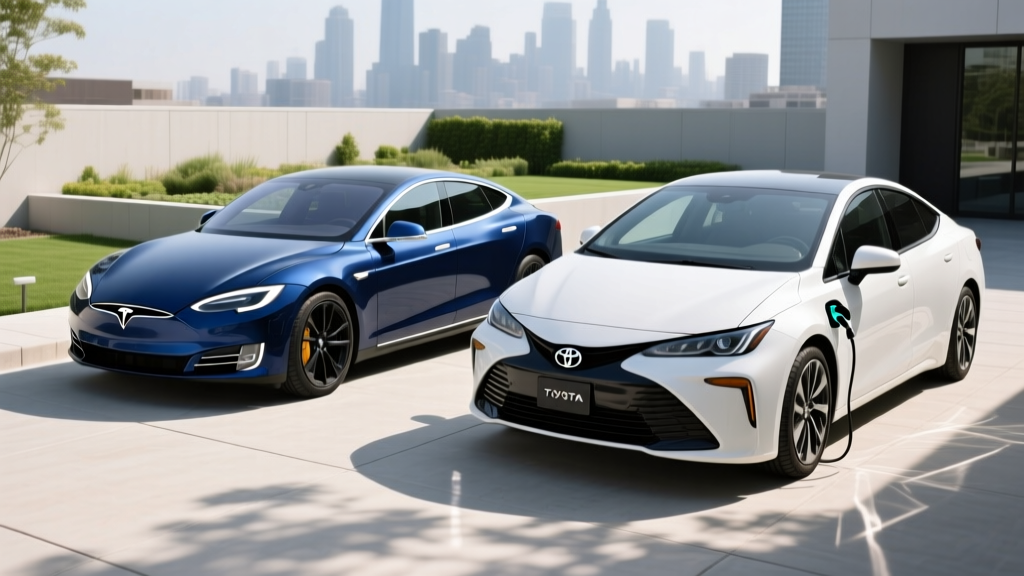
When shoppers search for a Tesla Prius comparison, they're usually weighing two fundamentally different philosophies: the all-electric simplicity of a Tesla Model 3 against the plug-in hybrid flexibility of the Toyota Prius Prime. Neither vehicle is universally better — the right answer depends on your daily mileage, charging access, road-trip habits, and budget. This guide breaks down the 2026 model-year specs, real-world efficiency, charging logistics, and total cost of ownership so you can decide which powertrain fits your life.
Side-by-Side Specs: 2026 Tesla Model 3 vs 2026 Toyota Prius Prime
| Spec | Tesla Model 3 Long Range RWD | Toyota Prius Prime XSE |
|---|---|---|
| Powertrain | BEV (Battery Electric) | PHEV (Plug-In Hybrid) |
| EPA Range (electric) | 363 miles | 44 miles (EV mode) + 410 mi total |
| Battery Capacity | ~79 kWh usable, NMC | 13.6 kWh usable, lithium-ion |
| Combined MPGe / MPG | 132 MPGe | 127 MPGe (EV) / 52 MPG (hybrid) |
| 0-60 mph | 4.9 seconds | 6.6 seconds |
| Horsepower | 346 hp | 220 hp (combined system) |
| Drivetrain | RWD (AWD available) | FWD |
| Peak DC Fast Charge | 250 kW (CCS/NACS) | Not DC fast-charge capable |
| Level 2 Charge Rate | 11.5 kW (~44 mi/hr) | 3.3 kW (~13 mi/hr) |
| Cargo Volume | 23 cu ft (trunk) + 3 cu ft (frunk) | 20.3 cu ft (rear seats up) |
| Rear Legroom | 35.2 in | 34.8 in |
| Base MSRP | $42,490 (Long Range RWD) | $33,445 (SE) |
| As-Tested Price (top trim) | ~$48,990 (LR AWD w/ FSD) | ~$39,670 (XSE Premium) |
| Federal Tax Credit (§30D) | Up to $7,500 (eligibility varies) | Up to $3,750 |
| Battery Warranty | 8 yr / 120,000 mi | 10 yr / 150,000 mi |
Sources: fueleconomy.gov (EPA data), Toyota and Tesla manufacturer spec sheets. Pricing reflects 2026 model-year MSRP before destination fees.
Real-World Range: What the EPA Sticker Doesn't Tell You
EPA vs Reality — Prius Prime: The 44-mile electric-only range is achievable in city driving below 40 mph. Highway EV-mode range drops to roughly 32-36 miles. Once the battery depletes, the hybrid system delivers a consistent 48-52 MPG regardless of conditions — a major advantage for drivers without reliable charging access.
The Prius Prime's strength is its dual personality: short commutes run purely on electricity, while longer trips seamlessly switch to hybrid mode with zero range anxiety. The Model 3's 363-mile EPA range is enough for most road trips, but you'll need to plan charging stops on routes exceeding 300 miles — especially in winter or mountainous terrain.
Charging Speed and Infrastructure
This is where the two vehicles diverge most dramatically. The Model 3 is designed for fast, long-distance travel. The Prius Prime is designed for overnight home charging.
| Charging Level | Tesla Model 3 LR | Toyota Prius Prime |
|---|---|---|
| Level 1 (120V household) | ~3-5 mi/hr (1-1.5 kW) | ~4 mi/hr (1.4 kW) |
| Level 2 (240V home/public) | ~44 mi/hr (11.5 kW) | ~13 mi/hr (3.3 kW) |
| DC Fast Charging | 250 kW peak; 10-80% in ~25 min | Not available |
| Full Charge Time (Level 2) | ~7-8 hours | ~4 hours |
| Connector | NACS (native Tesla); CCS via adapter | J1772 (Level 2 only) |
Key insight: The Prius Prime's 13.6 kWh battery charges fully overnight on any standard 240V Level 2 outlet — no expensive electrical upgrades required. A basic 16A Level 2 charger (~$300-500 installed) is sufficient. The Model 3 benefits enormously from a 48A Level 2 home charger (requiring a 60A circuit), which costs $800-2,000+ installed depending on your electrical panel's capacity. Homes with older 100A panels may need a $1,500-3,000 panel upgrade.
For road trips, the Model 3 accesses Tesla's Supercharger network — the most reliable DC fast-charging infrastructure in the US — plus third-party CCS stations via adapter. The Prius Prime has no DC fast-charging capability, meaning road trips run entirely on its hybrid gasoline engine at 50+ MPG.
Pricing, Tax Credits, and Total Cost of Ownership
| Cost Factor | Tesla Model 3 LR RWD | Toyota Prius Prime XSE |
|---|---|---|
| MSRP (before credit) | $42,490 | $39,170 |
| Est. Federal Tax Credit | Up to $7,500* | Up to $3,750* |
| Effective Purchase Price | ~$34,990 | ~$35,420 |
| 5-Yr Fuel/Energy Cost | ~$3,400 (electricity) | ~$4,200 (electric + gas) |
| 5-Yr Insurance (avg) | ~$9,500 | ~$6,800 |
| 5-Yr Maintenance | ~$1,800 | ~$3,200 |
| 5-Yr Depreciation (est.) | ~$16,000 | ~$12,500 |
| 5-Yr Total Cost | ~$65,690 | ~$62,120 |
*Tax credit amounts depend on IRS §30D eligibility. See irs.gov for current rules including income caps ($150K single / $300K joint), MSRP caps ($55K sedans), and critical-mineral/battery-sourcing requirements. Credit can be transferred to the dealer at point of sale as of 2024+. Consult a tax professional for your specific situation.
The Prius Prime's lower insurance premiums and slower depreciation narrow the gap considerably. Tesla insurance tends to run 30-40% higher than comparable Toyotas due to repair-cost data. However, the Model 3's lower energy and maintenance costs partially offset this over time.
Driving Experience, Tech, and Daily Livability
Tesla Model 3: The minimalist interior centers on a 15.4-inch touchscreen controlling virtually all vehicle functions — no physical buttons for climate, mirrors, or glovebox. The refreshed "Highland" generation (2024+) added ventilated seats, ambient lighting, rear passenger screen, and improved ride quality. Autopilot (SAE Level 2 driver assistance) is standard; Full Self-Driving (Supervised) is a $8,000 add-on that still requires active driver engagement. Over-the-air updates continuously add features. The glass roof provides an airy cabin but can cause heat buildup in summer.
Toyota Prius Prime: The 2023+ redesign transformed the Prius from an efficiency appliance into a genuinely attractive car. The XSE trim includes a 12.3-inch touchscreen with wireless Apple CarPlay and Android Auto, physical climate controls, heated/ventilated SofTex seats, and Toyota Safety Sense 3.0 (adaptive cruise, lane-keeping, pre-collision — all SAE Level 2). The driving experience is composed and quiet, with 220 combined horsepower providing confident highway merging — a massive improvement over previous generations.
Model 3 Advantages
- 363-mile range eliminates most charging stops
- 250 kW DC fast charging for road trips
- Supercharger network access
- OTA updates and continuous feature additions
- Frunk + trunk for 26 cu ft total cargo
- Lower per-mile energy cost
Model 3 Drawbacks
- Higher insurance premiums (~$540/yr more)
- Touchscreen-only controls frustrate some drivers
- Requires 60A circuit for optimal home charging
- FSD is expensive and still Level 2 (not autonomous)
- No physical buttons for basic functions
- Higher upfront cost before credits
Prius Prime Advantages
- No range anxiety — gas backup always available
- Charges on any 120V or basic 240V outlet
- Lower insurance and strong resale value
- Physical buttons and familiar Toyota interface
- 10-year/150,000-mile hybrid battery warranty
- 52 MPG hybrid mode on long trips
Prius Prime Drawbacks
- Only 44 miles of electric range
- No DC fast charging capability
- 3.3 kW onboard charger is slow for Level 2
- Less cargo space than Model 3
- No OTA feature updates
- FWD only — no AWD option
Who Should Buy Which?
Choose the Tesla Model 3 if:
- You have reliable home Level 2 charging (or can install it)
- Your daily driving is under 80 miles (well within battery range)
- You take road trips 3+ times per year and want fast DC charging
- You value performance (4.9s 0-60) and cutting-edge tech
- You want the lowest per-mile energy cost
- You qualify for the full $7,500 federal tax credit
Choose the Toyota Prius Prime if:
- You lack reliable home or workplace charging access
- Your commute is 20-40 miles (perfect for EV mode) but you also take long trips
- You want zero range anxiety without planning charging stops
- You prefer physical controls and Toyota's proven reliability record
- Insurance cost is a major budget factor
- Your electrical panel can't support a 60A circuit upgrade
Frequently Asked Questions
Does the Tesla Model 3 qualify for the $7,500 federal tax credit?
The Model 3 may qualify for up to $7,500 under IRS §30D, but eligibility depends on three factors: (1) your adjusted gross income must be below $150,000 (single) or $300,000 (joint), (2) the vehicle MSRP must be under $55,000 for sedans, and (3) the battery must meet critical-mineral and component-sourcing requirements that change annually. As of 2026, certain Model 3 trims qualify for the full credit, while others receive $3,750 or none depending on battery sourcing. Check the latest eligibility list on fueleconomy.gov and confirm with your tax professional before purchasing.
How much does it cost to charge a Model 3 vs fuel a Prius Prime?
At the US average electricity rate of ~$0.16/kWh, fully charging the Model 3's 79 kWh battery costs roughly $12.64, yielding a cost of about $0.035-0.045 per mile. The Prius Prime costs about $2.18 to fully charge its 13.6 kWh battery for 44 EV miles (~$0.05/mi electric), but once the battery depletes, it runs on gasoline at ~52 MPG. At $3.40/gallon, hybrid-mode driving costs roughly $0.065 per mile. If you can charge the Prius Prime nightly and drive under 44 miles daily, your fuel cost approaches zero.
Is the Prius Prime a good EV for someone without home charging?
Yes — this is the Prius Prime's strongest use case. Even without home charging, you get 52 MPG from the hybrid system, which is best-in-class. If you occasionally access a Level 2 charger at work or a public station, you can top up the 13.6 kWh battery in about 4 hours and enjoy 44 miles of electric driving. A BEV like the Model 3 is far less practical without reliable home charging.
Which has better long-term reliability and battery longevity?
Toyota backs the Prius Prime's hybrid battery with a 10-year/150,000-mile warranty and has two decades of proven hybrid reliability data. Tesla's battery warranty is 8 years/120,000 miles with a guaranteed 70% capacity retention threshold. Real-world data shows Tesla NMC batteries typically retain 85-90% capacity at 100,000 miles. Both are strong, but Toyota's longer warranty and hybrid track record give it an edge for buyers planning 10+ years of ownership.
Can the Model 3 handle cold-weather road trips?
Yes, but plan for reduced range. In sub-freezing temperatures, expect 20-30% range loss (down to ~250-280 real-world miles from the 363 EPA figure). Tesla's built-in trip planner automatically accounts for temperature and elevation, routing you through Superchargers. Preconditioning the battery before fast charging (initiated automatically when you navigate to a Supercharger) is essential for achieving peak 250 kW charge rates in cold weather.