Tesla vs. Genesis: Why the Warranty Defines Your EV Ownership Experience
When you evaluate the auto company Tesla on Genesis warranty terms, you're not just comparing two brands — you're weighing two fundamentally different philosophies of electric-vehicle ownership. Tesla bets on vertical integration, minimal dealer networks, and a battery-centric warranty structure. Genesis leans into luxury dealership service, longer bumper-to-bumper coverage, and complimentary maintenance. For the 2026 model year, both automakers sell compelling EVs, but the fine print in their warranty booklets tells you exactly what the next eight years will cost you.
This review uses the 2026 Tesla Model Y Long Range AWD and the 2026 Genesis Electrified G80 as the benchmark vehicles. We'll break down EPA range, charging speeds, battery chemistry, real-world efficiency, federal tax credit eligibility, and — most critically — the warranty structures that protect your investment long after the new-car shine fades.
| Specification | Tesla Model Y LR AWD | Genesis Electrified G80 |
|---|---|---|
| EPA Range | 320 miles | 282 miles |
| Battery Capacity (usable) | ~75 kWh (NMC) | 87.2 kWh (NMC) |
| Drivetrain | Dual-Motor AWD | Dual-Motor AWD |
| Horsepower | 384 hp | 365 hp |
| 0–60 mph | 4.8 seconds | 4.9 seconds |
| Max DC Fast Charge | 250 kW (CCS/NACS) | 350 kW (CCS) |
| 10–80% DC Charge Time | ~25 minutes | ~22 minutes |
| Level 2 Home Charge Rate | 11.5 kW (~44 mi/hr) | 10.9 kW (~35 mi/hr) |
| EPA Efficiency | 122 MPGe (28 kWh/100mi) | 95 MPGe (35 kWh/100mi) |
| Cargo Volume (rear seats up) | 30.2 cu ft (+ 4.1 cu ft frunk) | 13.1 cu ft (trunk only) |
| Rear Legroom | 41.6 in | 38.4 in |
| Base MSRP | $47,990 | $79,950 |
| Federal Tax Credit (§30D) | Up to $7,500 (eligibility varies) | Up to $7,500 (eligibility varies) |
Real-World Range: What the EPA Sticker Doesn't Tell You
The EPA posts a single number on the window sticker, but anyone who's driven an EV through a Midwestern winter or up a mountain pass knows that number is a best-case scenario. Here's what to actually expect from each vehicle.
2026 Tesla Model Y Long Range AWD
EPA Estimated Range: 320 miles
Real-world expectation: In mixed city/highway driving at 65–70°F, expect 280–300 miles. On sustained 75-mph highway runs, range drops to approximately 255–270 miles due to aerodynamic drag. In freezing temperatures (below 32°F), cabin heating and battery conditioning can reduce range by 20–30%, yielding roughly 220–250 miles per charge. Tesla's heat pump is among the best in the industry at mitigating cold-weather loss, but physics is physics.
2026 Genesis Electrified G80
EPA Estimated Range: 282 miles
Real-world expectation: Mixed driving yields approximately 245–265 miles. Highway cruising at 75 mph nets around 220–240 miles — the G80's heavier curb weight (~5,000 lbs) and luxury-sedan aerodynamics work against it. Cold-weather range can drop to 190–215 miles. Genesis includes a battery preconditioning feature tied to the navigation system, which helps preserve fast-charging speed in cold weather but does not recover lost range.
Source: fueleconomy.gov (U.S. EPA).
Charging Speed: Peak kW vs. the Sustained Reality
A common mistake EV shoppers make is focusing only on peak DC fast-charge rate. The number that actually matters is the sustained charge rate across the 10–80% window, because charging curves taper significantly as the battery fills. Here's the full picture.
| Charging Level | Tesla Model Y LR AWD | Genesis Electrified G80 |
|---|---|---|
| Level 1 (120V / 12A) | ~1.4 kW — 3–4 mi/hr | ~1.4 kW — 3–4 mi/hr |
| Level 2 (240V home) | 11.5 kW — ~44 mi/hr | 10.9 kW — ~35 mi/hr |
| DC Fast Charge (peak) | 250 kW | 350 kW |
| DC 10–80% time | ~25 minutes | ~22 minutes |
| DC 10–90% time | ~40 minutes | ~38 minutes |
| Connector (2026) | NACS (native); CCS via adapter | CCS1 |
What this means in practice: Genesis technically supports a higher peak charge rate (350 kW vs. 250 kW), but both vehicles sustain their peak for only the first 15–20% of the charge session before tapering. The Model Y's 250-kW peak on a V3 or V4 Supercharger sustains around 150–170 kW on average through the 10–80% window. The Electrified G80 on a 350-kW Electrify America or Ionity station sustains roughly 180–210 kW. The gap narrows in real-world road-trip charging to just 3–5 minutes — not a dealbreaker either way.
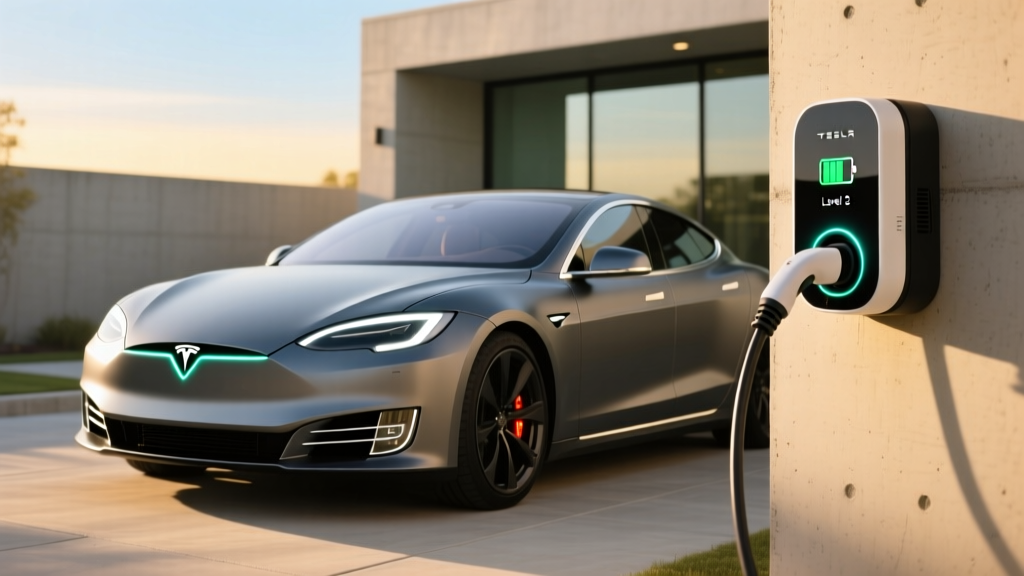
Home charging note: Both vehicles benefit from a 48-amp Level 2 home charger on a 60-amp circuit. The Model Y charges slightly faster at home due to its 11.5-kW onboard charger vs. the G80's 10.9-kW unit. A full overnight charge (10 hours) adds roughly 440 miles of range to the Tesla and 350 miles to the Genesis — more than enough for either vehicle.
Battery Chemistry, Degradation, and the Warranty Showdown
This is where the keyword question — evaluating Tesla on Genesis warranty terms — gets genuinely interesting. Both companies use nickel-manganese-cobalt (NMC) lithium-ion cells in these specific models, though Tesla has shifted many of its Standard Range vehicles to lithium iron phosphate (LFP). The Long Range Model Y retains NMC for its higher energy density.
| Warranty Category | Tesla Model Y | Genesis Electrified G80 |
|---|---|---|
| Battery & Drive Unit | 8 years / 120,000 miles | 10 years / 100,000 miles |
| Minimum Capacity Retention | 70% over warranty period | 70% over warranty period |
| Bumper-to-Bumper (Basic) | 4 years / 50,000 miles | 5 years / 60,000 miles |
| Roadside Assistance | 4 years / 50,000 miles | 5 years / unlimited miles |
| Corrosion Perforation | 12 years / unlimited miles | 7 years / unlimited miles |
| Complimentary Maintenance | None | 3 years / 36,000 miles |
The core trade-off: Tesla gives you 20,000 more miles on the battery and drive unit warranty (120K vs. 100K) but two fewer years of coverage. Genesis gives you two extra years but 20,000 fewer miles. If you drive more than 12,500 miles per year, the Tesla warranty effectively covers you longer. If you drive fewer miles but plan to keep the car 8–10 years, Genesis has the edge on calendar coverage.
Battery degradation data: Independent fleet data and owner surveys suggest Tesla's NMC packs degrade approximately 10–12% over the first 100,000 miles, with the curve flattening significantly afterward. Genesis, as a newer EV entrant with the Electrified G80 (introduced for 2023), has less long-term public data, but its E-GMP-derived platform shares architecture with Hyundai/Kia vehicles that show similar 10–14% degradation at 100K miles. Both 70% retention thresholds are conservative — most packs retain well above 80% at the warranty limit.
Pricing, Trim Levels, and Federal Tax Credit Eligibility
These two vehicles occupy very different price brackets, and that affects which buyers qualify for the federal §30D EV tax credit.
| Detail | Tesla Model Y LR AWD | Genesis Electrified G80 |
|---|---|---|
| Base MSRP | $47,990 | $79,950 |
| As-Tested (typical options) | $51,490 (FSD, paint, wheels) | $84,200 (Prestige pkg, paint) |
| MSRP Cap (§30D — SUVs/vans) | $80,000 ✓ | $80,000 (sedan cap: $55,000) ✗ |
| Buyer Income Cap (AGI) | $150K single / $300K joint | $150K single / $300K joint |
| Battery Sourcing Requirement | Partial eligibility (check IRS list) | Partial eligibility (check IRS list) |
| Max Potential Credit | $3,750–$7,500 | $0 (exceeds sedan MSRP cap) |
| Effective Price After Credit | ~$40,490–$44,240 | $79,950 |
Critical tax credit note: The Genesis Electrified G80 is classified as a sedan under IRS §30D rules, which imposes a $55,000 MSRP cap. At $79,950, the G80 does not qualify for the federal EV tax credit. The Tesla Model Y, classified as an SUV, falls under the $80,000 MSRP cap and may qualify for up to $7,500 — but the actual credit depends on battery-component and critical-mineral sourcing requirements that change annually. Always verify current eligibility on IRS.gov §30D and consult a tax professional before purchasing. As of 2026, the point-of-sale transfer option allows dealers to apply the credit directly at purchase if you qualify.
Performance, Interior, and Daily-Use Practicality
On paper, the performance numbers are remarkably close: 4.8 seconds to 60 mph for the Model Y vs. 4.9 seconds for the Electrified G80, both with dual-motor AWD. The difference is in how that performance is delivered. Tesla's single-speed reduction gear and instant torque vectoring feel sharper in stoplight-to-stoplight driving, while the Genesis prioritizes a smoother, more isolated luxury experience with adaptive dampers and extensive sound deadening.
Interior and cargo: This is where the vehicles diverge sharply. The Model Y offers 30.2 cubic feet of rear cargo space plus a 4.1-cubic-foot frunk — enough for a week of family luggage. The Electrified G80, constrained by its sedan body style, provides only 13.1 cubic feet of trunk space with no frunk (the space is occupied by power electronics). Rear legroom favors the Tesla at 41.6 inches vs. 38.4 inches in the Genesis.
Infotainment and tech: Tesla runs its proprietary 15.4-inch touchscreen interface with no Apple CarPlay or Android Auto — everything routes through Tesla's native software, including navigation, media, and vehicle controls. Genesis offers a 12.3-inch digital cluster and a 14.5-inch infotainment display with wireless CarPlay and Android Auto, plus a head-up display and a digital key. Genesis also includes its Genesis Active Safety Control suite (adaptive cruise, lane-keeping, blind-spot intervention) as standard. Tesla includes basic Autopilot (SAE Level 2 driver-assist) standard, with Full Self-Driving (Supervised) available as a $8,000 add-on — also Level 2, requiring constant driver engagement.
ADAS Level Reminder: Both Tesla Autopilot/FSD (Supervised) and Genesis Active Safety Control are SAE Level 2 driver-assistance systems. You must keep your hands on the wheel and eyes on the road at all times. Neither system is self-driving. Only Level 4 services like Waymo operate without a human driver in geofenced areas.
Pros, Cons, and Who Should Buy Each
Tesla Model Y Long Range AWD — Pros
- 320-mile EPA range; excellent real-world efficiency (122 MPGe)
- Access to Tesla Supercharger network (18,000+ U.S. stalls)
- Best-in-class cargo space for an EV crossover
- Frequent OTA updates add features post-purchase
- Potential $3,750–$7,500 federal tax credit
- 120,000-mile battery warranty (highest mileage in segment)
Tesla Model Y Long Range AWD — Cons
- No Apple CarPlay / Android Auto
- Minimalist interior polarizes luxury buyers
- Service center wait times can stretch weeks in some markets
- Panel-gap and paint quality inconsistency reported
- No complimentary maintenance
Genesis Electrified G80 — Pros
- Genuine luxury interior — Nappa leather, massaging seats, head-up display
- 5-year / 60,000-mile bumper-to-bumper + 3 years free maintenance
- Wireless CarPlay/Android Auto, excellent NVH isolation
- 350-kW peak DC charging capability
- Dealership service network with loaner vehicles
- 10-year / 100,000-mile battery warranty (calendar edge)
Genesis Electrified G80 — Cons
- 282-mile EPA range — below average for the price
- No federal tax credit (exceeds $55K sedan cap)
- Limited trunk space (13.1 cu ft); no frunk
- CCS-only charging; no native NACS access (adapter required)
- Higher insurance premiums due to luxury classification
- Smaller public charging footprint vs. Tesla ecosystem
Choose the Tesla Model Y if:
- You prioritize range, cargo space, and charging-network access
- You drive more than 12,500 miles/year (Tesla's 120K-mile battery warranty matters)
- You want to maximize federal tax credit savings
- You prefer crossover utility over sedan luxury
Choose the Genesis Electrified G80 if:
- Luxury interior quality, ride comfort, and dealership service are non-negotiable
- You drive fewer than 10,000 miles/year and want longer calendar-year warranty coverage
- You value complimentary maintenance and a traditional ownership experience
- The $80K+ price point and no federal credit don't deter you
Frequently Asked Questions
What is the real-world range of the Tesla Model Y and Genesis Electrified G80?
The Model Y's 320-mile EPA estimate translates to roughly 280–300 miles in mixed driving, 255–270 miles on the highway, and 220–250 miles in freezing weather. The Electrified G80's 282-mile EPA figure yields about 245–265 miles mixed, 220–240 highway, and 190–215 in cold conditions.
How fast does each EV charge at home and on DC fast chargers?
At home on a 240V Level 2 charger, the Model Y adds about 44 miles of range per hour (11.5 kW) and the G80 adds about 35 miles per hour (10.9 kW). On DC fast chargers, the Model Y peaks at 250 kW (10–80% in ~25 min) and the G80 peaks at 350 kW (10–80% in ~22 min).
Does the Genesis Electrified G80 qualify for the federal EV tax credit?
No. Under IRS §30D rules, sedans must have an MSRP at or below $55,000 to qualify. The G80 starts at $79,950, which disqualifies it. The Tesla Model Y, classified as an SUV (cap: $80,000), may qualify for up to $7,500 depending on your income, battery sourcing, and current-year rules. Verify at IRS.gov.
Which has the better battery warranty — Tesla or Genesis?
It depends on your driving habits. Tesla covers the battery and drive unit for 8 years / 120,000 miles. Genesis covers it for 10 years / 100,000 miles. If you drive 15,000 miles per year, Tesla's warranty covers you for 8 years of driving. Genesis's covers you for 6.7 years at that pace. For low-mileage drivers (under 10K/year), Genesis's 10-year calendar coverage is more valuable.
Is the Tesla Model Y worth buying over the Genesis Electrified G80?
For most EV buyers, yes — the Model Y delivers more range, far more cargo space, Supercharger network access, and potential tax credit savings at nearly $32,000 less than the G80. The Genesis wins only if luxury interior quality, dealership service, and a traditional ownership experience are your top priorities and budget is flexible.
What are the biggest pros and cons of each?
Model Y pros: range, efficiency, cargo, Supercharger access, tax credit. Cons: minimalist interior, no CarPlay, service delays. G80 pros: luxury cabin, dealership network, longer calendar warranty, free maintenance. Cons: limited range, no tax credit, small trunk, higher price.