Tesla vs Genesis: Two Very Different Paths to Luxury EV Ownership
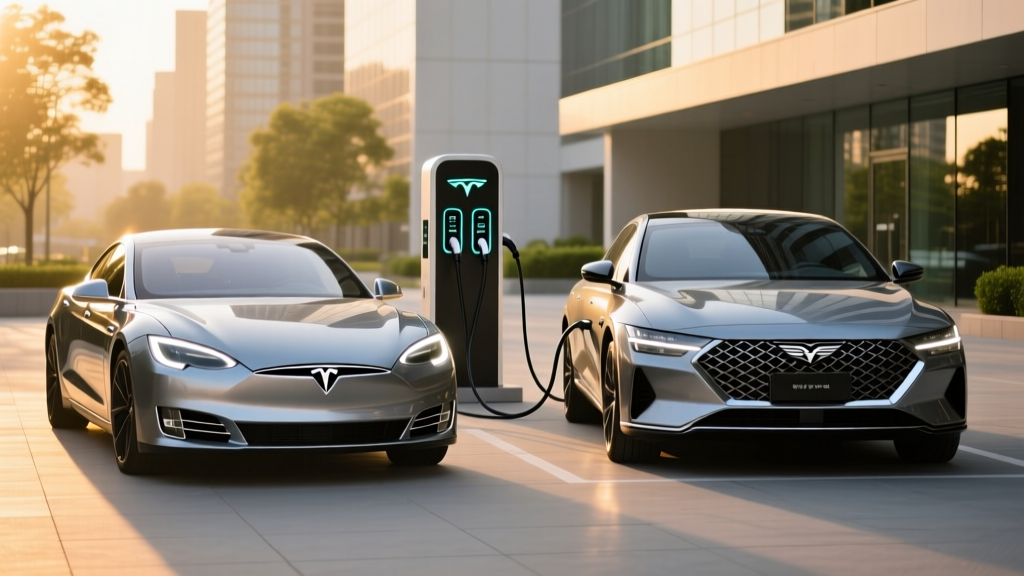
Shoppers searching for a premium electric vehicle inevitably land on a crossroads: Tesla or Genesis? These two brands represent fundamentally different philosophies in the luxury EV space. Tesla brings vertical integration, the Supercharger network, and software-first design. Genesis delivers traditional luxury craftsmanship, dealer-backed service, and Hyundai Motor Group's E-GMP platform engineering.
This isn't a single-model review — it's a brand-versus-brand teardown. We're comparing the current 2026 lineups head-to-head across range, charging, pricing, tax-credit eligibility, and real-world ownership to help you decide which badge belongs in your garage.
Current Lineups: Which Models Are We Comparing?
For 2026, here are the key competitors in each segment:
| Segment | Tesla | Genesis |
|---|---|---|
| Luxury Sedan | Model S / Model 3 | Electrified G80 / Electrified G90 (announced) |
| Luxury SUV | Model X / Model Y | Electrified GV70 / GV60 |
| Performance Halo | Model S Plaid | GV60 Performance |
| Compact Crossover | Model Y | GV60 |
Genesis's EV lineup is smaller but deliberately curated. The Electrified G80 sedan and Electrified GV70 SUV are conversions of existing ICE platforms, while the GV60 is built on the dedicated E-GMP architecture shared with the Hyundai Ioniq 5 and Kia EV6. Tesla's lineup is broader in price range, spanning from the Model 3 (starting around $38,990) to the Model S Plaid ($89,990+).
Range & Efficiency: EPA Numbers vs. Real-World Results
| Model | EPA Range | Real-World Highway (est.) | Battery (kWh usable) | Chemistry | MPGe (combined) |
|---|---|---|---|---|---|
| Tesla Model 3 Long Range AWD | 341 mi | ~290-305 mi | 79 kWh | NMC | 134 MPGe |
| Tesla Model Y Long Range AWD | 320 mi | ~270-285 mi | 75 kWh | NMC | 122 MPGe |
| Tesla Model S Long Range | 402 mi | ~340-360 mi | 100 kWh | NMC | 120 MPGe |
| Genesis GV60 Advanced AWD | 248 mi | ~210-225 mi | 74 kWh | NMC | 95 MPGe |
| Genesis Electrified GV70 | 236 mi | ~200-215 mi | 77.4 kWh | NMC | 89 MPGe |
| Genesis Electrified G80 | 282 mi | ~240-255 mi | 87.2 kWh | NMC | 92 MPGe |
Verdict on range: Tesla wins decisively here. The Model S Long Range at 402 miles EPA is in a class of its own, and even the Model 3 Long Range outpaces every Genesis EV by 50+ miles. The GV60's 248-mile EPA figure is adequate for commuting but falls short for road-trip confidence. Genesis's efficiency (kWh/100mi) also trails Tesla's industry-leading thermal management and motor design.
Source: fueleconomy.gov — EPA-estimated range and MPGe figures for current model-year vehicles.
Charging Speed: DC Fast Charging & Home Level 2
| Model | Max DC Fast Charge | 10-80% Time | Level 2 Home Rate | Connector |
|---|---|---|---|---|
| Tesla Model 3/Y (2026) | 250 kW (V3 Supercharger) | ~25-28 min | 11.5 kW (~44 mi/hr) | NACS (native) |
| Tesla Model S/X (2026) | 250 kW | ~30-35 min | 11.5 kW (~34 mi/hr) | NACS (native) |
| Genesis GV60 | 240 kW (peak) | ~18 min (800V) | 10.9 kW (~30 mi/hr) | CCS1 |
| Genesis Electrified GV70 | 175 kW (peak) | ~25-28 min | 10.9 kW (~28 mi/hr) | CCS1 |
| Genesis Electrified G80 | 175 kW (peak) | ~28-32 min | 10.9 kW (~32 mi/hr) | CCS1 |
Key insight: The Genesis GV60's 800-volt architecture enables a remarkable 10-80% charge in approximately 18 minutes at a capable 350 kW DC fast charger — faster than any current Tesla on a V3 Supercharger. However, this requires finding a 350 kW CCS station (Electrify America or similar), and the charge curve tapers sharply above 80%. Tesla's advantage isn't peak speed — it's network ubiquity. With over 50,000 Superchargers globally and native NACS integration, Tesla owners pull up, plug in, and charge without app fumbling or adapter hassles.
For home charging, both brands deliver comparable Level 2 speeds around 11 kW, adding roughly 30-44 miles of range per hour of charging. A proper 240V/48A home circuit will fully replenish either vehicle overnight.
Pricing, Trims & Federal Tax Credit Eligibility
| Model | Base MSRP | As-Tested (typical) | §30D Credit Eligible? | Effective Price (est.) |
|---|---|---|---|---|
| Tesla Model 3 Long Range AWD | $42,490 | $47,990 | Partial — $3,750-$7,500* | $34,990-$38,740 |
| Tesla Model Y Long Range AWD | $44,990 | $49,990 | Partial — $3,750-$7,500* | $37,490-$41,240 |
| Tesla Model S Long Range | $79,990 | $89,990 | No (exceeds MSRP cap) | $79,990+ |
| Genesis GV60 Advanced AWD | $53,350 | $60,800 | Partial — $3,750* | $49,600-$57,050 |
| Genesis Electrified GV70 | $66,950 | $73,000 | No (exceeds SUV MSRP cap) | $66,950+ |
| Genesis Electrified G80 | $79,850 | $85,000 | No (exceeds sedan MSRP cap) | $79,850+ |
*Federal EV tax credit eligibility under IRS §30D depends on multiple factors: buyer AGI income caps ($150K single / $300K joint), vehicle MSRP caps ($55K sedans / $80K SUVs/trucks), battery component and critical mineral sourcing requirements, and point-of-sale transfer availability. Credit amounts vary — some vehicles qualify for $3,750 (meeting one sourcing requirement) or the full $7,500 (meeting both). Always verify current eligibility at irs.gov and consult a tax professional before purchase.
The tax-credit picture heavily favors Tesla's volume models. The Model 3 and Model Y fall under MSRP caps and, depending on current battery-sourcing compliance, may qualify for partial or full credits. Most Genesis EVs price above the MSRP caps, eliminating federal credit eligibility entirely. Some buyers may access state-level incentives, but these vary by jurisdiction — check your state's energy office for current programs.
Performance & Driving Dynamics
| Model | 0-60 mph | Horsepower | Drivetrain | Top Speed |
|---|---|---|---|---|
| Tesla Model 3 Long Range AWD | 4.2 sec | 346 hp | Dual Motor AWD | 125 mph |
| Tesla Model S Plaid | 1.99 sec | 1,020 hp | Tri-Motor AWD | 200 mph |
| Tesla Model Y Long Range AWD | 4.8 sec | 384 hp | Dual Motor AWD | 135 mph |
| Genesis GV60 Performance | 3.9 sec | 429 hp (490 boost) | Dual Motor AWD | 146 mph |
| Genesis Electrified GV70 | 4.2 sec | 429 hp (490 boost) | Dual Motor AWD | 146 mph |
| Genesis Electrified G80 | 4.9 sec | 365 hp | Dual Motor AWD | 140 mph |
Tesla's Model S Plaid remains untouchable in straight-line performance — 1,020 hp and a sub-2-second 0-60 time is hypercar territory in a four-door sedan. But for everyday driving, Genesis's Boost mode (available on GV60 and Electrified GV70) delivers a satisfying 490-hp burst for 10-second intervals, and the GV60 Performance's 3.9-second sprint matches or beats Tesla's non-Plaid offerings.
Where Genesis excels is ride refinement. The Electrified G80 and GV70 feature adaptive dampers, acoustic laminated glass, and active noise cancellation that deliver a genuinely quiet, composed ride quality Tesla has never prioritized. If straight-line thrills matter, Tesla wins. If daily comfort and isolation matter, Genesis has the edge.
Interior, Cargo & Technology
| Model | Cargo (rear seats up) | Cargo (rear seats folded) | Front Legroom | Infotainment |
|---|---|---|---|---|
| Tesla Model 3 | 23 cu ft (trunk+frunk) | ~65 cu ft | 42.7 in | 15.4" touchscreen, Tesla OS |
| Tesla Model Y | 34 cu ft (rear up) | 76 cu ft | 41.8 in | 15.4" touchscreen, Tesla OS |
| Tesla Model S | 28 cu ft (trunk+frunk) | ~71 cu ft | 42.4 in | 17" touchscreen + rear display |
| Genesis GV60 | 24 cu ft (rear up) | ~55 cu ft | 41.2 in | 12.3" dual displays, Crystal Sphere shifter |
| Genesis Electrified GV70 | 29 cu ft (rear up) | ~57 cu ft | 41.3 in | 12.3" + 14.5" widescreen |
| Genesis Electrified G80 | 13.1 cu ft (trunk) | N/A (sedan) | 41.1 in | 12.3" cluster + 14.5" widescreen |
Tesla's interior philosophy is minimalist to a fault: one large screen controls everything, with no physical buttons for climate, volume, or glovebox. Some buyers love the clean aesthetic; others find it distracting while driving. Over-the-air updates continuously add features, but Tesla removed ultrasonic sensors and relies entirely on Tesla Vision (camera-based) for parking aids — a polarizing decision.
Genesis takes the opposite approach: the Crystal Sphere rotary shifter in the GV60, quilted Nappa leather, ambient lighting with 64 colors, and physical climate controls create a cabin that feels genuinely luxurious. The Electrified G80's rear-seat experience — with available reclining seats, massage, and a dedicated entertainment screen — rivals the Mercedes S-Class. This is where Genesis justifies its pricing for traditional luxury buyers.
Driver Assistance: Autopilot vs. Genesis Active Safety
Tesla's Autopilot is standard and competent for highway lane-centering and adaptive cruise. Full Self-Driving (Supervised) costs an additional $8,000 (or $99/month subscription) and adds automatic lane changes, traffic-light recognition, and city-street navigation. However, FSD remains a Level 2 system requiring constant supervision, and NHTSA has scrutinized Tesla's Autopilot-related incidents extensively.
Genesis includes Highway Driving Assist II (HDA II) standard on all EV models — offering adaptive cruise with lane-centering, navigation-based speed adjustment, and lane-change assist. It's less ambitious than Tesla's FSD but reliable and well-calibrated for highway use. Genesis also bundles forward collision avoidance, blind-spot cameras, and rear cross-traffic alert as standard equipment — features Tesla charges extra for or omits.
Warranty & Ownership Costs
| Coverage | Tesla | Genesis |
|---|---|---|
| Basic Vehicle Warranty | 4 years / 50,000 miles | 5 years / 60,000 miles |
| Battery & Drive Unit | 8 years / 120,000 mi (Model 3/Y) 8 years / 150,000 mi (Model S/X) | 10 years / 100,000 miles |
| Battery Capacity Threshold | 70% retention | 70% retention |
| Complimentary Maintenance | None | 3 years / 36,000 miles (valet included) |
| Roadside Assistance | 4 years / 50,000 miles | 5 years / unlimited miles |
Genesis's warranty package is substantially stronger on paper — the 10-year/100,000-mile battery warranty exceeds Tesla's coverage for Model 3 and Model Y buyers, and the included valet maintenance service eliminates dealer-visit friction. Tesla's 120,000-150,000 mile battery warranty (depending on model) offers longer mileage coverage but for fewer years.
Insurance costs tend to run higher for Tesla vehicles due to repair complexity, aluminum body construction, and elevated claim frequencies. Genesis benefits from Hyundai Motor Group's established parts and repair network, often resulting in lower insurance premiums. Always get quotes for your specific profile before purchasing.
For safety ratings, check the latest results at NHTSA and IIHS — both organizations update crash-test results annually, and scores vary by model year.
Pros, Cons & Who Should Buy What
Tesla — Strengths
- Class-leading range (Model S: 402 mi EPA)
- Supercharger network: 50,000+ stalls, plug-and-charge simplicity
- Over-the-air updates continuously add features
- Strongest federal tax credit eligibility in volume models
- Best-in-class efficiency (kWh/100mi)
- Model S Plaid performance is unmatched
Tesla — Drawbacks
- Minimalist interior lacks luxury feel at premium price points
- No physical controls — everything through touchscreen
- Build quality inconsistency (panel gaps, paint)
- FSD ($8,000 add-on) remains Level 2 despite the name
- Service center wait times in high-density markets
- No Apple CarPlay / Android Auto support
Genesis — Strengths
- Genuine luxury interior: materials, quietness, fit and finish
- GV60 800V architecture enables 18-min 10-80% DC charging
- Industry-leading warranty: 10yr/100K mi battery + valet maintenance
- Physical controls, Apple CarPlay/Android Auto standard
- Standard advanced safety suite (no paywall for key features)
- Dealer-backed service network with loaner vehicles
Genesis — Drawbacks
- Range trails Tesla significantly (248-282 mi EPA vs 320-402 mi)
- Most models exceed MSRP caps — no federal tax credit
- CCS charging network less reliable than Superchargers
- Smaller EV lineup limits choice
- Electrified G80/GV70 use adapted ICE platforms (less efficient)
- Lower efficiency means higher electricity cost per mile
Choose Tesla If:
- Road trips are frequent and you need Supercharger reliability
- Maximum range is your top priority
- You want to leverage the federal tax credit on a Model 3 or Model Y
- You value software features and OTA updates over interior luxury
- Performance (Plaid) is a non-negotiable
Choose Genesis If:
- Luxury interior quality and ride comfort are your primary criteria
- You charge primarily at home and rarely road-trip beyond 200 miles
- A strong dealer relationship and valet maintenance matter to you
- You want Apple CarPlay and physical climate controls
- Long-term warranty coverage (10-year battery) is a priority
Frequently Asked Questions
What is the real-world range of Tesla and Genesis EVs?
Tesla's real-world highway range typically runs 10-15% below EPA estimates: expect ~290-305 miles from a Model 3 Long Range (EPA 341) and ~340-360 from a Model S (EPA 402). Genesis EVs see similar percentage drops: the GV60 delivers roughly 210-225 real-world highway miles (EPA 248), and the Electrified G80 manages about 240-255 (EPA 282). In sub-freezing temperatures, reduce all figures by an additional 20-30%.
How fast do Tesla and Genesis EVs charge at home and on the road?
At a DC fast charger, the Genesis GV60's 800V system peaks at 240 kW and can reach 10-80% in about 18 minutes at a 350 kW station. Tesla Model 3/Y peak at 250 kW on V3 Superchargers with 10-80% in ~25-28 minutes. At home on Level 2 (240V), Tesla adds about 44 miles/hour (Model 3) and Genesis adds about 30 miles/hour (GV60). Both fully charge overnight on a 48A circuit.
How much do these EVs cost after federal tax credits?
The Tesla Model 3 Long Range ($42,490 MSRP) may qualify for $3,750-$7,500 under §30D depending on current battery-sourcing compliance, potentially bringing the effective price to $34,990-$38,740. The Model Y follows a similar pattern. Most Genesis EVs exceed the §30D MSRP caps ($55K for sedans, $80K for SUVs) and do not qualify for the federal credit. The GV60 Advanced AWD at $53,350 may qualify for partial credit. Always verify at irs.gov.
Is Tesla or Genesis better for long road trips?
Tesla wins road-trip usability by a wide margin. The Supercharger network offers reliable, plug-and-charge DC fast charging with integrated navigation routing. Genesis owners rely on third-party CCS networks (Electrify America, EVgo), which have historically lower uptime and require app/payment management. Combined with Tesla's 50-150 mile range advantage, Tesla is the clear choice for frequent long-distance drivers.
Which brand has better long-term reliability and warranty?
Genesis offers a stronger warranty package: 10 years/100,000 miles on the battery (vs. Tesla's 8 years/120,000 miles for Model 3/Y), plus complimentary valet maintenance for 3 years. Genesis benefits from Hyundai Motor Group's established service infrastructure. Tesla's service network has expanded but can have long wait times in major metro areas. Long-term battery degradation data favors both brands — NMC chemistry in both lineups typically retains 85-90% capacity after 100,000 miles based on fleet data.
Does either brand offer true self-driving capability?
No. Both Tesla Autopilot/FSD (Supervised) and Genesis Highway Driving Assist II are SAE Level 2 driver-assistance systems. They require the driver to remain fully attentive, with hands on or near the wheel and eyes on the road. Tesla's FSD, despite its name, is not autonomous. True self-driving (Level 4) is currently available only through robotaxi services like Waymo in limited metro areas. Always maintain full driving responsibility with any Level 2 system.