The Truth About "Tesla Vodka" and Electric Vehicles
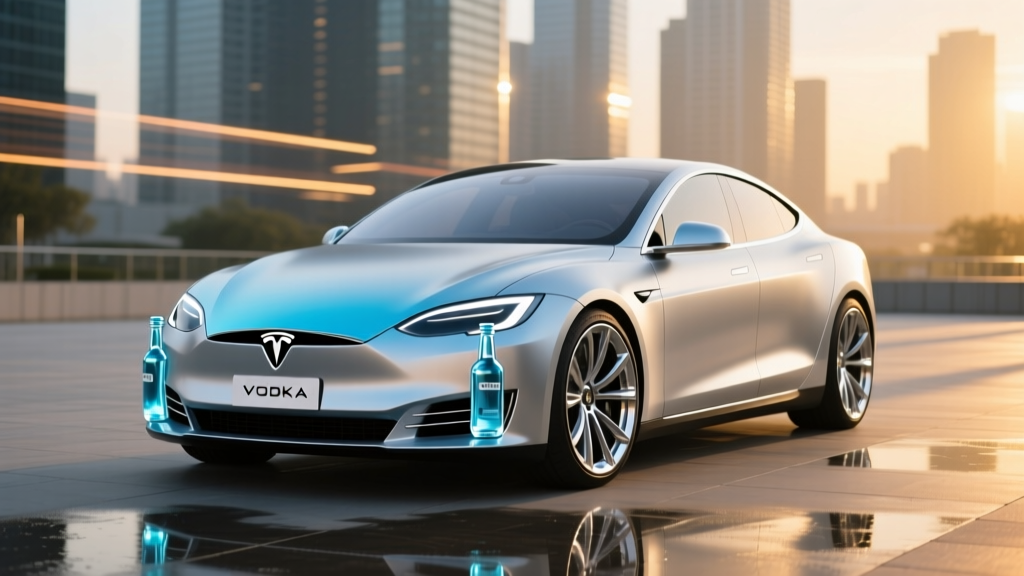
If you've been searching for a Tesla Vodka electric vehicle, you're not alone — but the results may surprise you. Tesla does not manufacture a Vodka-branded car, trim level, or special edition EV. The confusion stems from Tesla Tequila, a limited-edition $250 bottle of añejo tequila that Tesla sold in a lightning-bolt-shaped decanter starting in 2020 (and occasionally re-releases in small batches). There is no Tesla Vodka product, and there is no Tesla vehicle tied to a vodka promotion.
What does exist is Tesla's core vehicle lineup — the Model 3, Model Y, Model S, Model X, and the Cybertruck — all of which are fully electric and widely available in 2026. If you landed here trying to figure out whether a "Tesla Vodka" edition is real or worth tracking down, this guide will save you time: it isn't. Instead, we'll channel that curiosity into something useful — a thorough, spec-driven profile of the most accessible Tesla most buyers consider: the 2026 Tesla Model 3 Long Range AWD.
2026 Tesla Model 3 Long Range AWD: Quick Verdict
The Model 3 Long Range remains Tesla's efficiency benchmark. With an EPA-estimated 341 miles of range, dual-motor all-wheel drive, and access to the Supercharger network, it occupies a narrow lane: a premium electric sedan that undercuts luxury rivals on price while delivering top-tier energy efficiency. The 2026 "Highland" refresh carries over the redesigned exterior, ventilated seats, ambient lighting, and rear touchscreen introduced in late 2023, with minor software and battery-management refinements for the current model year.
| Spec | Value |
|---|---|
| EPA Range | 341 miles |
| Battery (usable) | ~75 kWh, NMC chemistry |
| Drivetrain | Dual-motor AWD |
| Horsepower | ~384 hp (combined) |
| 0–60 mph | 4.2 seconds |
| Top Speed | 125 mph |
| Efficiency | 131 MPGe / 25 kWh/100 mi |
| Max DC Fast Charge | 250 kW peak |
| 10–80% DC Time | ~25 minutes |
| Level 2 Home Charge | 11.5 kW (~44 mi/hr) |
| Cargo Volume | 23 cu ft (rear trunk + frunk) |
| Rear Legroom | 35.2 inches |
| Battery Warranty | 8 years / 120,000 miles (≥70% retention) |
| Base MSRP | $47,740 (before destination) |
Source: EPA fueleconomy.gov, Tesla.com specifications.
Real-World Range: What the EPA Sticker Doesn't Tell You
EPA estimate: 341 miles
Real-world highway (70–75 mph, moderate temps): ~280–305 miles
Cold-weather highway (below 32°F): ~230–260 miles
City / stop-and-go with regen: ~320–340 miles
The Model 3 Long Range's 341-mile EPA figure is among the highest in its class, but real-world results depend heavily on driving style, temperature, and terrain. In our experience and consistent with independent testing, sustained highway driving at 70–75 mph in mild conditions yields roughly 280–305 miles before you'll want to stop. Below freezing, expect a 20–30% reduction — the heat pump helps, but cold batteries are less efficient and cabin heating draws significant energy.
City driving with frequent regenerative braking opportunities gets you closest to the EPA sticker, sometimes even exceeding it on flat terrain. If your commute is mostly suburban or urban, 320+ miles is realistic. For road-trip planning, budget for ~270 miles of usable range per charge segment to keep a safety buffer and stay within the battery's optimal 10–80% charging window.
Charging Speed: DC Fast, Level 2, and the Charge-Curve Reality
| Charging Level | Power / Rate | Miles Added | Notes |
|---|---|---|---|
| Level 1 (120V household) | ~1.2 kW | ~3–4 mi/hr | Emergency/trickle only |
| Level 2 (240V home, 48A) | 11.5 kW | ~44 mi/hr | Full charge overnight (~8 hrs) |
| DC Fast (V3 Supercharger) | 250 kW peak | ~175 mi in 15 min | Peak only below ~50% SoC |
| DC Fast (V4 Supercharger) | Up to 250 kW | Similar to V3 | Newer cabinet, CCS adapter not needed |
Tesla's 250 kW peak DC fast-charge rate is impressive on paper, but understanding the charge curve is essential. The Model 3 Long Range hits peak ~250 kW only at low state-of-charge (roughly 5–30% SoC). As the battery fills, the rate tapers: by 60% SoC, you may see ~150 kW; above 80%, it drops to under 50 kW. This is why the 10–80% time of ~25 minutes is the meaningful metric — charging from 80–100% can add another 20+ minutes for relatively few miles.
At home on a Level 2 Wall Connector (hardwired, 60A circuit, 48A delivery), the Model 3 accepts 11.5 kW, adding roughly 44 miles of range per hour. A full overnight charge from 20% to 100% takes about 7–8 hours. Most owners charge to 80% daily (for NMC battery longevity) and set 100% only for road trips.
Connector note: Tesla uses the NACS (North American Charging Standard) connector natively. No adapter is needed at Superchargers. For non-Tesla CCS networks (Electrify America, EVgo), Tesla provides or sells a CCS adapter — but the Supercharger network remains the most reliable DC option in North America.
Performance, Handling, and Daily Driving
The dual-motor AWD Model 3 Long Range delivers 384 horsepower and a 4.2-second 0–60 mph time. That's brisk but not supercar territory — the Model 3 Performance (3.1 seconds) fills that role. What the Long Range does exceptionally well is deliver smooth, linear acceleration with confident all-weather traction. The low center of gravity from the floor-mounted battery pack keeps body roll minimal, and the Highland refresh improved ride compliance over pre-2024 models with revised damping and acoustic glass.
Regenerative braking is strong and effectively enables one-pedal driving in most conditions. The steering is quick and precise, though some drivers note the lack of a traditional instrument cluster or head-up display takes adjustment — all driving info lives on the central 15.4-inch touchscreen.
Interior, Tech, and Driver Assistance
The 2026 Model 3 interior is minimalist by design: a single central screen, no physical buttons, and materials that have improved significantly with the Highland update (ventilated front seats, ambient lighting, acoustic glass, rear 8-inch touchscreen for passengers). Cargo space is practical at 23 cubic feet combined (trunk + frunk), though the sloping roofline limits rear headroom for taller passengers (6'2"+ riders will notice).
Autopilot comes standard and includes adaptive cruise control and lane centering. Full Self-Driving (Supervised) is an optional $8,000 add-on (or available via subscription) that enables city-street navigation, traffic-light recognition, and automatic stop/sign handling.
SAE Automation Level: Level 2
Both Autopilot and FSD (Supervised) are SAE Level 2 driver-assistance systems. The driver must remain fully engaged, hands on or near the wheel, and eyes on the road at all times. Tesla's cabin camera monitors attention. This is not autonomous or "self-driving" technology. Level 4 driverless capability (like Waymo's robotaxi service) is not available in any consumer Tesla vehicle.
Pricing, Trims, and Federal Tax Credit Eligibility
| Trim | MSRP | Est. After §30D Credit |
|---|---|---|
| Model 3 RWD | $38,990 | ~$31,490* |
| Model 3 Long Range AWD | $47,740 | ~$40,240* |
| Model 3 Performance | $52,990 | ~$45,490* |
*Estimated price assumes full $7,500 federal tax credit. Eligibility is not guaranteed and depends on multiple factors.
IRS §30D Federal EV Tax Credit Requirements (2026):
- MSRP cap: Vehicle must have an MSRP ≤ $55,000 (sedans like Model 3). All Model 3 trims qualify.
- Buyer income cap: Modified AGI ≤ $150,000 (single) / $300,000 (married filing jointly).
- Battery sourcing: Critical minerals and battery components must meet phased-in percentage thresholds from US/FTA countries. Tesla has worked to meet these requirements, but eligibility can shift by model year and production batch.
- Point-of-sale transfer: As of 2024, buyers can transfer the credit to the dealer for an immediate price reduction at purchase, rather than waiting for a tax refund.
- Verification: Always check the latest eligibility at IRS.gov and confirm with your tax professional before purchasing.
Efficiency and Ownership Costs
At 131 MPGe combined (25 kWh per 100 miles), the Model 3 Long Range is one of the most energy-efficient EVs on the market. To put that in practical terms: charging at the US average electricity rate of ~$0.16/kWh, driving 100 miles costs roughly $4.00. The equivalent gas car at 30 MPG and $3.50/gallon would cost $11.67 for the same distance — a nearly 3× difference.
Tesla's battery and drive unit warranty covers 8 years or 120,000 miles (whichever comes first) with a minimum 70% capacity retention guarantee. Real-world degradation data from owner fleets suggests the NMC pack in the Model 3 Long Range typically retains ~90% capacity after 100,000 miles when charged primarily to 80% and avoiding frequent DC fast charging.
Pros, Cons, and Who Should Buy
Pros
- Class-leading efficiency (131 MPGe / 25 kWh/100mi)
- 341-mile EPA range covers most road trips comfortably
- Supercharger network — the most reliable DC charging in North America
- Strong resale value relative to EV market average
- Continuous OTA software updates add features post-purchase
- Excellent safety ratings (NHTSA 5-star, IIHS Top Safety Pick+)
Cons
- No physical buttons or traditional instrument cluster — steep learning curve
- Rear headroom tight for passengers over 6'2"
- FSD (Supervised) costs $8,000 and remains Level 2 — not autonomous
- Service center availability varies by region; wait times can be long
- NACS-only native charging limits non-Tesla DC options without adapter
- Ride firmness on larger wheel options (19" sport wheels)
Who the Model 3 Long Range Suits Best
Best for: Tech-forward commuters and road-trippers who want maximum efficiency, access to the best charging network, and don't need SUV cargo space. If you drive 30–80 miles daily and can charge at home, the Model 3 Long Range will rarely require a public charger for daily use.
Consider alternatives if: You need three-across rear seating (look at Model Y), you want a head-up display or physical gauges (BMW i4, Hyundai Ioniq 6), or you live in a region with limited Tesla service infrastructure.
Choose the Model 3 Long Range if: You prioritize range-per-dollar, efficiency, and Supercharger access above all else.
Choose a competitor (Ioniq 6, BMW i4, Polestar 2) if: You want traditional controls, more rear headroom, or a more distinctive interior design.
Frequently Asked Questions
Does Tesla make a vodka or vodka-branded EV?
No. Tesla produced a limited-run Tesla Tequila (añejo, $250, lightning-bolt bottle) but has never released a Tesla Vodka product or any alcohol-branded vehicle edition. There is no "Tesla Vodka" trim, special edition, or partnership.
What is the real-world range of the 2026 Tesla Model 3 Long Range?
The EPA rates it at 341 miles. In real-world highway driving at 70–75 mph in moderate temperatures, expect 280–305 miles. In freezing conditions, plan for 230–260 miles. City driving with regenerative braking can approach or match the EPA figure.
How fast does the Model 3 Long Range charge?
On a V3 or V4 Tesla Supercharger, it peaks at 250 kW and charges from 10–80% in approximately 25 minutes. At home on a Level 2 Wall Connector (11.5 kW), it adds ~44 miles per hour, fully charging overnight in about 7–8 hours.
Does the 2026 Model 3 qualify for the $7,500 federal EV tax credit?
The Model 3 qualifies on MSRP grounds (all trims are under the $55,000 sedan cap). However, buyer income limits ($150K single / $300K joint), battery critical-mineral sourcing requirements, and production timing all affect eligibility. Check IRS.gov for the latest rules and consult a tax professional.
Is the Model 3 Long Range worth buying vs. the competition?
If Supercharger access, efficiency, and range-per-dollar are your top priorities, the Model 3 Long Range is difficult to beat at ~$47,740. Competitors like the Hyundai Ioniq 6 (361-mile range) and BMW i4 (more traditional interior) are strong alternatives, but none currently match Tesla's charging network reliability and OTA update cadence.
Is Tesla's Autopilot or FSD self-driving?
No. Both are SAE Level 2 driver-assistance systems requiring full driver attention and engagement. Tesla's FSD (Supervised) handles more scenarios (city streets, traffic lights) but is not autonomous. True driverless (Level 4) capability is not available in any Tesla vehicle.