Why a Tesla VIN Decoder Matters in 2026
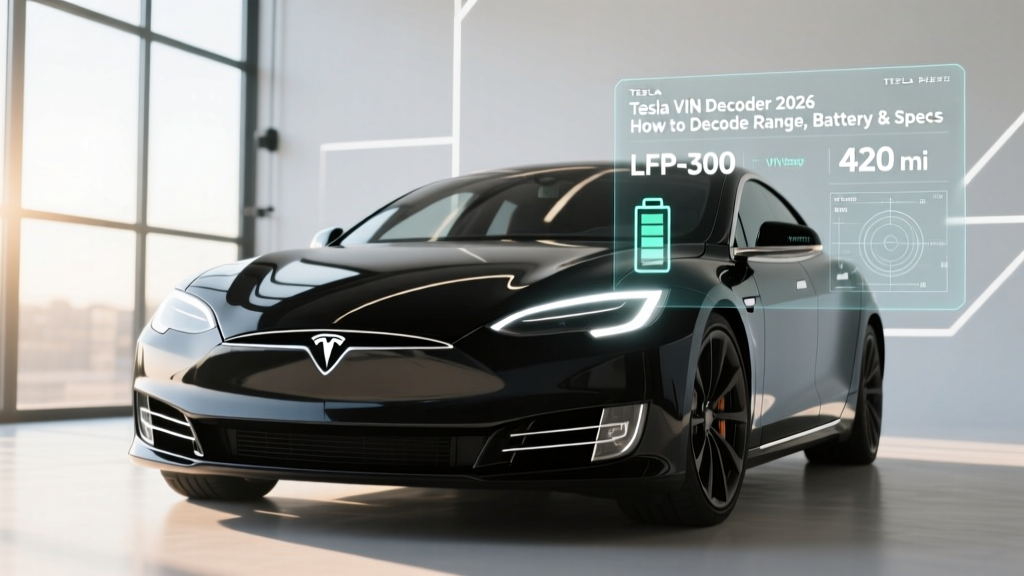
If you're shopping for a new or used Tesla, the 17-character Vehicle Identification Number is the single most reliable source of truth about what you're actually buying. Tesla's configurator and window stickers tell you what was ordered, but the VIN encodes what was built—including battery chemistry (LFP vs. NMC), motor configuration (single vs. dual), manufacturing plant, and model year. For buyers navigating shifting federal tax credit rules, cold-weather range expectations, and Supercharger network access, a proper Tesla VIN decoder is non-negotiable due diligence.
This guide walks you through how to decode a Tesla VIN, what each position reveals about range, charging, and performance, and how to cross-reference that data against real-world ownership realities. We'll use the 2026 Model 3 and Model Y lineups as primary examples, since they represent the bulk of Tesla's U.S. sales and the most common VIN lookup scenarios.
How to Read a Tesla VIN: Position-by-Position Breakdown
Every Tesla VIN follows the global 17-character standard, but Tesla uses specific codes in certain positions to denote battery type, drive unit, and restraint system. Here's what each segment means:
- Positions 1-3 (WMI - World Manufacturer Identifier):
5YJfor Tesla vehicles built in the U.S. (Fremont, Austin, or Gigafactory Nevada components).7G6or5YJvariants may appear for Cybertruck. Shanghai-built vehicles (exported to other markets) useLRW. - Position 4 (Vehicle Type/Line):
3= Model 3,S= Model S,X= Model X,Y= Model Y,C= Cybertruck. - Position 5 (Body Type/Trim Derivative): Varies by model. For Model 3/Y, this often encodes the drive unit and battery tier.
- Position 6 (Restraint System): Indicates airbag and seatbelt configuration.
- Position 7 (Battery Chemistry & Capacity): This is the critical position for EV buyers. Tesla encodes battery type here—distinguishing between LFP (lithium iron phosphate, CATL-sourced) and NMC (nickel manganese cobalt, Panasonic/LG). LFP packs are heavier but tolerate 100% daily charging; NMC packs offer higher energy density but Tesla recommends 80% daily limits.
- Position 8 (Motor/Drive Unit): Encodes single-motor RWD, dual-motor AWD, or tri-motor (Plaid/Cyberbeast).
- Position 9 (Check Digit): A calculated validation number per DOT standards.
- Position 10 (Model Year):
S= 2025,T= 2026,R= 2024. This confirms the actual model year regardless of delivery date. - Position 11 (Assembly Plant):
F= Fremont, CA;A= Austin, TX (Gigafactory Texas);C= Shanghai (China);P= Berlin (Germany). - Positions 12-17 (Sequential Production Number): The unique serial. Low numbers on a new model year can indicate early-build vehicles (sometimes with more assembly quirks); higher numbers suggest production maturity.
2026 Tesla Model 3 & Model Y: Key Spec Reference
| Spec | Model 3 RWD (LFP) | Model 3 Long Range AWD | Model Y Long Range AWD |
|---|---|---|---|
| EPA Range | 363 mi | 346 mi | 320 mi |
| Battery (usable) | ~60 kWh (LFP) | ~75 kWh (NMC) | ~75 kWh (NMC) |
| Peak DC Charge | 170 kW | 250 kW | 250 kW |
| 10-80% DC Time | ~25 min | ~18 min | ~20 min |
| Level 2 Rate | 11.5 kW (~44 mi/hr) | 11.5 kW (~44 mi/hr) | 11.5 kW (~40 mi/hr) |
| 0-60 mph | 5.8 sec | 4.2 sec | 4.8 sec |
| Horsepower | 271 hp | 346 hp | 384 hp |
| MPGe (combined) | 132 MPGe | 124 MPGe | 111 MPGe |
| Base MSRP | $38,990 | $45,990 | $46,990 |
| Warranty (Battery) | 8 yr / 100,000 mi | 8 yr / 120,000 mi | 8 yr / 120,000 mi |
Source: fueleconomy.gov (EPA), Tesla.com specs. Prices before destination fee or incentives.
What Your Tesla VIN Reveals About Real-World Range
The VIN's battery chemistry code (Position 7) is the biggest predictor of your actual driving range. Here's why it matters beyond the EPA sticker:
Real-World Range vs. EPA Estimate
LFP (Model 3 RWD): EPA 363 miles. Expect 300-320 miles in mixed driving at 65-70 mph. In sub-freezing temps (below 32°F), range drops to approximately 240-270 miles due to battery resistance and cabin heating load. LFP's advantage: you can charge to 100% daily without degradation concerns, effectively giving you more usable range than an NMC pack of similar size that Tesla recommends limiting to 80%.
NMC (Model 3/Y Long Range): EPA 320-346 miles. Expect 270-300 miles highway, dropping to 220-250 miles in winter cold. NMC packs have higher energy density but suffer more visible degradation if routinely charged above 90%.
Highway efficiency note: Teslas are notably efficient at city speeds (regen braking recovers energy), but aerodynamic drag at 75-80 mph reduces range by 15-20% versus the EPA combined cycle. Plan road trips around 250-mile segments for comfort.
Charging Speed: What the VIN Tells You (and What It Doesn't)
Your VIN's motor/battery position codes indicate which charging architecture your Tesla supports. All 2026 U.S.-market Teslas come with the NACS (North American Charging Standard) connector natively, granting access to the full Tesla Supercharger network plus a growing number of third-party networks (EVgo, Electrify America) that have added NACS cables.
Charging Speeds by Model & Battery Type
| Method | Model 3 RWD (LFP) | Model 3/Y LR (NMC) |
|---|---|---|
| DC Fast Charge (peak) | 170 kW | 250 kW |
| 10-80% DC Time | ~25 minutes | ~18-20 minutes |
| Level 2 Home (240V, 48A) | 11.5 kW / ~44 mi/hr | 11.5 kW / ~40-44 mi/hr |
| Level 1 (120V, 12A) | ~1.4 kW / ~4 mi/hr | ~1.4 kW / ~3 mi/hr |
Charge curve reality check: The peak kW number (170 or 250) is only sustained between approximately 10-40% State of Charge. Above 50%, the curve tapers significantly. Expect an average rate of roughly 120 kW (LFP) or 180 kW (NMC) across a full 10-80% session. This is why the "minutes" metric matters more than the peak kW figure.
Preconditioning matters: Navigate to a Supercharger using the car's built-in navigation, and the battery will preheat to optimal charging temperature. Without preconditioning (e.g., arriving at a non-navigated charger in cold weather), expect 10-80% times to increase by 30-50%.
Performance & Drivetrain: Decoding Motor Configuration
Position 8 of the VIN encodes the drive unit. For 2026 Teslas:
- Single Motor RWD: One rear permanent-magnet motor. Model 3 RWD produces 271 hp, 0-60 in 5.8 seconds. Adequate for commuting, less ideal for mountain passes or aggressive merging.
- Dual Motor AWD: Front induction + rear permanent-magnet. Model 3 Long Range: 346 hp, 0-60 in 4.2 sec. Model Y Long Range: 384 hp, 0-60 in 4.8 sec. Superior traction in snow/rain and noticeably quicker.
- Tri-Motor (Plaid/Cyberbeast): One front + two rear motors. Model S Plaid: 1,020 hp, 0-60 in 1.99 sec. Rare, expensive, track-oriented.
All 2026 Teslas include regenerative braking with adjustable intensity, enabling one-pedal driving in most conditions. The heat pump (standard since 2021 refreshes) significantly improves cold-weather efficiency by scavenging waste heat rather than relying solely on resistive cabin heating.
Pricing, Tax Credits & What Your VIN Determines for §30D Eligibility
The VIN is the definitive document for federal tax credit qualification. Under IRS §30D rules for 2026, eligibility depends on MSRP caps, buyer income limits, and critically, battery component and critical mineral sourcing—which the VIN helps verify.
2026 Tesla Pricing & Federal Tax Credit Eligibility
| Model/Trim | Base MSRP | §30D Credit | Effective Price |
|---|---|---|---|
| Model 3 RWD (LFP) | $38,990 | $3,750* | ~$35,240 |
| Model 3 Long Range AWD | $45,990 | $7,500 | ~$38,490 |
| Model Y Long Range AWD | $46,990 | $7,500 | ~$39,490 |
| Model Y Performance | $51,490 | $7,500 | ~$43,990 |
*Model 3 RWD with LFP (CATL-sourced) qualifies for partial credit due to critical mineral sourcing rules. Long Range (NMC, Panasonic) qualifies for the full $7,500. Credit available as point-of-sale transfer to dealer. Subject to buyer income caps: $150K single / $300K joint MAGI. Verify current rules at IRS.gov §30D. MSRP caps: $55,000 sedans, $80,000 SUVs/trucks.
§30D Eligibility Checklist (Use Your VIN to Verify)
- ✅ MSRP cap: Sedan ≤ $55,000; SUV/truck/van ≤ $80,000 (check window sticker or VIN build sheet)
- ✅ Buyer income: MAGI ≤ $150,000 (single) / $225,000 (HOH) / $300,000 (joint) in current or prior tax year
- ✅ Battery components: ≥ 60% manufactured in North America (2026 threshold)
- ✅ Critical minerals: ≥ 50% sourced from U.S. or FTA partners (this is where LFP/CATL packs lose partial credit)
- ✅ Final assembly: North America (all U.S.-built Teslas qualify; Shanghai-built do not)
- ✅ Point-of-sale transfer: You can transfer the credit to the dealer at purchase to reduce out-of-pocket cost immediately
Interior Space, Tech & Driver Assistance
Cargo volume: Model 3 offers 23 cu ft (trunk + frunk combined); Model Y provides 76 cu ft with rear seats folded (30 cu ft behind second row). The Model Y's hatchback design makes it substantially more practical for bulky items, strollers, or camping gear.
Passenger space: Model 3 rear legroom is 35.3 inches—adequate for adults on short trips, tight for tall passengers on long drives. Model Y rear legroom improves to 41.6 inches with a higher seating position and more headroom.
Infotainment: All 2026 Teslas run the latest Tesla OS on a 15.4-inch center display (Model 3 Highland refresh and Model Y Juniper). No Apple CarPlay or Android Auto—Tesla's native navigation, media, and vehicle controls are fully integrated. Rear-seat passengers in Model 3 and Model Y get an 8-inch screen for climate and entertainment controls.
Driver assistance (SAE Level 2): Standard Autopilot includes Traffic-Aware Cruise Control and Autosteer (lane centering). Full Self-Driving (Supervised) is an $8,000 option or $99/month subscription adding automatic lane changes, Navigate on Autopilot, and traffic light/stop sign recognition.
SAE Automation Level: Level 2 — Not Self-Driving
Tesla Autopilot and FSD (Supervised) are SAE Level 2 driver-assistance systems. The driver must remain fully engaged, hands on or near the wheel, and eyes on the road at all times. The system does not handle all driving scenarios and will disengage without warning. Only SAE Level 4 robotaxi services (Waymo, Zoox) operate without a human driver in defined geographic zones. Do not treat any Tesla system as autonomous.
Warranty, Battery Longevity & Total Cost of Ownership
Tesla's warranty structure varies by trim, and your VIN confirms which tier applies:
- Basic Vehicle: 4 years / 50,000 miles (all models)
- Battery & Drive Unit (Model 3 RWD): 8 years / 100,000 miles, minimum 70% capacity retention
- Battery & Drive Unit (Model 3/Y Long Range & Performance): 8 years / 120,000 miles, minimum 70% capacity retention
- Model S/X: 8 years / 150,000 miles
Degradation data: Real-world fleet data shows Tesla NMC packs losing approximately 10-12% capacity over 150,000 miles, with most degradation occurring in the first 30,000 miles before stabilizing. LFP packs degrade more slowly (5-8% over equivalent mileage) but start with lower total energy. Battery replacement outside warranty currently ranges from $12,000-$16,000 depending on pack size—though most owners will never need one.
5-Year TCO estimate (15,000 mi/yr):
| Cost Category | Model 3 RWD | Model Y LR AWD |
|---|---|---|
| Purchase (after credit) | ~$35,240 | ~$39,490 |
| Electricity (home, $0.14/kWh avg) | ~$3,150 | ~$3,700 |
| Insurance (avg) | ~$9,500 | ~$10,800 |
| Maintenance (tires, cabin filter, wipers) | ~$1,800 | ~$2,200 |
| Depreciation (est. 5-yr) | ~$16,000 | ~$18,500 |
| Total 5-Year | ~$65,690 | ~$74,690 |
Pros
- Class-leading efficiency (kWh/100mi) across all trims
- Access to the most reliable and extensive DC fast-charging network (Supercharger, 7,000+ U.S. stalls)
- Over-the-air updates continuously add features and refine performance
- LFP option allows 100% daily charging without degradation anxiety
- Minimal scheduled maintenance—no oil, no transmission fluid, no spark plugs
- Strong resale value relative to most EV competitors
Cons
- No Apple CarPlay / Android Auto—Tesla-only ecosystem
- FSD (Supervised) remains Level 2; $8,000 for features that require constant attention
- Insurance premiums 20-35% higher than comparable gas vehicles in many states
- Panel gap and paint quality inconsistencies still reported on early-build vehicles
- Service center wait times can be 2-4 weeks in some metro areas
- LFP range drops more noticeably in extreme cold vs. NMC
Who Should Buy a Tesla in 2026?
Choose the Model 3 RWD (LFP) if:
- Your commute is under 60 miles round-trip and you can charge at home
- You live in a mild climate (minimal sub-freezing months)
- You want the lowest entry price and are comfortable with partial tax credit
- You prefer charging to 100% daily for maximum usable range
Choose the Model 3 Long Range AWD if:
- You regularly drive 200+ mile highway trips and want full $7,500 credit eligibility
- You need AWD for snow/rain traction
- You value the quickest 0-60 and passing power in the sedan lineup
Choose the Model Y Long Range AWD if:
- You need SUV cargo space for family gear, pets, or road-trip luggage
- Rear-seat passengers are adults or tall teens who need legroom
- You want the best-selling EV in America with proven reliability data
Look at competitors (Hyundai Ioniq 5, Chevrolet Equinox EV, Ford Mustang Mach-E) if:
- You need Apple CarPlay or prefer traditional dealership service
- You want a more cushioned ride quality (Teslas are firm)
- You're in a region with limited Tesla Service Center coverage
Frequently Asked Questions
Where can I find my Tesla's VIN?
The VIN is visible through the lower driver-side windshield, on the driver's door jamb sticker, in the Tesla app under your vehicle details, and on all registration/insurance documents. For pre-purchase inspections on used Teslas, request the VIN from the seller before committing.
Can a VIN decoder tell me if a used Tesla has Autopilot or FSD?
No. The VIN encodes hardware configuration (motors, battery, plant) but not software purchases. FSD and Autopilot are tied to the vehicle's account, not the VIN. Verify software features through the car's Software menu or by having Tesla support confirm the vehicle's entitlements before purchase. FSD transfers with the vehicle in most cases but has been subject to Tesla's promotional transfer policies—always confirm in writing.
Does a Tesla VIN reveal the battery manufacturer (Panasonic, LG, CATL)?
Indirectly, yes. Position 7's battery code correlates with chemistry, which maps to manufacturer: LFP cells in U.S.-market Teslas are predominantly CATL, while NMC cells come from Panasonic (primarily) or LG Energy Solution. However, Tesla does not publish a public VIN lookup that names the cell supplier explicitly. Third-party decoder services and Tesla service centers can provide more granular pack data.
How does the VIN affect Supercharger access and NACS compatibility?
All Teslas with VINs corresponding to North American production have the NACS charge port natively. Shanghai-built Teslas (VIN position 11 = C) use GB/T in China and may require adapters in other markets. If you're importing or buying a grey-market Tesla, the VIN's plant code is critical for confirming charge connector compatibility.
Is the 2026 Model 3 RWD a better value than the Long Range after tax credits?
It depends on your use case. The RWD at ~$35,240 (after $3,750 credit) is the cheapest entry point, but the Long Range at ~$38,490 (after $7,500 credit) gives you AWD, 50% more power, faster DC charging (250 vs. 170 kW peak), and a longer battery warranty (120K vs. 100K miles). For only ~$3,250 more, the Long Range is the stronger value for most buyers who road-trip or face inclement weather. The RWD makes sense for warm-climate commuters who rarely exceed 150 miles between charges.
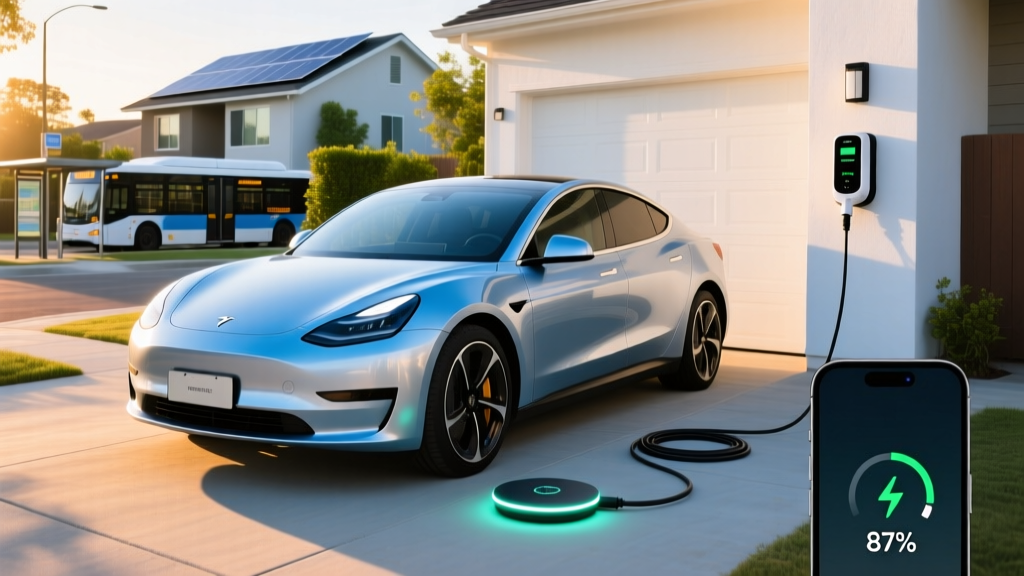
What's the real cost of home charging installation for a Tesla?
A Tesla Wall Connector (48A, 11.5 kW) costs $475 for the hardware. Professional installation on an existing 200-amp panel with a nearby 60A circuit typically runs $800-$1,500. If your home needs a panel upgrade (100A → 200A), add $2,000-$4,000. Total: $1,300-$5,500 depending on electrical infrastructure. Always get a quote from a licensed electrician before purchasing.