When senior engineering talent walks out the door at an automaker, the ripple effects take years to surface in the metal. The Tesla Victor Nechita departure — a senior engineer who contributed to Tesla's powertrain and vehicle-platform development — prompted a wave of speculation about how Tesla's engineering bench will hold up as the company pushes into its next-generation, lower-cost vehicle platform. For buyers evaluating a Tesla purchase today, the real question is practical: does this departure change what you should buy, or is the current lineup robust enough to absorb the loss?
In this analysis, we break down what the Nechita exit means for Tesla's product roadmap, then provide a full spec-driven review of the core 2026 Tesla lineup so you can make an informed decision regardless of corporate personnel moves.
Who Is Victor Nechita and Why Does His Departure Matter?
Victor Nechita served in senior engineering roles at Tesla, contributing to vehicle platform architecture and manufacturing efficiency initiatives. His work intersected with Tesla's push toward the "unboxed" manufacturing process — the company's strategy to reduce production costs by assembling vehicles from large sub-assemblies rather than traditional sequential line builds.
The Tesla Victor Nechita departure joins a broader pattern of senior engineering exits at Tesla over the 2023–2025 period, including leaders from battery cell development, Autopilot/FSD software, and vehicle engineering. Tesla has historically absorbed talent loss better than legacy automakers due to its deep engineering bench and culture of rapid iteration, but the cumulative effect raises legitimate questions about execution on the next-generation platform.
For current buyers, the impact is minimal in the near term. The 2026 Model Y, Model 3, Cybertruck, and Model S/X represent mature platforms with established supply chains. The real risk window is 2027–2028, when Tesla's lower-cost vehicle (sometimes referred to as the "Model 2" or next-gen platform) is expected to reach production.
2026 Tesla Lineup: Spec-by-Spec Breakdown
Here's the current Tesla lineup with the exact numbers that matter for purchase decisions.
| Specification | Model 3 LR AWD | Model Y LR AWD | Cybertruck AWD | Model S LR |
|---|---|---|---|---|
| EPA Range | 341 mi | 320 mi | 340 mi | 402 mi |
| Battery (usable) | ~75 kWh, NMC | ~75 kWh, NMC | ~123 kWh, NMC (4680 cells) | ~95 kWh, NMC |
| Peak DC Fast Charge | 250 kW | 250 kW | 350 kW | 250 kW |
| 10–80% DC Time | ~25 min | ~25 min | ~20 min | ~30 min |
| Level 2 Home Rate | 11.5 kW (~44 mi/hr) | 11.5 kW (~44 mi/hr) | 11.5 kW (~34 mi/hr) | 11.5 kW (~34 mi/hr) |
| 0–60 mph | 4.2 sec | 4.8 sec | 3.9 sec | 3.1 sec |
| Horsepower | 346 hp | 384 hp | 600 hp | 670 hp |
| Drivetrain | Dual-motor AWD | Dual-motor AWD | Dual-motor AWD | Dual-motor AWD |
| MPGe (combined) | 132 MPGe | 122 MPGe | 72 MPGe | 124 MPGe |
| kWh/100 mi | 25 | 28 | 47 | 26 |
| Cargo Volume | 23 cu ft (rear) + 3.1 frunk | 30 cu ft (rear) + 4.1 frunk | 67 cu ft (bed + frunk) | 28 cu ft (rear) + 5.3 frunk |
| Rear Legroom | 35.2 in | 41.6 in | 41.0 in | 35.4 in |
| Base MSRP | $47,740 | $48,240 | $79,990 | $74,990 |
| Battery Warranty | 8 yr / 120,000 mi | 8 yr / 120,000 mi | 8 yr / 120,000 mi | 8 yr / 150,000 mi |
Sources: fueleconomy.gov, Tesla official specifications. Pricing reflects 2026 model year MSRP before incentives.
Real-World Range: What the EPA Sticker Doesn't Tell You
EPA estimates are measured under controlled conditions. Here's what to expect in practice:
- Model 3 LR: EPA 341 mi → Expect ~280–300 mi at sustained 75 mph highway speeds; ~240–260 mi in freezing weather with cabin heat.
- Model Y LR: EPA 320 mi → Expect ~260–280 mi highway; ~220–240 mi in cold weather.
- Cybertruck AWD: EPA 340 mi → Expect ~270–290 mi highway; the truck's aerodynamic drag and weight hit efficiency hard above 65 mph.
- Model S LR: EPA 402 mi → Expect ~330–360 mi highway; Tesla's most efficient large sedan benefits from a mature platform.
Tesla's NMC batteries tolerate cold reasonably well thanks to active thermal management, but all EVs lose 15–30% range in sub-freezing temperatures. Preconditioning the battery while plugged in mitigates this significantly.
The key insight for buyers: if your daily commute plus errands total under 150 miles, any current Tesla covers you with enormous margin. Range anxiety only becomes a factor on road trips exceeding 250 miles between Supercharger stops — and Tesla's Supercharger network remains the most reliable DC fast-charging network in the US.
Charging Speed: Supercharger Access Is Tesla's Moat
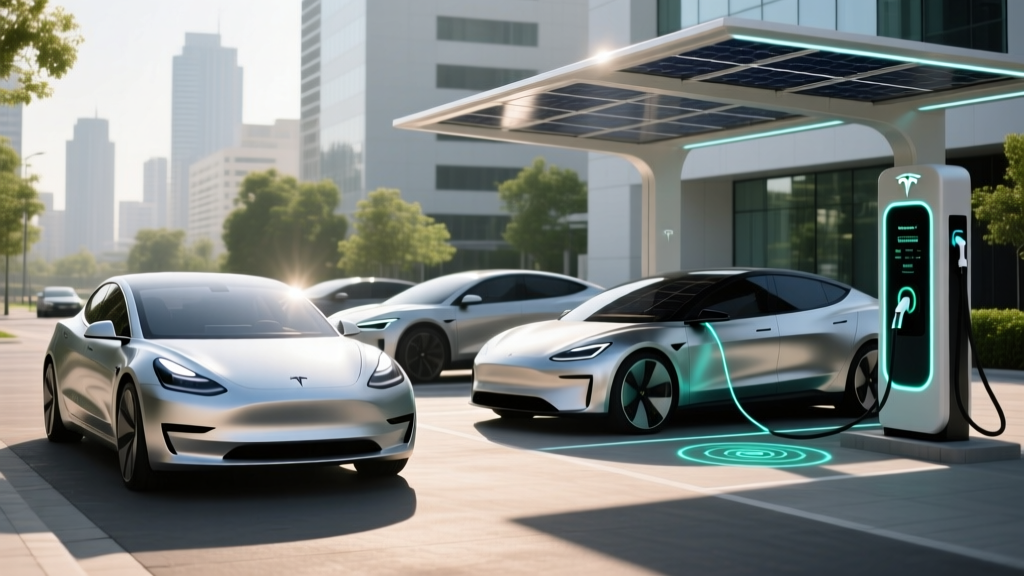
Charging infrastructure remains the single biggest differentiator for Tesla ownership in 2026. While competitors have gained access to Tesla's Supercharger network via the NACS connector transition, Tesla owners still benefit from native integration: plug-and-charge with no app or RFID card, automatic battery preconditioning when you navigate to a Supercharger, and the densest network coverage.
| Level | Power | Miles Added Per Hour | Typical Use Case |
|---|---|---|---|
| Level 1 (120V) | 1.4 kW | ~5 mi/hr | Overnight trickle; emergency top-up |
| Level 2 (240V home) | 11.5 kW | 34–44 mi/hr | Daily home charging; full charge in 7–9 hours |
| DC Fast (Supercharger V3) | 250 kW peak | ~175 mi in 15 min | Road trips; 10–80% in ~25 minutes |
| DC Fast (Cybertruck V4) | 350 kW peak | ~200 mi in 15 min | 4680 cell architecture charges faster; 10–80% in ~20 min |
Charging curve reality check: Tesla's peak kW rating is exactly that — a peak. The charge rate tapers significantly above 50% state of charge (SoC). A Model 3 at a V3 Supercharger might pull 250 kW at 10% SoC but drops to ~120 kW by 60% and ~50 kW by 80%. This is normal lithium-ion battery physics, not a Tesla-specific limitation, but it means the 10–80% time is the number that matters, not peak kW.
For home Level 2 charging, Tesla's Wall Connector ($420) is among the best units available, offering up to 44 miles of range per hour of charging on a 60-amp circuit. Installation typically costs $500–$2,000 depending on your electrical panel's capacity and the run distance from panel to garage.
Pricing and Federal Tax Credit Eligibility (2026)
Tesla's pricing has stabilized after the aggressive cuts of 2023–2024. Here's where each model stands on the federal §30D tax credit, which offers up to $7,500 for qualifying new EVs.
| Model | Base MSRP | Federal Credit | Effective Price | Credit Notes |
|---|---|---|---|---|
| Model 3 LR AWD | $47,740 | $7,500 | ~$40,240 | Qualifies; NMC battery with compliant sourcing |
| Model Y LR AWD | $48,240 | $7,500 | ~$40,740 | Qualifies; most popular Tesla for credit |
| Cybertruck AWD | $79,990 | $0 | $79,990 | Exceeds $80,000 SUV/truck MSRP cap — does NOT qualify |
| Model S LR | $74,990 | $0 | $74,990 | Exceeds $55,000 sedan MSRP cap — does NOT qualify |
Critical §30D eligibility caveats: The $7,500 credit has multiple hurdles beyond MSRP caps. Buyer adjusted gross income must not exceed $150,000 (single) or $300,000 (joint). Battery components and critical minerals must meet escalating domestic-sourcing thresholds. As of 2026, the point-of-sale transfer option allows you to apply the credit directly at purchase rather than waiting for tax filing. Always verify current eligibility at irs.gov and consult a tax professional — rules change and individual situations vary.
The Model Y remains the sweet spot: it qualifies for the full credit, offers the most cargo space, and sits at an effective price of ~$40,740 — making it competitive with the Hyundai Ioniq 5, Ford Mustang Mach-E, and Chevrolet Equinox EV on price while offering access to the Supercharger network natively.
Autopilot and FSD: Level 2 Assistance, Not Self-Driving
Tesla's Autopilot and Full Self-Driving (Supervised) are SAE Level 2 driver-assistance systems. The driver must remain fully engaged, hands on or near the wheel, eyes on the road, and ready to take over at any moment. This is not autonomous driving. Level 4 driverless operation (no human needed) is only available in limited robotaxi services like Waymo in select cities.
Tesla's FSD (Supervised) in 2026 handles most highway and urban driving scenarios with impressive competence — lane changes, traffic-light recognition, stop-sign handling, and navigation-based routing. However, it still requires active supervision and can make unexpected decisions in construction zones, unmapped areas, or unusual traffic patterns. The $8,000 FSD purchase or $99/month subscription is a personal value call: if you commute in heavy traffic daily, the stress reduction may justify it. For occasional use, standard Autopilot (included) provides adequate adaptive cruise and lane-keeping.
Who Should Buy a Tesla in 2026?
- Choose Model 3 if: You prioritize driving dynamics and efficiency over cargo space; your household is 1–2 people; you want the lowest effective price after the tax credit (~$40,240).
- Choose Model Y if: You need family-sized cargo room (30 cu ft rear, 76 cu ft with seats folded); you want the best value in a compact electric SUV with full credit eligibility.
- Choose Cybertruck if: You need a truck bed, can absorb the $79,990 price without a tax credit, and want 4680-cell charging speed. Towing capacity: 11,000 lbs.
- Choose Model S if: You want 402 miles of EPA range, luxury sedan comfort, and don't need the tax credit. Best for high-mileage road warriors.
- Wait if: You're eyeing Tesla's next-gen lower-cost vehicle. The Nechita departure and other engineering exits could delay that platform into 2028 or beyond.
Pros and Cons: The Honest Assessment
- Supercharger network access — still the gold standard for road-trip charging
- Class-leading software UX and over-the-air updates
- Model 3/Y qualify for $7,500 federal credit, bringing effective prices to ~$40K
- Strong efficiency (25–28 kWh/100 mi for Model 3/Y)
- Best-in-class DC fast-charge integration with automatic preconditioning
- Minimal maintenance: no oil changes, brake wear reduced by regen
- Senior engineering departures (including Nechita) raise long-term platform execution risk
- Build quality inconsistency still surfaces in panel gaps and interior trim
- FSD ($8,000 or $99/mo) remains Level 2 — expensive for supervised assistance
- Cybertruck and Model S/X do not qualify for federal tax credit
- No Apple CarPlay or Android Auto — Tesla's closed ecosystem frustrates some buyers
- Insurance premiums run 15–25% higher than comparable gas vehicles in most states
What the Nechita Departure Means for Your Purchase Decision
The Tesla Victor Nechita departure is one data point in a broader talent-retention story that bears watching but shouldn't drive your immediate purchase. Here's the practical framework:
If you're buying a 2026 Model 3 or Model Y: These are mature, well-understood platforms. Production processes are locked in, supply chains are stable, and Tesla has built millions of these vehicles. An engineering departure does not change the car sitting on the lot today. Buy with confidence if the specs meet your needs.
If you're waiting for the next-gen Tesla platform: This is where talent loss matters. The unboxed manufacturing process and sub-$30,000 vehicle require complex engineering execution. Multiple senior departures increase the risk of delays. If you were planning to wait for a cheaper Tesla, consider whether a current Model 3 at ~$40,240 (after credit) already meets your budget — or whether competitors like the Chevrolet Equinox EV or upcoming affordable models from Hyundai/Kia better serve your timeline.
If you're a Tesla investor: Engineering talent is Tesla's most critical asset. Watch for follow-on departures and the company's ability to recruit replacements from the broader auto and tech industries.
Frequently Asked Questions
What is the real-world range of a Tesla Model Y in 2026?
The EPA rates the Model Y Long Range AWD at 320 miles. In real-world highway driving at 75 mph, expect 260–280 miles. In freezing temperatures with cabin heat, that drops to roughly 220–240 miles. Preconditioning while plugged in helps recover some cold-weather loss.
How fast does a Tesla charge at home and on the road?
At home on a Level 2 Wall Connector (11.5 kW / 240V), a Model 3 or Model Y adds about 44 miles of range per hour — a full overnight charge from empty takes 7–8 hours. On a V3 Supercharger (250 kW DC), 10–80% takes approximately 25 minutes. The Cybertruck's 4680 cells can accept up to 350 kW, reducing 10–80% to about 20 minutes.
Does the Tesla Model Y qualify for the federal EV tax credit?
Yes, as of 2026, the Model Y Long Range qualifies for the full $7,500 §30D credit, bringing its effective price from $48,240 to approximately $40,740. Eligibility requires buyer income under $150K single / $300K joint, and the vehicle must meet battery-sourcing requirements (which it currently does). Verify at irs.gov before purchasing, as rules can change.
Is Tesla still worth buying vs. Hyundai, Ford, or Chevy EVs?
For road-trip charging reliability and software integration, Tesla retains an edge. The Supercharger network, even as it opens to NACS-equipped competitors, still offers the most seamless experience. However, the Hyundai Ioniq 5 charges faster on non-Tesla DC networks (800V architecture), the Ford Mustang Mach-E offers a more traditional interior layout, and the Chevy Equinox EV undercuts on price. Cross-shop based on your specific needs.
Will the Victor Nechita departure delay Tesla's next-generation vehicle?
It's one factor among several. Tesla's next-gen platform depends on manufacturing engineering, battery cell scaling (4680 production yield), and software integration. Multiple senior departures increase execution risk, potentially pushing the lower-cost vehicle from a 2027 target to 2028 or later. Tesla has not confirmed a firm production date.
What's the battery warranty on a 2026 Tesla?
Tesla covers the battery and drive unit for 8 years or 120,000 miles (whichever comes first) on Model 3 and Model Y, and 8 years or 150,000 miles on Model S and Model X. The warranty guarantees at least 70% battery capacity retention over that period. Real-world degradation data from Tesla's fleet suggests most packs retain 85–90% capacity at 100,000 miles.
For the latest Tesla specifications and pricing, visit tesla.com. For federal tax credit rules, consult irs.gov clean vehicle credits. Efficiency and range data from fueleconomy.gov.