When EV shoppers search for "Tesla ventilators," they're usually hunting for details on Tesla's cabin climate-control hardware — the electric compressors, heat pumps, blower motors, and HEPA filtration systems that regulate temperature, airflow, and air quality inside the vehicle. Unlike internal-combustion cars that waste engine heat for cabin warming, Teslas rely entirely on electrically driven thermal management. Understanding how these systems work, what they cost you in range, and how they compare across the 2026 lineup is essential for buyers in extreme climates.
This guide breaks down the ventilation and climate architecture across the 2026 Tesla Model 3, Model Y, Model S, and Model X, pairs each platform with its full EV spec sheet (range, charging, pricing, tax-credit eligibility), and explains how Tesla's thermal systems affect your real-world driving experience.
Tesla's Climate Architecture: Heat Pumps, Compressors, and HEPA Ventilation
Every 2026 Tesla sold in the U.S. uses an electric vapor-compression heat pump (introduced broadly with the Model Y in 2020 and retrofitted into the Model 3 with the 2021 refresh). The heat pump is the core of what buyers mean by "Tesla ventilators" — it moves thermal energy rather than generating it resistively, cutting cabin-heating energy consumption by roughly 30-50% compared to older PTC (positive temperature coefficient) resistive heaters.
Key components in Tesla's thermal management system:
- Octovalve manifold: An 8-port coolant routing valve that directs thermal energy between the battery pack, drive units, cabin heater core, and ambient-air heat exchanger. It's the reason Teslas can scavenge waste heat from the motors to warm the cabin.
- Electric scroll compressor: Runs on high-voltage pack power (not a belt-driven accessory). Provides both cabin cooling and heat-pump heating.
- Blower motor and ducting: Variable-speed cabin fan pushing air through the evaporator/heater core and into the cabin vents.
- HEPA filtration (Model S, Model X, Model Y): A large hospital-grade particulate filter with Tesla's "Bioweapon Defense Mode" that pressurizes the cabin to block outside pollutants. The refreshed Model 3 uses a smaller but still effective cabin filter without the oversized HEPA cartridge.
- Cabin overheat protection: A software-controlled feature that runs the A/C compressor or vents windows when parked cabin temperatures exceed a set threshold (configurable at 105°F or 120°F).
The efficiency payoff is significant. According to EPA data on fueleconomy.gov, the heat-pump-equipped Model 3 and Model Y achieve combined MPGe ratings in the 120-130 range — figures that would drop measurably in cold climates without the heat pump's efficiency advantage.
2026 Tesla Lineup: Specs, Range, and Climate System Details
Below is a consolidated spec table for the 2026 Tesla lineup. Climate-system notes are included alongside core EV metrics so you can see how ventilation hardware varies by model.
| Spec | Model 3 (Long Range AWD) | Model Y (Long Range AWD) | Model S (Long Range) | Model X (Long Range) |
|---|---|---|---|---|
| EPA Range | 363 mi | 337 mi | 402 mi | 348 mi |
| Battery (usable) | ~79 kWh (NMC) | ~79 kWh (NMC) | ~100 kWh (NMC) | ~100 kWh (NMC) |
| Heat Pump | Yes | Yes | Yes | Yes |
| HEPA Filtration | No (standard cabin filter) | Yes | Yes | Yes |
| Max DC Fast Charge | 250 kW | 250 kW | 250 kW | 250 kW |
| 10-80% DC Time | ~27 min | ~27 min | ~33 min | ~33 min |
| Level 2 Home Charge | 11.5 kW (~44 mi/hr) | 11.5 kW (~44 mi/hr) | 11.5 kW (~34 mi/hr) | 11.5 kW (~34 mi/hr) |
| 0-60 mph | 4.2 sec | 4.8 sec | 3.1 sec | 3.8 sec |
| Horsepower | ~346 hp | ~384 hp | ~670 hp | ~670 hp |
| Drivetrain | Dual-motor AWD | Dual-motor AWD | Dual-motor AWD | Dual-motor AWD |
| MPGe (combined) | 131 MPGe | 122 MPGe | 120 MPGe | 109 MPGe |
| Efficiency | 25 kWh/100mi | 27 kWh/100mi | 28 kWh/100mi | 31 kWh/100mi |
| Cargo (rear seats up) | 23 cu ft | 30 cu ft | 28 cu ft | 37 cu ft (+frunk) |
| Battery Warranty | 8 yr / 120,000 mi | 8 yr / 120,000 mi | 8 yr / 150,000 mi | 8 yr / 150,000 mi |
| Base MSRP | $47,740 | $48,630 | $79,990 | $84,990 |
Sources: fueleconomy.gov, Tesla New Vehicle Warranty. Prices reflect 2026 MSRP before destination fees. Specs subject to mid-year revision.
Real-World Range: What Tesla's Climate System Costs You in Winter and Summer
EPA Sticker: 337-402 mi depending on model.
Real-World Highway (70-80 mph, moderate climate): Expect ~85-90% of EPA — roughly 285-360 mi.
Cold Weather (below 30°F): The heat pump mitigates losses, but expect 20-30% range reduction — roughly 230-320 mi depending on model. Battery preconditioning and seat/steering-wheel heaters help reclaim efficiency.
Hot Weather (A/C heavy use): Tesla's efficient compressor typically costs only 5-8% range in summer driving.
Tesla's heat pump is the reason cold-weather range loss is manageable rather than catastrophic. In pre-heat-pump EVs, resistive cabin heating could consume 3-5 kW continuously — equivalent to driving at 15-25 mph worth of energy just to stay warm. The heat pump moves heat at a coefficient of performance (COP) of 2-4, meaning it delivers 2-4 kW of cabin warmth for every 1 kW of electrical draw. In real-world winter testing, this translates to roughly 30% less range penalty compared to resistive-heated competitors.
One nuance: in extreme cold (below ~10°F), the heat pump's outdoor heat exchanger can frost over, requiring periodic defrost cycles that temporarily reduce efficiency. Tesla's thermal management software handles this automatically, but you may notice brief cabin-temperature fluctuations during these cycles.
Charging Speed and Battery Preconditioning
Tesla's climate system plays a critical role in charging performance. The same thermal hardware that heats and cools the cabin also preconditions the battery pack before DC fast charging — warming it to the optimal ~95°F (35°C) temperature for maximum charge acceptance.
| Charging Level | Power / Rate | Miles Added per Hour | Notes |
|---|---|---|---|
| Level 1 (120V) | ~1.4 kW | ~4-5 mi/hr | Emergency/trickle only |
| Level 2 (240V, 48A) | 11.5 kW | 34-44 mi/hr | Wall Connector at home; full overnight charge |
| DC Fast (Supercharger V3) | Peak 250 kW | ~180 mi in 15 min | 10-80% in ~27-33 min; tapers above 80% |
| DC Fast (Supercharger V4) | Peak 250 kW (current Tesla vehicles) | Similar to V3 | V4 cabinet capable of higher rates, but Tesla vehicles currently limited to 250 kW |
Charging-curve reality check: The "250 kW" peak rate applies only between roughly 10-30% state of charge on a preconditioned battery. Above 50% SoC, the rate tapers to ~100-120 kW, and above 80% it drops further to protect battery longevity. This is why 10-80% times are the meaningful metric — not peak kW. Always navigate to a Supercharger using the car's built-in routing to trigger automatic battery preconditioning; arriving without preconditioning can add 10-15 minutes to your charge session in cold weather.
Pricing, Trim Levels, and Federal Tax Credit Eligibility
| Model / Trim | Base MSRP | §30D Credit Eligible? | Est. Price After Credit |
|---|---|---|---|
| Model 3 RWD | $39,740 | Yes (if sourcing requirements met) | ~$32,240 |
| Model 3 Long Range AWD | $47,740 | Yes (if sourcing requirements met) | ~$40,240 |
| Model 3 Performance | $54,740 | Yes (under $55,000 sedan cap) | ~$47,240 |
| Model Y Long Range AWD | $48,630 | Yes (under $80,000 SUV cap) | ~$41,130 |
| Model Y Performance | $53,130 | Yes | ~$45,630 |
| Model S Long Range | $79,990 | No (exceeds $55,000 sedan MSRP cap) | $79,990 |
| Model X Long Range | $84,990 | No (exceeds $80,000 SUV MSRP cap) | $84,990 |
Critical §30D eligibility caveats (2026 rules per IRS.gov):
- MSRP caps: Sedans/wagons must be under $55,000; SUVs, trucks, and vans under $80,000. This eliminates Model S and Model X from the credit.
- Buyer income caps: AGI must not exceed $150,000 (single), $225,000 (head of household), or $300,000 (joint). If your AGI exceeds these in the purchase year or prior year, you're ineligible.
- Battery sourcing requirements: The credit splits into $3,750 for critical-minerals sourcing and $3,750 for battery-component manufacturing. As of 2026, Tesla's U.S.-built vehicles (Fremont and Austin) meet some but not all sourcing thresholds — the full $7,500 is not guaranteed for every VIN. Verify your specific vehicle's eligibility on the IRS clean-vehicle credit list before purchase.
- Point-of-sale transfer: Eligible buyers can transfer the credit to the dealer at purchase, reducing the purchase price directly rather than waiting for a tax refund.
Consult a tax professional for your specific situation. Incentive rules are subject to legislative change.
Driver Assistance, Tech, and Cabin Features
All 2026 Teslas ship with Tesla's standard Autopilot suite — a SAE Level 2 driver-assistance system that includes adaptive cruise control, lane-keeping, and automatic emergency braking. The driver must remain fully engaged at all times.
Tesla Autopilot and FSD (Supervised) are Level 2 systems. They do NOT drive the car autonomously. The driver must keep hands on the wheel (or demonstrate attention via the cabin camera), monitor the road, and be prepared to take over instantly. Only Level 4 services like Waymo operate without a human driver.
Full Self-Driving (Supervised) remains an $8,000 add-on (or $99/month subscription as of early 2026). It adds city-street navigation, traffic-light recognition, and more aggressive lane changes — but remains a Level 2 system requiring constant supervision. NHTSA continues to investigate FSD-related incidents, and the system's safety record remains a subject of active regulatory scrutiny.
Cabin tech highlights:
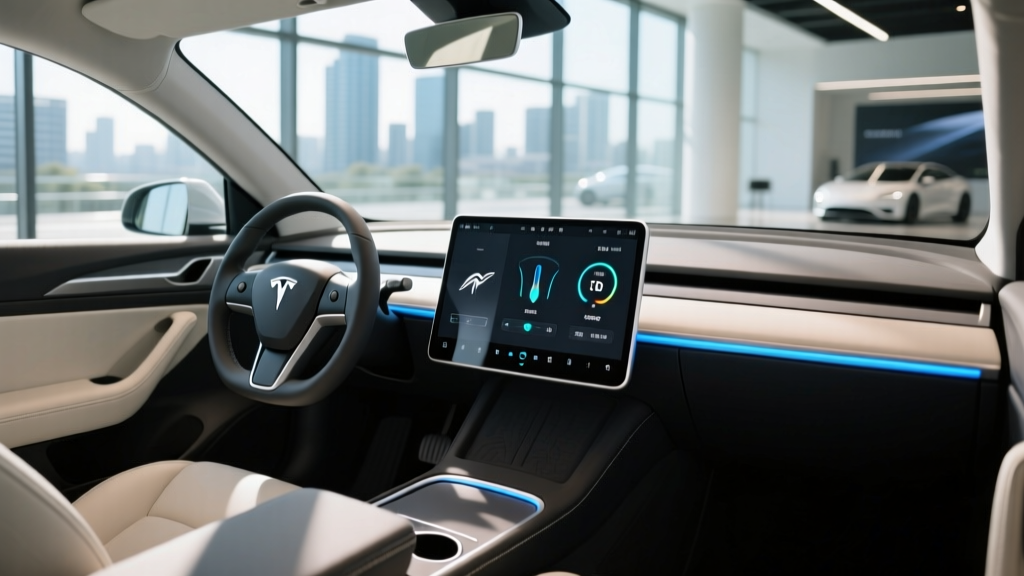
- 15.4-inch center touchscreen (Model 3/Y), 17-inch (Model S/X) with AMD Ryzen infotainment processor
- Over-the-air software updates that can modify thermal-management behavior, charge curves, and climate controls
- Dog Mode, Camp Mode, and Sentry Mode — all of which use the HVAC system to maintain cabin temperature while parked (a significant battery drain if left running for hours)
- Model S/X: yoke or round steering wheel option, rear-seat touchscreen, 22-speaker audio
- Model 3/Y: minimalist interior with ventilated front seats (a feature buyers searching for "Tesla ventilators" often want confirmed — yes, ventilated/cooled seats are standard on 2026 Model 3 Highland and refreshed Model Y)
Notable drawbacks: The Model 3 and Model Y lack a traditional instrument cluster (all info is on the center screen), which some drivers find distracting. Model S/X pricing has crept well above competitors like the Lucid Air and BMW iX. And Tesla's build-quality consistency, while improved, still generates more panel-gap and trim complaints than legacy luxury brands.
Pros, Cons, and Who Should Buy
- Best-in-class Supercharger network access (17,000+ U.S. stalls) — still the most reliable DC fast-charging ecosystem
- Heat pump standard on all models — genuine cold-weather range advantage
- Class-leading efficiency (kWh/100mi) across Model 3 and Model Y
- Over-the-air updates continuously improve vehicle functionality
- HEPA filtration on Model Y, S, X is a legitimate differentiator for allergy sufferers and urban drivers
- Ventilated front seats now standard on Model 3 and Model Y (frequently asked about)
- Model S and Model X no longer qualify for the federal tax credit due to MSRP caps
- 250 kW peak DC charge rate is now outpaced by Hyundai/Kia's 350 kW (E-GMP) and Lucid's 300+ kW architecture
- FSD (Supervised) remains Level 2 despite the name — $8,000 for a driver-assist upgrade is expensive
- No Apple CarPlay or Android Auto — Tesla's proprietary interface only
- Service-center wait times can stretch to weeks in underserved metro areas
- Insurance premiums run 20-40% higher than comparable ICE vehicles in most states
Who each Tesla suits best:
- Model 3: Solo commuters and couples who want the most efficient, affordable entry point with strong range. Best value in the lineup after the §30D credit.
- Model Y: Families needing crossover cargo space (30 cu ft rear + frunk) without stepping up to luxury pricing. The best-selling Tesla for a reason.
- Model S: Performance sedan buyers who prioritize 400+ mile range and 3.1-second 0-60 times over value. You're paying for speed and prestige, not practicality.
- Model X: Three-row families who want falcon-wing rear doors and 348 miles of range. Competes with the Rivian R1S and Kia EV9 but at a premium.
Frequently Asked Questions
What does "Tesla ventilators" actually refer to?
The term doesn't correspond to a single Tesla product. It typically refers to one of three things: (1) the cabin blower motor and HVAC ducting that circulate air, (2) the heat pump and compressor system that condition cabin air, or (3) the ventilated (cooled) front seats available on 2026 Model 3 and Model Y. Tesla does not sell a standalone "ventilator" product — the term is a colloquial search for Tesla's climate-control hardware.
Does Tesla's HEPA filter actually work?
Yes, measurably. The oversized HEPA filter in the Model S, Model X, and Model Y captures particles down to 0.3 microns at 99.97% efficiency. Tesla's "Bioweapon Defense Mode" pressurizes the cabin to prevent outside air infiltration. Independent testing by organizations like Consumer Reports has confirmed significant particulate reduction in smoke-heavy environments. The Model 3 uses a smaller standard cabin filter that is effective but not HEPA-grade.
How much range does running the A/C or heater cost?
With the heat pump, cabin heating in moderate cold (30-45°F) costs roughly 1-2 kW — about 5-10% of range on a typical trip. In extreme cold (below 15°F), the heat pump works harder and may supplement with resistive heating, pushing consumption to 3-4 kW and costing 15-25% of range. Summer A/C is less impactful: Tesla's efficient compressor typically draws 0.5-1.5 kW, costing 3-7% of range.
Can I precondition my Tesla while it's plugged in?
Yes, and you should. Preconditioning via the Tesla app while plugged into your Level 2 home charger warms or cools the cabin and battery using grid power rather than battery energy. This preserves your full EPA range for the drive ahead and is especially valuable in cold weather, where a preconditioned battery also charges faster at DC stations.
Is the 2026 Tesla Model Y worth buying over the Ford Mustang Mach-E or Hyundai Ioniq 5?
It depends on your priorities. The Model Y wins on Supercharger network reliability, software integration, and efficiency (122 MPGe combined). The Ioniq 5 charges faster (peak 350 kW, 10-80% in ~18 min on a capable charger) and offers 800V architecture. The Mach-E provides a more traditional driving feel and available CarPlay. If you road-trip frequently, Tesla's charging network remains a significant advantage. If you prioritize rapid DC charging and a more conventional interior, the Ioniq 5 is compelling.
Does the Tesla Model 3 qualify for the full $7,500 federal tax credit in 2026?
Potentially — but not automatically. The Model 3 (all trims under $55,000) meets the MSRP cap. However, the full $7,500 requires meeting both critical-minerals and battery-component sourcing requirements under §30D, plus the buyer must fall under the AGI income caps ($150K single / $300K joint). Some Model 3 VINs qualify for the full $7,500, some for $3,750, and some for $0, depending on battery sourcing at time of manufacture. Check the fueleconomy.gov tax credit lookup for the specific VIN before purchasing.