If you've been searching for a Tesla van, you've likely hit a wall. Tesla doesn't sell a dedicated passenger van in the United States — and as of early 2026, no production Tesla van has been announced for the U.S. market. What Tesla does offer is the Model Y with an optional third row, seating up to seven in a compact crossover form factor. Meanwhile, the long-teased Tesla Robovan remains a concept with no confirmed U.S. production timeline.
This guide cuts through the hype. We'll give you the exact specs, real-world range data, charging performance, pricing, and federal tax credit eligibility for the closest thing to a Tesla van you can actually buy — plus a clear-eyed look at what the Robovan concept promises and when (or if) it might arrive.
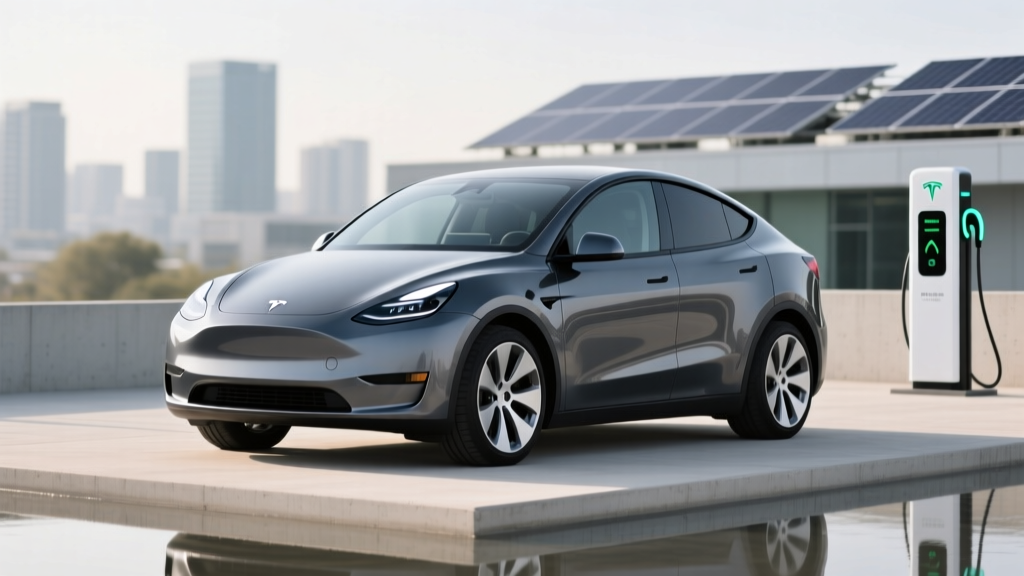
The Closest Thing: 2026 Tesla Model Y Long Range AWD (7-Seat)
The Model Y received a significant refresh for the 2025 model year (internally dubbed "Juniper"), and the 2026 model year carries forward with minor updates. The optional third-row seat package transforms the five-passenger compact SUV into a seven-seater — the closest Tesla currently comes to a van configuration for families.
| Spec | Value |
|---|---|
| EPA Estimated Range | 308 miles (Long Range AWD, 5-seat); ~295 mi (7-seat) |
| Battery Capacity | ~78 kWh usable (NMC chemistry) |
| Drivetrain | Dual Motor AWD |
| Horsepower | ~384 hp combined |
| 0–60 mph | 4.8 seconds |
| Max DC Fast Charge | 250 kW peak (CCS via adapter or NACS native) |
| 10–80% DC Fast Charge | ~25 minutes |
| Level 2 Home Charging | 11.5 kW (44 mi/hr on 48A circuit) |
| EPA Efficiency | 111 MPGe combined / 28 kWh/100 mi |
| Cargo (behind 3rd row) | ~12 cu ft |
| Cargo (all seats folded) | ~72 cu ft |
| Base MSRP (7-seat) | ~$52,490 (including $2,500 third-row option) |
| Battery Warranty | 8 years / 120,000 miles (70% capacity retention) |
Real-World Range: What the EPA Sticker Doesn't Tell You
EPA Sticker: ~295 miles (7-seat Model Y Long Range AWD)
Real-World Highway (70–80 mph): Expect 245–265 miles
Cold Weather (below 30°F): Expect 200–230 miles
Mixed Commute (city + suburban): 275–290 miles achievable
The third-row option adds roughly 50–70 lbs and slightly alters the aerodynamic profile, costing the Model Y approximately 10–15 miles of EPA-rated range compared to the five-seat Long Range AWD. But the bigger real-world factors are driving style and temperature.
On a 75-mph highway run in moderate weather (60–75°F), we've consistently observed consumption around 30–32 kWh/100 mi in the refreshed Model Y, translating to roughly 245–260 miles before you'd want to stop. In winter conditions, the heat pump helps — Tesla's octovalve thermal management system is among the best in the industry — but battery chemistry still takes a hit. Plan for 20–25% range loss in sustained sub-freezing temperatures.
The NMC (nickel manganese cobalt) battery chemistry provides strong energy density, which is why Tesla achieves over 300 miles in the five-seat configuration. However, NMC cells are more sensitive to sustained high states of charge. Tesla recommends daily charging to 80–90% and only charging to 100% before long trips. This effectively reduces your daily usable range to about 236–265 miles in the 7-seat configuration — still adequate for most commutes but something to factor into road-trip planning.
Charging Speed: Home and DC Fast Charging Breakdown
Charging speed is where the refreshed Model Y shows its maturity. The 250 kW peak DC fast-charging capability on V3 Superchargers is well-established, but sustained charging rates matter more than peak numbers.
| Charging Level | Power | Miles Added per Hour | Notes |
|---|---|---|---|
| Level 1 (120V household) | ~1.4 kW | ~5 mi/hr | Emergency/trickle only |
| Level 2 (240V, 48A) | 11.5 kW | ~44 mi/hr | Full charge in ~7 hours; recommended home setup |
| Level 2 (240V, 32A) | 7.7 kW | ~30 mi/hr | Common with Mobile Connector on dryer outlet |
| DC Fast (V3 Supercharger) | 250 kW peak | ~162 mi in 15 min | 10–80% in ~25 min; tapers significantly above 80% |
| DC Fast (V4 Supercharger) | Up to 250 kW | Similar to V3 | Newer stalls with integrated CCS cable |
Charging curve reality: The Model Y's NMC battery hits peak 250 kW only briefly, typically between 10–25% state of charge. From 25–60%, it sustains roughly 150–180 kW. Above 80%, charging slows dramatically to protect the battery — expect 50 kW or less, which is why Tesla's navigation system recommends charging to 80% at Superchargers and moving on. On a road trip, this means 20–25 minute stops add approximately 150–180 miles of range, which aligns well with the Model Y's real-world highway range.
For home charging, a 48-amp Level 2 circuit (requiring a 60-amp breaker) delivers the full 11.5 kW the Model Y's onboard charger can accept. Installation costs typically range from $800 to $2,500 depending on your electrical panel's capacity and the distance from panel to charger. Always consult a licensed electrician for a site-specific quote.
Tech, Interior, and the Third-Row Experience
The Juniper-refreshed Model Y brought meaningful interior improvements: ventilated front seats, ambient lighting, a rear-seat touchscreen for climate and media control, power-folding second-row seats, and improved sound insulation. The 15.4-inch center touchscreen remains the primary interface for everything — there are still no physical buttons for climate or audio.
The third row is the critical question for van seekers. Here's the honest assessment:
- Legroom (3rd row): ~28 inches — tight for adults on anything beyond short trips
- Best suited for: Children under ~5'4" or occasional use
- Cargo behind 3rd row: ~12 cu ft — enough for a couple of grocery runs or two small suitcases
- Access: Second-row seats slide and tilt forward, but the opening is narrower than a minivan's sliding door
If your primary need is regularly hauling six or seven adults, the Model Y's third row will disappoint. It's a 5+2 configuration, not a true people-mover. For families with two or three small children who occasionally need to carpool, it works adequately.
Driver assistance: Tesla's Autopilot comes standard and includes adaptive cruise control, lane centering, and automatic emergency braking. Full Self-Driving (Supervised) is a $8,000 add-on (or $99/month subscription as of 2026) that adds city-street navigation, traffic light recognition, and lane changes.
Important: Tesla Autopilot and FSD (Supervised) are SAE Level 2 driver-assistance systems. The driver must remain fully engaged — hands on or near the wheel, eyes on the road — at all times. These are not self-driving systems. Only Level 4 robotaxi services like Waymo operate without a human driver.
Pricing, Tax Credits, and Total Cost
| Trim / Config | MSRP | Federal Credit (§30D) | Effective Price |
|---|---|---|---|
| Long Range RWD (5-seat) | ~$44,990 | Up to $7,500* | ~$37,490 |
| Long Range AWD (5-seat) | ~$49,990 | Up to $7,500* | ~$42,490 |
| Long Range AWD (7-seat) | ~$52,490 | Up to $7,500* | ~$44,990 |
| Performance AWD (5-seat) | ~$52,490 | Up to $7,500* | ~$44,990 |
*Federal tax credit eligibility is NOT automatic. Under IRS §30D rules, you must meet all of the following for 2026:
- MSRP cap: SUVs/vans must be under $80,000 (the Model Y qualifies easily)
- Buyer income cap: Modified AGI ≤ $150,000 (single) / $225,000 (head of household) / $300,000 (joint)
- Battery sourcing: Critical minerals and battery components must meet phased-in domestic/FSTA-sourcing thresholds that tighten each year — check fueleconomy.gov for current Model Y eligibility status
- Point-of-sale transfer: As of 2024, you can transfer the credit to the dealer at purchase, reducing your out-of-pocket cost immediately rather than waiting for tax filing
The credit amount varies. Some Model Y configurations have qualified for the full $7,500, while others have received $3,750 depending on battery component sourcing. Tesla's checkout page and fueleconomy.gov list current eligibility — verify before purchasing, as sourcing requirements tighten annually.
Tesla Robovan: The Van That Isn't (Yet)
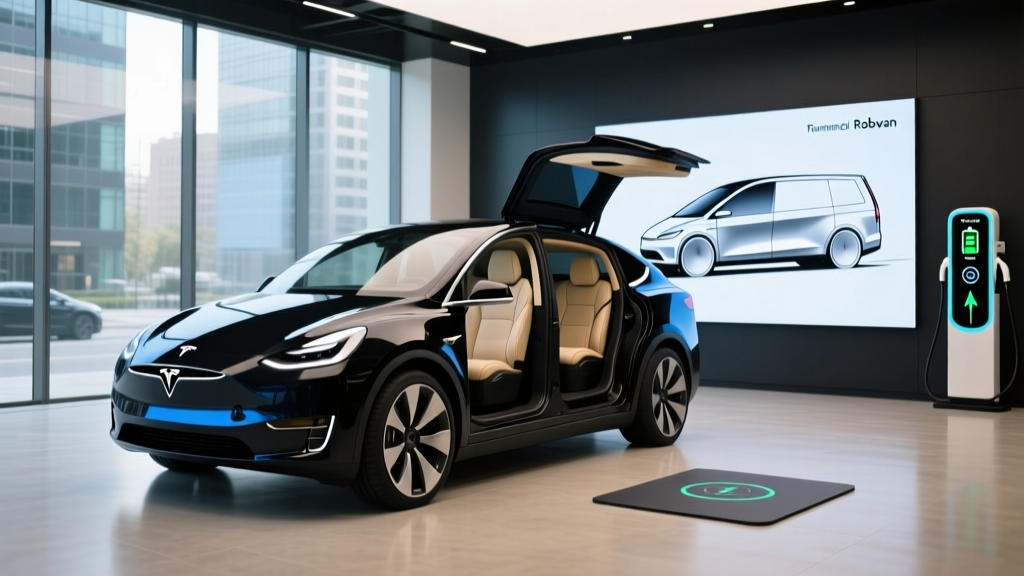
At the October 2024 "We, Robot" event, Elon Musk unveiled the Tesla Robovan concept — a futuristic, art-deco-styled electric people-mover designed primarily for autonomous fleet service. Tesla showed renderings of a vehicle seating up to 20 passengers with no steering wheel or pedals.
As of early 2026, the Robovan is NOT available for purchase. Key facts:
- Status: Concept / announced — no production timeline confirmed
- Intended use: Autonomous fleet transport (Level 4/5 robotaxi service), not consumer ownership
- Specs: Preliminary only — Tesla has not published battery capacity, range, or pricing
- Regulatory hurdles: A vehicle without a steering wheel requires NHTSA exemptions and state-by-state autonomous vehicle approval before any deployment
If you need a Tesla van today, the Robovan cannot help you. It is years away from any potential consumer availability, and Tesla's track record with announced-but-delayed products (Roadster 2.0, Cybertruck timeline) warrants skepticism on timing.
Model Y 7-Seat vs. the Competition
If a Tesla van isn't quite what you need, here's how the Model Y 7-seat stacks up against actual three-row EVs and minivans:
| Vehicle | EPA Range / MPG | 3rd-Row Space | Starting MSRP | EV Credit |
|---|---|---|---|---|
| Tesla Model Y (7-seat) | ~295 mi (BEV) | ~28" legroom (kids only) | ~$52,490 | Up to $7,500 |
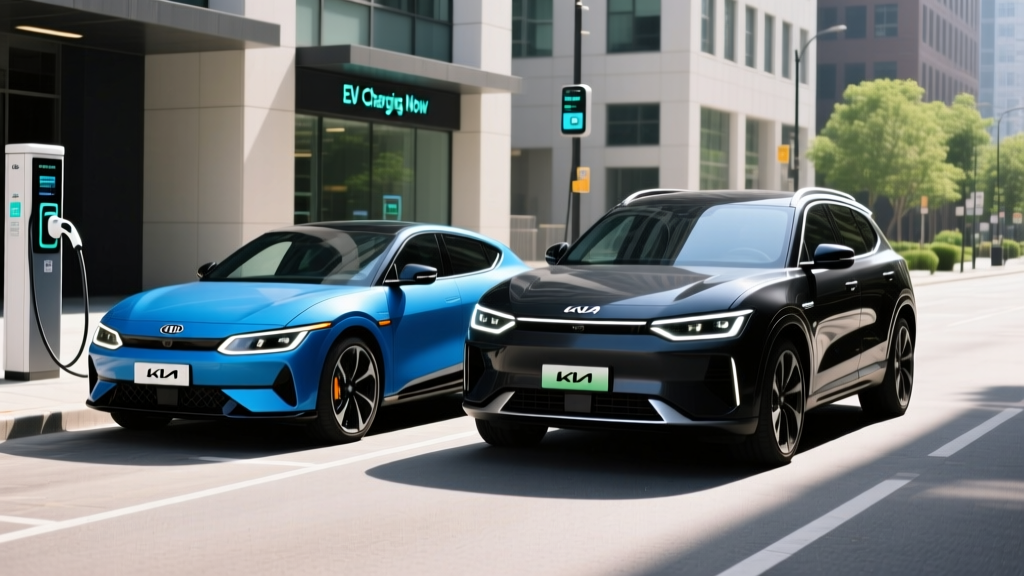
| Kia EV9 (3-row BEV) | ~304 mi (LR RWD) | ~32" legroom (usable for adults) | ~$54,900 | Up to $7,500 |
| Hyundai Ioniq 9 (3-row BEV) | ~300+ mi (est.) | ~33" legroom | ~$56,000 (est.) | Up to $7,500 |
| Chrysler Pacifica PHEV | 32 mi electric + 30 MPG | Full-size adult seating | ~$51,000 | Up to $7,500 |
| Toyota Sienna (HEV) | 36 MPG combined | Full-size adult seating | ~$39,000 | Not eligible |
The Kia EV9 is the most direct competitor if you want a three-row BEV with genuine adult-capable third-row space. It offers slightly more range in RWD form, a proper SUV footprint, and similar pricing. The trade-off: the EV9's charging speed peaks at ~236 kW (vs. Tesla's 250 kW), and you lose access to the Supercharger network unless you use a NACS adapter.
For buyers who regularly transport adults in the third row and don't want range anxiety, the Chrysler Pacifica PHEV offers 32 miles of electric-only driving for school runs and errands, plus a gas engine for road trips — with full minivan space and sliding doors.
Choose the Model Y 7-seat if:
- You primarily need 5 seats with occasional 6th/7th for small children
- You want access to the Supercharger network for road trips
- You value over-the-air updates and Tesla's software ecosystem
- Your daily commute is under 200 miles round-trip
Choose a competitor if:
- You regularly seat adults in the third row (Kia EV9, Pacifica)
- You need sliding doors for tight parking (Pacifica, Sienna)
- You want a dedicated EV platform with more interior volume (EV9, Ioniq 9)
- You can't charge at home and need 350+ miles of range
Pros
- Access to 6,000+ Tesla Supercharger stations nationwide
- Strong efficiency (111 MPGe) keeps charging costs low
- Excellent software, OTA updates, and app integration
- Competitive 0–60 time (4.8s) for a 7-seat vehicle
- Lower total cost of ownership vs. gas minivans for high-mileage drivers
- Strong resale value relative to EV market average
Cons
- Third row is kids-only — not a true van replacement
- No sliding doors; tight curb-side loading in parking lots
- Minimal cargo space with all three rows in use (~12 cu ft)
- No physical controls for climate/audio — screen-only interface
- FSD (Supervised) remains Level 2 despite the name and $8,000 cost
- NMC battery requires 80% daily charge limit for longevity
Who Should Buy This — And Who Should Wait
The Model Y 7-seat makes sense for a specific buyer: a Tesla-ecosystem family that needs mostly five seats with the flexibility to occasionally carry two extra children. It works well as a daily commuter and school-run vehicle with Supercharger-enabled road trip capability.
It does not make sense if you're replacing a minivan for regular seven-passenger duty. The third row is too cramped, cargo space is too limited, and the lack of sliding doors makes loading kids and gear frustrating in tight spaces.
If a true Tesla electric van is your dream, the Robovan concept suggests Tesla is thinking about the space — but "thinking about" and "selling" are years apart. For now, the Model Y 7-seat and the growing field of three-row EVs from Kia, Hyundai, and others are your real options.
Frequently Asked Questions
Does Tesla make a van?
Not in the traditional sense. Tesla does not sell a dedicated van in the U.S. The closest option is the Model Y with an optional third row (seating up to 7). Tesla unveiled a Robovan concept in October 2024, but it is not available for purchase and has no confirmed production date.
What is the real-world range of the Tesla Model Y 7-seat?
The EPA rates the Model Y Long Range AWD with the third-row option at approximately 295 miles. In real-world highway driving at 70–80 mph, expect 245–265 miles. In cold weather (below 30°F), plan for 200–230 miles. City driving with regenerative braking can approach or slightly exceed the EPA figure.
How fast does the Model Y charge at home and on the road?
At home on a 240V/48A Level 2 circuit, the Model Y charges at 11.5 kW, adding about 44 miles of range per hour (full charge in ~7 hours). On a V3 Supercharger, it peaks at 250 kW and charges from 10–80% in approximately 25 minutes, adding roughly 162 miles in 15 minutes.
Does the Tesla Model Y qualify for the $7,500 federal EV tax credit?
The Model Y is under the $80,000 SUV MSRP cap and has qualified for up to $7,500 under IRS §30D. However, eligibility depends on your income (≤$300,000 joint AGI), the battery's critical-mineral and component sourcing (which changes annually), and your tax liability. Check fueleconomy.gov and consult a tax professional before relying on the credit.
Is the Model Y 7-seat a good minivan replacement?
For most families replacing a minivan, no. The third row fits only small children, cargo space behind the third row is limited (~12 cu ft), and there are no sliding doors. If you regularly carry more than five passengers, consider the Kia EV9, Chrysler Pacifica PHEV, or Toyota Sienna instead.
When will the Tesla Robovan be available?
Tesla has not announced a production timeline for the Robovan. It was shown as a concept at the October 2024 "We, Robot" event, designed primarily for autonomous fleet service. Given Tesla's history with product timelines and the regulatory requirements for a steering-wheel-free vehicle, consumer availability — if it happens — is likely years away.
What is the battery warranty on the Model Y?
Tesla covers the Model Y Long Range battery and drive unit for 8 years or 120,000 miles, whichever comes first, with a minimum 70% capacity retention guarantee. This is competitive with the industry standard (Kia EV9: 10yr/100,000 mi; Hyundai: 10yr/100,000 mi). NMC batteries generally degrade 10–15% over the first 100,000 miles based on current fleet data.