Quick Verdict: The Tesla Van Isn't Here Yet
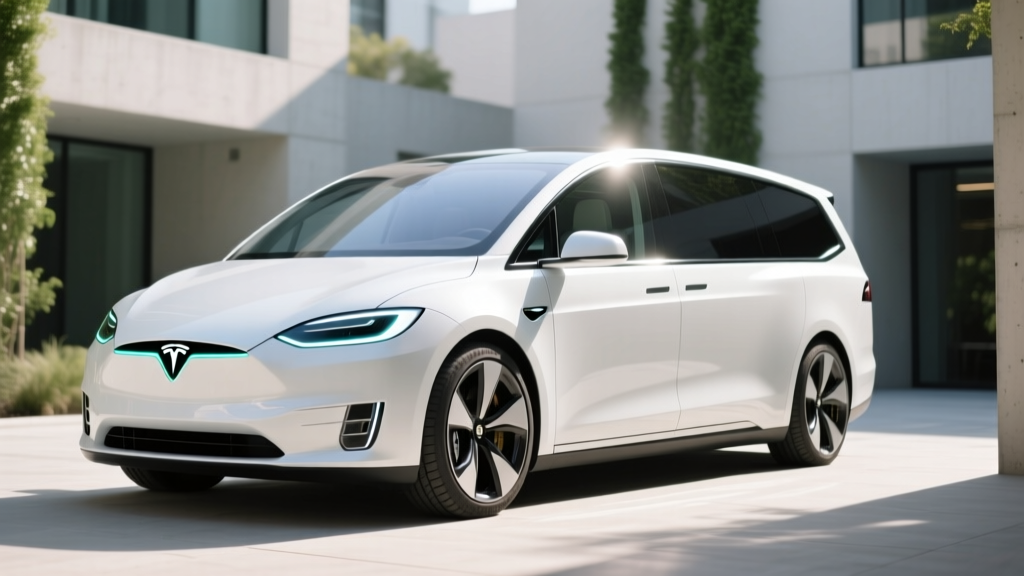
If you've been searching for a Tesla van 2025 to buy, here's the honest truth: Tesla has not officially announced, revealed, or put on sale a dedicated passenger or cargo van as of early 2026. No Model V, no Robovan with confirmed specs, no configurator page. What exists are concept renderings, Elon Musk's past statements about a future "Tesla van," and the Robovan teased alongside the Cybercab in October 2024 — a vehicle with no confirmed production date, pricing, or EPA-certified specifications.
This article compiles every credible data point available about Tesla's van ambitions, provides estimated specifications based on Tesla's current platform architecture, and offers real guidance for buyers who need an electric van now from competitors who actually sell them. If Tesla announces a production van, we'll update this piece with confirmed EPA and manufacturer data.
The Robovan Concept and Tesla's Van History
Tesla's most concrete van-adjacent reveal came on October 10, 2024, at the "We, Robot" event in Burbank, California. Alongside the Cybercab robotaxi prototype, Tesla showed a vehicle it called the Robovan — a sleek, art-deco-inspired people mover with seating for up to 20 passengers and no steering wheel or pedals. Musk described it as a future autonomous shuttle for cities and campuses.
Key facts about the Robovan reveal:
- No production timeline was given — Musk suggested "a few years" for the Cybercab, with the Robovan implied to be further out.
- No battery capacity, range, motor output, or pricing was disclosed.
- The vehicle shown was a non-functional design mockup, not a drivable prototype.
- No EPA certification or NHTSA regulatory pathway has been publicly discussed.
Before the Robovan, Musk mentioned a "Tesla van" concept in various interviews between 2018 and 2022, sometimes describing it as a Sprinter-class commercial vehicle, sometimes as a consumer minivan. None of these materialized. Tesla's current lineup (Model S, 3, X, Y, Cybertruck) includes no van body style, and the company's 2025 investor materials have not referenced a van program by name.
Estimated Specs If Tesla Builds a Consumer Van
Based on Tesla's current battery technology, motor configurations, and the 800V architecture introduced with Cybertruck, here is a reasonable projection of what a Tesla consumer van (let's call it a hypothetical "Model V") might offer if it entered production in the 2027–2028 timeframe. These are not confirmed specs.
| Specification | Estimated Value |
|---|---|
| Battery Capacity | ~100–123 kWh usable (NMC, 4680 cells) |
| EPA Range (est.) | 280–350 miles |
| Peak DC Fast Charge | ~250–350 kW (800V architecture) |
| 10–80% Charge Time | ~18–25 minutes (est.) |
| Level 2 Home Charging | 11.5 kW / ~30–37 mi/hr |
| Drivetrain | Dual-motor AWD (likely) |
| 0–60 mph | ~5.0–6.5 seconds (est.) |
| Horsepower | ~400–600 HP (dual motor) |
| Efficiency (est.) | ~2.0–2.5 kWh/mi (large van aerodynamics) |
| Cargo Volume (est.) | 140–200 cu ft (behind front seats) |
| Seating Capacity | 7–8 passengers (consumer); up to 15 (commercial) |
| Base MSRP (est.) | $65,000–$85,000 (consumer van) |
| Battery/Powertrain Warranty | 8 yr / 120,000 mi (Tesla standard) |
Charging: What Tesla's 800V Platform Could Deliver
Tesla's Cybertruck introduced the company's first 800V battery architecture, enabling faster DC charging with lower current (and therefore less heat). A future Tesla van would almost certainly adopt this platform. Here's how that translates to real charging scenarios:
| Charging Level | Power | Miles Added per Hour | Notes |
|---|---|---|---|
| Level 1 (120V household) | ~1.4 kW | ~3–4 mi/hr | Emergency only; impractical for a 100+ kWh battery |
| Level 2 (240V home, Wall Connector) | 11.5 kW | ~30–37 mi/hr | Full charge in ~10–12 hours overnight |
| DC Fast (V4 Supercharger) | ~250–350 kW peak | ~600–900 mi/hr (peak) | 10–80% in ~18–25 min; tapers significantly above 80% |
Critical charging-curve note: Peak kW ratings are sustained only between roughly 10–50% state of charge. Above 60%, charging power drops to protect the battery cells. A "350 kW peak" does not mean the van charges at 350 kW for the entire session. Expect the average charging rate across a 10–80% session to be closer to 60–70% of the peak figure. This is true for every EV on the market and is especially relevant for large batteries, where the final 20% can add 15+ minutes.
Tesla's Supercharger network remains the most reliable DC fast-charging ecosystem in the U.S., with over 6,000 stalls nationally. A Tesla van would charge natively on NACS (North American Charging Standard) connectors, which are now being adopted by Ford, GM, Rivian, and most major automakers through 2025–2026.
Tax Credit Eligibility: What a Tesla Van Would Face
If a Tesla van launches in the $65,000–$85,000 range, federal tax credit eligibility under IRS §30D would depend on several factors that change frequently:
- MSRP Cap: Vans classified as SUVs/pickups/vans face an $80,000 MSRP cap under current §30D rules. A base-trim Tesla van at ~$65,000 could qualify; a fully loaded variant at $85,000+ likely would not.
- Buyer Income Cap: Modified adjusted gross income must not exceed $150,000 (single), $225,000 (head of household), or $300,000 (joint filers).
- Battery Sourcing: Critical minerals and battery components must meet escalating domestic-content and free-trade-agreement thresholds. Tesla's use of 4680 cells manufactured in Texas improves sourcing compliance, but rules tighten annually through 2029.
- Point-of-Sale Transfer: Eligible buyers can transfer the credit to the dealer at purchase, reducing the out-of-pocket price immediately rather than waiting for tax filing.
- Commercial Van Caveat: A commercial-configured van (GVWR over 14,000 lbs or sold to a fleet) might qualify under §45W (commercial clean vehicle credit) instead, with different rules.
Bottom line: do not assume a flat $7,500 credit. Check the fueleconomy.gov tax credit lookup when (and if) the vehicle is officially listed, and consult a tax professional for your specific situation.
Electric Vans You Can Actually Buy in 2025–2026
If you need an electric van today, several proven options exist. Here's how the key competitors compare:
| Vehicle | EPA Range | Battery | Peak DC kW | Cargo (cu ft) | Base MSRP |
|---|---|---|---|---|---|
| Rivian EDV (Amazon delivery) | ~161 mi | ~105 kWh NMC | ~150 kW | ~540 cu ft (cargo) | Fleet only |
| Mercedes-Benz eSprinter | ~203 mi | 113 kWh NMC | 115 kW | ~533 cu ft | ~$74,000 |
| Ford E-Transit | 126 mi (low roof) | 68 kWh NMC | 115 kW | ~246 cu ft (low roof) | ~$51,000 |
| BrightDrop Zevo 600 | ~250 mi | ~165 kWh | 120 kW | ~615 cu ft | Fleet only |
| Chrysler Pacifica PHEV | 32 mi EV + 490 mi gas | 16 kWh (PHEV) | N/A (no DC) | ~140 cu ft | ~$51,000 |
For consumer passenger use, the Chrysler Pacifica Plug-In Hybrid remains the only electrified minivan available in the U.S. market. It offers 32 miles of electric-only range — enough for school runs and local errands — before the gas engine engages. Fully electric passenger vans from mainstream brands simply don't exist yet in the American market.
For commercial/fleet cargo use, the Ford E-Transit and Mercedes-Benz eSprinter are proven, available, and supported by dealer service networks. Both are designed for last-mile delivery routes under 150 miles, where daily depot charging makes range limitations manageable.
Who Should Wait for a Tesla Van — and Who Shouldn't
Wait for a Tesla van if:
- You don't need a van for at least 2–3 years
- Supercharger network access and Tesla's software ecosystem are priorities
- You're a fleet operator who can absorb uncertainty in production timelines
- You want a consumer-oriented electric minivan with 300+ miles of range
Buy now from a competitor if:
- You need a commercial cargo van for business operations today
- You need a family passenger van with electric capability (Pacifica PHEV)
- You have tax-credit planning tied to a 2025 or 2026 purchase year
- You cannot afford to wait on an unannounced product with no delivery guarantee
Tech Features: What Tesla Would Likely Bring
Based on Tesla's current vehicle lineup, a production van would almost certainly include:
- Infotainment: 15.4" center touchscreen running Tesla's proprietary OS, with navigation, streaming, and over-the-air updates. No Apple CarPlay or Android Auto — Tesla has never supported either.
- Autopilot (standard): SAE Level 2 driver assistance including adaptive cruise control, lane centering, and automatic emergency braking. Driver must remain fully engaged at all times.
- Full Self-Driving Supervised (optional, ~$8,000): Enhanced Level 2 system with intersection handling, on/off-ramp navigation, and parking assist. Despite the name, this is not autonomous driving — it requires continuous driver supervision.
- Sentry Mode and Dashcam: Always-on camera recording when parked, a feature unique to Tesla's camera-heavy architecture.
- Frunk (front trunk): Likely, given Tesla's skateboard platform design, adding 5–10 cu ft of front cargo space.
- V2L (Vehicle-to-Load): Possible, given Cybertruck's Powershare feature — allowing the van to power tools, appliances, or a campsite.
Frequently Asked Questions
What is the real-world range of the Tesla van?
There is no confirmed EPA range because the Tesla van is not in production. If Tesla builds a van with a ~110 kWh battery and dual-motor AWD, an EPA estimate of 280–350 miles is plausible based on the Model X platform. Real-world highway range would likely be 20–25% lower, and cold-weather range could drop 25–30% below the EPA sticker.
How fast would a Tesla van charge?
Using Tesla's 800V architecture from the Cybertruck, a van could plausibly peak at 250–350 kW on a V4 Supercharger, reaching 10–80% in roughly 18–25 minutes. Home Level 2 charging via a Tesla Wall Connector (11.5 kW) would add approximately 30–37 miles of range per hour, requiring 10–12 hours for a full charge on a 100+ kWh battery. These are estimates, not confirmed figures.
How much would a Tesla van cost after tax credits?
If a base-trim Tesla van launches around $65,000 and qualifies for the full $7,500 federal credit under IRS §30D (subject to buyer income caps, MSRP limits, and battery-sourcing rules), the effective price could be ~$57,500. However, the $80,000 MSRP cap for vans/SUVs means higher trims would likely not qualify. State incentives vary and should be checked separately. Always confirm eligibility on irs.gov before purchasing.
Is the Tesla van worth waiting for vs. competitors?
If you need a van now, no — the Tesla van doesn't exist as a purchasable product. For commercial fleets, the Ford E-Transit and Mercedes eSprinter are proven with dealer support. For families, the Chrysler Pacifica PHEV is the only electrified minivan option. If you can wait 2–4 years and want a consumer electric van with Supercharger access, Tesla's eventual offering could be compelling — but that's speculative.
Does a Tesla van qualify for the federal EV tax credit?
Hypothetically, a base-trim Tesla van under $80,000 MSRP could qualify for up to $7,500 under §30D, assuming the buyer meets income requirements and the battery meets critical-mineral and component-sourcing thresholds. A commercial-configured van might qualify under the separate §45W credit. Since the vehicle doesn't exist yet, no official IRS listing is available.
What are the biggest pros and cons of waiting for a Tesla van?
- Access to Tesla Supercharger network (most reliable DC charging in U.S.)
- Over-the-air software updates and continuous feature improvements
- Likely 300+ mile EPA range on higher trims
- Tesla's 800V architecture for faster DC charging
- Strong resale value typical of Tesla products
- Does not exist — no production date, no reservations, no specs confirmed
- Tesla's history of delayed timelines (Roadster 2, Cybertruck delays)
- No Apple CarPlay or Android Auto support
- Likely premium pricing ($65,000+ base)
- Tesla service center capacity may not support a high-volume van
- No third-party repair ecosystem compared to Ford/Mercedes
Final Take
The Tesla van 2025 is a vehicle that lives in speculation, not in showrooms. Tesla has demonstrated interest in the van segment through the Robovan concept and Musk's past comments, but no production program has been confirmed with specs, pricing, or a timeline. If you're a consumer looking for an electric family van, the market is currently limited to the Chrysler Pacifica PHEV. If you're a fleet operator, the E-Transit and eSprinter are shipping today with known specs and service support.
We'll update this article the moment Tesla officially announces a production van with EPA-certified specifications. Until then, treat any "Tesla van specs" you find online as projections, not facts.