Tesla Used Car Warranty: The Quick Breakdown
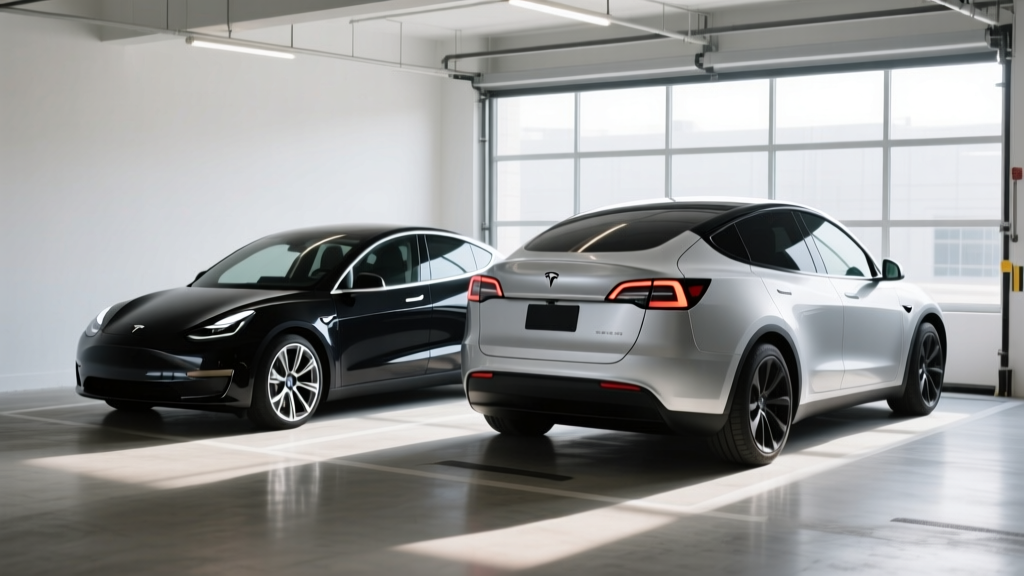
Buying a pre-owned Tesla is one of the most accessible ways into the EV market, but the value of that purchase hinges on what warranty protection transfers to you. The Tesla used car warranty is not a single policy — it's a layered system where the Basic Vehicle Limited Warranty, Battery and Drive Unit Limited Warranty, and any remaining Tesla Extended Service Agreement each behave differently when a car changes hands. In 2026, with Model 3 Highland refresh pricing still elevated and Model Y Juniper deliveries ramping, the used market is where most buyers actually transact. Understanding exactly what coverage you inherit — and what you don't — is the difference between a confident purchase and a five-figure surprise.
Tesla Warranty Coverage at a Glance (2026)
| Warranty Type | Coverage Period | Transferable? | Applies To |
|---|---|---|---|
| Basic Vehicle Limited Warranty | 4 years / 50,000 miles | Yes, to private-party buyers | All Tesla models |
| Battery & Drive Unit (Standard Range) | 8 years / 100,000 miles | Yes | Model 3 / Model Y RWD (LFP) |
| Battery & Drive Unit (Long Range/Perf) | 8 years / 120,000 miles | Yes | Model 3 LR, Model Y LR/Perf (NMC) |
| Battery & Drive Unit (Model S/X) | 8 years / 150,000 miles | Yes | Model S / Model X all trims |
| Tesla Extended Service Agreement | Varies by plan | Yes, if purchased from Tesla | Eligible used Teslas |
What the Battery Warranty Actually Covers (and the 70% Threshold)
The heart of any used Tesla's residual value is the traction battery. Tesla's Battery and Drive Unit Limited Warranty guarantees that the battery will retain at least 70% of its original usable capacity over the warranty period — 8 years or the applicable mileage limit, whichever comes first. This threshold is critical: a battery at 71% state of health (SoH) is technically "within spec," even though you've lost nearly a third of your range.
For context, most Tesla owners report degradation curves that flatten after the initial 5-10% loss in the first 20,000-30,000 miles. Data aggregated from fleet telemetry suggests a typical Model 3 Long Range (NMC chemistry) sits around 88-92% SoH at 60,000 miles, while LFP-equipped Standard Range models often show slower degradation, hovering around 93-96% at similar mileage due to LFP's inherently longer cycle life.
LFP vs NMC: What It Means for a Used Tesla Battery
| Attribute | LFP (Standard Range) | NMC (Long Range / Performance) |
|---|---|---|
| Typical chemistry in | Model 3 RWD, Model Y RWD | Model 3 LR, Model Y LR/Perf, Model S/X |
| Energy density | Lower (~160 Wh/kg cell) | Higher (~250-270 Wh/kg cell) |
| Cycle life | 2,000-3,000+ cycles | 1,000-2,000 cycles |
| Cold-weather range loss | More pronounced (~30-35%) | Moderate (~20-28%) |
| Recommended daily SoC | 100% (Tesla recommends periodic full charge) | 80-90% daily; 100% for trips |
| Warranty mileage | 100,000 miles (Model 3/Y) | 120,000 miles (Model 3/Y LR) |
If you're evaluating a used Model 3 or Model Y, check the battery's build date (visible in the vehicle's MCU or through a service center request). The 8-year clock starts from the original in-service date, not the model year. A 2020 Model 3 delivered in March 2020 has battery coverage through March 2028 — that's only two years of protection remaining in 2026.
Real-World Range on a Used Tesla: What to Expect
EPA range stickers on used Teslas reflect the car's configuration when new, but real-world range depends on battery SoH, tire condition, ambient temperature, and driving style. Here's what current owners and testers report for popular used-market configurations:
Used Tesla Range: EPA vs Reality
2021-2023 Model 3 Long Range AWD (75 kWh usable, NMC):
EPA: 358 miles (2022-2023), 353 miles (2021)
Real-world highway (70 mph, 65°F): ~290-310 miles
Real-world winter highway (30°F): ~240-265 miles
At 85% SoH (typical 60k-mile car): expect ~260-280 miles highway in mild weather
2022-2024 Model 3 RWD (57.5 kWh usable, LFP):
EPA: 272 miles
Real-world highway (70 mph, 65°F): ~225-245 miles
Real-world winter highway (30°F): ~180-200 miles
At 93% SoH (typical 40k-mile car): expect ~220-235 miles highway in mild weather
2021-2023 Model Y Long Range AWD (75 kWh usable, NMC):
EPA: 330 miles (2023), 318 miles (2021-2022)
Real-world highway (70 mph, 65°F): ~265-290 miles
Real-world winter highway (30°F): ~220-245 miles
Efficiency on a used Model 3 LR typically lands around 26-28 kWh/100 miles (roughly 120-130 MPGe combined) in mixed driving, per fueleconomy.gov data. The Model Y LR, heavier and less aerodynamic, runs 28-31 kWh/100 miles (111-122 MPGe combined). These figures directly affect your charging cost — a critical ownership variable that most used-car listings omit.
Charging Speed: What a Used Tesla Can Actually Do
Charging capability doesn't degrade meaningfully with age, but it varies significantly by trim and model year. A 2020 Model 3 Standard Range Plus charges much slower than a 2024 Model 3 Highland Long Range. Here's the spec matrix for common used-market Teslas:
Used Tesla Charging Specs by Model
| Model / Trim | Max DC Fast Charge | 10-80% Time | Level 2 (240V) Rate | Connector |
|---|---|---|---|---|
| Model 3 RWD (2022-2024, LFP) | 170 kW peak | ~25-28 min | 11.5 kW (~44 mi/hr) | NACS (native) |
| Model 3 LR AWD (2021-2023) | 250 kW peak | ~15-18 min | 11.5 kW (~44 mi/hr) | NACS (native) |
| Model 3 LR (2024+ Highland) | 250 kW peak | ~15-18 min | 11.5 kW (~44 mi/hr) | NACS (native) |
| Model Y LR AWD (2021-2024) | 250 kW peak | ~17-22 min | 11.5 kW (~37 mi/hr) | NACS (native) |
| Model S LR (2021+) | 250 kW peak | ~18-22 min | 11.5 kW (~34 mi/hr) | NACS (native) |
Key nuance for used buyers: peak kW is not sustained kW. A Model 3 LR hitting 250 kW at 10% SoC will taper to ~150 kW by 50% and ~70 kW by 75%. The 10-80% time is the more useful metric for road-trip planning. Also, LFP-equipped Standard Range models have a flatter charge curve but a lower peak, so their 10-80% time is often only marginally longer despite the lower peak rate.
Home charging at 11.5 kW (48-amp circuit on a 60-amp breaker) adds roughly 37-44 miles per hour depending on the model's efficiency. Most used Teslas will fully replenish overnight on a Level 2 home charger — the single biggest ownership advantage over public charging reliance. Installation typically runs $800-$2,000 depending on panel proximity, assuming a 200-amp service panel is available. If your home needs a panel upgrade (common in older homes), budget an additional $1,500-$3,000.
Pricing, Tax Credits, and the Used EV Credit
Used Tesla prices have moderated considerably. As of early 2026, here's where common used-market models land:
Used Tesla Pricing & Tax Credit Eligibility
| Model / Trim | Typical Used Price (2026) | §25E Used EV Credit | Effective Price After Credit |
|---|---|---|---|
| 2020-2021 Model 3 SR+ | $18,000 - $22,000 | Up to $4,000 (30% of sale price) | $14,000 - $18,000 |
| 2021-2022 Model 3 LR AWD | $24,000 - $30,000 | Up to $4,000 | $20,000 - $26,000 |
| 2022-2023 Model 3 RWD (LFP) | $22,000 - $27,000 | Up to $4,000 | $18,000 - $23,000 |
| 2021-2022 Model Y LR AWD | $26,000 - $33,000 | Up to $4,000 | $22,000 - $29,000 |
| 2023-2024 Model Y LR AWD | $32,000 - $39,000 | Up to $4,000 | $28,000 - $35,000 |
Critical IRS §25E rules for the used EV credit (per irs.gov):
- Credit amount: 30% of the sale price, up to a maximum of $4,000
- Vehicle price cap: Sale price must be $25,000 or less to qualify
- Buyer income limits (2026): $75,000 single / $112,500 head of household / $150,000 joint (modified AGI)
- Vehicle age: Must be at least 2 model years old (so 2024 or older for a 2026 purchase)
- Dealer requirement: Must be purchased from a licensed dealer (private-party sales don't qualify)
- One-time use: The specific VIN can only claim the credit once every 3 years
This means the sweet spot for the used EV credit is a 2021-2022 Model 3 SR+ or LR priced at or below $25,000 from a dealer. A Model Y LR priced at $26,000+ won't qualify unless the dealer drops the price. Always confirm the VIN hasn't previously been used to claim §25E — Tesla's own used inventory typically tracks this, but third-party dealers may not.
Note: The §30D new EV tax credit (up to $7,500) does not apply to used vehicle purchases. If you're cross-shopping new vs. used, factor the §25E credit against the higher upfront cost and full warranty of a new vehicle.
Performance, Tech, and Daily Livability
Even a 4-year-old Tesla delivers performance that outpaces most new EVs at similar price points:
| Spec | Model 3 LR (2021-2023) | Model 3 RWD (2022-2024) | Model Y LR (2021-2024) |
|---|---|---|---|
| 0-60 mph | 4.2 sec | 5.8 sec | 4.8 sec |
| Horsepower | ~346 hp (dual motor) | ~283 hp (single motor) | ~384 hp (dual motor) |
| Drivetrain | AWD (dual motor) | RWD | AWD (dual motor) |
| Cargo (rear + frunk) | 23 cu ft + 3.1 cu ft | 23 cu ft + 3.1 cu ft | 30.2 cu ft + 4.1 cu ft (behind 2nd row) |
| Rear legroom | 35.2 in | 35.2 in | 40.5 in |
| Curb weight | ~4,034 lbs | ~3,862 lbs | ~4,398 lbs |
Tech and Driver Assistance
Every used Tesla includes the baseline Autopilot suite (Traffic-Aware Cruise Control and Autosteer). This is an SAE Level 2 driver-assistance system — you must keep your hands on the wheel and eyes on the road at all times. It is not self-driving.
Full Self-Driving (FSD) Capability — Tesla's supervised Level 2 system that adds Navigate on Autopilot, Auto Lane Change, and traffic light/stop sign recognition — may or may not transfer with a used Tesla. As of 2024, Tesla stopped automatically transferring FSD licenses on private-party sales. If FSD matters to you, buy from Tesla's certified used inventory (where FSD transfers are more consistent) or confirm the license status in writing before purchasing from a third-party dealer.
Driver Assistance Is NOT Self-Driving
Autopilot and FSD (Supervised) are SAE Level 2 systems. The driver must remain fully engaged, monitor the road, and be prepared to take over instantly. Tesla's own documentation states these features "require active driver supervision and do not make the vehicle autonomous." Only Level 4 services like Waymo operate without a driver in the loop — and those are geofenced, not available in personal vehicles.
Infotainment and Standout Features
Used Teslas from 2021 onward feature the MCU3 (Ryzen-based) infotainment processor, which remains responsive in 2026. Key tech includes a 15-inch center touchscreen, over-the-air updates (still actively pushed to older vehicles), Tesla's native navigation with real-time Supercharger routing, and access to the Supercharger network — the most reliable DC fast-charging network in North America with over 25,000 stalls.
Notable drawbacks on used models: the absence of Apple CarPlay/Android Auto (Tesla uses its own interface exclusively), limited rear-seat amenities on pre-2024 Model 3 (no rear screen, minimal HVAC controls), and the 2021-2023 Model 3's lack of ventilated seats and ambient lighting that the 2024 Highland refresh added.
Pros
- Supercharger network access — best-in-class charging reliability
- Strong performance even on base trims (0-60 under 6 sec for RWD)
- Over-the-air updates keep older vehicles current
- Transferable battery warranty (8 yr / 100-120k mi)
- Low running costs: ~$0.04-$0.06/mile on home charging
- LFP Standard Range models show minimal degradation
Cons
- No Apple CarPlay or Android Auto
- Pre-2024 Model 3 rear seat comfort is below class average
- FSD license may not transfer on private-party sales
- Insurance premiums run 15-30% above comparable ICE vehicles
- Out-of-warranty battery replacement: $12,000-$16,000 estimated
- Cold-weather range loss is significant (20-35% depending on chemistry)
Who Should Buy a Used Tesla — and Who Should Look Elsewhere
Best for: Commuters with home charging access, tech-savvy drivers who value OTA updates and Supercharger road-trip capability, and buyers in states with robust §25E dealer participation. A used Model 3 LR with 40,000-60,000 miles and remaining battery warranty is arguably the best value-per-mile EV on the market in 2026.
Look elsewhere if: You need a third row (Model Y's optional jump seats are tiny and only for children), you regularly tow (Model Y is rated for 3,500 lbs but range drops drastically under load), you live in a charging desert with no reliable public DC infrastructure, or you require CarPlay integration for fleet/employer requirements.
Pre-Purchase Checklist: Protecting Your Warranty
- Verify the in-service date — not the model year. The warranty clock starts when the car was first delivered or sold.
- Check battery SoH — request a battery health report from Tesla Service or use the energy graph in the vehicle to estimate degradation.
- Confirm FSD transfer status — get it in writing from the seller.
- Inspect for salvage/branded title — Tesla will void the battery warranty on vehicles with salvage titles, even if the battery itself is undamaged.
- Verify Supercharger eligibility — Tesla permanently banned certain salvaged/rebuilt vehicles from the Supercharger network.
- Check for open recalls — visit nhtsa.gov/recalls and enter the VIN.
- Review service history — Tesla's app shows service records if the previous owner used Tesla Service Centers.
Frequently Asked Questions
Is the Tesla warranty transferable to a second owner?
Yes. Both the Basic Vehicle Limited Warranty (4 yr / 50,000 mi) and the Battery and Drive Unit Limited Warranty (8 yr / 100,000-150,000 mi depending on model) transfer automatically when the vehicle is sold, whether through a private party or a dealer. No paperwork is required — Tesla tracks coverage by VIN.
What voids a Tesla battery warranty?
Tesla can deny a battery warranty claim if the vehicle has a salvage or rebuilt title, if the battery was opened or serviced by a non-Tesla technician, if the vehicle was used in severe commercial applications outside normal use, or if the owner intentionally damaged the battery. Normal degradation above the 70% threshold is not a warranty claim.
How much does a Tesla battery replacement cost out of warranty?
Out-of-warranty battery replacement for a Model 3 or Model Y typically ranges from $12,000 to $16,000 including labor, based on current Tesla service center estimates. Model S/X replacements can run $15,000-$20,000+. Tesla sometimes offers refurbished battery packs at a lower cost. This is why verifying remaining warranty coverage is the single most important step in a used Tesla purchase.
Can I buy an extended warranty for a used Tesla?
Tesla offers an Extended Service Agreement (ESA) on certain used vehicles sold through its own inventory. The ESA must typically be purchased before the original Basic Vehicle Limited Warranty expires. Third-party extended warranties exist (e.g., from providers like XCare or Endurance) but vary widely in EV-specific coverage — read the exclusions carefully, as many third-party plans exclude the battery and drive unit entirely.
Does a used Tesla qualify for any tax credits?
Yes, under IRS §25E, a used Tesla purchased from a licensed dealer for $25,000 or less can qualify for a credit of up to $4,000 (30% of sale price), subject to buyer income limits ($75k single / $150k joint). The vehicle must be at least 2 model years old. The §30D new-vehicle credit does not apply to used purchases. Always confirm eligibility with a tax professional and check irs.gov for current rules.
How do I check how much battery degradation a used Tesla has?
Navigate to the vehicle's energy graph (Controls > Software > Battery or via the Tesla app if linked). Compare the displayed "typical" or "rated" range at 100% charge against the original EPA rating. For a more precise reading, a Tesla Service Center can pull a full battery health report showing SoH percentage. Third-party tools like Tessie or TeslaFi can also track and estimate degradation over time.